

Blog
The 5 Best Aquaponics Systems
The best aquaponics systems balance reliability, efficiency, and crop versatility. Media beds suit beginners, rafts maximize leafy-green production, NFT and vertical systems save space, while




The best aquaponics systems balance reliability, efficiency, and crop versatility. Media beds suit beginners, rafts maximize leafy-green production, NFT and vertical systems save space, while hybrid designs offer unmatched flexibility for diverse growing goals.
One of the most important choices a grower must make is which aquaponics system to use. Aquaponics systems involve live fish whose welfare depends on system stability, in contrast to hydroponics, where changing system types only requires minor equipment updates, or traditional gardening, where soil beds can be easily modified.
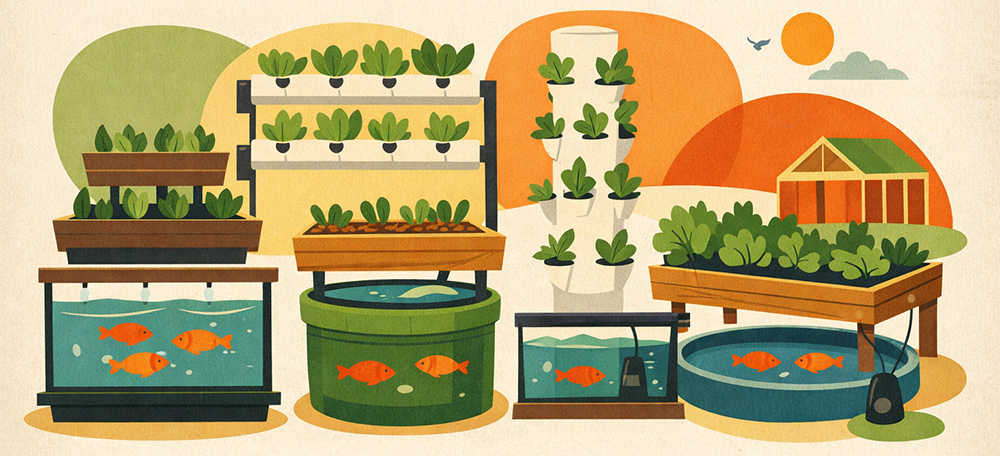
Every major type of aquaponics system is examined in this thorough guide, along with its operational principles, aquaponics benefits and drawbacks, ideal applications, and crucial monitoring requirements. Knowing these system architectures will help you choose designs that are in line with your unique objectives, degree of experience, and available resources, whether you’re starting your first desktop herb garden or growing a business that produces thousands of pounds a year.
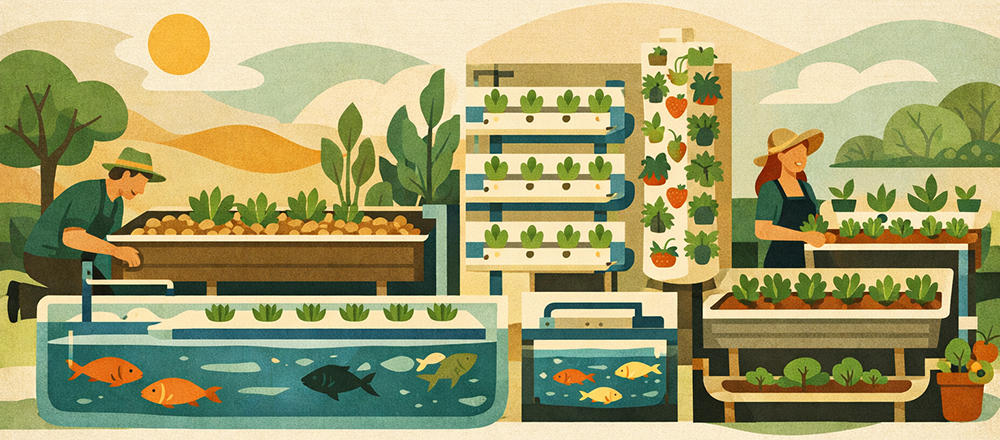
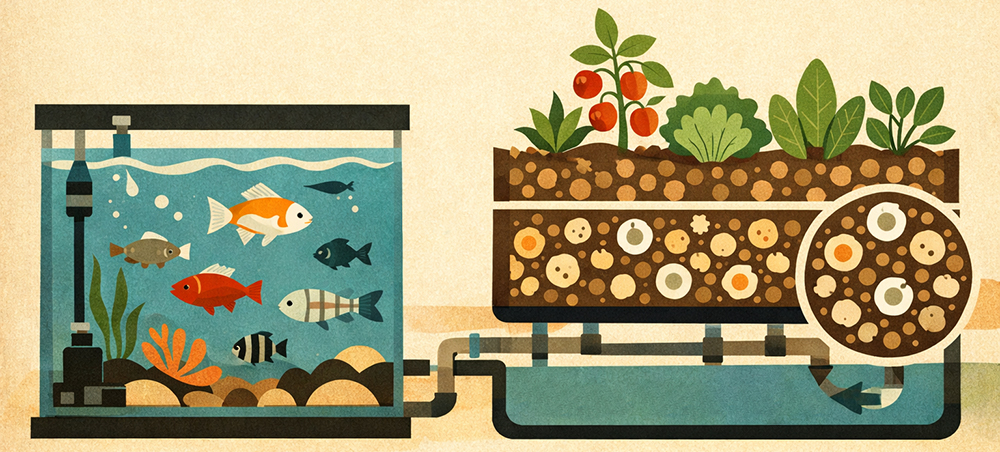
Media bed systems, also called flood and drain systems, represent the most versatile and beginner-friendly aquaponics design. Their simplicity, robust biological filtration, and ability to support diverse plant types make them the standard recommendation for first-time builders.
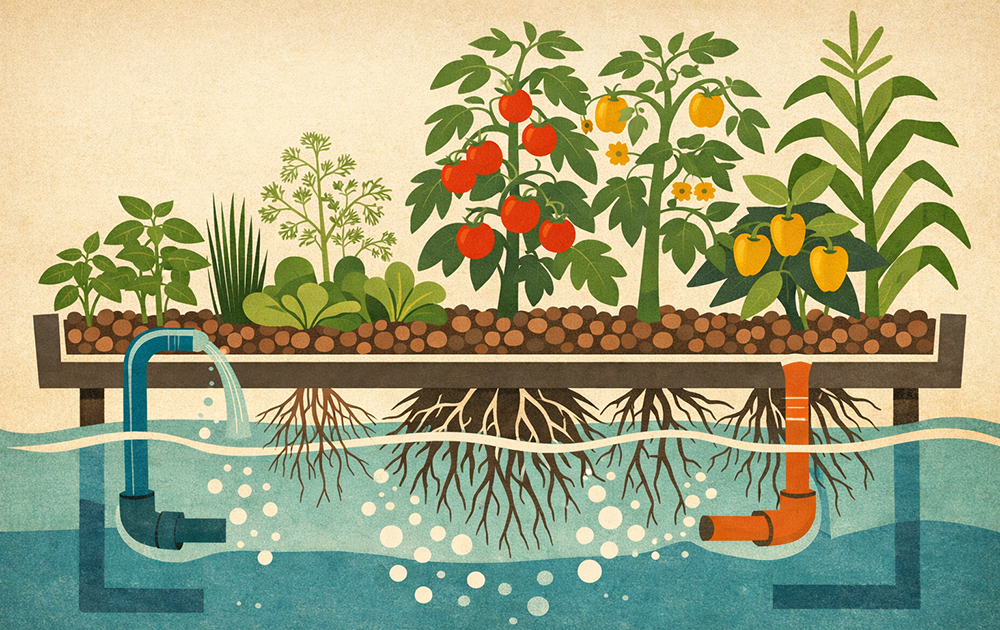
Plants grow in containers (grow beds) filled with growing media, typically expanded clay pellets (hydroton), lava rock, or gravel. Water from the fish tank periodically floods the grow bed to a depth of 10-12 inches, saturating the media and delivering nutrients to plant roots. After flooding for 10-15 minutes, water drains completely back to the fish tank, creating the “flood and drain” cycle.
This cycling serves multiple critical functions. During flooding, plant roots absorb water and dissolved nutrients. During draining, air is pulled down into the media, delivering oxygen to roots and beneficial bacteria. The drain phase prevents anaerobic conditions that would cause root rot and bacterial die-off.
Most media bed systems employ bell siphons or timer-controlled pumps to automate flood/drain cycles. Bell siphons, elegantly simple devices with no moving parts, automatically drain beds once water reaches a preset level, creating hands-free operation. Timer systems use pumps running on schedules (typically 15 minutes on, 45 minutes off) for straightforward cycle control.
Superior Biological Filtration: The enormous surface area provided by growing media, millions of square inches in even modest beds, supports massive beneficial bacterial populations. This robust biofiltration handles fish waste more effectively than any other system design, allowing higher fish stocking densities and greater nutrient production for heavy-feeding plants.
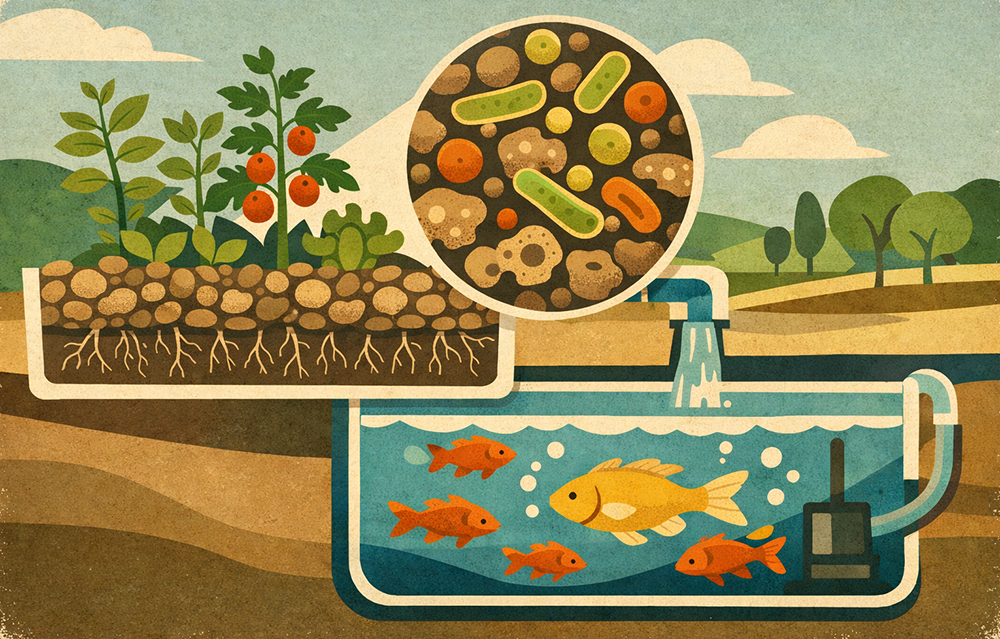
Mechanical Filtration Integration: Media beds function as mechanical filters, trapping solid fish waste particles that accumulate in the media rather than circulating through the system. Worms added to media beds (vermicomposting) break down these solids, further processing waste and enhancing nutrient availability.
Extreme Plant Versatility: Media beds support everything from delicate herbs to 6-foot tomato plants. The growing media provides root anchoring suitable for heavy fruiting crops, while the flood/drain cycle delivers oxygen necessary for healthy root development across plant types.
Simplicity and Reliability: With few moving parts and straightforward operational principles, media bed systems rarely experience catastrophic failures. Bell siphon systems operate without timers, pumps, or electronics that can malfunction.
Beginner-Friendly: The forgiving nature of media beds, with their massive biofiltration capacity and mechanical filtration, buffers against many beginner mistakes. Overfeeding fish or irregular monitoring rarely creates the immediate crises possible in more sensitive system types.
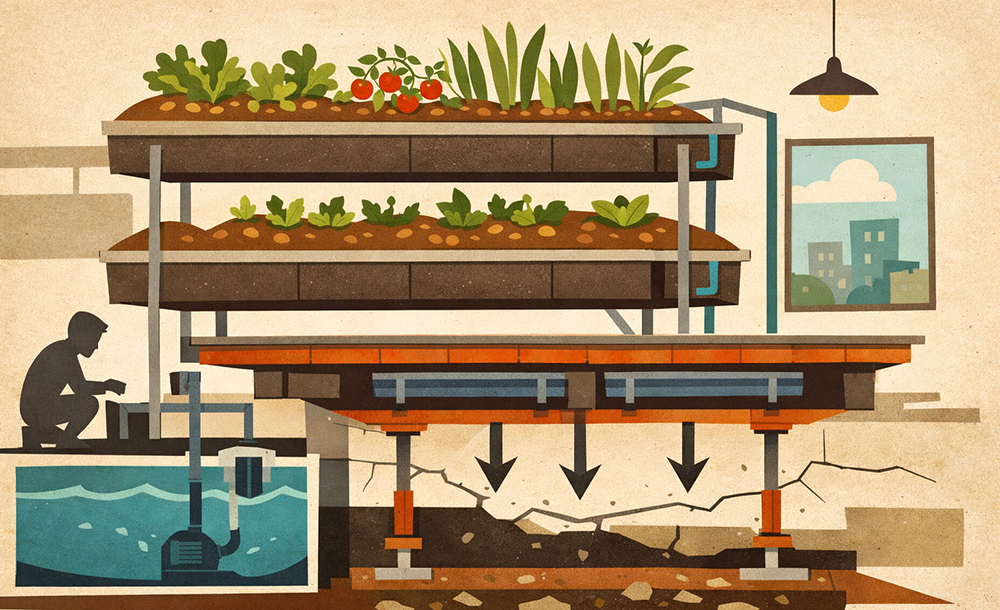
High Initial Weight: Media beds filled with wet growing media can weigh 50-100+ pounds per cubic foot. This substantial weight demands robust structural support, particularly for multi-tier or elevated systems. Many indoor installations require floor reinforcement to prevent structural damage.
Media Clogging Over Time: Despite worm populations processing solid waste, media beds gradually accumulate fine particulates that can clog pore spaces, reducing water flow and oxygen exchange. Complete media cleaning every 2-3 years, labor-intensive work, maintains optimal performance.
Lower Plant Density: Compared to raft or NFT systems optimized for dense leafy green production, media beds support fewer plants per square foot. Commercial operations focused exclusively on lettuce often choose other system types for higher plant density.
Slow Startup: Media beds require longer cycling periods (6-8 weeks) than systems with dedicated biofilters. Bacterial populations must colonize the entire media volume before systems handle full fish loads.
Media bed systems require consistent but not intensive monitoring:
At Atlas Scientific, we have all your testing needs in one with the Wi-Fi Aquaponics Kit. For those who prefer the “Do It Yourself” approach, the Bare-Bones Wi-Fi Hydroponics Kit comes with just the enclosure and hardware assembled within.
Raft systems, also called Deep Water Culture (DWC) or floating raft systems, dominate commercial leafy green production globally. Their exceptional plant density, rapid harvest cycles, and streamlined operations make them the choice for large-scale lettuce and herb cultivation.
Plants grow in foam rafts (typically expanded polystyrene) floating on nutrient-rich water. Roots hang directly into the water where they absorb dissolved nutrients and oxygen. Water from fish tanks flows continuously through raft beds, providing constant nutrient delivery and water exchange.
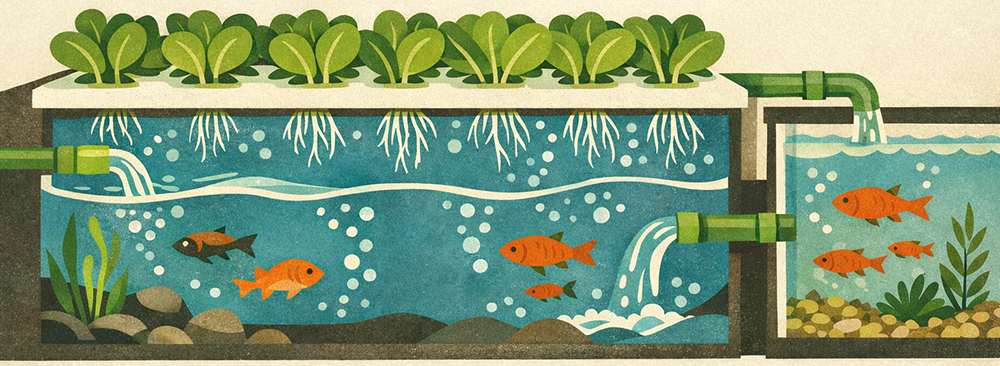
Unlike media beds with their flood/drain cycles, raft systems maintain constant root submersion. This demands excellent water aeration, air stones, venturi aerators, or paddlewheel systems provide the dissolved oxygen (6-8 mg/L minimum) necessary for healthy root development.
Raft systems require separate biofilters since rafts themselves provide minimal bacterial colonization surface. These biofilters, typically specialized media-filled containers or moving bed biofilm reactors (MBBR), process fish waste before water enters raft beds.
Maximum Plant Density: Raft systems support 20-30+ lettuce heads per square foot, dramatically higher density than media beds. This density advantage makes raft systems the most space-efficient option for leafy green production.
Rapid Harvest Cycles: The constant nutrient availability accelerates growth rates. Commercial operations harvest lettuce every 4-5 weeks, achieving 10-12 harvest cycles annually compared to 6-8 cycles in many media bed systems.
Visual Root Monitoring: Transparent raft bed sides enable continuous root observation. Early disease detection, pest identification, and nutrient deficiency symptoms become immediately visible, allowing rapid intervention.
Lower Weight Per Growing Area: While raft beds contain substantial water weight, they require no heavy growing media, reducing structural load compared to media bed systems.
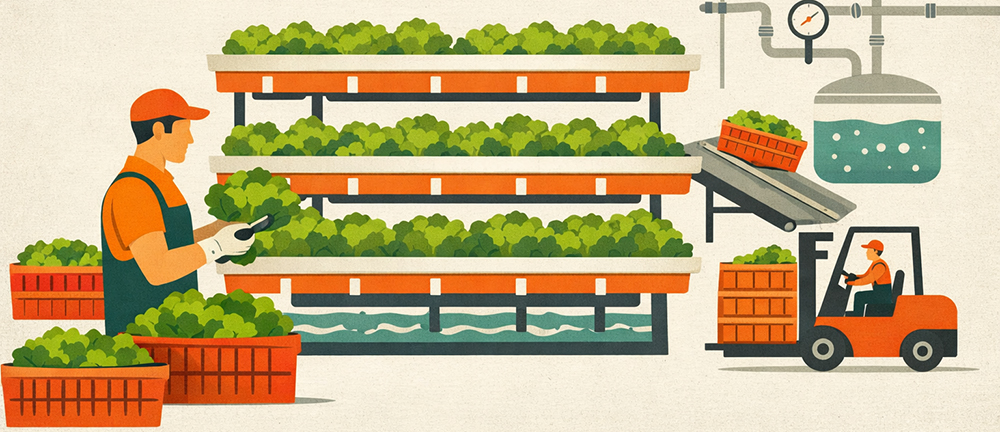
Simplified Harvesting: Plants lift directly from rafts without disturbing neighboring plants or substrate. This streamlined harvesting reduces labor costs in commercial operations compared to media bed systems requiring individual plant extraction from media.
Requires Separate Biofilter: The minimal surface area in raft systems provides insufficient space for beneficial bacterial colonization. Dedicated biofilters, adding cost, complexity, and additional monitoring requirements, become necessary.
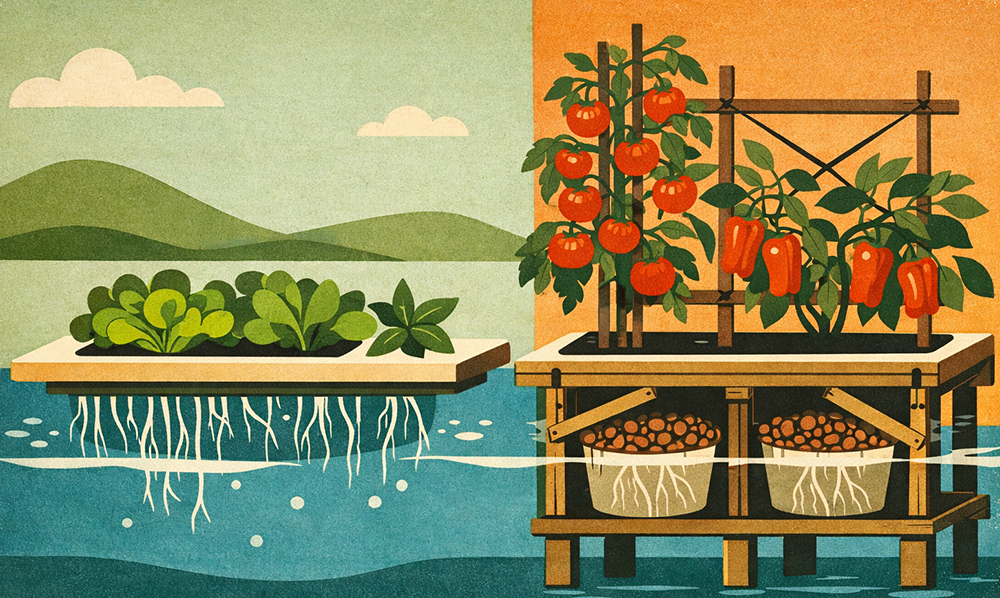
Limited Plant Types: Raft systems work excellently for shallow-rooted leafy greens and herbs, but struggle with larger plants. Heavy fruiting crops (tomatoes, peppers) require floating raft modifications with extensive support structures that largely negate system advantages.
Higher Aeration Requirements: Constant root submersion demands excellent dissolved oxygen management. Aeration system failures cause rapid root suffocation and plant death within hours. Backup aeration is critical for reliable operations.
Temperature Sensitivity: Large water volumes in raft beds can overheat in warm conditions, dramatically reducing oxygen solubility. Cooling systems often become necessary in climates with sustained temperatures above 80°F.
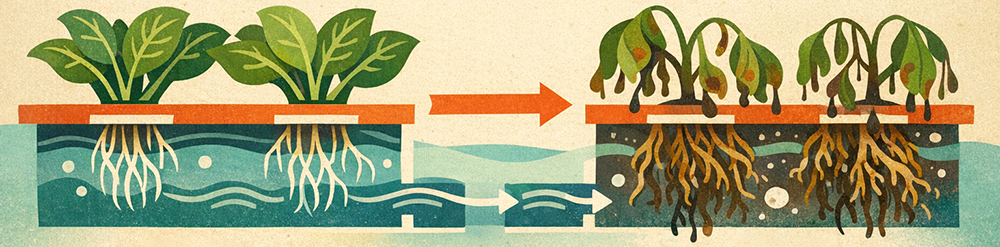
Root Disease Vulnerability: Continuous root submersion creates ideal conditions for water-borne pathogens like Pythium (root rot). Disease outbreaks can spread rapidly through connected raft beds, potentially destroying entire crops.
Understanding EC fundamentals: What Is EC In Hydroponics?
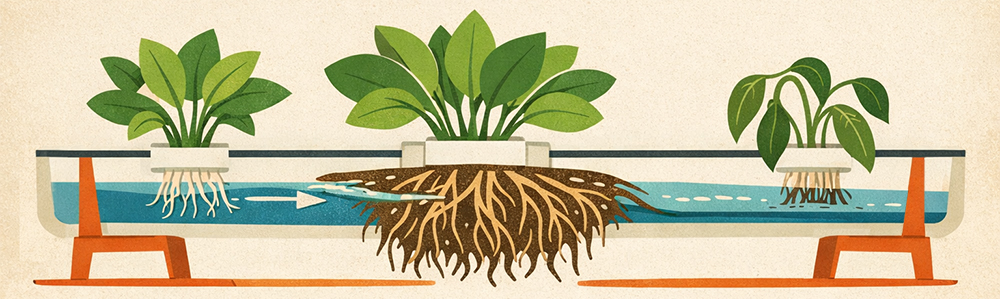
NFT systems employ narrow channels where thin films of nutrient solution flow continuously over roots. Popular in pure hydroponics, NFT adapts to aquaponics for specific applications, primarily herb production and small-scale operations.
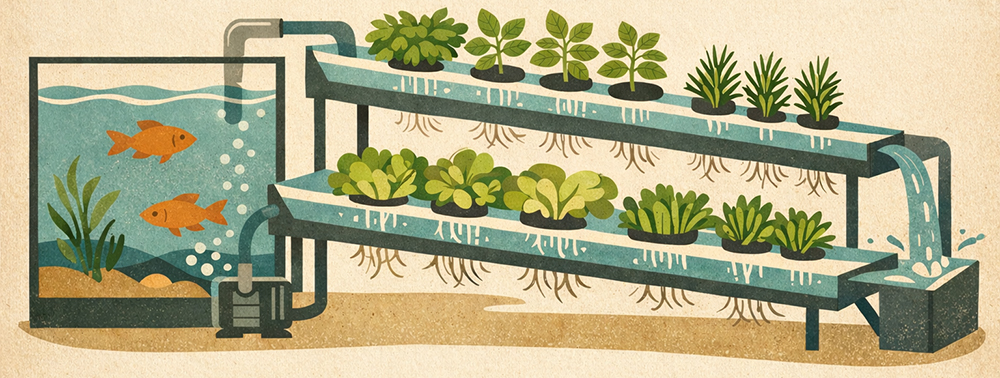
Plants grow in channels (typically PVC pipes or specialized NFT gulleys) positioned at slight downward slopes (1:30 to 1:100 ratio). Nutrient solution enters at the channel’s upper end, flows down, creating a thin film (2-5mm) over roots, and drains at the lower end back to the fish tank. Pumps run continuously, maintaining a constant flow.
The thin film provides nutrients while the exposed upper root zones access atmospheric oxygen. This design theoretically provides optimal oxygen/nutrient balance. However, maintaining that ideal film thickness across varying conditions proves challenging in practice.
Water Efficiency: NFT systems use remarkably little water compared to raft systems. The thin film means minimal water volume recirculates through the system, reducing thermal mass and energy requirements for temperature management.
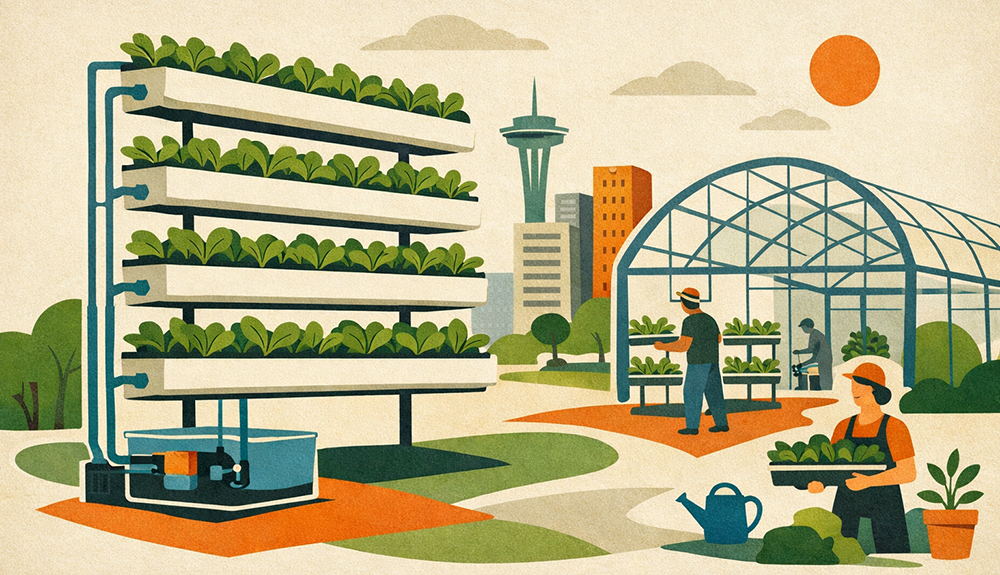
Space-Efficient Vertical Arrangements: NFT channels stack vertically easily, maximizing production in limited floor space. Urban operations and greenhouse producers often employ vertical NFT configurations for space optimization.
Low Growing Media Requirements: Plants typically start in small rockwool cubes or similar minimal substrate. This eliminates heavy media costs and reduces system weight dramatically compared to media beds.
Streamlined Harvesting: Like raft systems, plants lift directly from channels without disturbing neighbors. Continuous harvest of herbs or cut-and-come-again greens simplifies significantly.
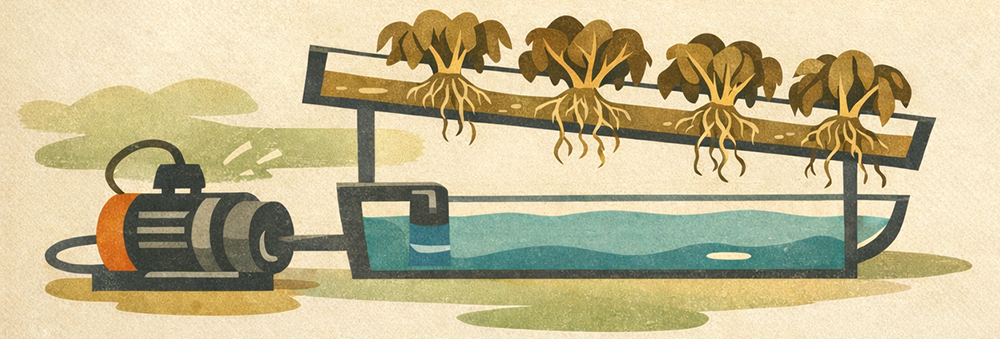
Extreme Pump Failure Sensitivity: NFT’s greatest weakness is catastrophic vulnerability to pump failures. The thin film provides no buffering capacity; roots dry within 15-30 minutes if the flow stops. Power outages or pump malfunctions can destroy entire crops before problems are noticed.
Limited Plant Size: Only shallow-rooted plants with compact growth habits work in NFT channels. Even lettuce varieties with extensive roots can struggle; larger plants are completely impractical.
Root Clogging: As plants mature, root masses can block channels, restricting flow to downstream plants. Regular channel monitoring and occasional root pruning become necessary.
Requires Separate Biofilter: Like raft systems, NFT provides insufficient surface area for biological filtration. Dedicated biofilters add complexity and cost.
Precise Slope Requirements: Improper channel slope creates pooling or excessive flow velocity. Both conditions compromise plant health and yield.
Flow Rate: Monitor daily to ensure channels maintain proper film thickness. Clogged intakes or blocked channels create immediate problems.
pH and EC: Test 2-3 times weekly. NFTs’ low water volume means parameters can shift rapidly with water additions or fish feeding changes.
Backup Power: Critical for commercial operations. Battery backup or standby generators prevent catastrophic losses during power interruptions.
Vertical systems represent space optimization taken to its logical extreme, stacking growing zones vertically to maximize production per square foot of floor space. While “vertical” describes configuration rather than water delivery method, these systems warrant separate discussion due to their unique characteristics and urban agriculture applications.
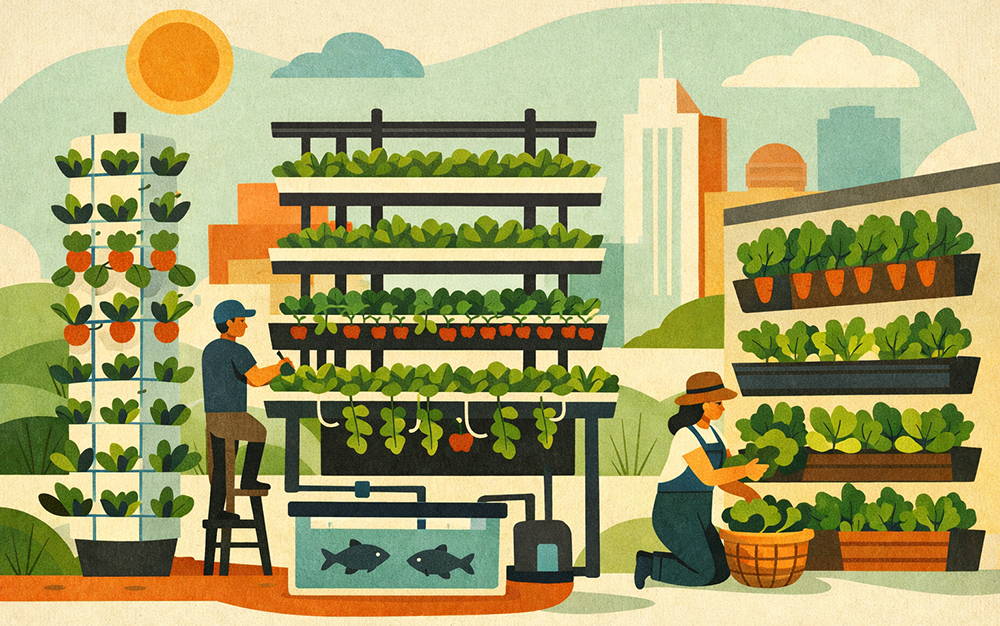
Vertical systems employ various techniques for upward arrangement:
Tower Systems: Cylindrical towers with planting pockets around the exterior. Water pumps to the top and trickles down through plant roots in descending pockets.
A-Frame Configurations: Angled NFT or gutter systems arranged in triangular profiles, providing plant access to both sides while maintaining relatively compact footprints.
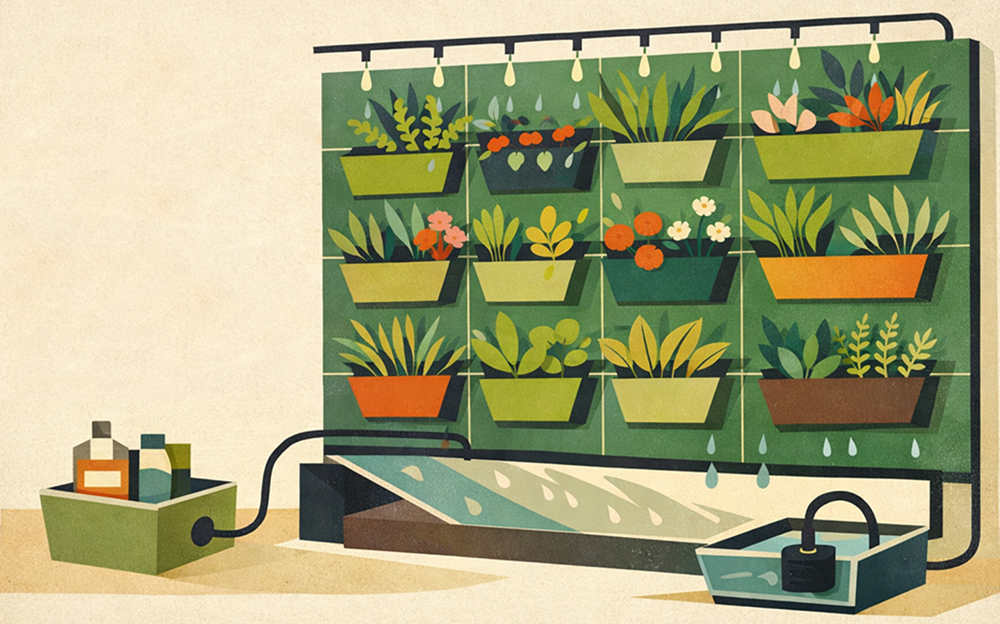
Wall Systems: Flat panels with planting pockets arranged in grids, often using drip irrigation or recirculating film techniques for nutrient delivery.
Maximum Space Efficiency: Vertical systems can produce 3-5 times more per square foot of floor space compared to horizontal configurations. Urban operations with expensive real estate find this density advantage compelling.
Accessibility: Well-designed vertical systems position plants at convenient working heights, reducing bending and physical strain during planting, maintenance, and harvesting.
Visual Appeal: The vertical orientation creates striking visual displays, particularly appealing for educational installations, restaurants, or retail environments where aesthetics matter.
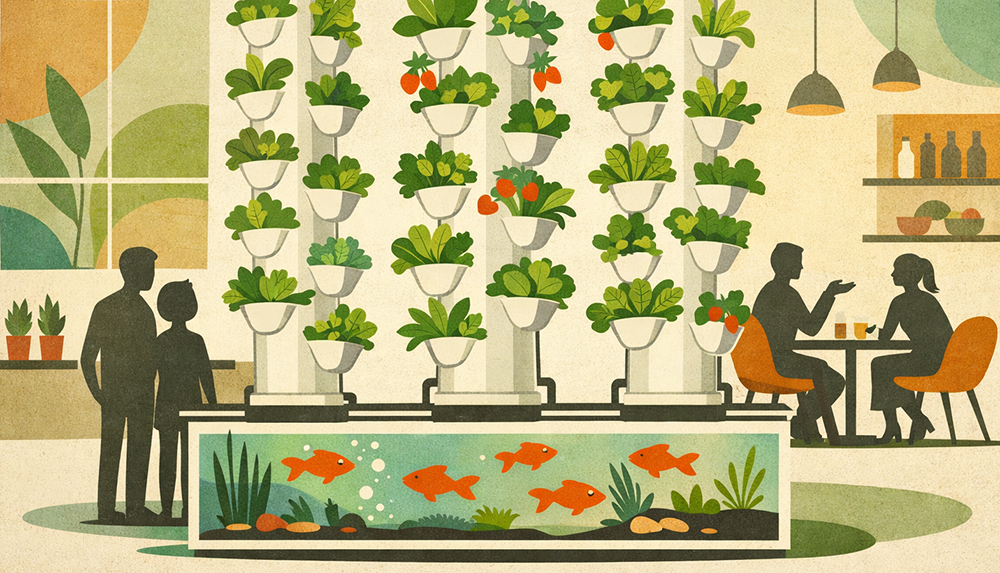
Modular Scalability: Tower-based systems often employ modular designs enabling incremental expansion. Starting small and adding towers as resources allow creates flexible growth paths.
Light Distribution Challenges: Ensuring adequate light reaches all plant positions, particularly lower levels, requires careful system orientation, supplemental lighting, or both. Light gradients often cause uneven growth across vertical arrangements.
Plumbing Complexity: Vertical distribution systems require more complex plumbing than horizontal alternatives. Multiple distribution points, level-appropriate pressure management, and drainage coordination add installation complexity.
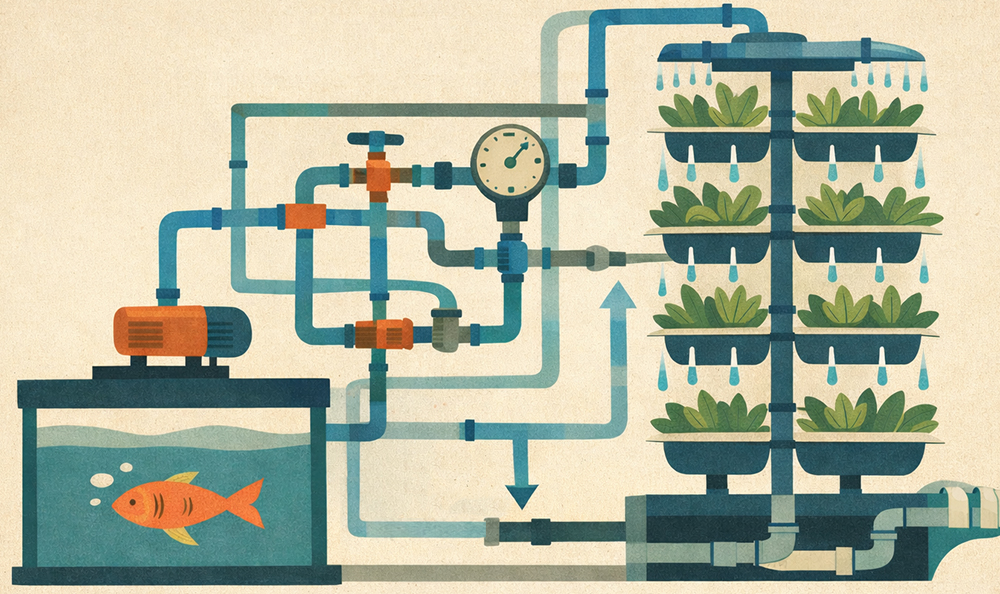
Limited Plant Types: Most vertical systems accommodate only compact, shallow-rooted plants. The space constraints and limited root volume make fruiting plants impractical in most vertical configurations.
Higher Installation Costs: The specialized components, complex plumbing, and often necessary supplemental lighting increase initial investment compared to traditional horizontal systems.
Maintenance Access: Servicing upper components, especially in tall towers, requires ladders, platforms, or specialized equipment. This accessibility challenge complicates routine maintenance and troubleshooting.
Light Uniformity: Monitor plant growth across vertical positions. Dramatic size variations indicate light distribution problems requiring adjustment.
Flow Distribution: Verify consistent flow to all growing positions. Clogged lines or inadequate pressure commonly affect upper positions in vertical arrangements.
Hybrid systems combine multiple aquaponics methods within integrated designs, leveraging each type’s strengths while mitigating individual weaknesses. Commercial operations increasingly employ hybrid approaches for operational efficiency and crop diversity.
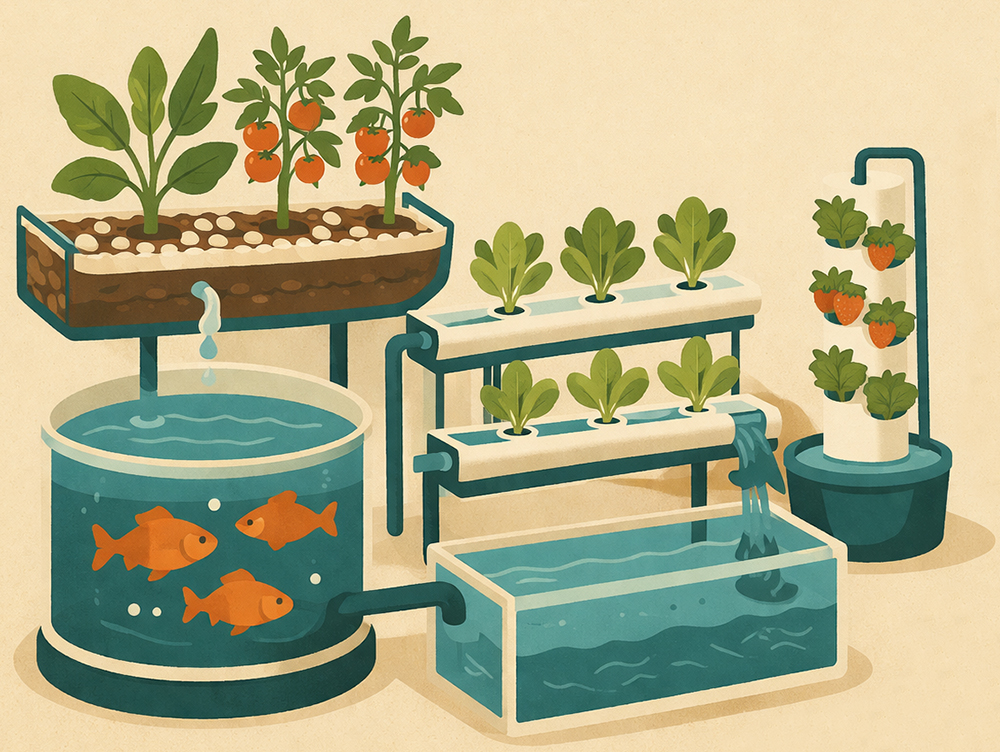
Media Bed + Raft System: The most popular hybrid uses media beds for biological and mechanical filtration, while raft beds handle high-density leafy green production. Water flows from fish tanks through media beds (providing filtration), then to raft beds (providing plant growing area), and back to fish tanks. This configuration captures media bed advantages (excellent biofiltration, mechanical filtration, crop diversity) with raft bed benefits (high-density production, rapid harvest cycles). The combination allows single operations to produce both leafy greens commercially and mixed crops (tomatoes, peppers, herbs) for market diversity.
Media Bed + NFT System: Similar principles apply; media beds handle filtration, while NFT channels provide space-efficient herb production. This hybrid suits commercial herb operations wanting robust biofiltration with vertical NFT growing capacity.
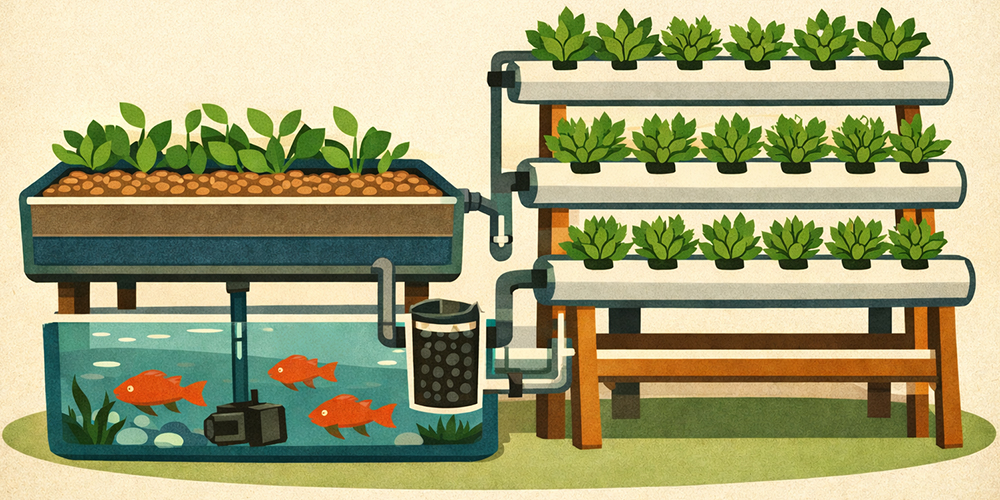
Multi-Stage Raft Systems: Some commercial operations employ multiple sequential raft beds at different nutrient concentrations. Young transplants enter low-nutrient beds, progress to medium-nutrient beds, and finish in high-nutrient beds. This staged approach optimizes growth conditions for plant development phases.
Optimized Functionality: Each component performs its optimal function. Biofiltration happens where most effective (media beds), and plant production happens where most efficient (raft/NFT).
Crop Diversity: Hybrid systems grow everything from microgreens to large fruiting plants within single integrated operations, providing market flexibility unavailable in single-type systems.
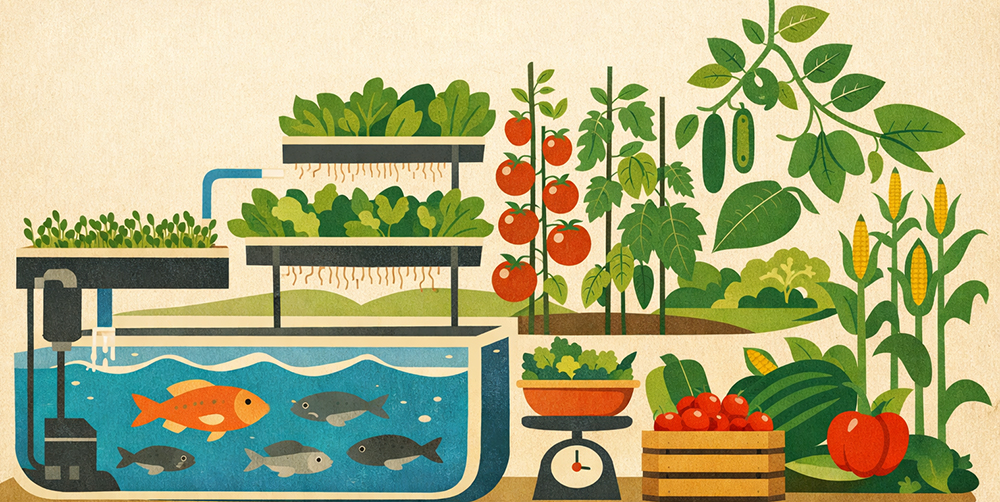
Risk Distribution: Component redundancy provides backup. If one growing area experiences disease or pest problems, other areas continue producing.
Scalability: Hybrid systems scale efficiently, adding raft beds to existing media bed systems or extending NFT channels to established operations allows incremental expansion.
Increased Complexity: Multiple system types mean multiple monitoring points, different maintenance schedules, and more components that could fail. This complexity demands greater technical competency and time investment.
Higher Initial Investment: Building complete hybrid systems requires purchasing components for multiple system types, increasing startup costs compared to single-method approaches.
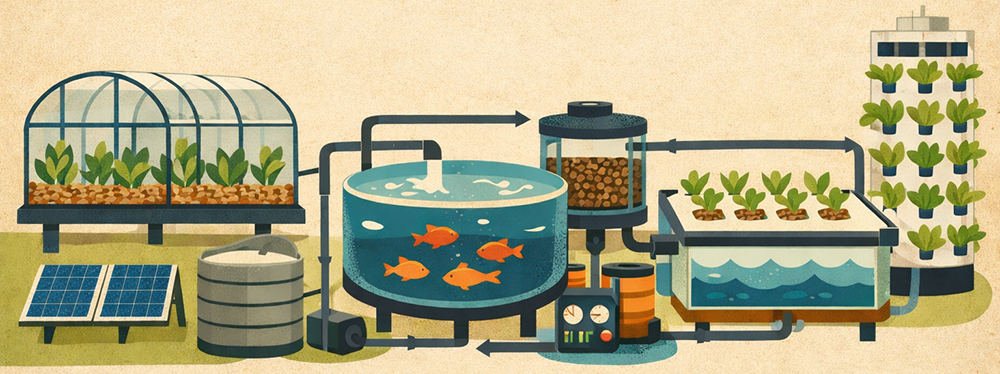
Planning Requirements: Proper hybrid system design demands understanding how components integrate, sizing components appropriately, and ensuring balanced flow between system sections. Poor planning creates bottlenecks or inefficiencies.
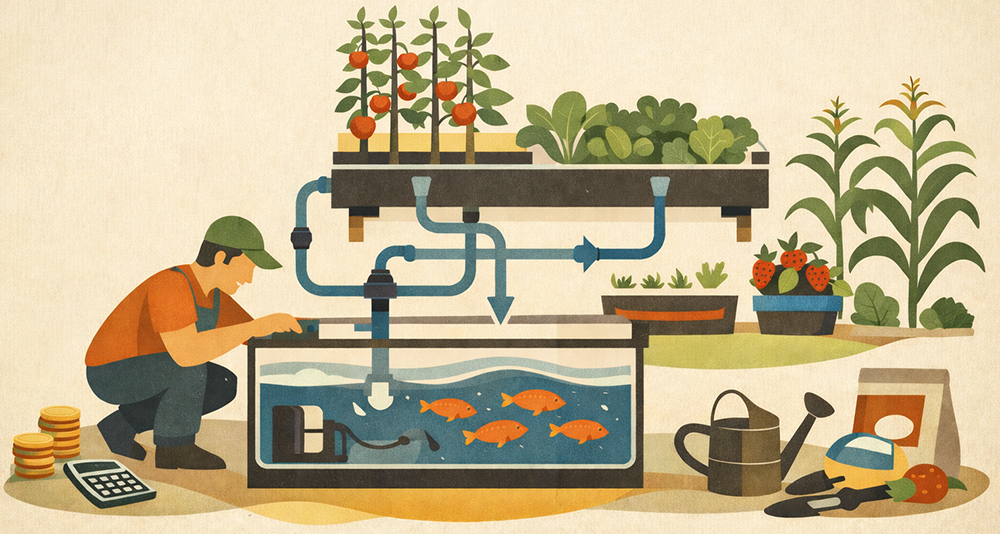
The best aquaponics system is not determined by the most sophisticated or well-liked design; rather, it is determined by the design that best suits your particular objectives, level of experience, available time for system management, physical space, budget, and target crops.
Are you prepared to put precision aquaponics monitoring into practice? For more information about our pH probes, conductivity sensors, dissolved oxygen meters, and comprehensive monitoring solutions made for growers overseeing intricate living ecosystems that require laboratory-grade accuracy, get in touch with the top-notch staff at Atlas Scientific.
The best aquaponics systems balance reliability, efficiency, and crop versatility. Media beds suit beginners, rafts maximize leafy-green production, NFT and vertical systems save space, while
Maintaining the correct pH inside a bioreactor is essential for successful fermentation, cell culture, and bioprocess optimization. Even small pH fluctuations can dramatically affect enzyme