

Blog
Best pH Sensor for Bioreactors
Maintaining the correct pH inside a bioreactor is essential for successful fermentation, cell culture, and bioprocess optimization. Even small pH fluctuations can dramatically affect enzyme







Deficiencies of calcium in plants are rarely due to the absence of calcium in the soil, but more so due to the uptake process and the uptake process balance, and the environmental equilibrium. By recognizing physiologic cues, applying appropriate and timely interventions, and monitoring the crops, the growers can mitigate the damage and maintain healthy crops from season to season.
Calcium deficiency creates havoc for crops, leading to heavy financial loss to farmers. A classic sign would be the withering of tomato plants and rot near the base, which is an indicator of calcium deficiency.

Coupled with the huge financial strain, calcium deficiency is extremely common, and around 600 million crops suffer from it worldwide. What many people don’t seem to know is that the disorder is never a result of a lack of calcium in the soil. Rather, it is a deficiency that is a result of a much more complex and interwoven set of issues.
Whereas nearly all other vital nutrients that are mobile in the plant, calcium works under rather unique physiological constraints that make deficiency symptoms both predictable and challenging to manage. Understanding these mechanisms is essential for any serious grower looking to optimize plant health.
Structural Integrity: Calcium ions form cross-links between pectin molecules in cell walls, creating the rigid framework that gives plants their strength. Without adequate calcium, new cell walls become weak and malformed, leading to the characteristic tissue breakdown we associate with deficiency.
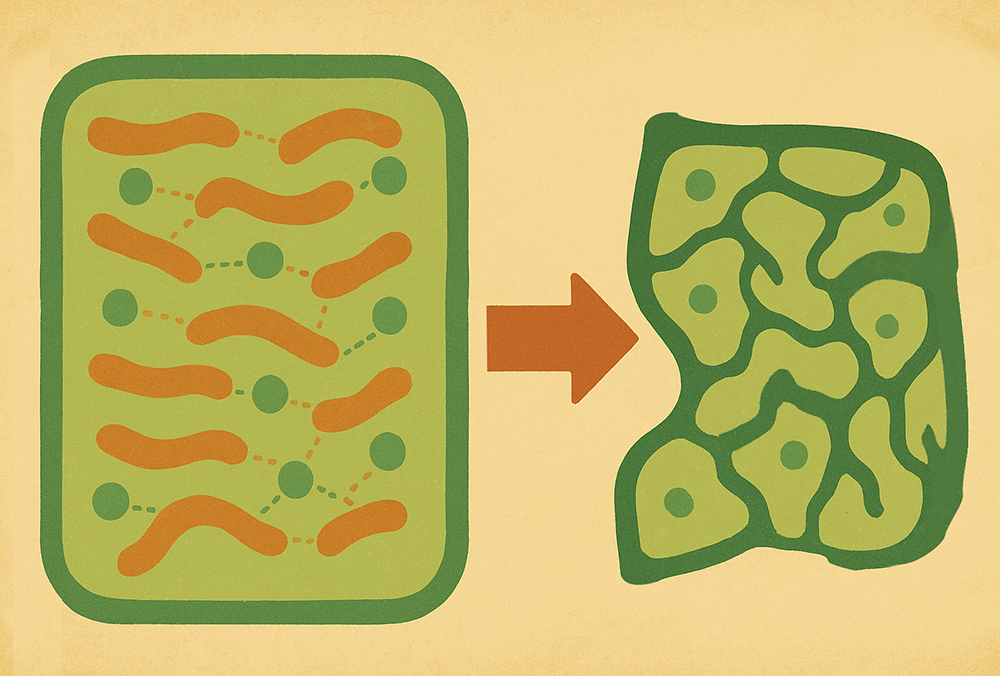
Membrane Stability: Calcium maintains the selective permeability of cell membranes by binding to phospholipids and proteins. This function is so critical that even minor calcium deficiency can disrupt nutrient uptake and cellular communication.
Enzymatic Regulation: Calcium acts as a secondary messenger, activating numerous enzymes involved in metabolism, stress response, and growth regulation. This explains why calcium-deficient plants often show multiple, seemingly unrelated symptoms.
Signal Transduction: The element plays a crucial role in how plants respond to environmental stimuli, from gravity to pathogen attacks. Calcium deficiency compromises these response mechanisms, making plants vulnerable to secondary stresses.
While most growers rely on visual signals to diagnose calcium deficiency in plants, there are advanced methods that can detect deficiency earlier.

Early-Stage Detection Techniques:
Tissue Testing Protocols: The most reliable method involves sampling young, actively growing tissues during peak uptake periods (typically mid-morning). Optimal calcium levels in leaf tissue should range from 0.5% to 2.0% dry weight, depending on the species. Levels below 0.3% indicate severe deficiency.
Electrical Conductivity Monitoring: Changes in plant electrical conductivity can indicate calcium deficiency before visual symptoms appear. Calcium-deficient plants often show altered conductivity patterns due to compromised membrane integrity.
Chlorophyll Fluorescence Analysis: Advanced growers use chlorophyll fluorometers to detect stress before visible symptoms develop. Calcium deficiency affects photosystem II efficiency, creating detectable changes in fluorescence patterns.
Different plant families exhibit unique calcium deficiency patterns:
Solanaceae (Tomatoes, Peppers, Eggplants): Blossom end rot is the classic symptom, appearing as dark, sunken lesions on fruit tips. However, earlier indicators include irregular leaf margins and stunted terminal growth.

Brassicaceae (Cabbage, Broccoli, Kale): Internal tip burn in heading crops, where inner leaves develop brown necrotic areas. External leaves may show marginal chlorosis progressing to necrosis.
Rosaceae (Strawberries, Apples): Leaf tip burn and reduced fruit quality, including bitter pit in apples and reduced strawberry firmness. Young leaves often display cupping or distortion.
Cucurbitaceae (Cucumbers, Squash, Melons): Fruit deformation and reduced shelf life, along with characteristic leaf edge burning. Stems may develop weak points leading to lodging.
Calcium deficiency in plants results from a complex interaction of environmental factors that affect calcium uptake and transport. Understanding this matrix is essential for effective treatment.
Calcium movement within plants depends entirely on transpiration-driven mass flow. This creates several vulnerability points:

Transpiration Rate Dependencies: Low humidity, high temperatures, or poor air circulation can reduce transpiration rates, limiting calcium transport to growing points. Conversely, extremely high transpiration rates can create salt buildup that interferes with calcium uptake.
Root Zone Moisture Management: Inconsistent watering patterns disrupt calcium flow. Even brief drought stress can trigger deficiency symptoms that persist for weeks, as calcium cannot redistribute from older tissues.
Water Quality Considerations: High sodium or magnesium levels in irrigation water can interfere with calcium uptake through competitive inhibition at root surfaces.
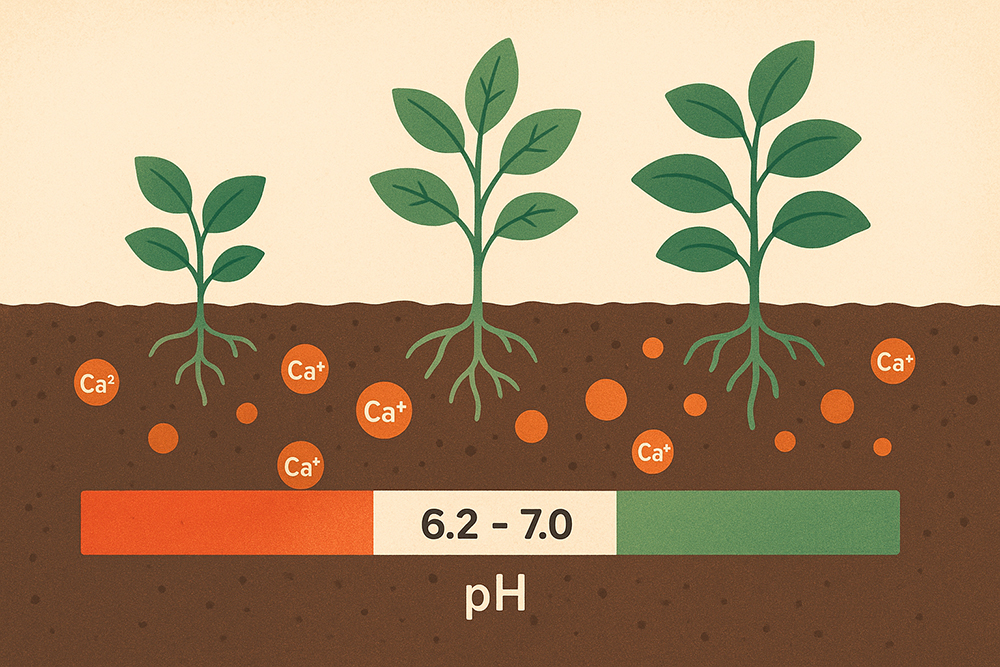
The relationship between pH and calcium availability is more complex than simple solubility curves suggest. While calcium solubility increases at lower pH levels, most plants uptake calcium most efficiently between pH 6.2-7.0. Outside this range, other factors often limit uptake despite adequate solubility. Precise pH monitoring using professional-grade instruments like the Atlas Scientific Consumer Grade pH Probe ensures you maintain optimal conditions for calcium uptake.
For detailed guidance on pH management in hydroponic systems, see our article: Why is pH Important for Hydroponics?
High potassium or magnesium levels can block calcium uptake sites on root membranes. This antagonism explains why calcium deficiency sometimes appears in soils with adequate calcium levels. Boron deficiency can exacerbate calcium deficiency symptoms by impairing calcium utilization within plant tissues.
Similarly, adequate phosphorus levels are necessary for efficient calcium metabolism.
Effective treatment of calcium deficiency in plants requires targeted approaches based on accurate diagnosis and environmental assessment.
Foliar Calcium Applications: For rapid symptom relief, apply calcium chloride solutions (0.5-1.0%) directly to affected foliage during cooler periods. This bypasses root uptake limitations but provides only temporary relief.
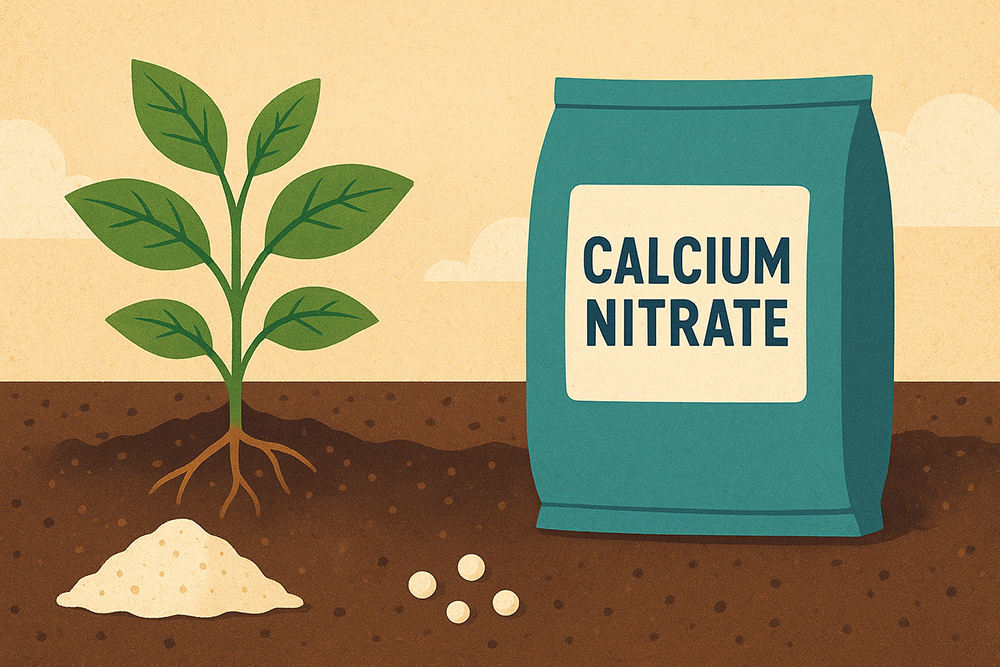
Root Zone Amendments: Calcium nitrate remains the most effective soil amendment, providing both calcium and nitrogen while maintaining neutral pH effects. Application rates should be based on soil testing rather than visual symptoms.
Hydroponic Adjustments: In soilless systems, maintain calcium levels between 150-200 ppm in nutrient solutions. Monitor electrical conductivity closely using precision EC meters like those from Atlas Scientific’s conductivity probe line, as calcium additions can push total dissolved solids to problematic levels. Regular pH monitoring with laboratory-grade pH sensors ensures optimal calcium availability.
Learn more about optimizing hydroponic nutrient solutions in our comprehensive guide: Nutrient Solution For Hydroponics – The Ultimate Guide
Integrated Nutrient Management: Develop feeding programs that maintain optimal calcium, potassium, and magnesium ratios (typically 3:2:1 in soil systems). This prevents competitive inhibition while ensuring adequate availability.
Environmental Control Optimization: Implement climate control strategies that maintain consistent transpiration rates. This includes managing day/night temperature differentials, humidity levels, and air circulation patterns.
Soil Structure Enhancement: Improve soil physical properties through organic matter additions and appropriate tillage practices. Better soil structure promotes more uniform water distribution and calcium uptake.
Modern precision agriculture demands sophisticated monitoring approaches that predict and prevent calcium deficiency rather than simply treating symptoms.

Successful calcium deficiency management requires reliable measurement tools. Atlas Scientific’s laboratory-grade sensors provide the precision needed for professional growing operations:
For comprehensive water testing guidance, explore our resource: Hydroponic Water Testing Basics
Ion-Specific Electrodes: Deploy calcium-specific electrodes in root zones to monitor real-time calcium availability. For comprehensive monitoring, combine these with Atlas Scientific’s precision pH probes and conductivity sensors to track the complete chemical environment affecting calcium uptake.
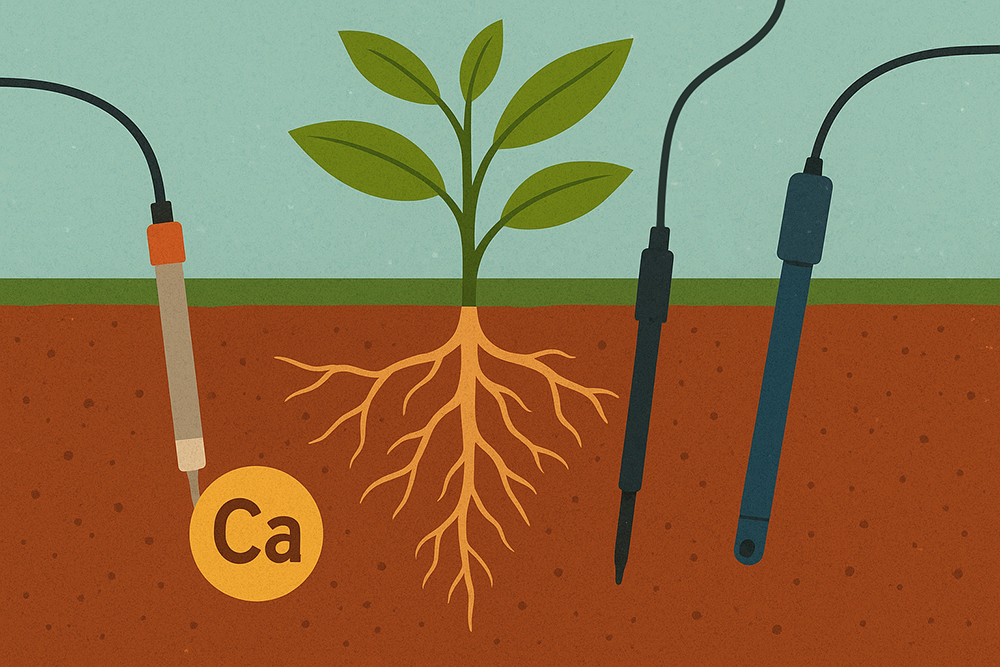
Electrical Conductivity Monitoring: Changes in electrical conductivity indicate nutrient imbalances before they become critical. Atlas Scientific’s conductivity probes provide laboratory-grade accuracy for tracking these subtle changes.
Understanding EC’s role in plant health: How Does Electrical Conductivity Affect Plant Growth?z
Degree Day Calculations: Develop calcium demand models based on growing degree days and crop development stages. This allows proactive nutrient management rather than reactive treatments.
Stress Index Integration: Combine multiple environmental factors (temperature, humidity, radiation, wind) into stress indices that predict calcium deficiency risk.
Phenological Timing: Time calcium applications to coincide with periods of highest demand, such as fruit set and rapid vegetative growth phases.
Understanding the economic implications of calcium deficiency helps justify investment in prevention and monitoring systems.
Research indicates that calcium deficiency can reduce yields by 15-40% depending on crop type and severity. For high-value crops like strawberries or tomatoes, this translates to significant economic losses that far exceed prevention costs.

Beyond yield losses, calcium deficiency reduces fruit quality, storage life, and market value. Blossom end rot alone can make entire harvests unmarketable.
Calcium-deficient plants are more susceptible to fungal and bacterial diseases, leading to additional treatment costs and potential crop losses.
Investment in precision calcium management and high-quality probes pays for itself within one growing season through:

Successful management of calcium deficiency in plants requires understanding that this disorder is rarely about simple calcium shortage. Instead, it’s about creating optimal conditions for calcium uptake, transport, and utilization within plant tissues. By combining scientific understanding with precision monitoring and targeted interventions, growers can eliminate calcium deficiency as a limiting factor in crop production.

Investment in proper calcium management pays dividends not just in yield and quality, but in overall plant health and resilience. For growers serious about optimizing their operations, mastering calcium nutrition represents a critical step toward sustainable, profitable production systems.
Ready to implement precision calcium management? Contact the world-class team at Atlas Scientific to learn more about the line of pH probes, conductivity sensors, and monitoring solutions designed for professional growers who demand laboratory-grade accuracy in field conditions.
For more technical insights on plant nutrition and hydroponic systems, explore these Atlas Scientific resources:
Maintaining the correct pH inside a bioreactor is essential for successful fermentation, cell culture, and bioprocess optimization. Even small pH fluctuations can dramatically affect enzyme

Reverse osmosis water is best for hydroponics, providing near-zero EC and removing contaminants. It offers reliable results, precise nutrient control, and typically pays for itself