

Blog
Best pH Sensor for Bioreactors
Maintaining the correct pH inside a bioreactor is essential for successful fermentation, cell culture, and bioprocess optimization. Even small pH fluctuations can dramatically affect enzyme






Soil pH is the single most important factor in plant health, dictating nutrient availability, growth, and yield. Too acidic or alkaline, and even fertile soil can leave plants starved.
Underneath every lush garden, productive farm, and healthy landscape lies good soil – so what role does pH play? All nutrients available, plant health, and the success or failure of your agricultural program boil down to this ‘apparent’ simple measurement.
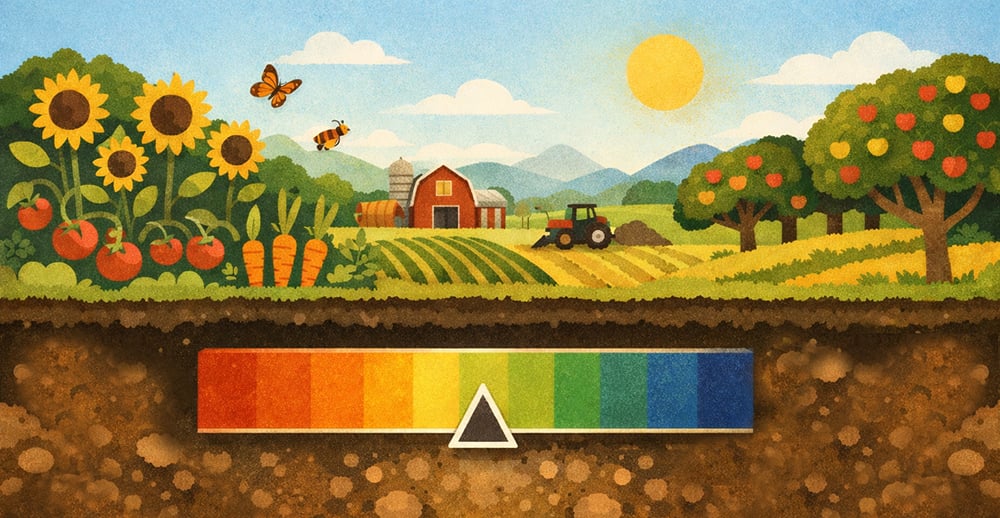
Knowing the importance of pH in soil can help a good gardener become a great one, and struggling gardeners can turn their operations into a success.
Soil pH measures the concentration of hydrogen ions, ranging from 0 to 14, where 7 is considered neutral. Anything less than 7 expresses an acidic environment, and anything above 7 is considered alkaline soil.
This logarithmic aspect is important because each increment equals a tenfold increase in acidity. For example, pH 6 is ten times more acidic than pH 7, and as far as soil is concerned, pH 5 would be one hundred times more acidic.
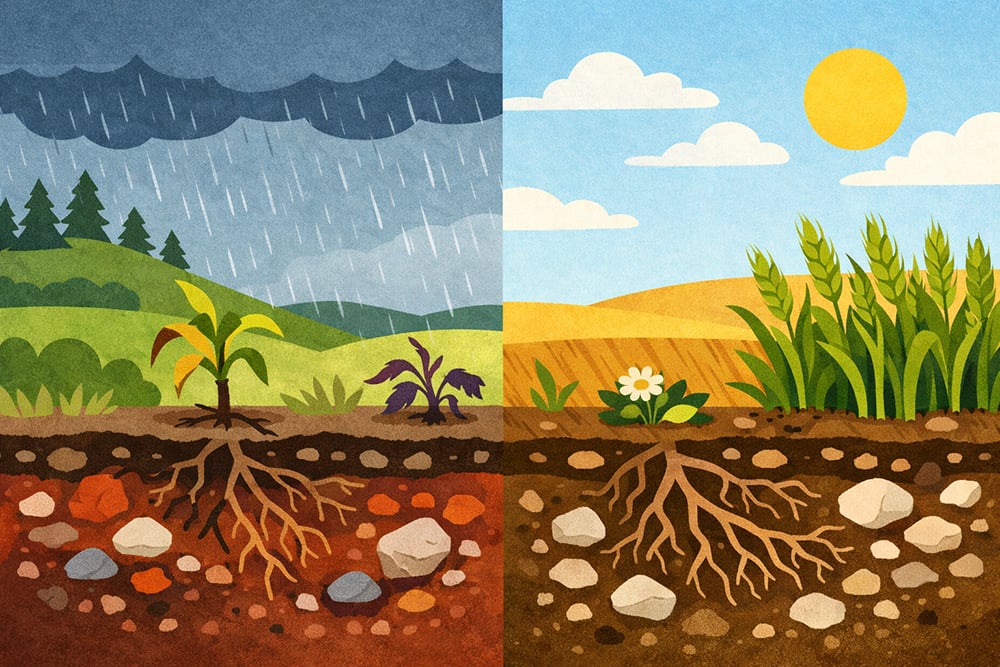
Agricultural soils have pH levels ranging from 4 to 8, with extreme measures outside the range possible. Soils in high-rainfall regions are inherently acidic because precipitation leaches alkaline minerals. On the other hand, in dry areas usually alkali soils usually occur due to poor leaching and mineral precipitation.
The test process, especially the pH measuring method, has a great influence on measurement results. pH is usually 0.7 units higher than pHCa, which is the measurement of soil acidity or alkalinity when using a calcium chloride (CaCl2) solution as the extracting liquid instead of pure water. While commercial laboratories include their testing protocol, most home gardeners are unaware of these discrepancies, which can be confusing when reviewing the analysis.
Soil pH is nature’s doorkeeper to the availability of nutrients. Chemistry occurring at various pH values either compounds nutrients into unusable states or frees them for plant use. This is what we call nutrient solubility, which means that, despite a soil being full of nutrients, the plants can still exhibit symptoms of deficiencies.
When pH values drop below 5.5, aluminum and manganese solubilize or erode at excessive rates to enter plant roots in toxic amounts that inhibit growth. At the same time, nutrients like phosphorus combine with aluminum and iron, creating insoluble compounds that plants cannot absorb. Calcium and magnesium become less available, resulting in deficiencies despite sufficient soil reserves.
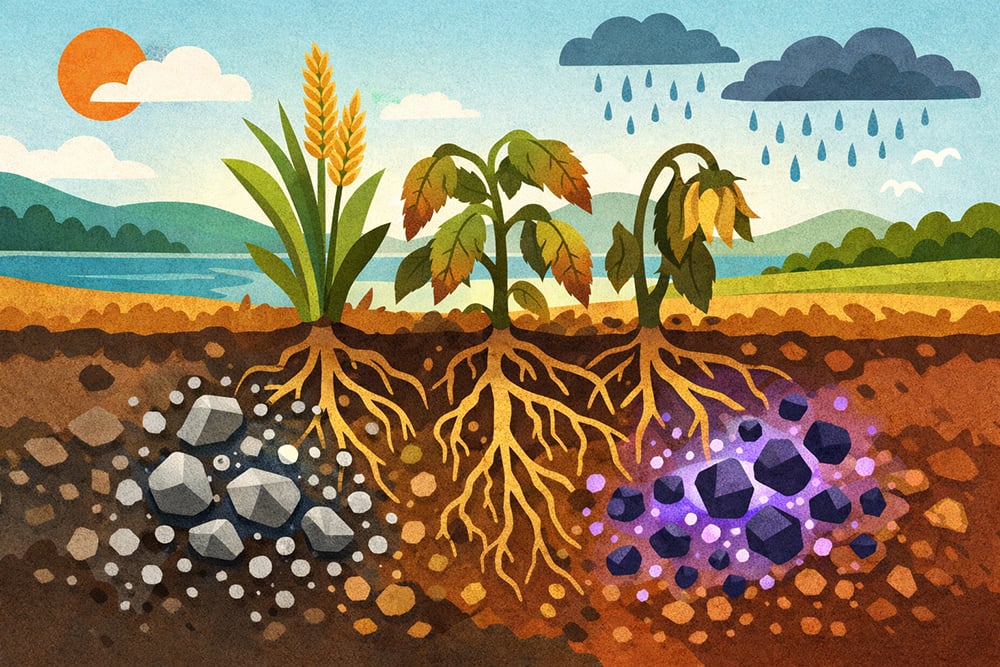
Alkaline soils (over pH 7.5), by contrast, cause opposite problems. Iron, manganese, zinc, and boron become chemically locked in an unavailable form, and deficiencies can occur even with adequate supplies. Plants in high pH soils are often also affected by iron deficiency (interveinal chlorosis), where the leaves yellow but the veins remain green.
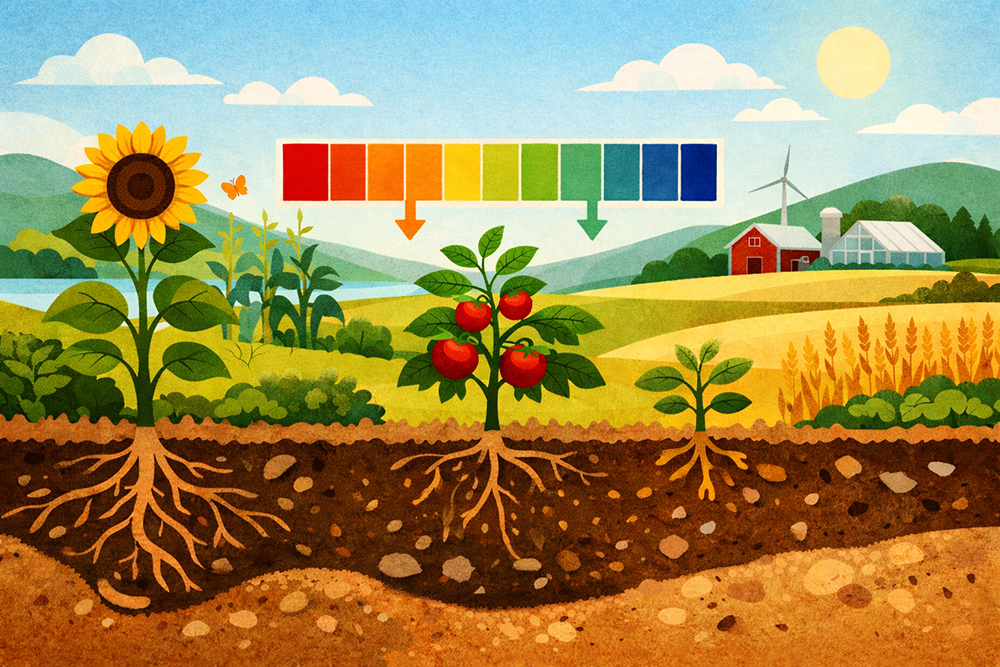
Different plants develop under differing soil conditions, and plants also have specific pH preferences based on the environment they adapted to. Knowing these demands can prevent costly errors and make a world of difference in plant performance.
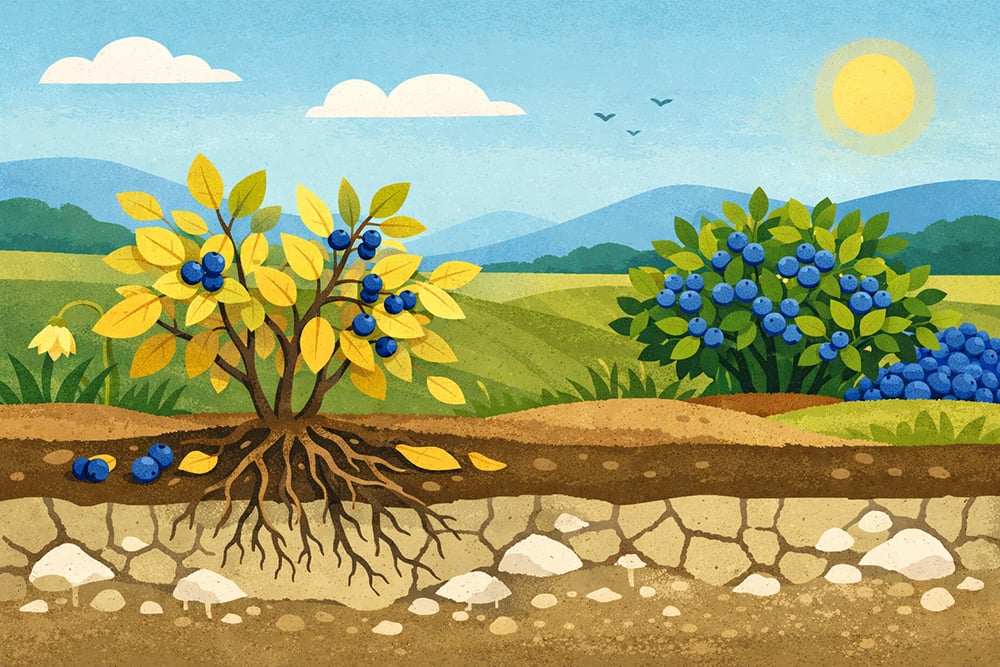
Acid-loving plants, including blueberries, azaleas, and rhododendrons, prefer a pH of 4.5 to 5.5. These species evolved to serve us as a perfect root system that we supposedly can’t kill. Blueberries cannot thrive in alkaline soil as they won’t grow and will produce yellow leaves and less fruit.
Many other veggies’ optimal pH is on the acidic side to neutral, between 6.0 and 7.0. Tomatoes grow best in a pH range of 6.2 to 6.8, as that’s when nutrients are readily available for vegetative growth and production of fruit. Brassicas, such as cabbage and broccoli, on the other hand, will be happy with a slightly higher pH, as long as it does not go above 8. And some plants thrive best in acidic soils to avoid scab disease, such as potatoes.
Established lawn grasses prefer a pH of 6.0 to 7.0, but some are more narrow in their preferences. Cool-season grasses such as fescue and bluegrass are happiest at a pH of around 6.5; warm-season types will tolerate a little more alkaline soil.
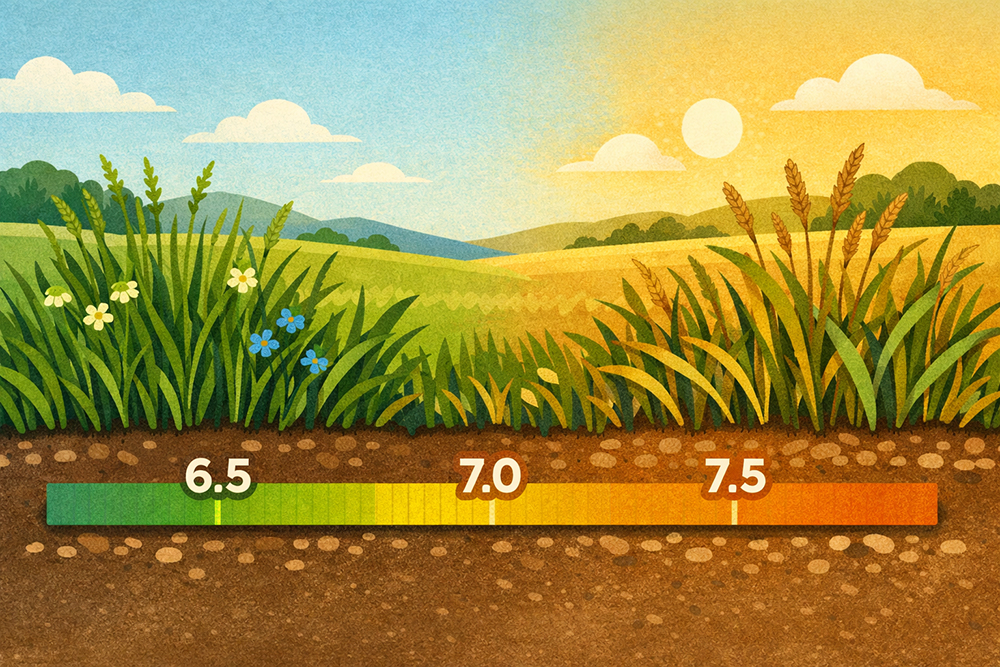
The pH of both trees and shrubs is also varied according to their origin. Indigenous species may show good growth responses in natural pH ranges because they have adapted to local soil conditions, whereas exotics will not and may need pH induction of the soil to encourage optimal growth.
Geography plays an essential role in shaping soil pH patterns via climate, geology, and vegetation interactions. Knowledge of regional tendencies will help gardeners and farmers anticipate their pH management needs.

Acidic soils usually develop in high rainfall areas as precipitation dissolves (leaches) calcium and magnesium from the soil, known as acidic leaching. Acid soil, generally found in the Northern belt and humid tropical areas, may require lime to raise the pH level and make nutrients more available.
Alkaline soils generally occur where there is low leaching in arid climates, where calcium carbonate accumulates. Western states frequently battle high-pH soils that lock up valuable micronutrients and need to be acidified for many crops.

The parent material (the original geological material) is also important in the development of pH. Limestone-based or other calcium-rich soils tend to be more alkaline, while granite and sandstone-based based are usually acidic. To be a successful grower, knowledge of regional geology is useful to estimate the possible pH.
Accurately measuring pH is the cornerstone of successful soil management. There are different test methods for different applications, and each of them has its own benefits.
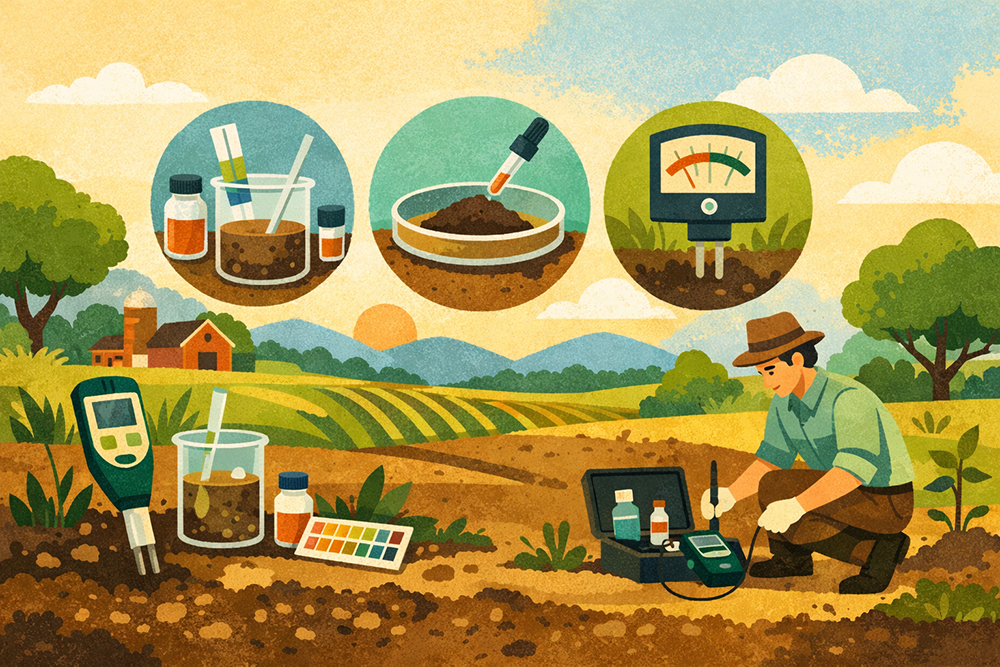
Home testing kits (like a Water pH Test Kit) are readily available that give rapid, cheap pH estimates based on color-change with the aid of colorful indicators. As easy as they are to use for general testing, these kits may be insufficiently accurate for fine-tuning pH. Accuracy levels depend on the specific product and user skill.
Digital pH meters are much more accurate and easier to use than test kits. Good quality pH meters can produce accurate readings if properly calibrated and maintained; however, they need to be calibrated frequently, and electrodes should not be damaged. There are many different types of pH sensors to satisfy your application needs.
Testing labs provide the most reliable and consistent results through their use of standard test methods and calibration. And as with pH, laboratory tests simply offer far more nutrient analysis of the soil’s pH so that you can make accurate management decisions.
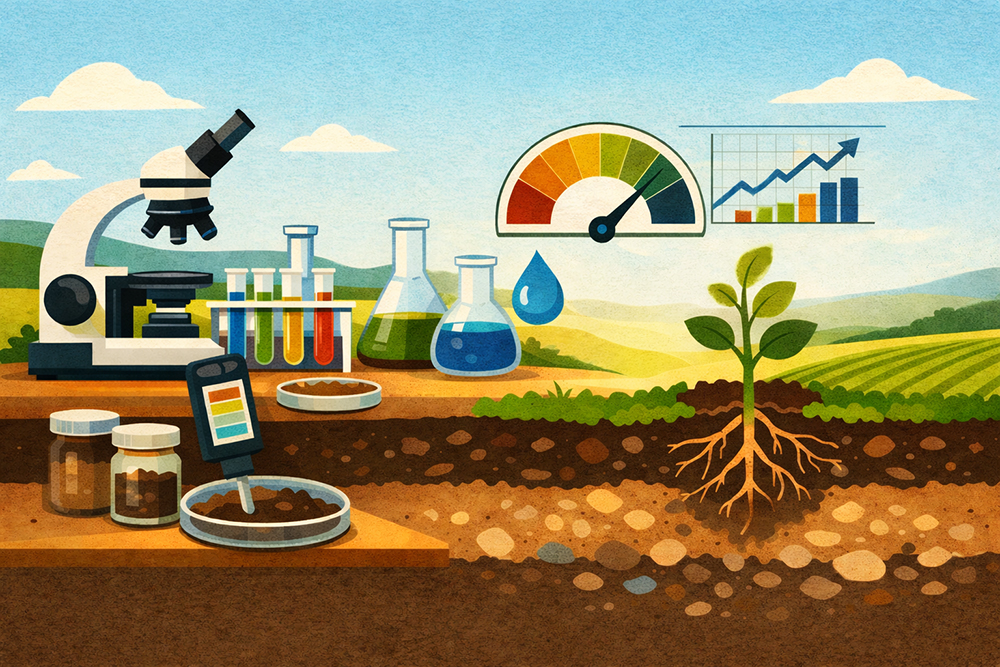
Regardless of the measurement system, the method of selecting samples from soil has a significant impact on test precision. We recommend taking samples from several different areas at a uniform depth and avoiding freshly fertilized spots or odd locations. Stir samples well before testing for accurate results.
Before you make any changes to soil pH, you need to understand soil chemistry, buffer capacity, and what amendments are the right ones. Rushing the process or using inappropriate materials can harm soil structure and plant health.
Lime application is a commonmethod to increase acidic soil pH. Agricultural limestone (calcium carbonate) is the most common and least expensive source of lime, while dolomitic limestone contains both calcium and magnesium, in addition to carbonates. Hydrated lime is faster acting, but must be handled with care because it’s caustic.
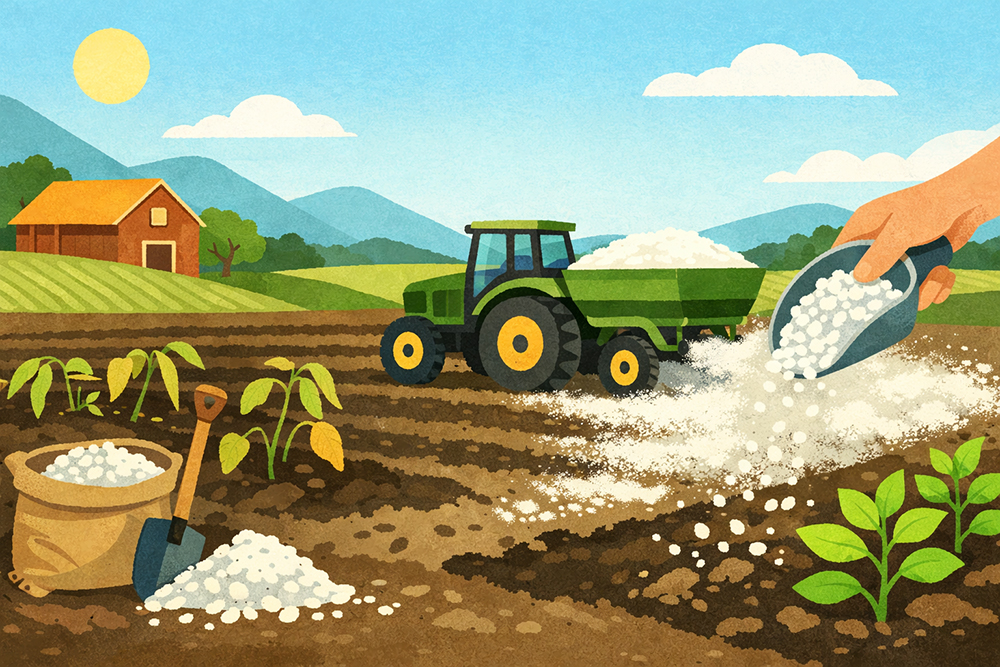
Reducing the alkalinity of your soil is more challenging and expensive than increasing the acidity soil. The least expensive long-term solution is using elemental sulfur, but the benefits take time since soil bacteria must convert it to sulfuric acid. Aluminum sulfate works more quickly, but overuse can create aluminum toxicity if you’re not careful.
Organic materials are beneficial for both acid and alkaline soils, slowly working to moderate extreme pH levels. Well-rotted compost, aged manure, and other organic amendments add crumb structure to help hold nutrients in the soil for crops and stimulate beneficial microbial activity that improves nutrient availability.
Soil buffer capacity, which depends on clay and/or organic matter content, dictates how much amendment a soil needs to change its pH.
Light-textured sandy soils with low buffer capacity have their pH easily modified but with poor persistence. Clay soils, on the other hand, tend to resist a change in pH because of their negatively charged particles and high cation exchange capacity.
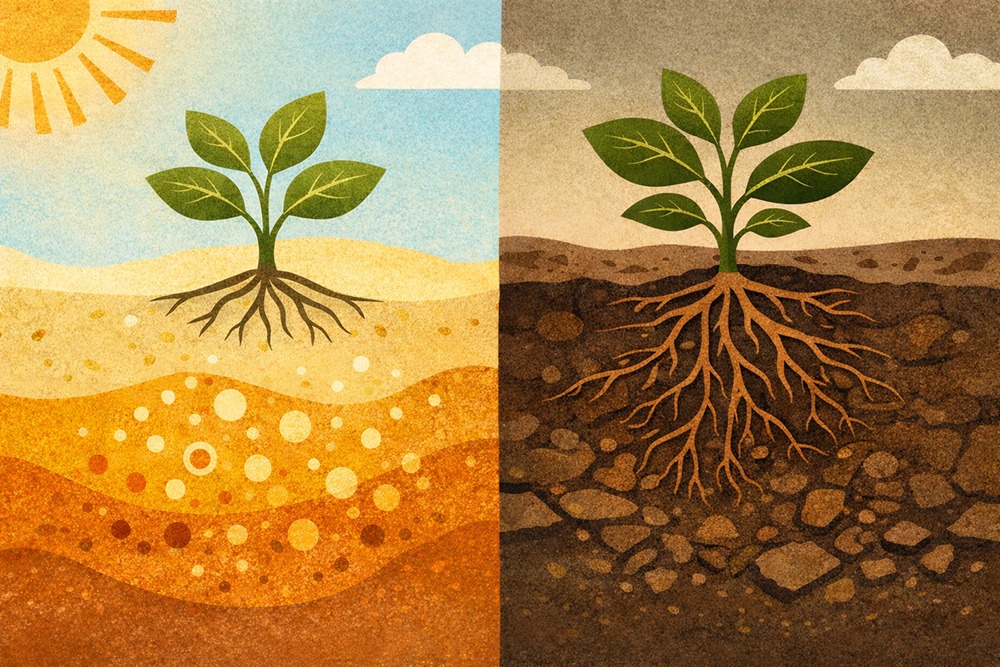
It takes the right timing and techniques to make pH adjustments work – it prevents failure and ensures the best results by understanding reaction rates in soil chemistry.
Adjusting soil pH is usually more affective when amendments are applied in the fall. Over the winer snowmelt and moisture help dissolve the materials and kickstart the chemical processes. If pH adjustments are applied in the spring, slower acting chemicals, such as elemental sulfur may not have enough time to benefit the soil before plants need to grow.
Soil-applied amendments will accelerate the rate of pH change compared with surface application only. Plowing or working lumps of lime or sulfur into the top 6-8 inches of soil will improve contact with the soil particles and make for faster reaction. Surface application is suitable for established perennials (small flowering plants), because it’s not practical to plow all of them every year, though results are slower.
It is safer and more effective to gradually change pH, rather than adjusting it all at once. Big changes can shock plant roots and throw off the balance of soil microbes. Most growers find that splitting applications over two seasons enables control of efficacy and avoids pH targets being exceeded.
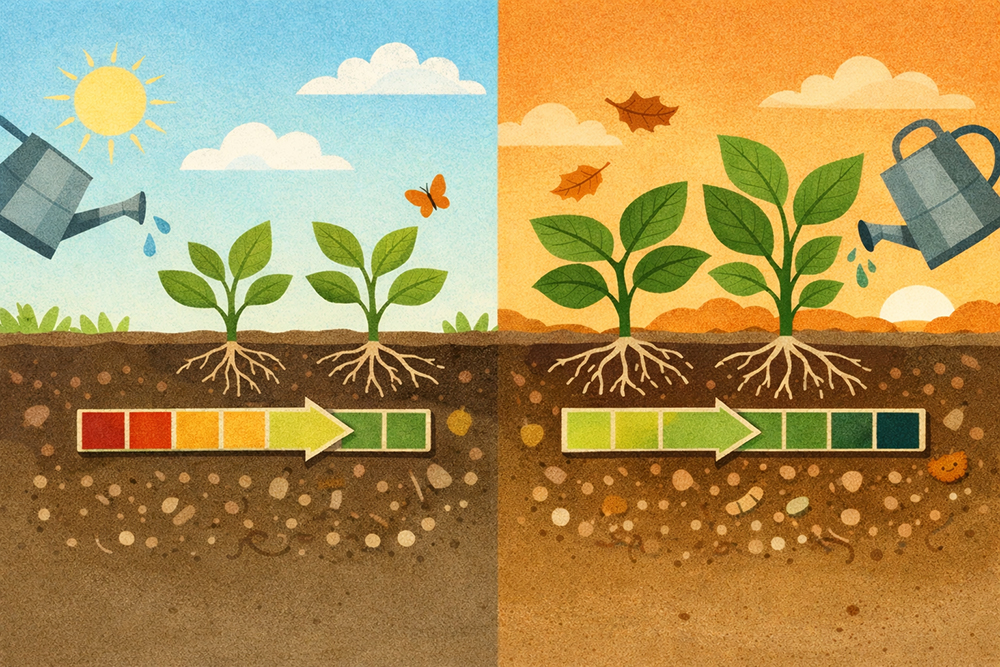
Acid-buffering predictions are used to update amendment rates throughout each year. Soil pH may also change from time to time as a result of fertilizer usage, decomposition of organic matter, and natural weathering.
When making long-term changes to soil pH, it’s critical to understand the factors that determine the changes. Regular pH monitoring ensures that the soil pH doesn’t drift beyond its optimal parameters.
Soil pH is greatly affected by the type of fertilizer you use. It also influences soil pH over time. For example, ammonium nitrogen fertilisers acidify the soil, while nitrate fertilizers have little effect on pH. When acidifying fertilizers are used, lime applications may be needed to achieve and maintain the desired pH.
Knowing the importance of pH in soil enables smarter growing decisions and more successful outcomes. This basic soil chemistry concept affects all areas of plant nutrition and growth, so proper pH management is crucial.
If you have any questions regarding our advanced soil pH testing equipment, or want to find out which pH probe will best suit your soil needs, feel free to speak to the world-class team at Atlas Scientific.


Maintaining the correct pH inside a bioreactor is essential for successful fermentation, cell culture, and bioprocess optimization. Even small pH fluctuations can dramatically affect enzyme

Reverse osmosis water is best for hydroponics, providing near-zero EC and removing contaminants. It offers reliable results, precise nutrient control, and typically pays for itself