


Blog
The 5 Best Aquaponics Systems
The best aquaponics systems balance reliability, efficiency, and crop versatility. Media beds suit beginners, rafts maximize leafy-green production, NFT and vertical systems save space, while





Lettuce, kale, basil, Swiss chard, peppers, tomatoes, and cucumbers are the best plants for aquaponics; these are selected according to the type of system, the range of fish temperatures, and the nutrient and support requirements of each crop.
With aquaponics, a symbiotic ecosystem is created in which plants filter water for fish, and fish waste provides nutrients for plants. Success, however, depends on choosing plants that are appropriate for your particular system type, fish species, and the particular limitations of striking a balance between fish health, plant nutrition, and beneficial bacteria.
Aquaponics relies on biological waste conversion, whereas hydroponics allows you to control every nutrient precisely. As a result, distinct nutrient profiles, pH requirements, and monitoring requirements are created. Many novice growers experience unsatisfactory outcomes not because aquaponics is ineffective, but because they have selected plants that are incompatible with their fish-bacteria-plant ecosystem.
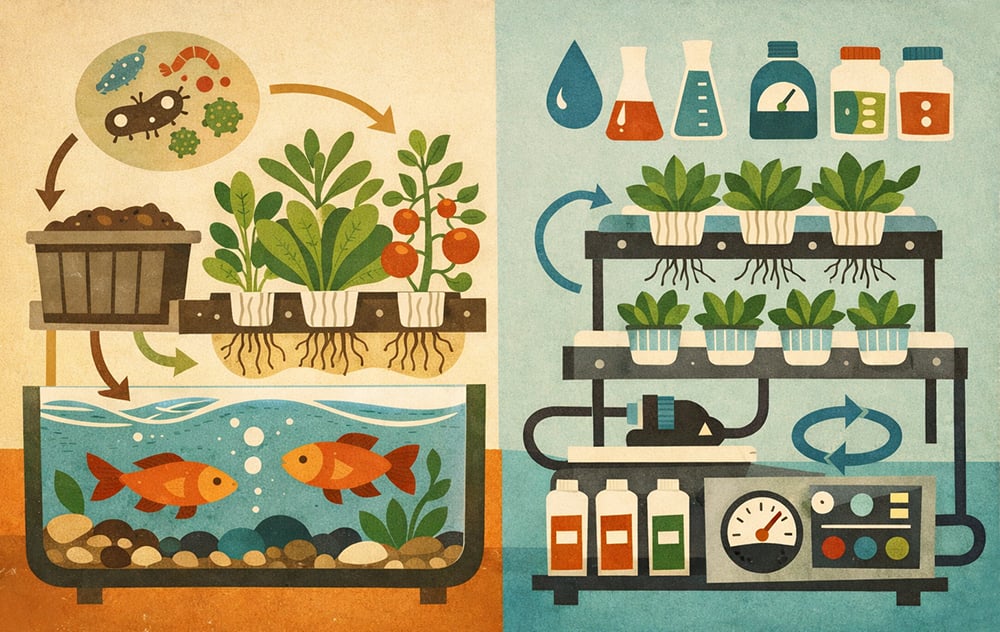
This guide helps you match crops to your particular aquaponic setup for reliable year-round harvests by organizing plant recommendations by system type and fish pairing.
Aquaponics relies on fish waste that is transformed by helpful bacteria, in contrast to hydroponics, where you can precisely control every nutrient. Maintaining a pH of 6.8–7.2 that simultaneously satisfies fish, plants, and bacteria is critical because pH directly affects nutrient availability and biological activity in aquaponic systems. Aquaponic systems also present three key challenges: nutrient levels can be unbalanced (with plenty of nitrogen but possible shortages of potassium, calcium, and iron); temperature ranges are determined by the needs of the fish rather than the plants alone; and overall conditions are less precisely controlled than in hydroponics. As a system matures, the most suitable aquaponic plants are those that can tolerate these limitations and still grow well.
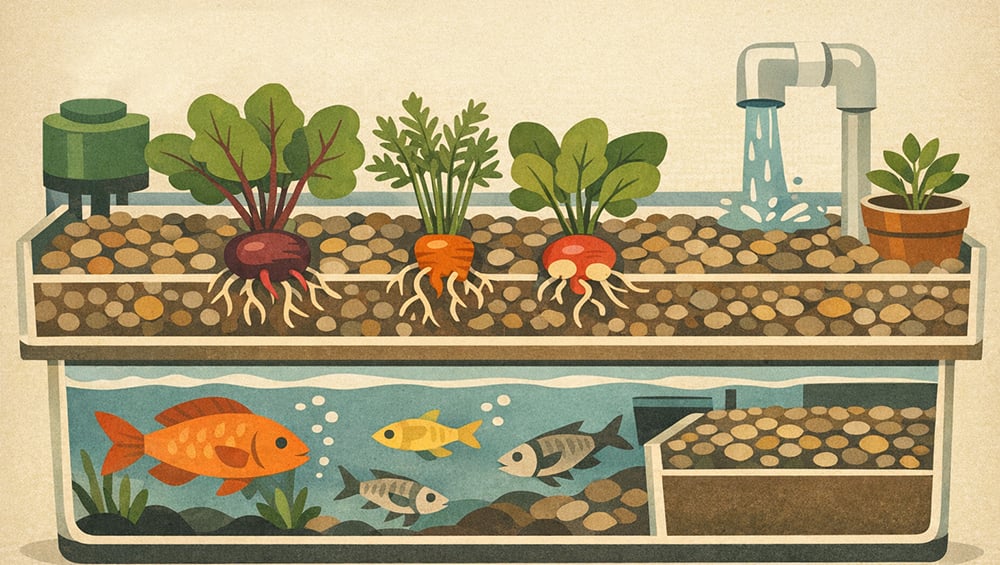
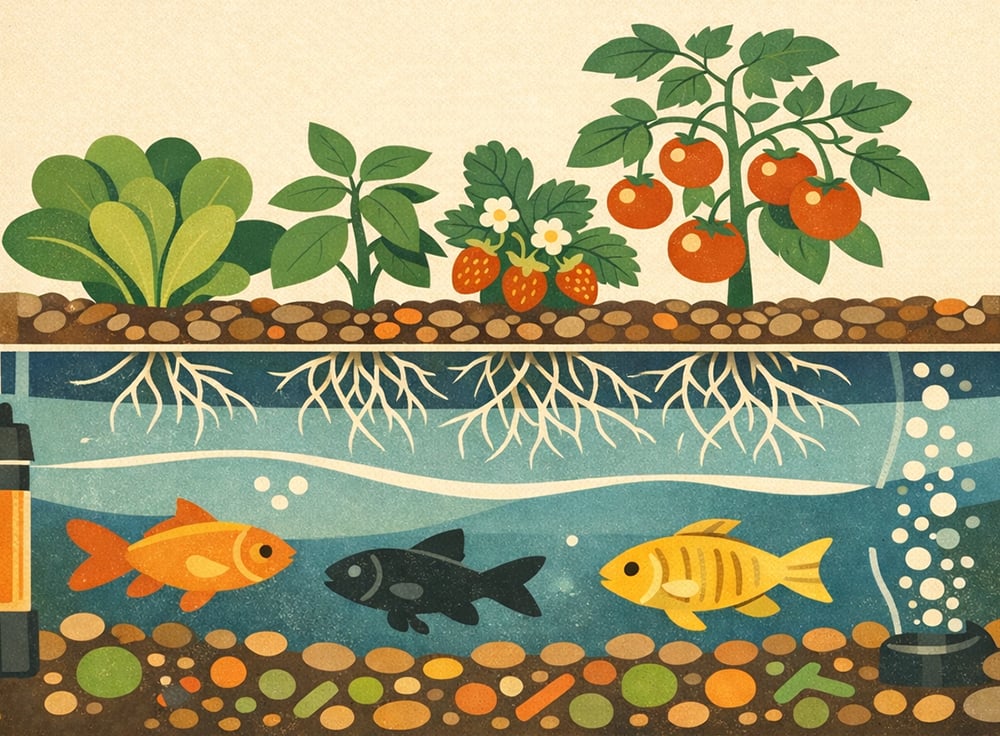
The most adaptable growing environment in aquaponics is found in media beds filled with expanded clay or lava rock, which can support anything from heavy fruiting plants to delicate herbs. The solid media creates the perfect environment for the colonization of beneficial bacteria while offering superior mechanical filtration and root support.
Tomatoes represent the pinnacle achievement for mature media bed systems, producing spectacularly when paired with warm-water fish like tilapia, requiring 70-80°F. However, they demand heavily stocked systems aged at least 8 months with robust bacterial populations.
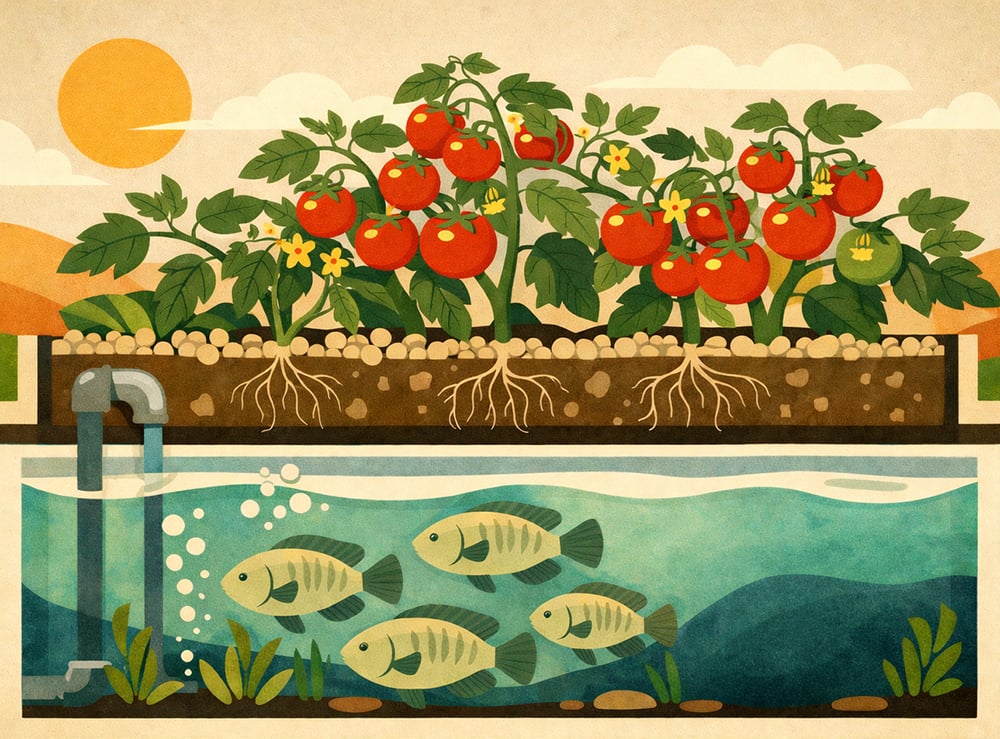
Supplementation with potassium sulfate and calcium carbonate is essential to prevent calcium deficiencies in plants (such as blossom end rot) and support fruit development. Expect 60-80 days to first fruit, with indeterminate varieties producing continuously for 9-12 months when properly supported and supplemented.
Both bell peppers and hot pepper varieties excel in aquaponics, often outperforming tomatoes due to slightly lower nutrient demands and greater disease resistance. Pair them with tilapia or catfish in systems with moderate to heavy stocking. Calcium supplementation during fruiting periods prevents blossom end rot. Peppers typically fruit in 60-90 days and produce continuously thereafter. Compact varieties perform better in space-limited systems.
Kale’s extraordinary hardiness makes it valuable for reliable year-round production in media beds. Unlike lettuce harvested as whole heads, kale produces over months through continuous leaf-by-leaf harvesting. It pairs well with goldfish and koi, preferring 60-72°F, or adapts to tilapia systems. Established systems with moderate stocking support kale well, though occasional iron supplementation prevents nutrient deficiency like chlorosis. Allow 12-inch spacing between plants for optimal air circulation. First harvest occurs at 55-75 days, then continues indefinitely.
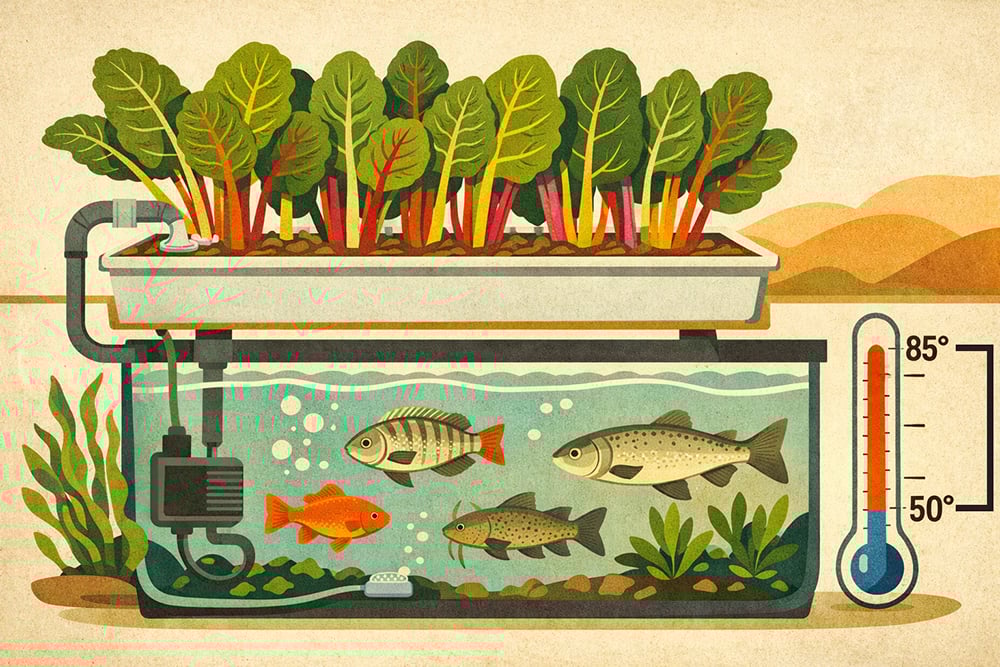
Swiss chard, particularly rainbow varieties with vibrant colored stems, combines exceptional nutrition with striking visual appeal. Its remarkable temperature tolerance (50-85°F) allows pairing with any fish species, providing year-round production flexibility. Light to moderate stocking suffices, and supplementation is rarely needed. Harvest begins at 50-60 days and continues through continuous leaf picking for months.
Parthenocarpic cucumber varieties bred for greenhouse production perform exceptionally in media beds paired with tilapia, requiring 70-85°F. These specialized cultivars produce heavily without pollination requirements. However, cucumbers are extraordinarily heavy water consumers; mature plants can drink over one gallon daily during warm periods with intense light. This demands heavily stocked systems with excellent aeration and careful monitoring of system water levels to prevent dramatic nutrient concentration changes. Potassium monitoring becomes critical. Expect the first harvest at 50-65 days.
With sufficient media depth (12+ inches), beets, carrots, and radishes produce acceptably in media beds. However, their root quality typically disappoints compared to soil cultivation, and space efficiency is poor, dedicating valuable growing positions for months to produce a single root vegetable. Better crop options exist for most systems.
Heavy fruiting plants need substantial support structures secured to media bed frames rather than relying solely on root anchoring. Periodically remove accumulated solid waste from media beds to prevent anaerobic zones that compromise beneficial bacteria. Heavy feeders like tomatoes, peppers, and cucumbers need regular potassium and calcium supplementation that lighter greens don’t require. Monitor pH and electrical conductivity (EC) in aquaponic nutrient solutions more frequently during fruiting stages when nutrient demands spike.
Deep Water Culture (DWC) systems, another name for floating raft systems, allow for quick harvest rotation and incredibly dense planting with 20–30 lettuce heads per square foot. This system type is preferred by commercial operations for the production of leafy greens because of its scalability and efficiency. Raft systems, however, restrict selection to crops that don’t need physical support and have shallow, compact root systems.
Butterhead lettuce anchors commercial aquaponic raft operations globally due to its consistent performance, shallow roots, and rapid 28-35 day harvest cycle. As a light feeder, butterhead succeeds even in newly cycled systems still developing full bacterial capacity.
It pairs beautifully with trout and goldfish, preferring 60-70°F or adapts to cooler tilapia water. Its pH tolerance of 6.0-7.0 aligns perfectly with the aquaponic compromise range, and supplementation is rarely needed. The mild flavor and delicate texture develop beautifully in raft systems with continuous root submersion.
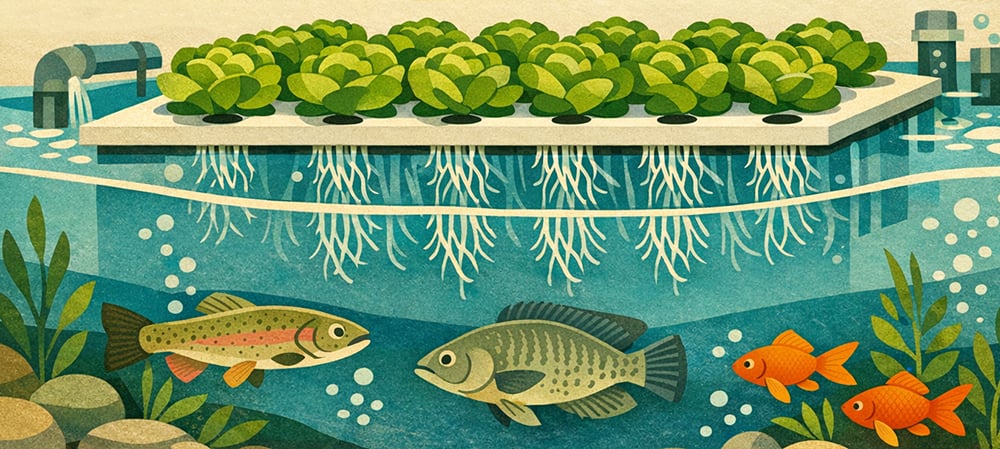
Romaine offers similar ease to butterhead but with higher heat tolerance, making it ideal for tilapia systems operating at warmer temperatures. Its upright growth habit works particularly well in raft systems, and the robust texture appeals to consumers wanting crunchier lettuce for salads and wraps. Light to moderate fish stocking suffices, supplementation is typically unnecessary, and harvest occurs at 35-45 days.
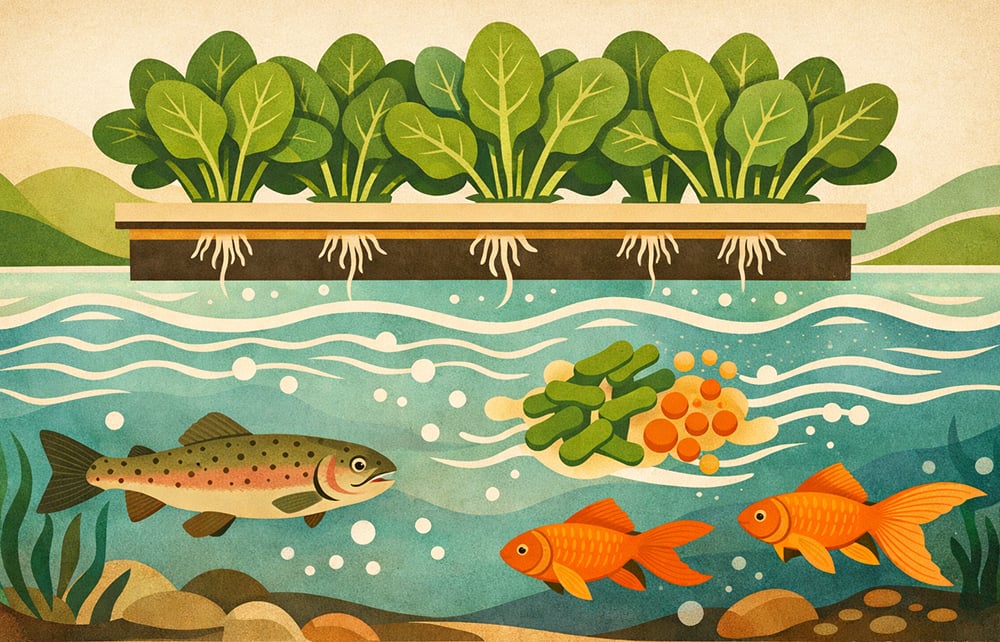
Spinach achieves exceptional nutrient density in raft systems when paired with cool-water fish like trout and goldfish, preferring 50-70°F. As a medium feeder, spinach requires established systems with robust bacterial populations that convert waste efficiently.
Chelated iron supplementation is frequently needed as spinach is particularly prone to iron deficiency, showing as pale, chlorotic leaves. Harvest occurs at 40-50 days. Systems operating above 75°F experience premature bolting and bitter flavor development.
Basil represents aquaponics’ most profitable herb crop, commanding $12-20 per pound wholesale while growing rapidly in raft systems. However, basil is temperature-sensitive and requires pairing with warm-water fish like tilapia, maintaining 70-85°F minimum. Systems operating below 65°F experience stunted growth and increased downy mildew susceptibility.
Moderate stocking in mature systems provides sufficient nutrients with minimal supplementation needed. First harvest occurs at 28-35 days, with continuous harvesting every 2-3 weeks, promoting bushy growth and preventing flowering that diminishes quality.
Bok choy, pac choi, and tatsoi represent exceptionally fast-growing raft system crops ready for harvest in just 30-45 days. Their temperature tolerance of 55-75°F allows pairing with virtually any fish species. Light to moderate stocking suffices, and supplementation is rarely needed. The strong restaurant demand for Asian vegetables, combined with premium pricing, creates attractive commercial opportunities for raft system growers.
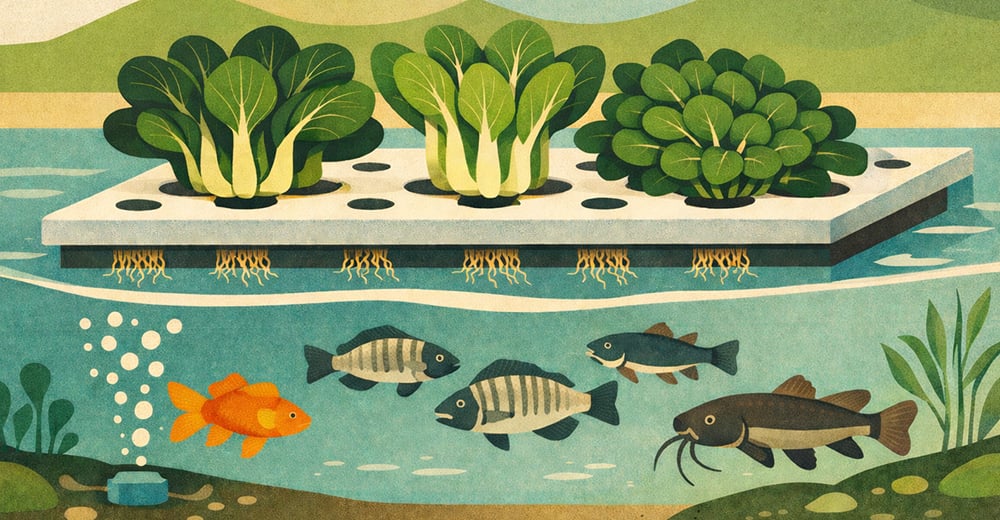
Arugula’s rapid 20-30 day growth cycle makes it the fastest-returning crop in aquaponic raft systems. Its distinctive peppery bite appeals to specialty markets. Pair arugula with cool-water fish like trout and goldfish, as it prefers cooler temperatures. As an extremely light feeder, arugula succeeds even in developing systems. No supplementation is needed. Interestingly, warmer temperatures intensify arugula’s peppery flavor, allowing growers to adjust taste profiles by manipulating system temperature within tolerable fish ranges.
Continuous root submersion in raft systems requires excellent aeration to maintain adequate dissolved oxygen levels in aquaponic systems of 6-8 mg/L. Inadequate oxygen causes root browning and stunted growth. Dense planting maximizes space efficiency but requires careful monitoring to prevent nutrient depletion in heavily stocked rafts.
The continuous water flow in raft systems makes them exceptionally efficient for commercial leafy green production focused on rapid harvest cycles. However, avoid attempting to grow heavy fruiting plants in rafts without substantial additional support structures that negate the system’s primary advantages.
For herbs and small leafy greens, Nutrient Film Technique systems with shallow channels and thin nutrient films perform exceptionally well; however, they have trouble with larger or heavier plants. Compact crops with low support needs are favored by the restricted root space and shallow water depth.
Basil performs beautifully in NFT systems when paired with warm-water fish like tilapia. The continuous thin nutrient film provides consistent moisture without waterlogging, which basil despises. Space plants 6-8 inches apart in channels, and harvest regularly to maintain compact growth habits. NFT systems require very stable water flow; pump failures cause rapid plant stress in shallow films.
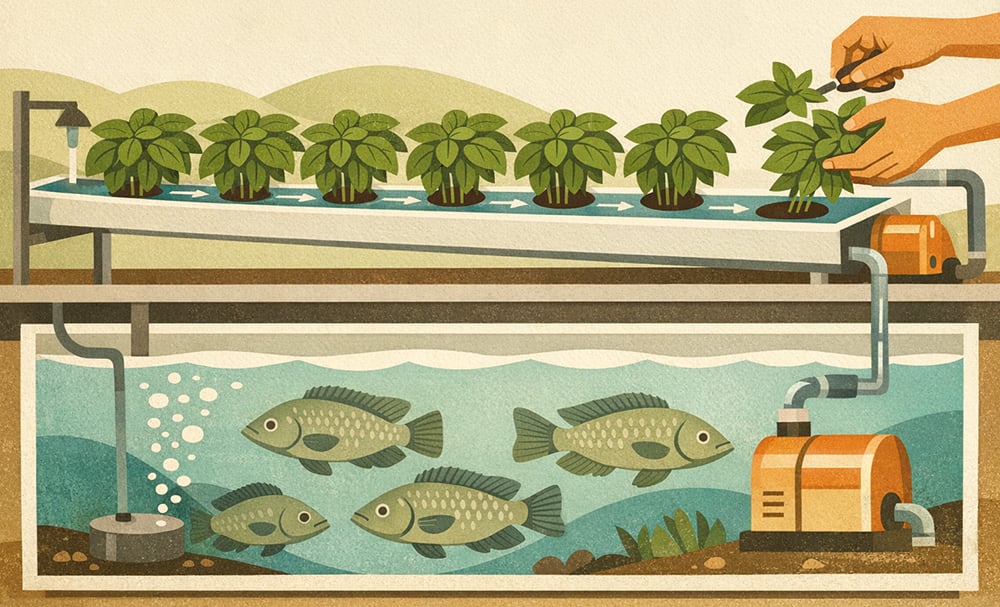
Cilantro, parsley, chives, and compact mint varieties all thrive in NFT systems. Cilantro particularly benefits from the precise temperature control NFT systems enable, maintaining 60-75°F prevents the premature bolting that plagues field production. Parsley’s slower germination (14-21 days) requires patience, but established plants produce for 4-6 months.
Chives represent one of aquaponics’ hardiest herbs, tolerating lower light levels and temperature fluctuations better than virtually any other crop, making them ideal for NFT systems with less-than-optimal conditions.
Alpine strawberries and certain everbearing varieties produce continuously in NFT systems when given proper support structures. While individual plant yields are modest, the extended 8-10 month harvest season and premium pricing ($4-8 per pound) create attractive economics.
Manual pollination using soft brushes to transfer pollen between flowers or daily gentle shaking during flowering is essential unless introducing specialized pollinating insects. Strawberries prefer the slightly cooler 60-75°F range, pairing well with goldfish or koi.
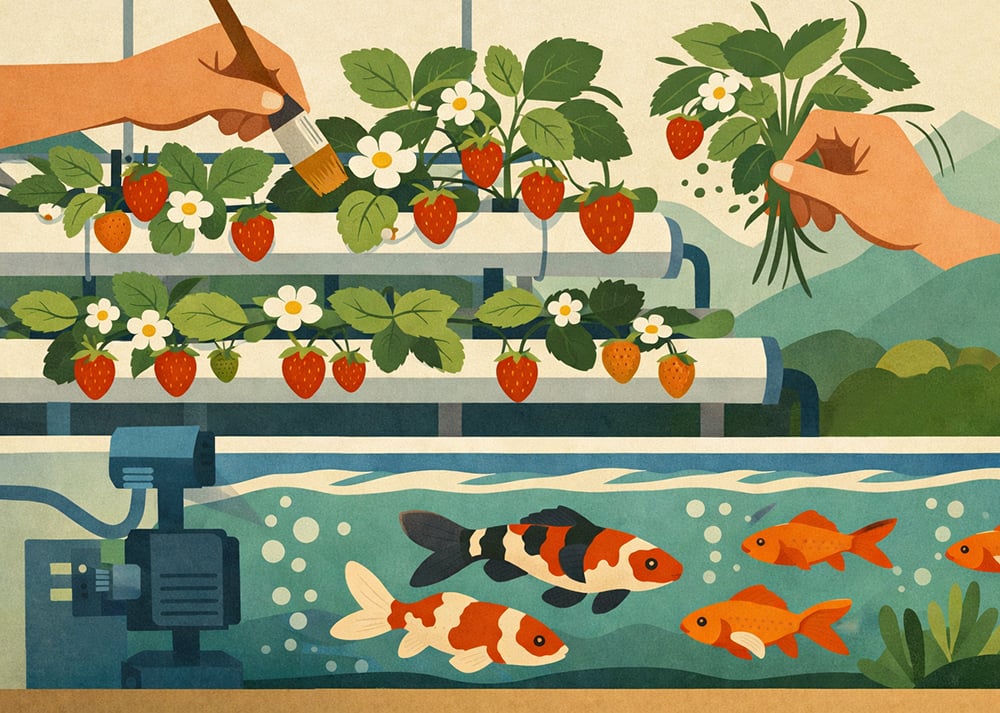
Root mats can block NFT channels over time as plants mature, necessitating periodic system cleaning between crop rotations. Maintain very stable water flow, as even brief pump failures in shallow films cause rapid wilting and stress. The limited root space restricts NFT systems to lighter-feeding crops with compact root systems. Heavy feeders quickly deplete nutrients in the thin film, requiring more frequent solution monitoring and adjustment than other system types.
When plants are matched to fish species’ preferred temperatures, management becomes easier, and both system components perform better.
Cooler water is ideal for trout, goldfish, and koi, and it goes well with lettuce, spinach, kale, arugula, cilantro, and most cool-season crops. For northern climates or temperature-controlled indoor systems, where maintaining lower temperatures is simpler and more cost-effective, this combination works incredibly well. Swiss chard also performs well in cool-water systems due to its broad temperature tolerance. In many climates, these fish-plant combinations allow for year-round production in greenhouse systems without the need for additional heating.
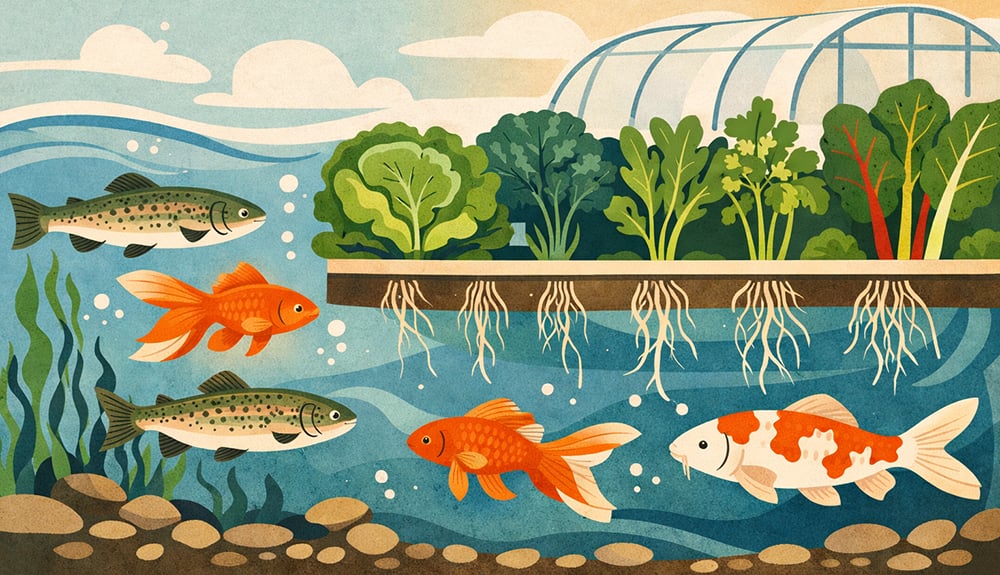
Basil, tomatoes, peppers, cucumbers, and warm-season herbs require warmer water, which is preferred by tilapia, catfish, and the majority of ornamental tropical species. Tilapia’s quick growth, effective feed conversion, and high stocking density tolerance make this combination the most popular in commercial aquaponics and greenhouse operations. Although growth rates may slow slightly in comparison to cooler conditions, lettuce and Swiss chard can withstand these warmer temperatures.
Fish species can be chosen with flexibility because some plants, such as lettuce, Swiss chard, and many herbs, can withstand temperatures between 60 and 80 degrees Fahrenheit. These adaptable crops allow for mixed systems or offer choices when switching between fish species on a seasonal basis. They are great options for systems that experience seasonal temperature fluctuations or those that are still developing precise climate control capabilities because of their wide temperature tolerance.
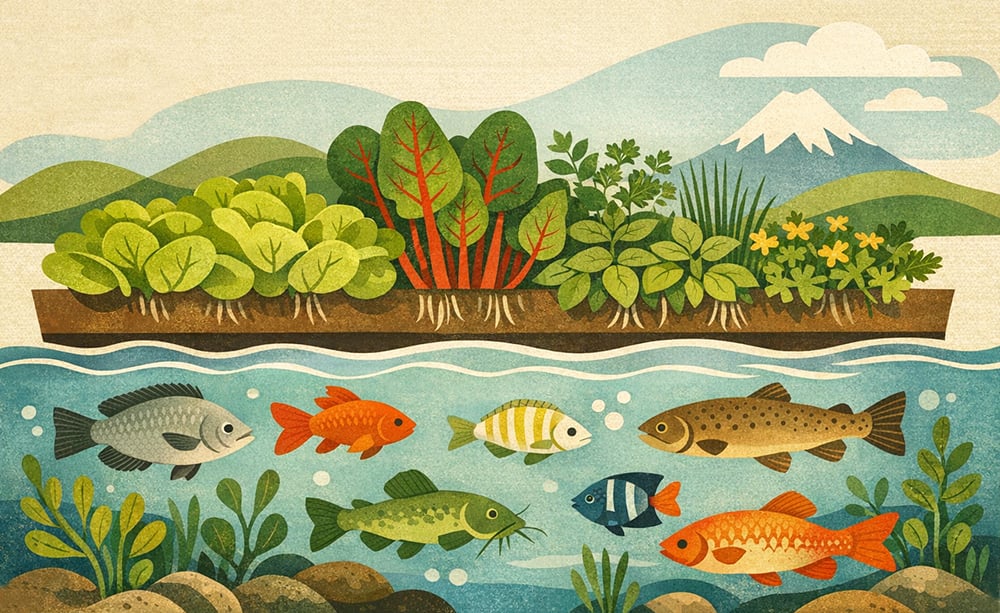
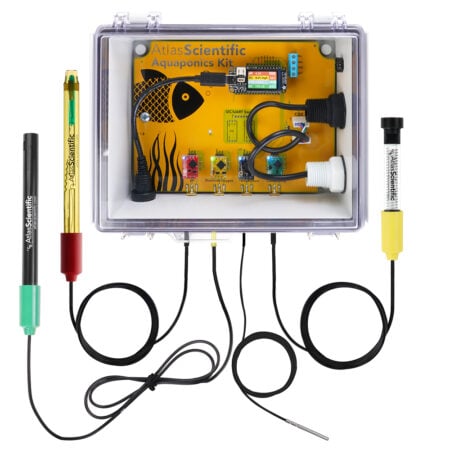
Successful aquaponics relies on accurate water quality monitoring in aquaponic systems to track nitrogen cycling, fish health, and plant nutrition. Key monitoring parameters include:
Fish waste provides abundant nitrogen but often lacks sufficient potassium, calcium, and iron for demanding fruiting crops. Strategic supplementation addresses these deficiencies without compromising fish health.
Tomatoes, peppers, and cucumbers consistently require potassium supplementation. Potassium sulfate is the preferred supplement because it doesn’t affect pH dramatically. Add small amounts (5-10 grams per 100 gallons) weekly during fruiting stages, monitoring plant response. Potassium deficiency appears as yellowing leaf margins and poor fruit development.
Blossom end rot in tomatoes and peppers indicates calcium deficiency despite adequate calcium in the system, usually caused by irregular watering or pH outside the optimal range. Calcium carbonate can supplement calcium while also buffering pH upward if systems drift too acidic. Foliar calcium sprays provide immediate calcium availability during critical fruiting periods without affecting fish.
Chlorosis (yellowing leaves with green veins) typically indicates iron deficiency, particularly common in spinach and other leafy greens. Chelated iron (iron EDTA or iron DTPA) provides plant-available iron without affecting fish. Add 1-2 ppm iron monthly or as symptoms appear. High pH (above 7.2) reduces iron availability, making pH management critical.
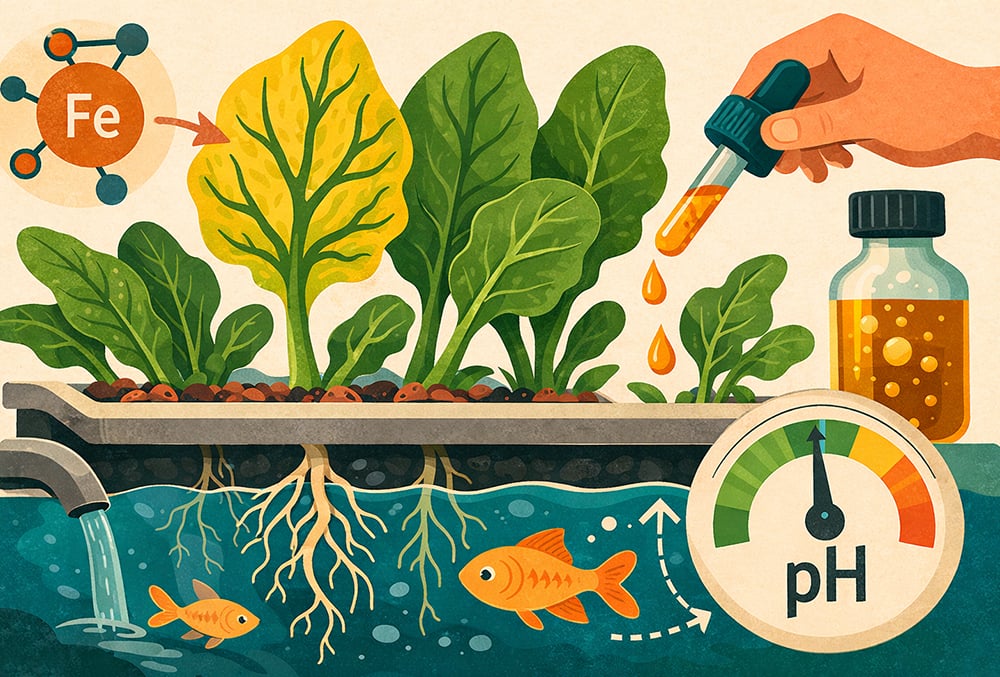
Always introduce supplements gradually in small doses, monitoring both plant and fish response over 24-48 hours before adding more. Research each supplement’s fish toxicity, some fertilizers safe for hydroponics are deadly to fish. Foliar feeding provides nutrients directly to leaves, bypassing water quality concerns for fish but requiring more frequent application. Track all supplementation in a log to identify patterns and optimize strategies for your specific system.
Understanding the particular limitations of balancing fish health, plant nutrition, and beneficial bacteria populations is essential for strategic plant selection in aquaponics. The best plants have shallow to medium root systems, moderate to light nutrient requirements, tolerance for slightly alkaline pH (6.8–7.2), and temperature ranges that are suitable for fish species.
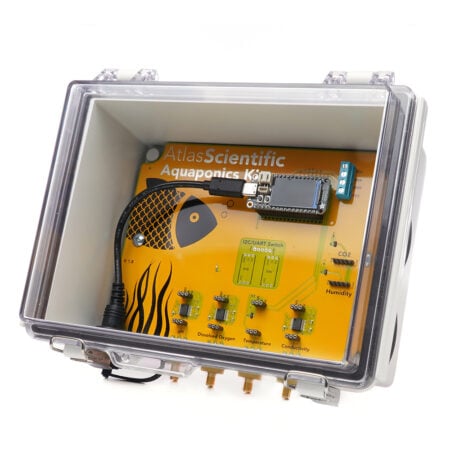
Are you prepared to put precision aquaponic monitoring into practice? To find out more about our pH probes, conductivity sensors, and comprehensive monitoring solutions created for growers managing intricate living ecosystems requiring laboratory-grade accuracy, get in touch with the top-notch staff at Atlas Scientific.


The best aquaponics systems balance reliability, efficiency, and crop versatility. Media beds suit beginners, rafts maximize leafy-green production, NFT and vertical systems save space, while

Maintaining the correct pH inside a bioreactor is essential for successful fermentation, cell culture, and bioprocess optimization. Even small pH fluctuations can dramatically affect enzyme