

Blog
The Best Indoor Air Quality Monitors
Indoor air quality can have a major impact on the comfort and productivity of homes, offices, schools, laboratories, and industrial facilities. Carbon dioxide buildup, poor




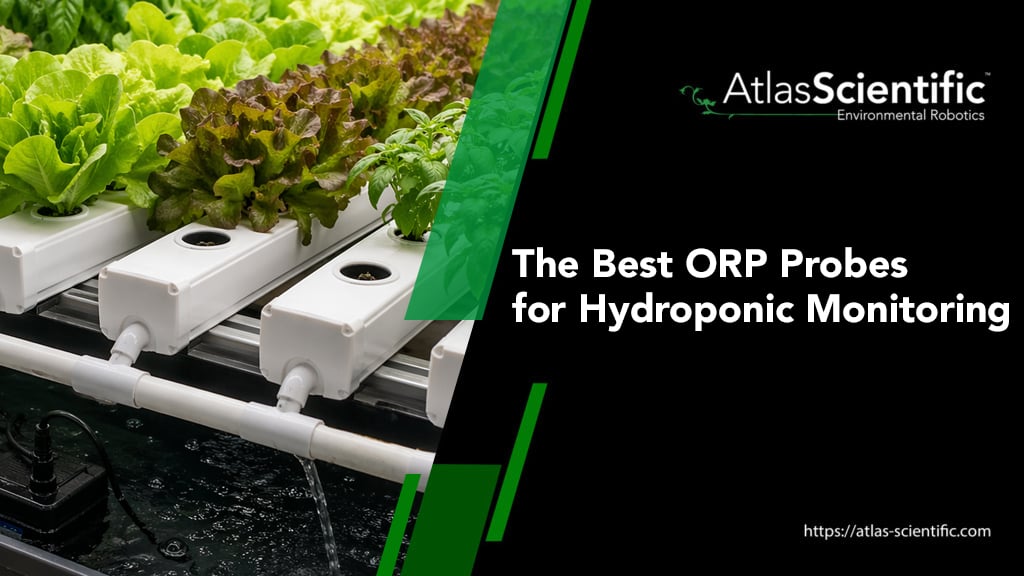
When it comes to hydroponic growing, maintaining precise control over water chemistry is not just beneficial; It’s essential for plant health, yield consistency, and disease prevention. While parameters like pH and electrical conductivity (EC) are commonly monitored, oxidation-reduction potential (ORP) is an often underutilized but highly valuable metric. ORP provides insight into the oxidative or reductive state of a nutrient solution, effectively acting as a real-time indicator of water sanitation, microbial activity, and overall system cleanliness. In practical terms, a properly balanced ORP level helps growers suppress harmful pathogens such as algae, bacteria, and fungi, while still supporting a healthy root environment.
Hydroponic environments present unique challenges: constant submersion, exposure to nutrient salts, temperature fluctuations, and biofouling can all degrade probe performance over time. Choosing the right ORP probe therefore requires careful consideration of factors such as measurement accuracy, long-term stability, resistance to fouling, ease of calibration, and compatibility with monitoring or automation systems. Some probes are designed for quick, handheld measurements, while others are built for continuous, inline monitoring in fully automated grow operations.
In this article, we compare five popular ORP probe brands used in hydroponics: Atlas Scientific, Bluelab, Hanna Instruments, Apera Instruments, and HM Digital. Each offers a different balance of performance, usability, and cost. By examining their strengths and limitations in real-world hydroponic applications, we aim to identify which solution provides the most reliable and scalable approach to ORP monitoring, and ultimately, which probe stands out as the best choice for serious growers.

The Atlas Scientific ORP probe stands out due to its precision engineering and durability in demanding hydroponic environments. Built with a platinum sensing element and chemically resistant materials, it delivers stable, accurate readings even when exposed to oxidizers like hydrogen peroxide or ozone—conditions that often degrade lower-end probes.
It offers a wide measurement range (approx. –2000 mV to +2000 mV) with high accuracy (±1 mV) and fast response times, allowing growers to detect subtle changes in water chemistry in real time. Unlike many competitors, it is designed for continuous submersion, making it ideal for inline or reservoir-based monitoring in both small and large hydroponic systems.
Another key advantage is long-term stability, with relatively infrequent calibration requirements (often around once per year), reducing maintenance and downtime. It also supports long cable runs and seamless integration with controllers when paired with Atlas Scientific’s EZO™ circuits, enabling full automation and remote monitoring.
Overall, the probe’s combination of lab-grade accuracy, industrial durability, and system integration flexibility makes it the most reliable and scalable option for serious hydroponic monitoring.
If you need a simple handheld tester, there are cheaper options. But if your goal is accurate, continuous, and scalable ORP monitoring, the Atlas Scientific ORP probe is the most capable and future-proof choice available.

The Bluelab ORP probe is designed with a strong emphasis on simplicity and ease of use, making it a popular choice among hydroponic growers who want reliable readings without technical complexity. It uses a platinum electrode and durable construction to provide stable ORP measurements in typical nutrient solutions, and it pairs seamlessly with Bluelab meters for a straightforward, plug-and-play experience. Because ORP does not require calibration, setup is minimal, allowing growers to start monitoring immediately.
In practice, the probe performs well for routine checks and spot monitoring, helping growers quickly assess water sanitation and detect potential issues like pathogen growth. Its durable design and included storage solution support reasonable longevity when properly maintained, and the cable length allows convenient access to reservoirs. This makes it especially appealing for small to mid-scale growers who prioritize convenience over advanced system integration.
However, the Bluelab ORP probe is not designed for continuous inline monitoring or automation-heavy systems. It is best suited for manual use rather than permanent installation, and its compatibility is largely centered around the Bluelab ecosystem. While it delivers dependable performance for everyday hydroponic use, it lacks the flexibility and scalability needed for more advanced, data-driven growing operations.
The Bluelab ORP probe is a strong choice for growers who want simple, reliable measurements without technical complexity, but it’s less suited for advanced, automated, or continuous hydroponic systems.
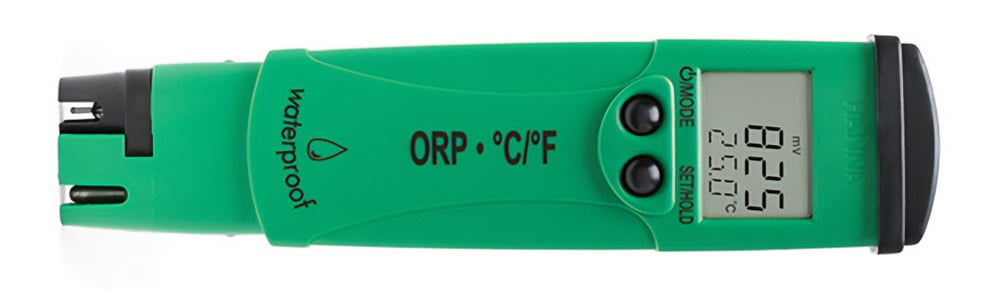
The Hanna HI98120 is a portable, all-in-one ORP tester designed for simple and reliable spot measurements. It combines the probe, display, and electronics into a single handheld device, making it ideal for growers who want quick readings without setting up a full monitoring system. Its waterproof (IP67) design adds durability, and the unit even floats, which is useful in hydroponic environments.
The tester offers good accuracy (±2 mV) and 1 mV resolution, which is sufficient for most hydroponic applications. It also features a replaceable probe cartridge and an extractable junction for easier maintenance, helping extend the device’s lifespan. Built-in features like a stability indicator, temperature sensor, and auto shutoff make it convenient for everyday use.
However, the HI98120 is best suited for manual, periodic testing rather than continuous monitoring. It cannot be integrated into automated systems and lacks data logging or remote capabilities. While it’s a dependable and user-friendly tool, it’s not designed for advanced or large-scale hydroponic operations that require constant, real-time monitoring.
The Hanna HI98120 is a reliable, easy-to-use handheld ORP tester that’s great for quick checks and routine monitoring, but it’s not built for continuous, automated, or large-scale hydroponic systems.
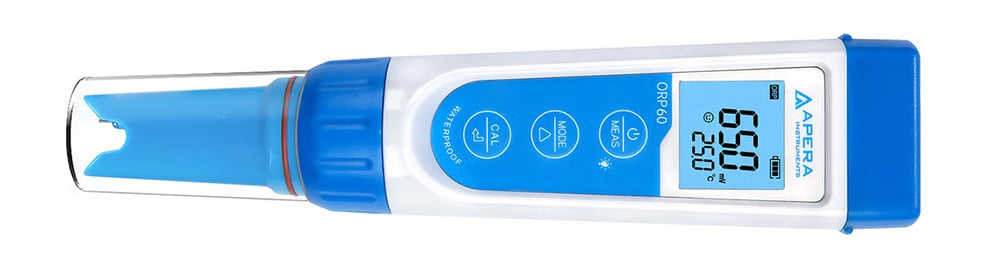
The Apera ORP60 is a mid-range, handheld ORP tester that offers a good balance between affordability and performance. Designed for hobbyists and small-scale hydroponic growers, it features a replaceable platinum probe, dual display (ORP and temperature), and a complete kit with calibration and storage solutions, making it convenient and ready to use out of the box.
In terms of performance, it provides solid accuracy and 1 mV resolution, which is more than sufficient for routine hydroponic monitoring. Additional features like auto-hold, backlit display, and automatic temperature compensation improve ease of use and help ensure consistent readings during testing.
However, like most pocket testers, the ORP60 is best suited for manual spot-checking rather than continuous monitoring. It lacks integration with automation systems, and the probe will need periodic replacement over time. Overall, it’s a strong choice for growers who want reliable, easy-to-use ORP measurements without the complexity of advanced systems.
The Apera ORP60 is a solid mid-range choice; more accurate and feature-rich than basic testers, but still best suited for manual, routine monitoring rather than advanced or automated hydroponic systems.
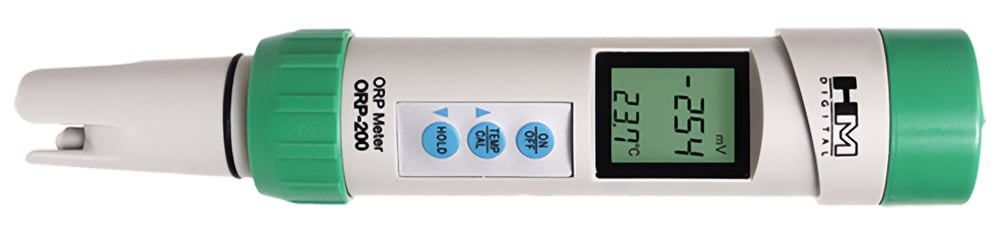
The HM Digital ORP-200 is a budget-friendly, handheld ORP meter designed for simple and convenient water testing. It combines ORP and temperature measurement in one compact device and comes factory calibrated, making it easy for beginners or casual users to get started right away. Features like a large display, data hold, and auto shutoff add to its everyday usability.
In terms of performance, it offers adequate accuracy (±2 mV) and a standard ORP range, which is sufficient for basic hydroponic monitoring. It also includes a replaceable probe and waterproof (IP67) design, allowing it to be used safely around reservoirs and helping extend the device’s lifespan with proper maintenance.
However, the ORP-200 is best suited for manual spot-checking rather than continuous monitoring. It lacks integration with automated systems and doesn’t offer the precision or durability of higher-end probes. Overall, it’s a solid entry-level option for growers who need a simple, low-cost way to monitor ORP, but not for advanced or large-scale setups.
The HM Digital ORP-200 is a solid entry-level ORP meter; great for quick checks and basic monitoring, but not suited for advanced, automated, or continuous hydroponic systems.
| Attribute | Atlas Scientific ORP Probe | Bluelab ORP Probe | Hanna HI98120 ORP Tester | Apera ORP60 Pocket Tester | HM Digital ORP-200 Meter |
| Accuracy Level | Lab-grade | Moderate | Moderate | Moderate | Basic |
| Continuous Monitoring | Yes (24/7) | Limited | No | Limited | No |
| Integration (controllers/IoT) | Advanced (I2C/UART) | Proprietary | None | Minimal | None |
| Durability | High | High | Moderate | Moderate | Low |
| Submersibility | Full-time | Partial | Handheld | Handheld | Handheld |
| Best Use Case | Automated hydroponics systems | Grower monitoring | Spot testing | Hobby systems | Entry-level checks |
| Price Tier | $$$ | $$ | $$ | $ | $ |
While all five brands serve a purpose, the differences become clear when applied to real hydroponic systems. Atlas Scientific is the clear winner due to its unmatched combination of accuracy, durability, and integration flexibility. It is the only option in this group that can truly support continuous, automated hydroponic monitoring at a professional level.

Bluelab is a strong second choice for growers who prefer simplicity, while Hanna and Apera serve well for manual testing scenarios. HM Digital remains a budget-friendly entry point but lacks the reliability needed for serious cultivation.
For anyone building a scalable, data-driven hydroponic system, investing in Atlas Scientific is not just justified; It’s essential!
Indoor air quality can have a major impact on the comfort and productivity of homes, offices, schools, laboratories, and industrial facilities. Carbon dioxide buildup, poor
UART and I2C are serial communication protocols, but they serve different purposes. UART is typically used for direct device-to-device communication and requires dedicated connections. I2C