

Blog
The 5 Best Aquaponics Systems
The best aquaponics systems balance reliability, efficiency, and crop versatility. Media beds suit beginners, rafts maximize leafy-green production, NFT and vertical systems save space, while





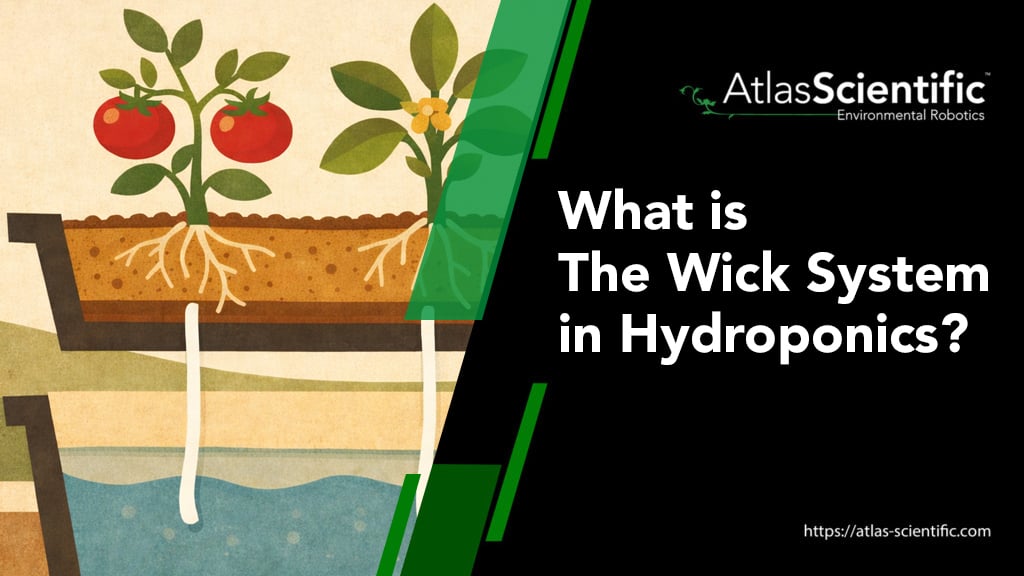
With no need for pumps or electricity, a hydroponic wick system is a straightforward, passive growing technique that transfers nutrient solution from a reservoir to plant roots via capillary action. Plants are sustained by physics alone, not by mechanical circulation, thanks to wicks composed of cotton, nylon, or comparable materials that draw nutrients upward.
A hydroponic wick system is a passive growing technique that uses capillary action instead of mechanical circulation to supply plants with nutrient solution. Remarkably few parts make up the system: a growing medium with plant roots, a reservoir with nutrient solution, and one or more wicks that connect the two.
The vital function of the system is carried out by the wick, which is usually composed of cotton, felt, nylon, or specialized horticultural wicking material. One end extends into the growing medium around the roots of the plants, while the other end is immersed in the reservoir of nutrient solution. The wick continuously draws nutrient solution upward from the reservoir, delivering it to the root zone as needed through capillary action, the same process that enables plants to move water against gravity through their vascular systems.
This process is remarkable because it is passive. There is no need for electrical input. The solution is not circulated by any pumps. Flood cycles are not controlled by timers. The plants themselves control the uptake of nutrients; the wick draws more solution upward in response to a slight moisture deficit caused by the roots absorbing water and nutrients from the growing medium. Plant physiology and physics are the only sources of power for this self-regulating system.
Knowing capillary action helps us understand the limitations of wick systems and how they operate. When liquid molecules are more strongly drawn to a solid surface than to other liquid molecules, this phenomenon is known as capillary action. Against the force of gravity, this attraction draws the nutrient solution up through the wick fibers and into the growing medium in a wick system.
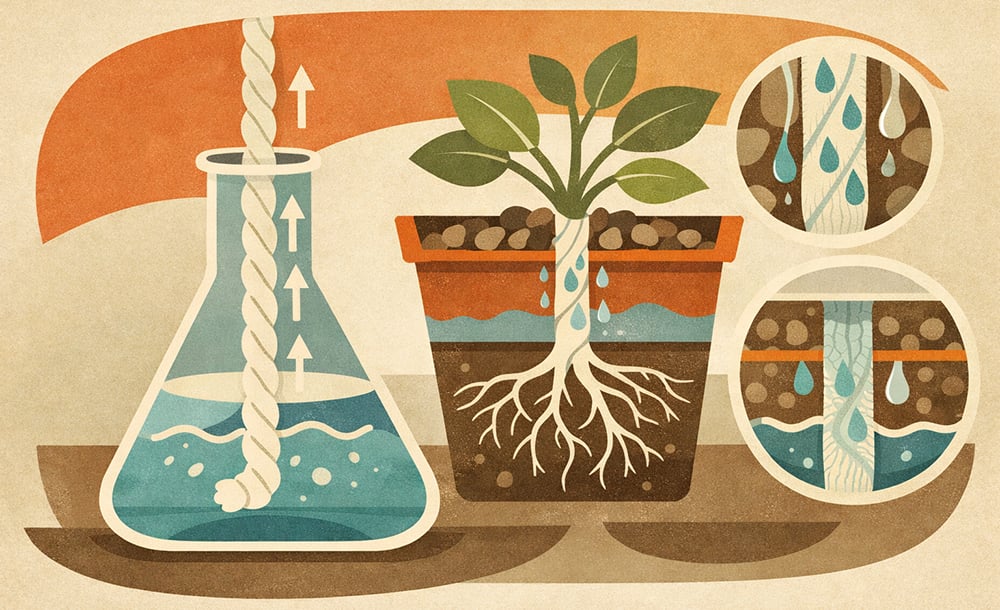
The pore size of the material, the nutrient solution’s surface tension, and the height difference between the nutrient solution and the plant roots are the three main variables that affect this process. Consistently sized pores that are both large enough to effectively transport solution and small enough to maintain capillary pull over the wick’s length are characteristics of the perfect wick material.
Capillary action does have some intrinsic limitations, though. The resistance of gravity increases as the solution moves higher through the wick. Depending on the wick material and solution characteristics, the maximum wicking height is usually between 12 and 18 inches when capillary forces are no longer able to overcome gravity. The size of plants and water needs that wick systems can accommodate are essentially limited by this height restriction.
Furthermore, the distribution of nutrients is naturally uneven due to capillary action. The growing medium is still saturated with nutrient solution close to the wick. A moisture gradient is produced by distance from the wick; regions further away stay drier. Due to their innate tendency to grow roots in the moistest areas, plants may group around the wick and underutilize the peripheral medium.

Even though they are simple, every part of the wick system contributes differently to overall performance. Comprehending these elements facilitates troubleshooting and optimization.
Any food-grade container suitable for the size of your system can serve as the reservoir for the nutrient solution. Two-liter bottles or quart jars may be used in small hobby systems. Plastic bins or 5-gallon buckets are used in larger operations. There must be enough nutrient solution in the reservoir to sustain plants in between refills. A reservoir volume that is equal to or greater than the total container volume offers sufficient buffering capacity for the majority of small systems.
The choice of reservoir material is more important than most growers realize. Containers that are opaque or dark stop algae from growing, which can introduce pathogens and compete with plants for nutrients. Unless actively controlled, transparent containers encourage the growth of algae. Regardless of system size, black or opaque reservoirs are therefore highly advised.
In wick systems, the growing medium supports plants and optimizes capillary action. High capillary action and superior water retention make the perfect growing medium for wick systems, enabling the wick to move solution efficiently and guaranteeing that roots can access moisture between wick-adjacent areas.
Despite its waning use in other hydroponic techniques, vermiculite is still a favorite for wick systems because of its exceptionally high capillary action. Its layered crystalline structure efficiently retains moisture and naturally draws solution upward.
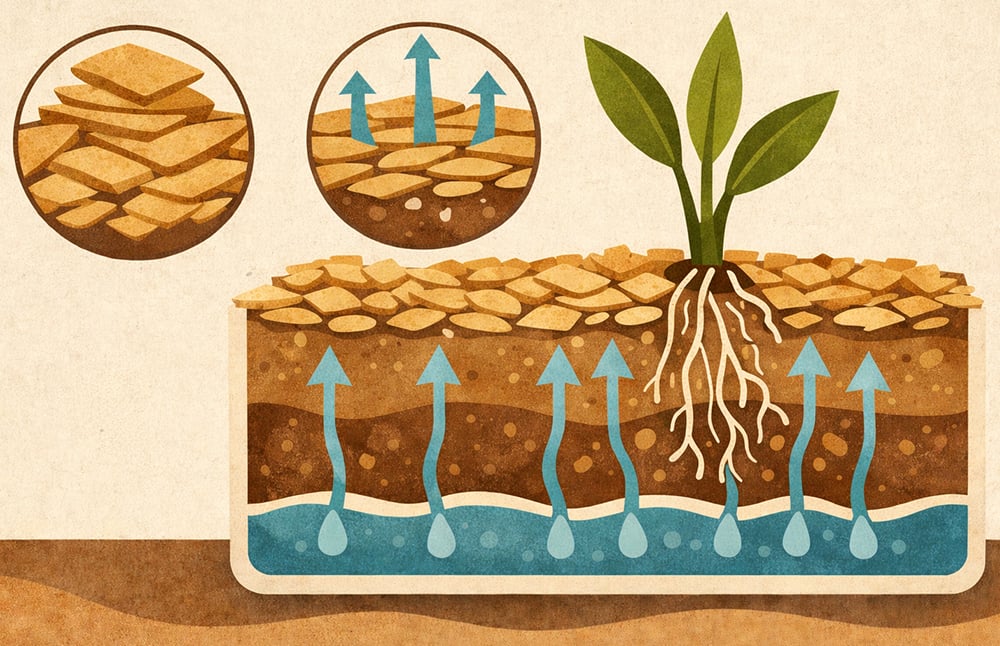
For growers who care about the environment, coconut coir is an excellent option because it provides comparable capillary qualities with greater sustainability. When properly hydrated, it offers excellent aeration and rivals vermiculite in water retention.
Despite being widely used in hydroponic applications, perlite performs poorly in wick systems. In wick systems, where water retention and capillary action are crucial, its superior drainage, which is advantageous in flood-drain systems, becomes a drawback. Large pores in perlite allow water to drain away from roots, possibly resulting in dry areas.
Although they function well, Rockwool and Oasis cubes are not the best for wick systems. The capillary action efficiency of vermiculite or coco coir is not captured by these materials, which are designed for particular hydroponic techniques.
The choice of wick material has a direct impact on system performance. Consistent porosity, resilience to microbial degradation, and durability in nutrient solution are all characteristics of ideal wick materials. Cotton or natural fiber, the conventional wick material, functions but gradually deteriorates as advantageous microorganisms infiltrate the fibers, jeopardizing capillary action.
Throughout the growing season, specialized hydroponic wicking cord, usually composed of nylon or synthetic fibers, maintains consistent performance. These substances maintain capillary action for prolonged periods of time and are resistant to microbial degradation. Tiki torch wicks, which are frequently suggested for do-it-yourself systems, function passably but compromise consistency for cost.
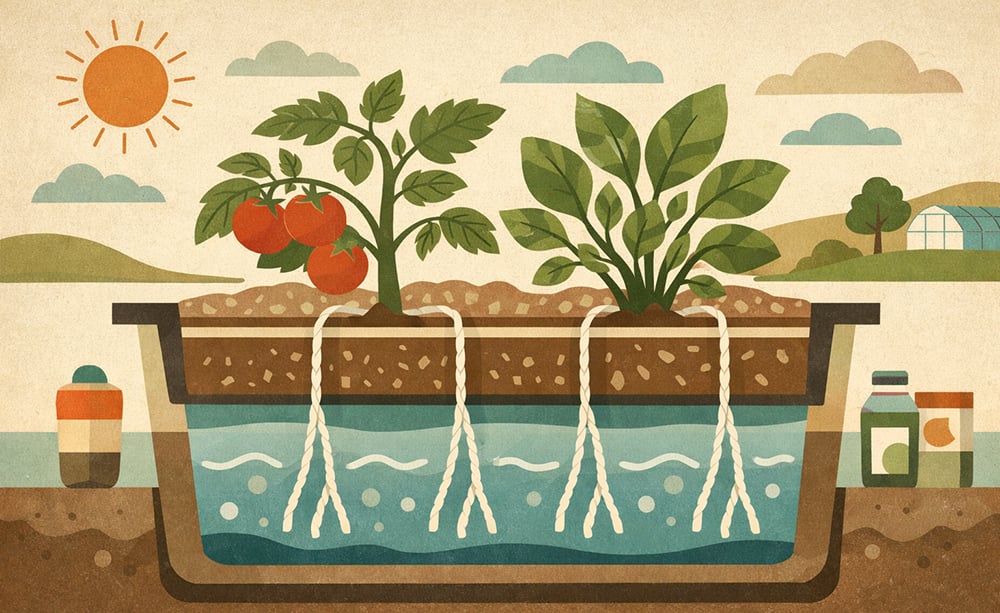
The size of the container and the water requirements of the plants determine how many wicks are needed. One small plant or multiple small herbs can be supported in a compact system by a single wick. Additional wicks, placed perfectly to disperse moisture throughout the growing medium, are beneficial for larger containers or plants.
To promote capillary contact with the wick and avoid waterlogging, growing containers in wick systems ought to feature drainage holes. The wick threads through a hole in the bottom of the container, which is positioned above the reservoir. This hole allows air to circulate while the wick makes contact with the nutrient solution and growing medium.
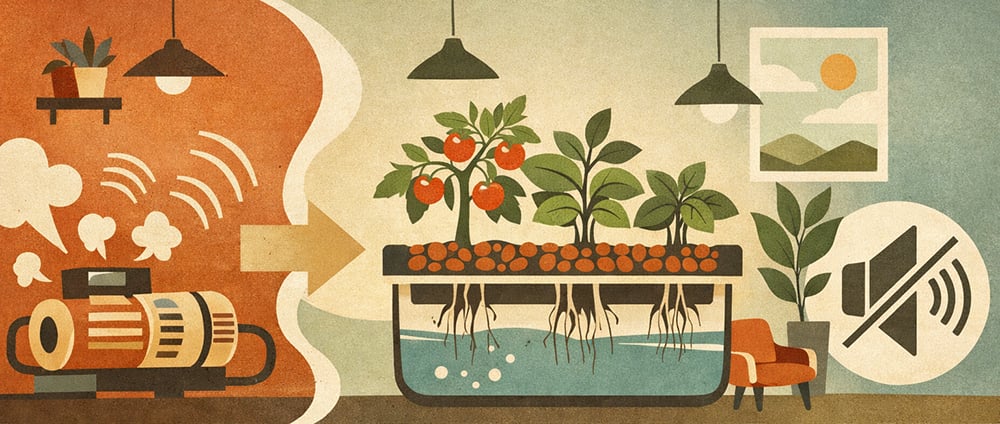
Wick systems don’t need complicated wiring, pumps, timers, or electrical connections. They are perfect for novices, students, and anybody else looking for a simple introduction to hydroponics because of their basic simplicity. With simple household items, systems can be put together in a matter of minutes.
The least expensive way to start hydroponics is with wick systems. The cost of materials is only a few dollars, while active hydroponic systems can cost hundreds or thousands. Because of its affordability, hydroponic growing is now accessible to all, eliminating financial obstacles for growers on a tight budget or educational initiatives.
Wick systems rarely experience catastrophic failures because they lack complicated components or moving parts. Your crop won’t be destroyed by pump failures. Nutrient delivery is unaffected by power outages. The system is not disrupted by timer malfunctions. Wick systems require little maintenance once they are set up. The main tasks of maintenance are keeping an eye on plant health and nutrient solution levels.
Wick systems take up very little room, which makes them perfect for classroom shelves, office windowsills, and apartment balconies. Simple wick systems can be used in even the smallest growing areas.

Compared to soil cultivation or flood-drain systems, wick systems use a lot less water. Drainage waste is eliminated by the closed-loop design, and plants only use what they require thanks to the passive delivery mechanism. Plant transpiration, not system inefficiency, is the main cause of water loss.
Silent operation is made possible by the lack of pumps, which is a big plus for indoor growers or those operating in noisy settings.
Wick systems are unable to precisely control the delivery of nutrients. The growing medium’s nutrient concentration is solely determined by the solution’s composition; growers are unable to modify delivery rates in response to shifting plant requirements. When system nutrient concentration cannot be dynamically controlled, plants with high nutrient demands during particular growth phases may become deficient.
Compared to active hydroponic systems with constant circulation, wick systems’ passive, gradual nutrient delivery usually results in slower growth. The growth restriction is acceptable for leafy greens and herbs, but it becomes an issue for vigorous plants or commercial production schedules.
The growing medium’s nutrient availability is uneven due to moisture gradients produced by capillary action. Naturally, plants take advantage of this by grouping their roots close to the wick, underutilizing the growing medium on the periphery. This inefficiency restricts plant density and wastes resources.
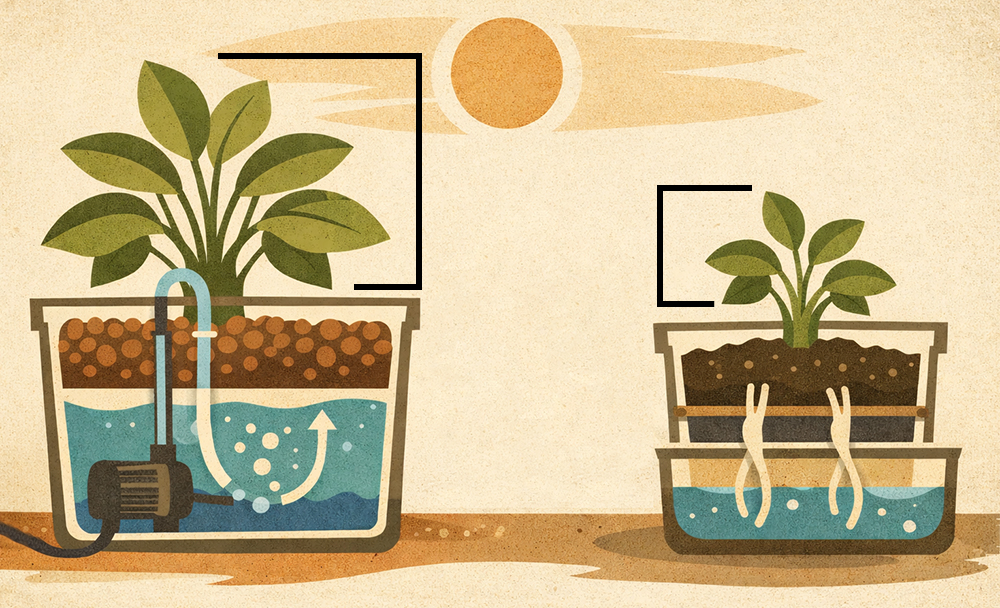
Plant size is limited by the maximum height of capillary action. Most wick systems effectively serve plants with maximum heights of 12-18 inches. Simply put, large plants require more water than the system can provide. This restriction severely limits plant selection and renders commercial production impracticable.
Salt buildup in the growing medium is arguably the most pernicious issue with wick systems. Dissolved salts are left behind when water evaporates from the medium surface or is transpired by plants, building up to hazardous levels. Unlike active systems, where solution circulation prevents localized accumulation, wick systems concentrate salts in the upper medium, where they can damage roots and inhibit nutrient uptake.
Frequent flushing, usually once a week, aids in controlling salt accumulation but must be done carefully to prevent nutrient depletion. As the growing season goes on, this maintenance load grows.
Variations in humidity and temperature cause variations in wick system performance. Evaporation and nutrient concentration are increased by high temperatures. Reduced transpiration from low humidity may cause roots to become waterlogged. Because the passive delivery mechanism in wick systems lacks buffering capacity, these environmental effects are more noticeable than in active systems.
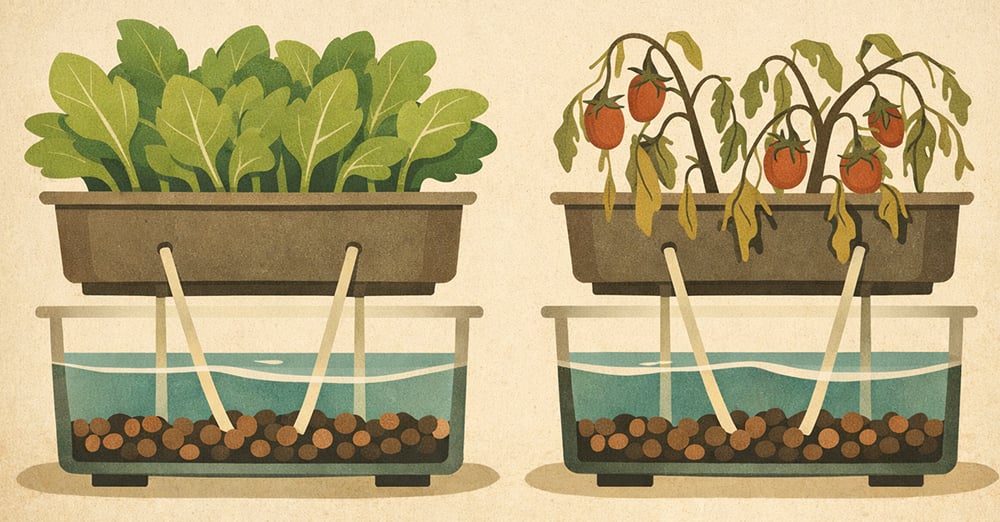
Wick systems are not very effective with larger fruiting plants, root vegetables, or plants with extensive root systems, but they do fairly well with light-feeding, shallow-rooted plants like lettuce and herbs. Demanding plants simply cannot be supported by the height restriction and limited capacity for nutrient delivery.
Wick system success is significantly impacted by the choice of growing medium. The best options are vermiculite and coconut coir, which combine the effectiveness of capillary action with features for water retention and aeration.
Due to mining, vermiculite naturally contains high sodium levels. Before setting up the system, rinse with distilled water to lower sodium levels that might interfere with nutrient absorption. Before filling containers, make sure the vermiculite is moist but not soggy by thoroughly soaking it, draining any excess water, and checking.

Compressed coconut coir bricks need to expand; this is usually accomplished by soaking them in distilled water for 15 to 30 minutes, which hydrates and fluffs them. To get rid of salt and other impurities that are naturally present during the processing of coconuts, expanded coir needs to be thoroughly rinsed. Because coir is rich in potassium, some growers pre-buffer it with calcium solutions to avoid nutrient imbalances.

The growing medium for a wick system should always be damp but not soggy. Root rot and pathogenic growth are encouraged when the waterlogged medium turns anaerobic. Capillary effectiveness is decreased by an overly dry medium. The ideal moisture content for proper nutrient delivery and root aeration should be maintained by the wick and plant uptake.
The most basic wick system only needs a few supplies: a plant, growing medium, nutrient solution, one wick, two containers (or one container with dividers), and a wick. More sophisticated systems include multiple wicks, independent reservoirs, and container configurations that are optimized.
Since wick systems are unable to self-correct for pH or EC drift, they depend on a steady nutrient balance. Healthy growth requires routine observation.
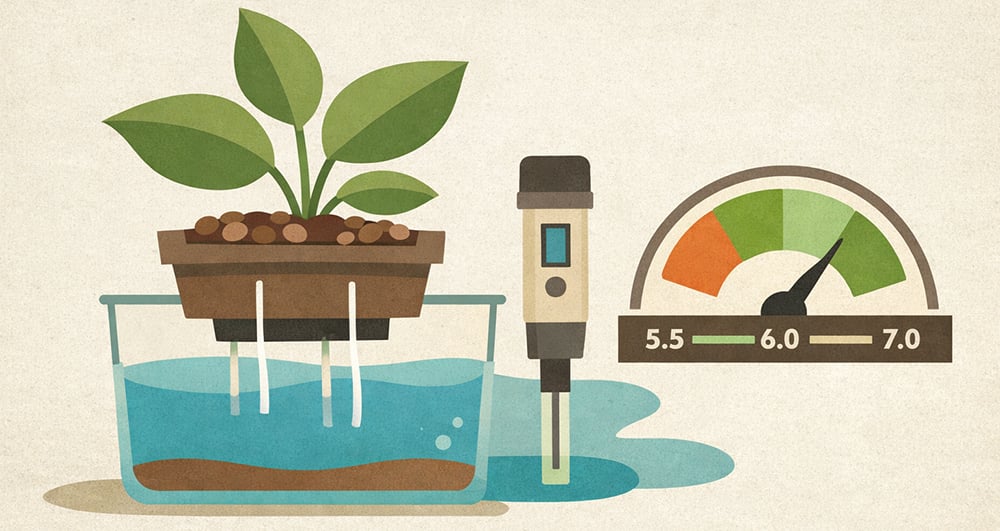
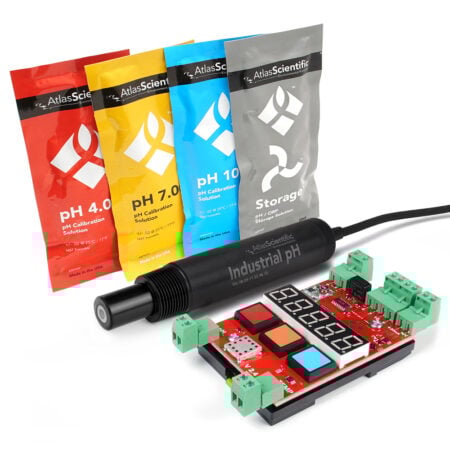
Although pH levels naturally fluctuate over time, most plants do best at 5.5 to 7.0. For precise measurements taken straight from the reservoir, test twice a week using an Atlas Scientific pH Probe or pH Kit.
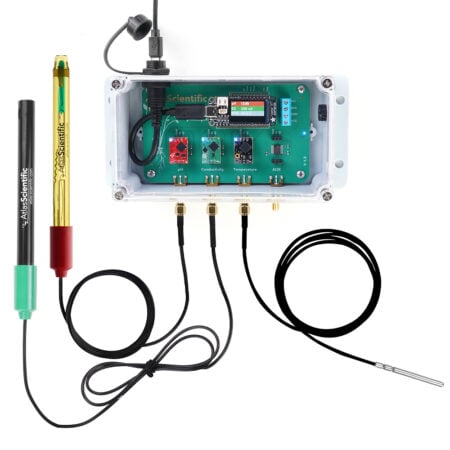
Keep the EC between 1.0 and 1.6 mS/cm, modifying it as water evaporates or plants absorb nutrients. To monitor salt accumulation and identify when flushing is necessary (usually above 2.0 mS/cm), use an Atlas Scientific EZO-EC Circuit or Conductivity Probe.
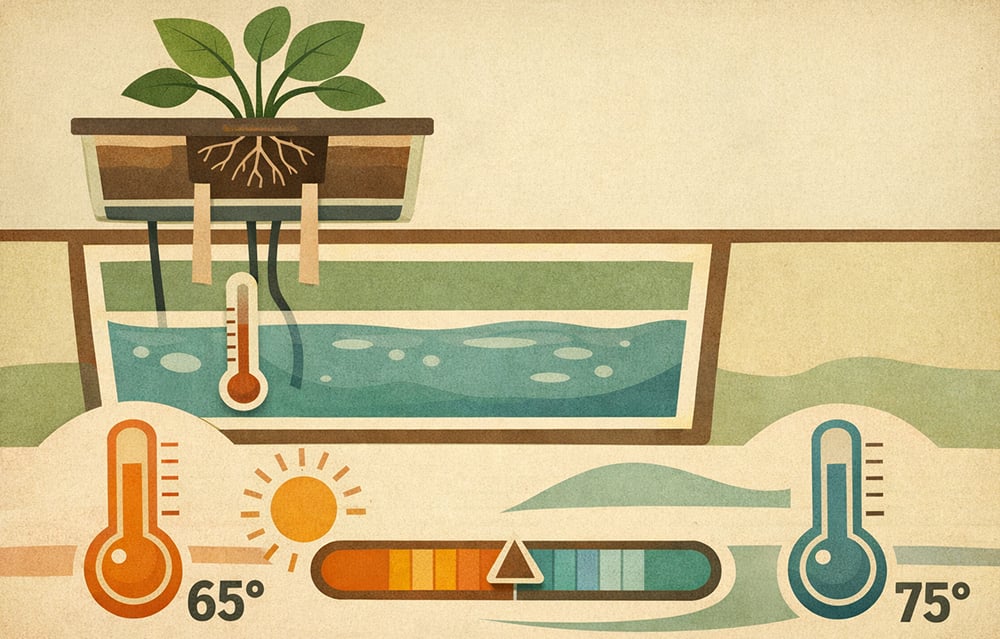
For the best uptake of nutrients and oxygen, keep the solution between 65 and 75°F. Use an Atlas Scientific Temperature Probe to monitor and stabilize conditions, cooling with ice packs or shading as necessary.
Systems with hydroponic wicks offer a sophisticated fusion of practicality and simplicity. They are perfect starting points for novice growers or anyone looking for simple cultivation in small spaces because of their passive operation, low cost, and low maintenance needs.

Do not hesitate to contact the world-class team at Atlas Scientific if you have any questions about hydroponic systems or the sensors we suggest for your wick system.



The best aquaponics systems balance reliability, efficiency, and crop versatility. Media beds suit beginners, rafts maximize leafy-green production, NFT and vertical systems save space, while

Maintaining the correct pH inside a bioreactor is essential for successful fermentation, cell culture, and bioprocess optimization. Even small pH fluctuations can dramatically affect enzyme