
Subtotal: $53.99
Blog
Best pH Sensor for Bioreactors
Maintaining the correct pH inside a bioreactor is essential for successful fermentation, cell culture, and bioprocess optimization. Even small pH fluctuations can dramatically affect enzyme





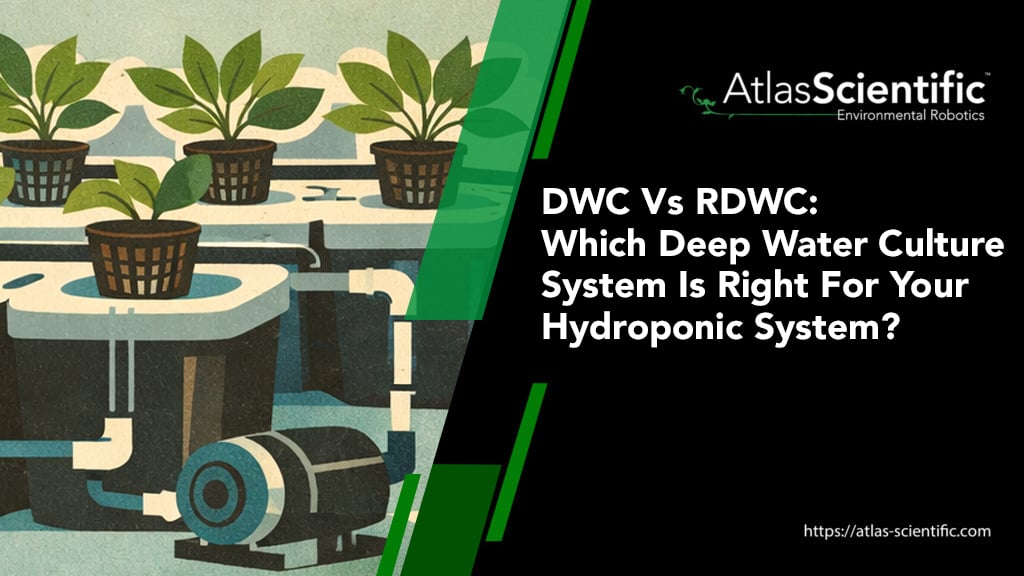
Choosing between DWC and RDWC depends on your goals and experience. DWC is ideal for beginners seeking simplicity, low cost, and flexibility, while RDWC suits growers prioritizing scalability, uniform growth, and reduced maintenance in larger, more advanced hydroponic systems.

When diving into hydroponic growing methods, Deep Water Culture (DWC) and Recirculating Deep Water Culture (RDWC) consistently rank among the most common systems for both beginners and experienced hydroponic growers.
While DWC and RDWC methods share fundamental principles, their differences in design, scalability, and maintenance can greatly impact your growing success. In this guide, we will explore both systems to help you make the right decision for your hydroponic system.
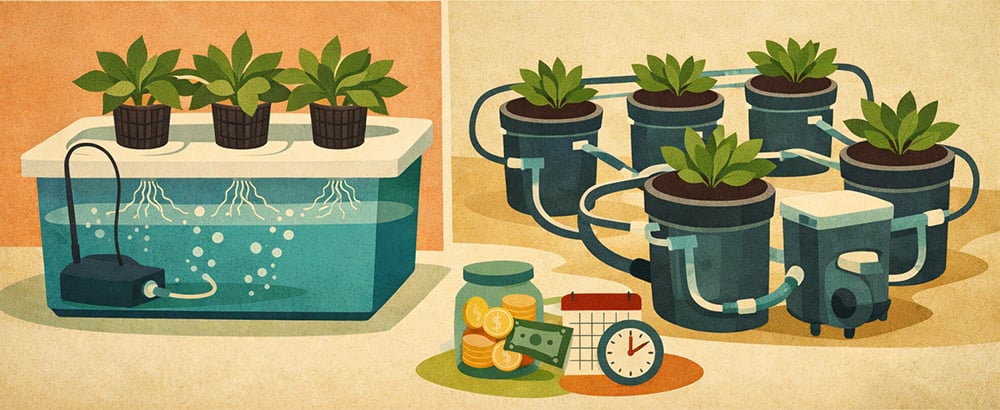
Deep Water Culture represents hydroponics in its purest and simplest form. In DWC systems, plant roots are suspended directly in a nutrient-rich, oxygenated water solution within different reservoirs. Each growing container operates completely independently, housing its own air pump (with an airstone), net pot, nutrient solution, and plant.
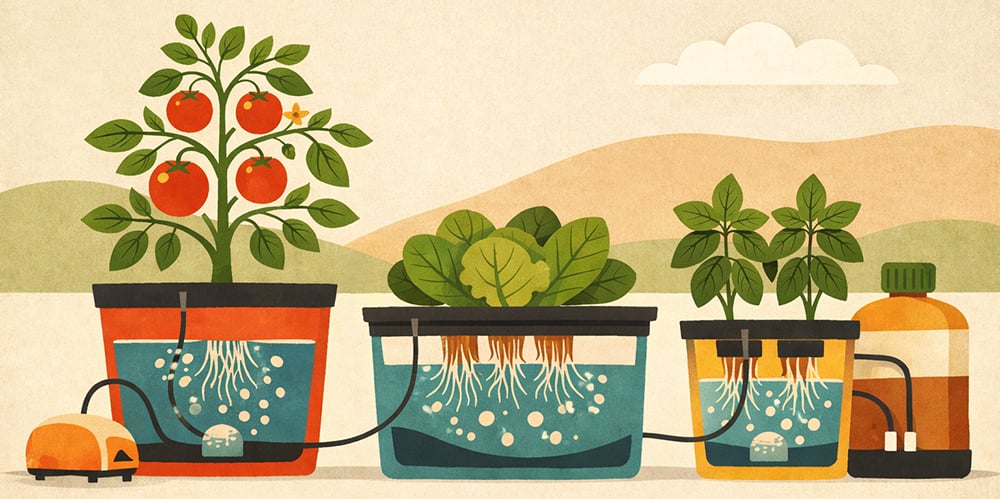
The reason DWC is so popular lies in its simplicity. Unlike alternative hydroponic methods, where plant roots receive intermittent exposure to nutrients, DEC provides continuous access to water, oxygen, and minerals 24/7. The airpump continuously delivers oxygen to the submerged roots while preventing water stagnation and root rot.
Additionally, this constant availability of nutrients results in rapid plant growth. Without soil or a growing medium that can restrict root development, plants in DWC can absorb nutrients more efficiently, typically resulting in growth rates that exceed traditional soil-based cultivation by 30-50%.
Recirculating Deep Water Culture builds on DWC by connecting multiple growing sites to a centralized control reservoir. In RDWC, individual plant containers link together via a network of tubing or pipe channels, allowing the nutrient solution to circulate continuously throughout the entire hydroponic system.
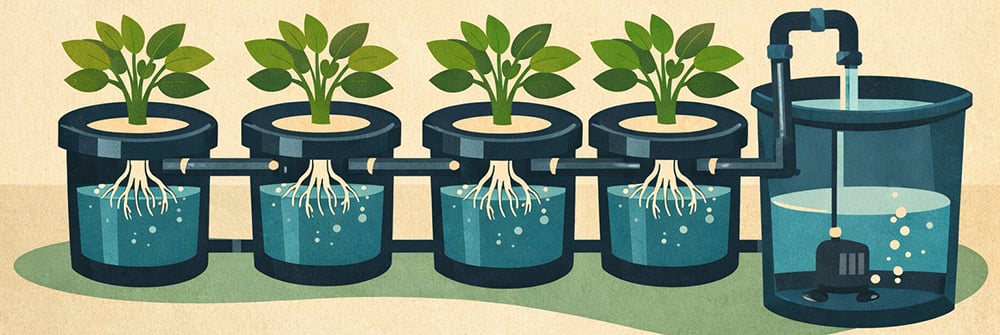
The central reservoir is like the system’s heart – it houses the water pump that drives water circulation, it contains the main air supply for oxygenation, and it is the primary location for nutrient adjustments and additions. The design of RDWC systems creates a homogenous growing environment where all plants receive identical nutrient concentrations, dissolved oxygen (DO) levels, and pH levels at the same time.
As the pump pulls the solution through the connected containers, it passes through the root zones before returning to the main reservoir for re-oxygenation and redistribution. This continuous circulation guarantees consistent conditions across all growing sites while simplifying management tasks that would otherwise need to be performed on each container separately.
There are five main differences between DWC and RDWC hydroponics.
The most obvious difference between DWC and RDWC systems is their structure. As mentioned, DWC systems have standalone reservoirs that function independently. For example, a typical DWC setup may have multiple five-gallon buckets, each with its own hydroponic nutrient solution, air pump, and airstone.
RDWC systems, on the other hand, have multiple containers that connect to a larger central reservoir. The control bucket in the middle usually holds most of the system’s water volume and all nutrient adjustments, while the smaller containers (often called satellite containers) house individual plants. RDWC systems use a circulation pump to actively move the solution through the hydroponic network, maintaining uniform conditions across all sites.
Managing nutrients is a key part of hydroponic systems. In DWC, individual buckets require testing and adjusting reservoirs must be completed separately. For example, if you are operating six DWC buckets, you need to measure pH and electrical conductivity (EC) six times, then make individual corrections to each container. This process can take up a lot of time, particularly during the frequent adjustments needed in early growth stages.
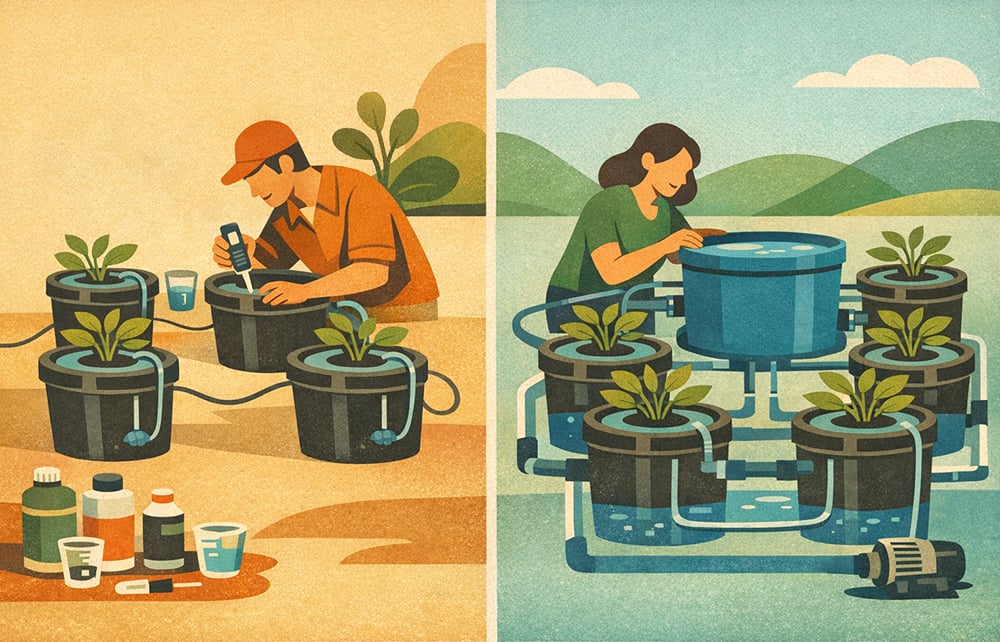
This is where the benefits of RDWC come in. RDWC dramatically streamlines nutrient management by centralizing these tasks. As a grower, you can make adjustments at the control reservoir and allow the circulation to distribute the corrected solution throughout the entire system within minutes. Not only does this save time, but it also ensures all your plants receive identical nutrition, eliminating the variable conditions that can happen when managing multiple independent reservoirs.
Both DWC and RDWC systems prioritize oxygenation; however, their approaches are different. DWC completely relies on airstones within each bucket to introduce DO. Each reservoir, therefore, needs its own air pump or connection from a central pump.
RWDC is much more advanced, combining airstone oxygenation with the oxygen introduced through water movement. As the solution circulates through pipes, returns to the reservoir, and passes through the growing sites, it experiences water turbulence that naturally increases DO levels. This dual-action oxygenation usually results in higher DO concentrations than static DWC systems, which may lead to accelerated growth rates.
For smaller hydroponic operations, DWC systems offer excellent flexibility. Adding capacity simply means introducing another independent bucket. This flexibility allows you to experiment with different nutrient formulations for various plant species or growth stages without affecting other plants.
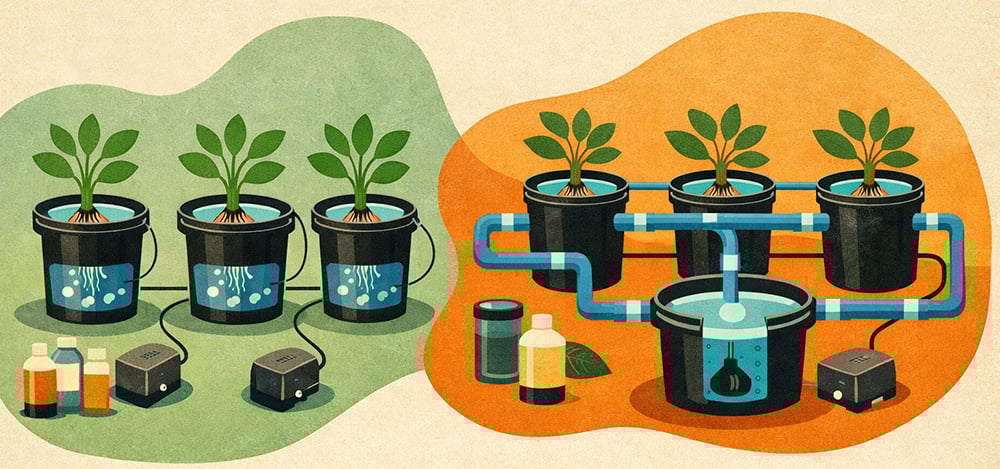
However, as operations expand, managing multiple individual DWC reservoirs can become extremely labor-intensive. RDWC addresses this issue by making expansion more manageable. In RDWC networks, adding growing sites only requires additional containers and connecting pipes, while nutrient management remains the same and centralized, regardless of how many plants the system is supporting.
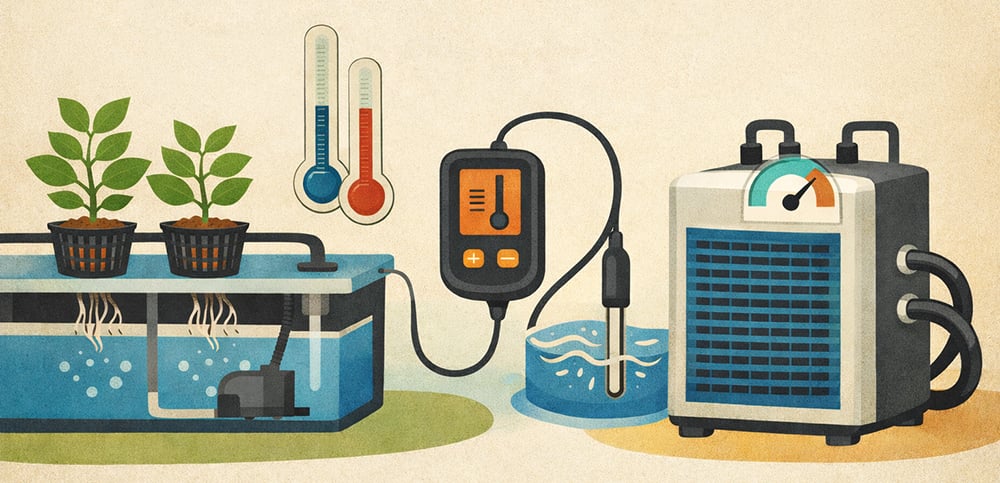
Maintaining optimal root zone temperature is essential in deep water culture hydroponics, as warm water holds less DO and increases disease susceptibility. Most plants thrive in a solution of 65-72°F (18-22°C). In DWC, each bucket’s temperature must be managed separately with a temperature sensor. If you are using smaller reservoirs, they are more likely to be susceptible to temperature fluctuations from environmental changes, potentially requiring chillers or cooling solutions for each container.
RDWC’s larger total water volume provides greater thermal stability. The central reservoir acts as a buffer against temperature changes, and as they are all connected, a single water chiller can cool the entire system. This thermal mass makes RDWC more resilient to environmental temperature variations.
Building from the advantages above, DWC systems represent one of the easiest entry points into hydroponics. The basic components are readily available and affordable to start your hydroponic growing journey, with many growers successfully building functional DWC systems for under $50 per bucket!
As each bucket operates autonomously, you have complete control over your system. This allows customized nutrition for different plant species or growth stages. For example, you can run seedlings, vegetative plants, and flowering plants at the same time with appropriate nutrients for each stage.
Another big benefit of DWC systems is disease containment. As DWC systems have isolation between buckets, it prevents pathogen transmission. So, if disease or root rot were to develop in one reservoir, it would remain confined to that container, protecting the rest of your plants.
As mentioned, DWCs require a lower initial investment as they require minimal capital outlay. You can start with a single bucket and expand gradually without needing to invest in circulation pumps, large reservoirs, or extensive plumbing.
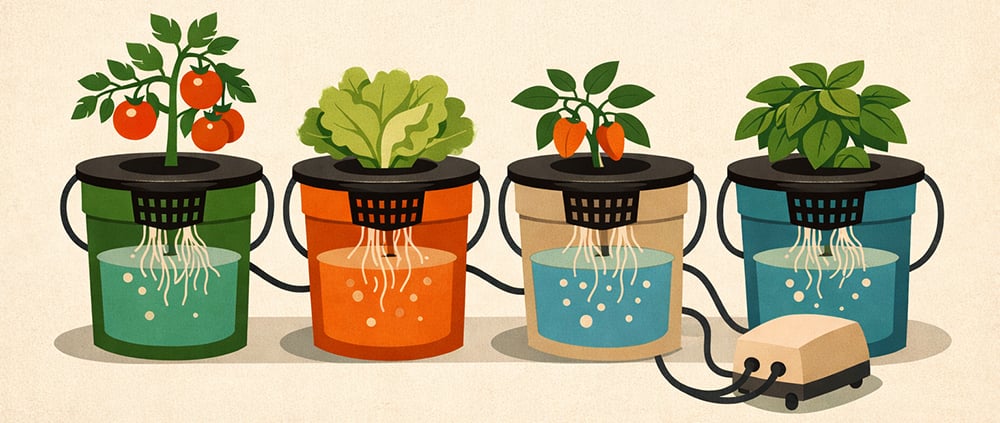
For beginners, DWC is the way to go as problems are pretty straightforward to diagnose and fix. Each bucket is a self-contained unit, making it easier to identify and address issues without affecting other plants.
RDWC reduces daily maintenance dramatically. Instead of testing and adjusting separate reservoirs, you can manage everything at one control point. This is a massive benefit for larger hydroponic operations. RDWC also has consistent growing conditions where all plants receive identical nutrient concentrations, DO, and pH levels. This uniformity promotes growth across all growth sites and makes crop timing much easier.
As RDWC has a combination of airstones and water circulation, they generally produce higher DO levels, increasing growth rates and yields. RDWC systems also have better temperature stability because larger water volumes resist temperature fluctuations more effectively.

If you are looking for a hydroponic system with a scalable design, then RDWC systems are the go-to! They can easily accommodate additional growing sites without increasing maintenance requirements. This consistency and control, therefore, often produce more uniform crops with predictable harvest timing, making it the preferred deep water culture for commercial operations.
Managing multiple separate reservoirs can be very labor-intensive. For example, testing and adjusting each bucket individually can require hours of work.
Even with extremely careful management, slight variations in EC, pH, and nutrient concentrations between buckets are inevitable, which could result in uneven plant development.

Smaller containers warm much quicker than a larger system, making consistent temperature control challenging without multiple cooling systems.
The greatest strength of RDWC systems – interconnection – becomes its primary vulnerability if disease strikes. Pathogens can quickly spread through circulating water, potentially affecting the entire crop before being detected.
RDWCs have a higher initial cost as they require circulation pumps, larger reservoirs, and plumbing components. With more components comes more potential failure points. As RDWC is a more complex system, pump malfunctions or pipe blockages require immediate attention to prevent oxygen depletion.
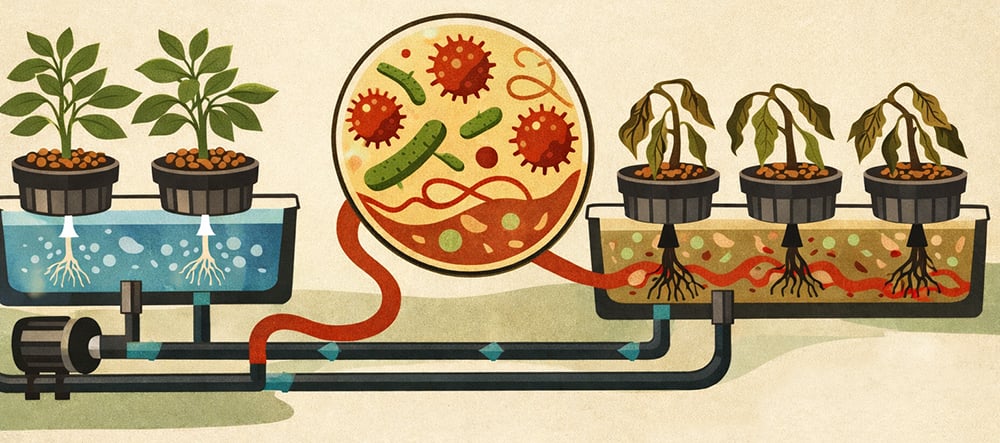
For those looking to grow different plants, RDWC makes it challenging as all plants share the same nutrient solution. This makes it impractical to grow species with vastly different nutritional requirements simultaneously.
Regardless of which deep water culture system you choose, proper monitoring of key parameters is key to success. Both DWC and RDWC need regular measurement of EC, pH, DO, and solution temperature.
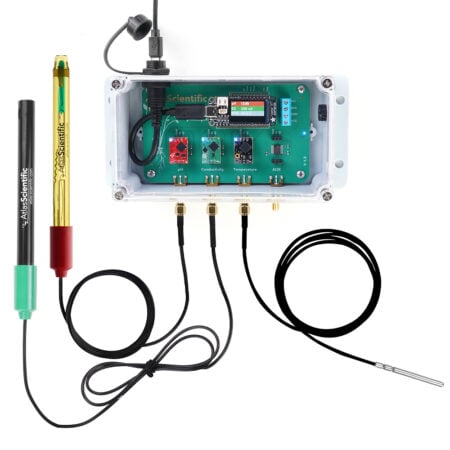
Monitoring hydroponic systems has never been easier with Atlas Scientific! We offer continuous automated monitoring of all of these critical parameters so you can be successful. Real-time data logging allows you to track trends, receive alerts when parameters drift outside optimal ranges, and make data-driven adjustments to improve yields.
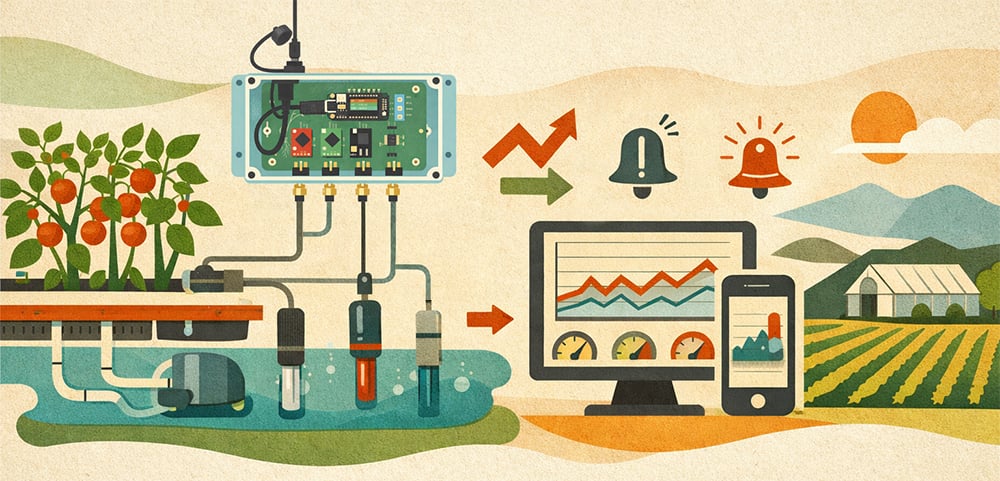
For RDWC systems in particular, automated monitoring is invaluable. Sensors like the Wi-Fi Hydroponics Kit installed in the control reservoir provide comprehensive system-wide data without the need to manually test each growing bucket/sit. Integration with automated dosing systems can maintain perfect pH and EC levels with minimal human intervention.
If you are unsure which EC meter or pH sensor is best for you, read our guides on the best EC meters for hydroponics and the best pH probes for hydroponics.
The decision between DWC and RDWC depends on your specific requirements, goals, and constraints.
Choose DWC if:
Choose RDWC if:
Whichever system you select, following our tips will help your chances of success.
Water Quality: Start with reverse osmosis (RO) or filtered water when possible. Municipal water containing chloramines or chlorine can stress plants and disrupt beneficial biology. Unsure about water quality treatment? Read our article – A Complete Guide To Water Analysis Methods In Industries.
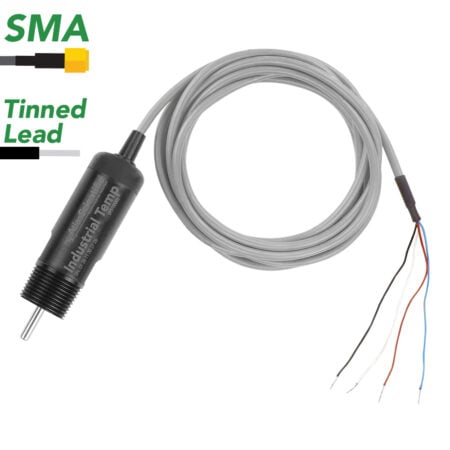
Solution Temperature: You should maintain temperatures between 65-72°F (18-22°C) and invest in a good-quality temperature probe and water chiller for consistent control, especially if you live in or experience warmer climates.
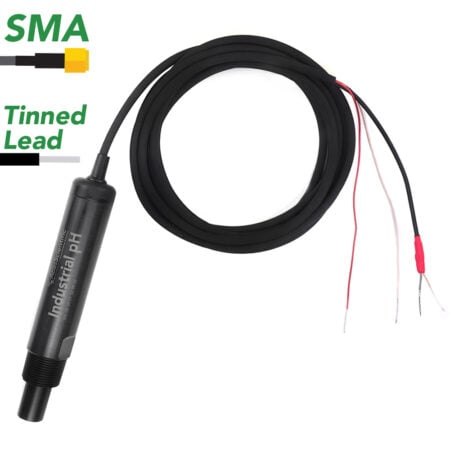
pH Management: Monitor the pH level daily with a pH meter and maintain levels between 5.5-6.5 (for most crops). Do not worry, pH drifts are normal as plants consume nutrients, but remember regular testing and adjustments to prevent nutrient lockout.
Dissolved Oxygen: Provide adequate aeration with appropriately sized air pumps and top-quality airstones. Remember to replace airstones every few growing cycles as mineral buildup reduces efficiency.
Sanitation: Between growing cycles, thoroughly clean and sanitize all components. You can use hydrogen peroxide or specialized hydroponic sanitizers to eliminate pathogens and prevent disease.
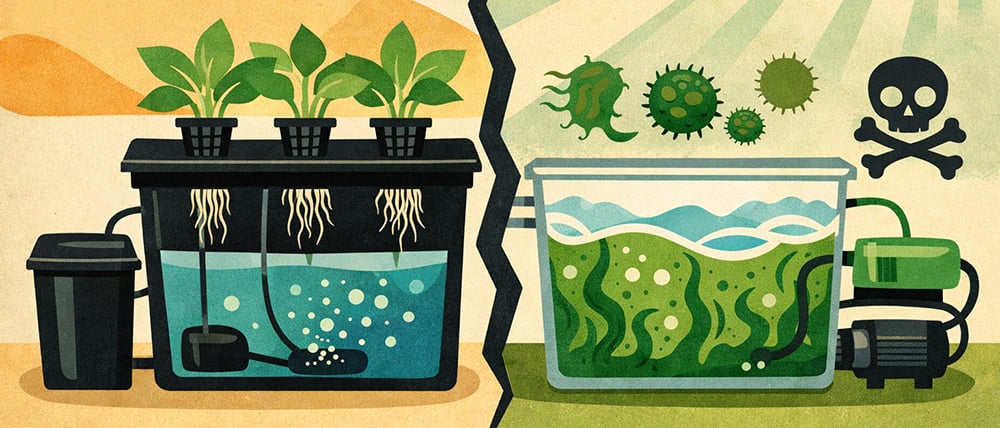
Light Prevention: Keep all nutrient solution containers completely light-proof, as light exposure promotes algae growth. Algae compete for oxygen and nutrients, and can harbor pathogens.
Both DWC and RDWC are effective methods for hydroponic cultivation. DWCs are fantastic for entry-level hydroponics as they offer affordability, simplicity, and flexibility. RDWC, on the other hand, provide consistence, efficiency, and scalability suited for more experienced hobbyists and hydroponic commercial operations.
When selecting which deep water culture, select one that aligns with your experience level, your available time for maintenance, the budget you have, and your growth goals. Most hydroponic growers start with basic DWC systems to learn the fundamentals before transitioning to RDWC as operations expand.
Whichever path you choose today, accurate monitoring and water quality control are key. Advanced monitoring solutions like those at Atlas Scientific will help optimize growing conditions and prevent problems before they impact your crops. If you would like to learn more about DWC Vs RDWC hydroponic systems, or if you are unsure which monitoring kit will suit your operational needs, reach out to the world-class team at Atlas Scientific today!


Maintaining the correct pH inside a bioreactor is essential for successful fermentation, cell culture, and bioprocess optimization. Even small pH fluctuations can dramatically affect enzyme

Reverse osmosis water is best for hydroponics, providing near-zero EC and removing contaminants. It offers reliable results, precise nutrient control, and typically pays for itself