

Blog
The Importance of Measuring ORP in Cooling Towers
ORP in cooling towers gives you a real-time look at how strong the water’s oxidizing power is, which lets you know if disinfection is really





ORP in cooling towers gives you a real-time look at how strong the water’s oxidizing power is, which lets you know if disinfection is really working. ORP can help stop the risk of bacterial growth, biofilm, scale formation, and corrosion before they damage equipment by keeping an eye on how well the system can kill microbes.
Cooling towers quietly remove extra heat from important systems in data centers, hospitals, power plants, and HVAC systems. But the warm, aerated water is also perfect for bacteria, biofilm, scale, and corrosion. Taking care of this chemistry is important for the health of the public, the life of the equipment, and the efficiency of the equipment.

ORP (Oxidation-Reduction Potential) gives you an answer to a very important question in real time: Is the water able to kill germs right now? This guide tells you what ORP is, why it’s important in cooling towers, and how accurate ORP measurement helps keep things running safely and efficiently.
Every cooling tower operates as an open evaporative system. Water cascades through a filter medium, air is drawn across it, and a fraction of the water evaporates. The elegant physics behind that process comes with three unavoidable consequences.
First, as water evaporates, dissolved minerals stay behind and concentrate. Left unchecked, calcium carbonate and other salts drop out of solution and form scale on heat exchanger surfaces, where even a thin layer dramatically reduces thermal transfer efficiency.
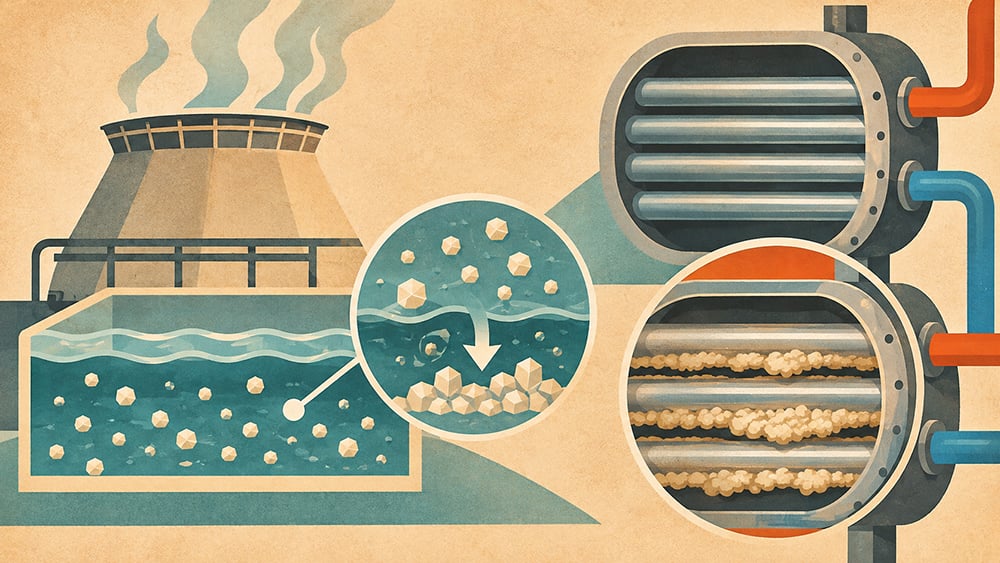
Second, the combination of dissolved oxygen, varying pH, and concentrated ions drives corrosion of carbon steel, copper, and galvanized components throughout the system. Third, and most dangerously, warm water between roughly 25°C and 42°C with available nutrients is a textbook environment for microbial growth. Bacteria, fungi, and algae establish biofilms that insulate heat exchanger surfaces, accelerate microbiologically influenced corrosion, and shelter pathogens. Legionella pneumophila thrives specifically in poorly maintained cooling towers and can be aerosolized in drift droplets that travel several kilometers downwind.
The weapon of choice against all three problems, especially the microbial one, is oxidizing biocide: chlorine, bromine, chlorine dioxide, ozone, peracetic acid, or hydrogen peroxide. Each works by chemically oxidizing the cell walls and metabolic machinery of microorganisms, disrupting biofilm, and breaking down organic contaminants. But simply dosing biocide into a tower is not the same as controlling it. Overdose, and you accelerate corrosion, waste chemicals, and create discharge compliance problems. Underdose, and you invite the very contamination you were trying to prevent. The control question is how to know, continuously and reliably, how much oxidizing power the water actually has at the point of contact with the microbes.
Oxidation-Reduction Potential, also written as redox potential, is a measurement of the net electron-transfer capacity of a solution. Every chemical species in water can be classified as either an oxidizer, which accepts electrons, or a reducer, which donates them. ORP expresses the balance between these two populations as a single voltage, measured in millivolts, referenced against a stable electrochemical standard.

An ORP sensor consists of two half-cells immersed in the same solution. The measuring electrode is typically a noble metal such as platinum, chosen because it is chemically inert and exchanges electrons freely with the surrounding water without participating in the reactions itself. The reference electrode, usually silver/silver chloride, provides a known and stable voltage against which the measuring electrode is compared. The potential difference between them, in millivolts, is the ORP value.
The critical insight is that ORP does not measure the concentration of any single chemical. It measures the net oxidizing capacity of everything in the water, simultaneously. This is why it outperforms almost every other real-time parameter for disinfection control, and why regulatory bodies and water treatment specialists increasingly specify it as the primary control signal for cooling towers.
For decades, cooling tower disinfection was verified by measuring free chlorine residual. While still useful diagnostically, it has major limitations as a real-time control signal.
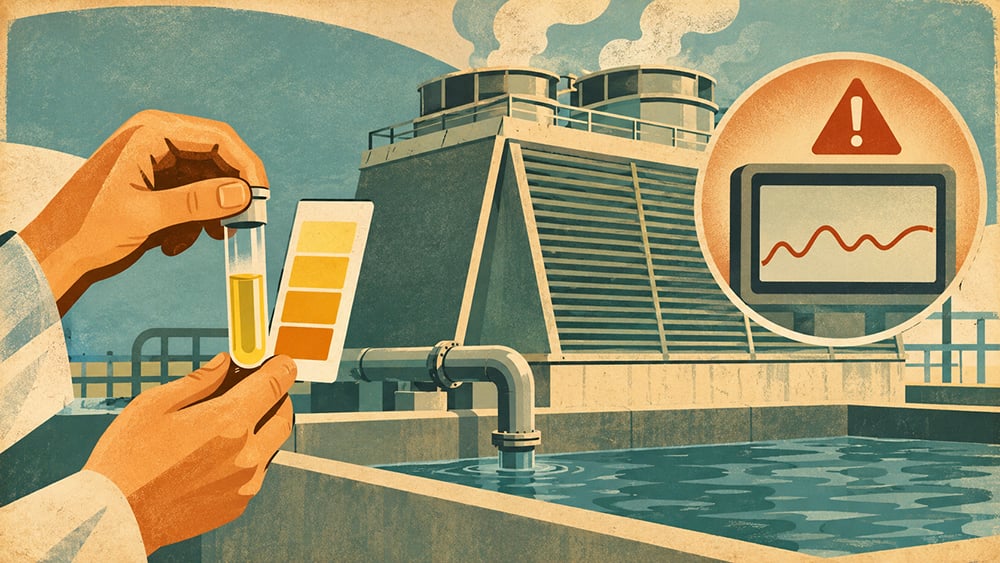
Tests for free chlorine show how much chlorine is there, not how much is biocidally active. At pH 7, most chlorine is in the form of hypochlorous acid, which is very active. At pH 8.5, it changes to hypochlorite ion, which is about eighty times less effective. Chlorine tests can’t tell you how strong a disinfection system is, but two systems can show 1 ppm chlorine and be very different. ORP can do this because it measures how much oxidizing activity the water really has.
Chlorine tests don’t work either when other biocides like bromine, chlorine dioxide, or ozone are used. ORP is not limited to chemistry; it shows the overall oxidizing strength of any disinfectant.
Changes in demand are immediately reflected in ORP. When organic contamination eats up oxidizer, ORP drops in a matter of seconds, but periodic chlorine testing doesn’t catch it at all.
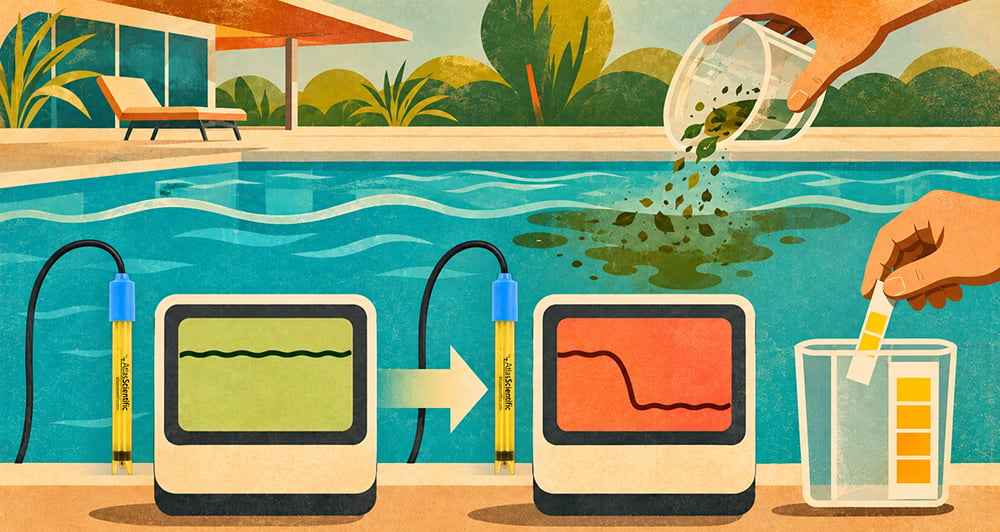
The biocide chemistry, the makeup water, the organic load, and the rules or insurance that the site follows all affect how to choose an ORP target for a cooling tower. For most programs that use chlorine or bromine, an ORP setpoint of +600 mV to +700 mV against a silver/silver chloride reference is a common goal for keeping microbes under control all the time. If the value is less than +300 mV, it means that the oxidizing capacity is not strong enough, and microbial growth at some point is likely. Values over +750 mV usually mean that too much biocide is being used, which wastes it, speeds up corrosion on copper and mild steel, and can cause problems with the law at the blowdown discharge.
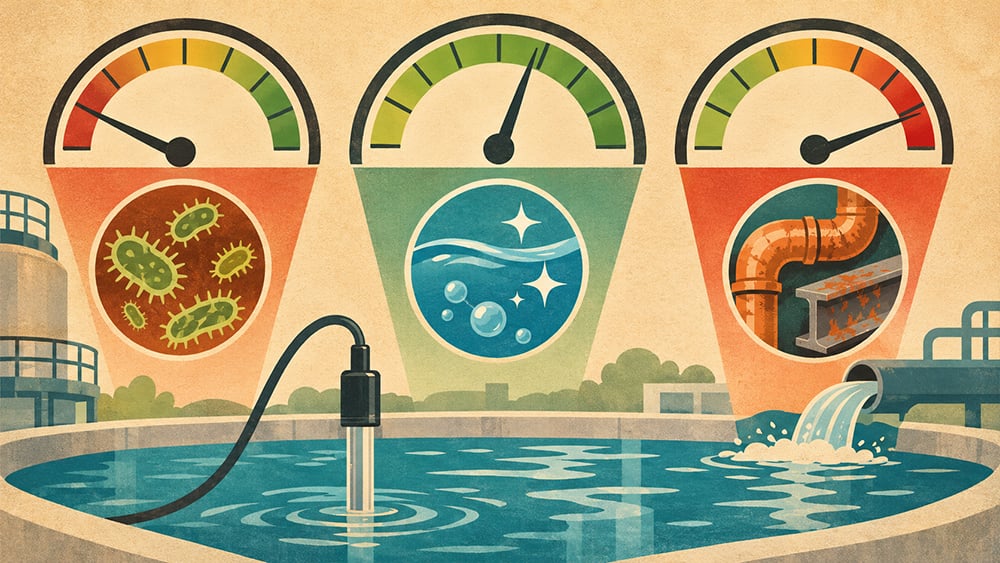
Programs using chlorine dioxide or ozone apply slightly different setpoints because these chemistries produce different electrochemical signatures. Sites using stabilized bromine may target the lower end of the typical range because stabilized chemistries intentionally trade peak oxidation potential for extended contact time.
The critical discipline is not the specific number, but the consistency of holding it. An ORP controller with a properly calibrated sensor and a responsive biocide feed will keep the tower inside a narrow band around the setpoint regardless of load changes or sudden demand events. A well-tuned ORP loop responds in seconds. A manual grab-sample program, by contrast, exposes the tower to hours of uncontrolled chemistry between measurements.
ORP is conceptually simple and operationally deceptive. In a clean laboratory buffer, any reasonable sensor gives a fast, stable reading. In a real cooling tower sump, it is a different story, and this is where many programs fail.
The first challenge is electrode fouling. Cooling tower water carries biofilm, suspended solids, scale precursors, and dissolved organics that coat the platinum surface. A fouled electrode reads sluggishly, drifts downward, and eventually stops responding. The solution is a sensor chosen and installed for easy cleaning, combined with a realistic cleaning schedule.
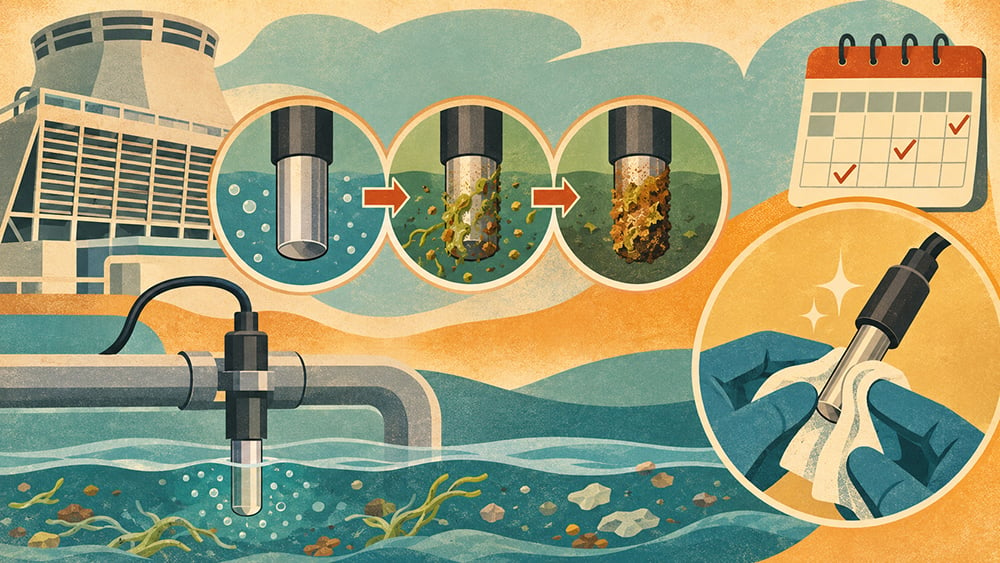
The second challenge is reference electrode stability. The silver/silver chloride reference contains a porous junction that allows ionic contact between the internal reference solution and the process water. If that junction clogs with scale, biofilm, or silver sulfide precipitate, the reference potential drifts and the entire measurement becomes unreliable. High-quality industrial ORP sensors are built with double-junction reference systems specifically to extend life in aggressive environments.
The third challenge is signal conditioning. ORP is a millivolt-level signal measured across a very high impedance. A few meters of cable run through an electrically noisy plant environment can corrupt the signal badly enough to make the reading meaningless.
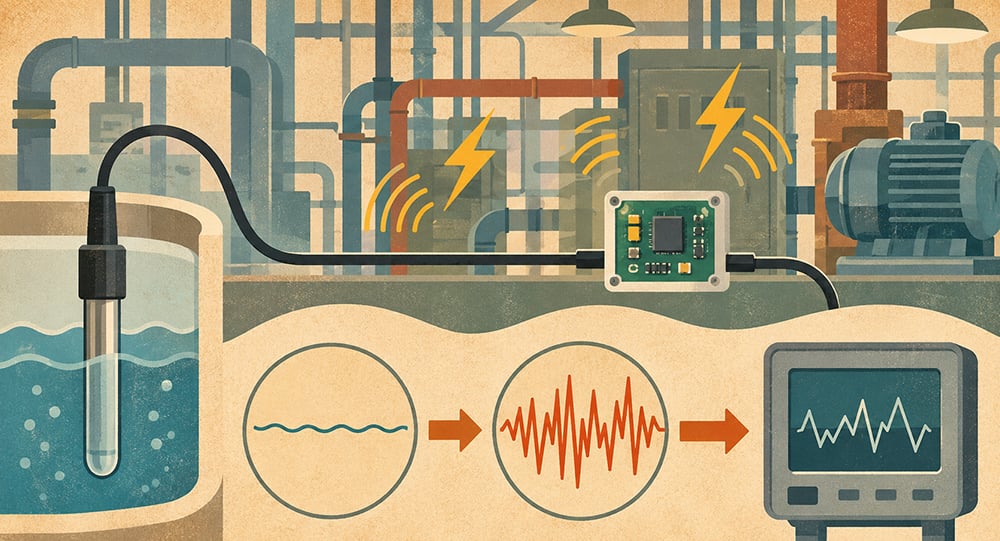
Atlas Scientific’s EZO ORP Circuit is designed to solve the signal conditioning problem directly. Rather than requiring a custom high-impedance analog front-end design, the EZO-ORP handles all the conditioning internally and outputs clean, calibrated ORP data in millivolts over UART or I2C. It reads from -1,019.9 mV to +1,019.9 mV with a resolution of 0.1 mV and an accuracy of ±1 mV, operates from a 3.3V or 5V supply, and integrates with embedded solutions like the microcontroller, Raspberry Pi, or Arduino-based system with a few lines of code. For cooling tower applications, that means a plant engineer can build continuous ORP monitoring on a PLC or edge device without designing analog instrumentation from scratch.
A properly engineered ORP monitoring setup consists of four elements: the sensor, the signal conditioner, the controller or data system, and the installation hardware that puts the sensor where it can see representative water.
The sensor is the component with the shortest service life and the biggest impact on data quality. Atlas Scientific offers the Lab Grade ORP Probe for prototyping and light-duty monitoring, and the Industrial ORP Probe for permanent installations in demanding environments.
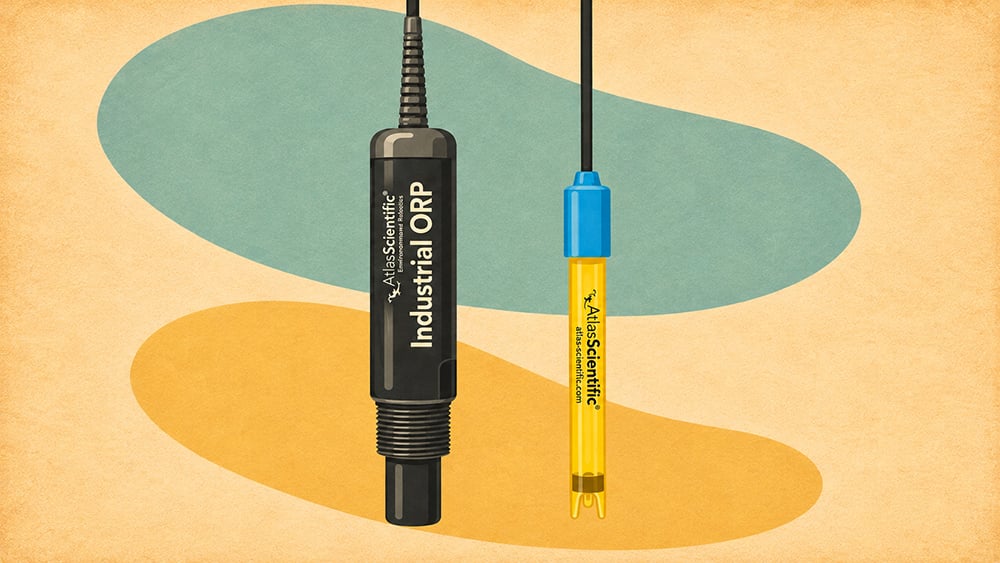
For cooling tower service, the industrial probe is the appropriate choice because it is built for the continuous-duty cycle, extended chemical exposure, and mechanical handling that a plant environment imposes.
The signal conditioning stage is where the EZO-ORP Circuit earns its place, turning an otherwise fussy high-impedance measurement into a stable digital value that any modern control system can ingest. For teams who want a complete, pre-matched measurement chain, the ORP Kit bundles a calibrated probe, the EZO-ORP Circuit, and the accessories needed to bring a system online quickly.
The controller is whatever system reads the digital ORP value and acts on it, whether that is a dedicated cooling tower controller, a facility SCADA system, a custom PLC program, or an edge device running a cloud-connected monitoring stack. Because the EZO-ORP outputs straightforward ASCII data, integration does not require proprietary protocols or vendor-specific software.
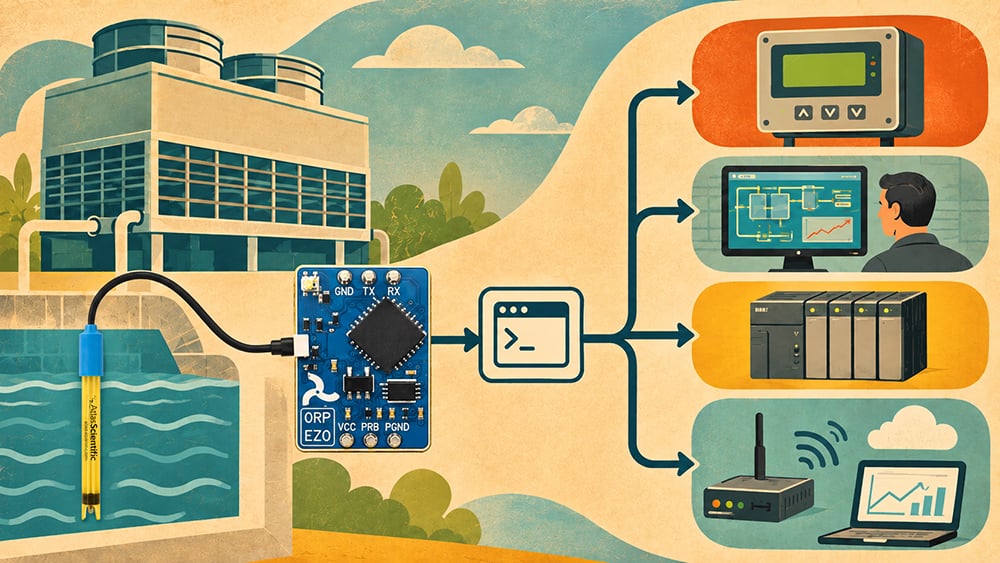
Installation hardware is the part most often overlooked. An ORP probe must see flowing, representative water. Stagnant sump installations expose the sensor to settled solids and unrepresentative chemistry. A flow cell or bypass loop on the circulation piping, with isolation valves for maintenance, is the preferred arrangement. Atlas Scientific’s line of in-line probe fittings provides the plumbing hardware needed to mount probes cleanly into the recirculation line.
Even in well-maintained cooling towers, an ORP sensor will drift and get dirty over time. For reliable monitoring, regular maintenance is a must.
Before being used, probes should be calibrated against a known redox standard like Zobell’s solution or a quinhydrone buffer. They should also be checked from time to time. The EZO-ORP Circuit can be calibrated at one point and remembers it.
Monthly checks and cleaning, followed by recalibration, are a good routine. Cooling tower service industrial ORP probes usually last between one and three years.
The way we manage cooling tower water is moving toward constant, data-driven monitoring. More and more, regulators, insurers, and facility operators want to be able to check how well disinfection is working in real time instead of just doing it by hand now and then. To get better control of microbes while using fewer chemicals, less water, and less energy, you need to know exactly what the water chemistry is at all times.
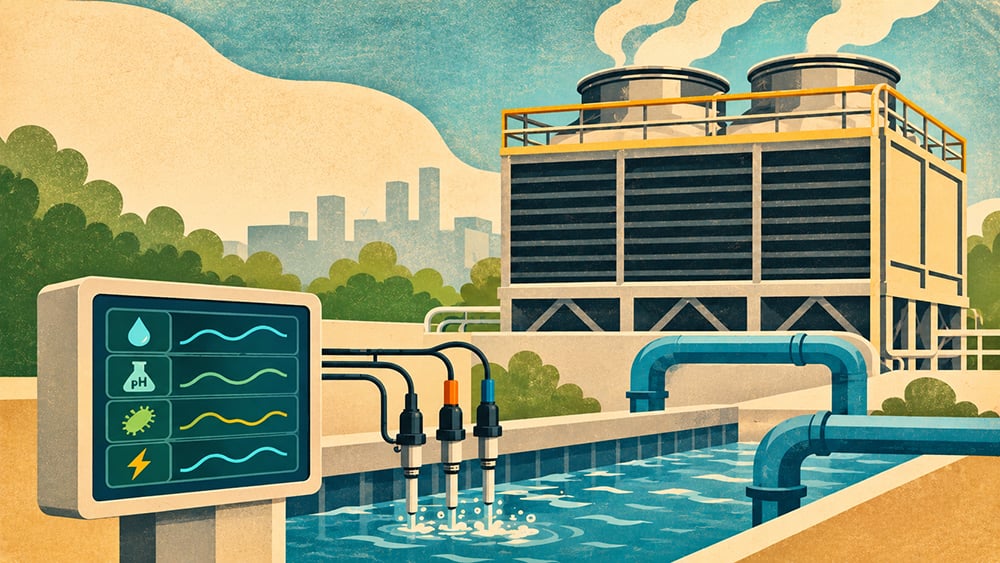
ORP is what gives us that information. It shows how well biocides work right away and works well with modern digital control systems. It’s now much easier and cheaper to set up reliable ORP monitoring thanks to small probes and digital circuits.
If you want to learn more about ORP or look into the ORP probes and sensing solutions we offer, contact the world-class team at Atlas Scientific.
ORP in cooling towers gives you a real-time look at how strong the water’s oxidizing power is, which lets you know if disinfection is really

Water color is measured either via standardized lab tests using the Platinum-Cobalt (Pt-Co/APHA) scale and spectrophotometry for regulatory compliance, or through continuous digital sensing (RGB,