

Blog
The Best Indoor Air Quality Monitors
Indoor air quality can have a major impact on the comfort and productivity of homes, offices, schools, laboratories, and industrial facilities. Carbon dioxide buildup, poor







An RDWC (Recirculating Deep Water Culture) system connects multiple deep water culture sites into one continuously circulating nutrient loop, creating a single, shared root zone. By stabilizing dissolved oxygen, pH, temperature, and electrical conductivity across all plants, RDWC amplifies growth and nutrient uptake. The science lies in balance: precise monitoring turns recirculation into explosive, uniform plant performance.
If traditional hydroponics is about precision, an RDWC system is about amplification. Recirculating Deep Water Culture (RDWC) takes the core idea of deep water culture (DWC), where plant roots are suspended in an oxygenated nutrient solution, and connects multiple growing sites into one continuous circulating system.

When dialed in, an RWDC system produces explosive growth rates, rapid root development, and incredible nutrient uptake efficiency. When it’s not dialed in, small imbalances spread fast. That duality is what makes RDWC powerful, and it is why understanding the science behind it matters.
An RDWC system is a hydroponic arrangement where a central reservoir is connected to several plant containers. To maintain consistent nutrient concentration, temperature, and dissolved oxygen levels throughout the system, nutrient solution is constantly moved between the reservoir and each grow site.
Each plant may sit in a separate bucket in a typical Deep Water Culture (DWC) system, with oxygen supplied by an air stone. Every bucket in an RDWC system is connected to every other bucket. Air stones keep each site’s dissolved oxygen levels high while water flows continuously through the system, usually propelled by a water pump.
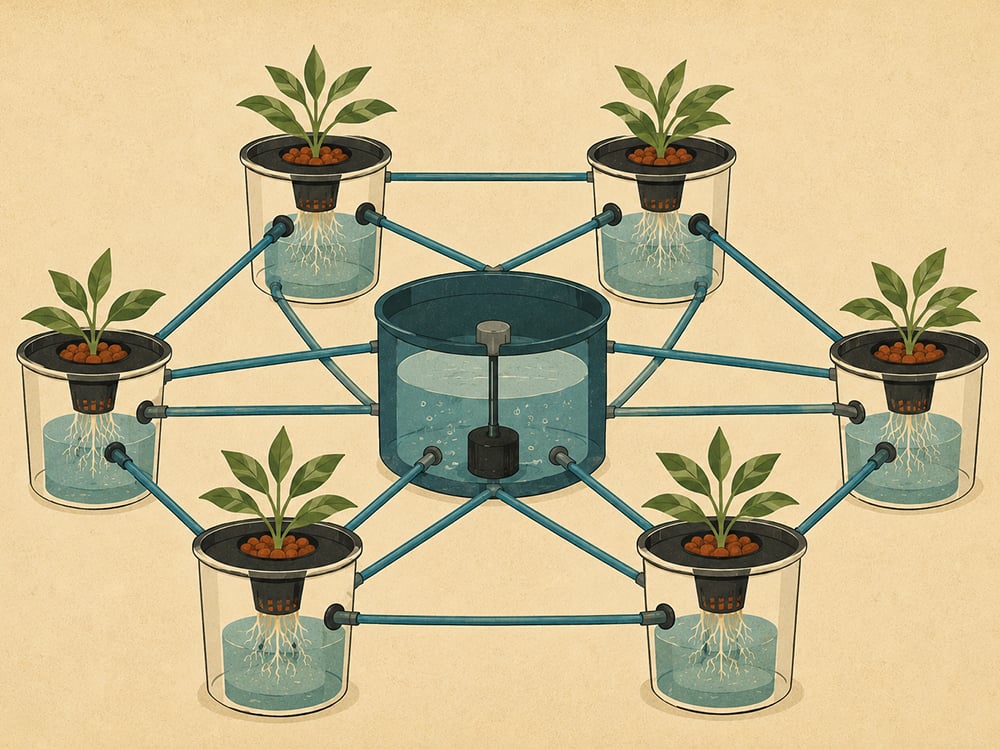
Recirculation is what makes RDWC unique. The system functions as a single, expansive root zone rather than as separate containers.
RDWC may initially appear to be a plumbing improvement. In actuality, it alters system dynamics and plant physiology in a number of significant ways.
Nutrient concentration can drift on its own in isolated DWC buckets. EC in that bucket alone may change if one plant absorbs nitrogen more vigorously. Each container may have a slightly different temperature. These variations cause growth to fluctuate over time.
Water flows continuously between sites and the main reservoir in an RDWC system. All plants experience temperature stabilization and nutrient concentration equalization as a result of this mixing.
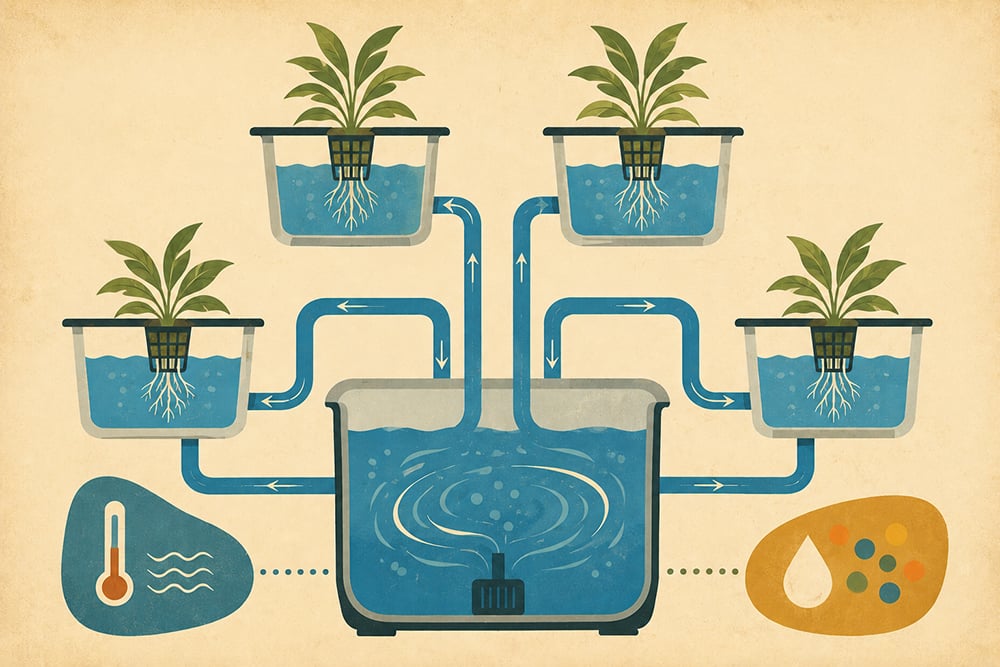
Instead of producing numerous micro-environments, you are generating a single, homogenized nutrient body from a chemical standpoint. Although this uniformity increases consistency, errors propagate throughout the system.
The single most important parameter in any deep water system is dissolved oxygen (DO).
For respiration, plant roots need oxygen. Air pockets in the soil supply that oxygen. It is necessary to dissolve oxygen in the water when using hydroponics. Insufficient DO levels cause roots to suffocate, pathogens to flourish, and growth to drastically slow down.
Because RDWC systems integrate water circulation and active aeration, they perform exceptionally well. Each bucket receives oxygen from air stones, and stagnation is avoided by water movement. Dissolved oxygen, however, is dynamic.
It is influenced by temperature, microbial activity, root density, and nutrient concentration. Less oxygen is held in warmer water. Heavy root masses consume more oxygen. Microbial populations compete for available DO.
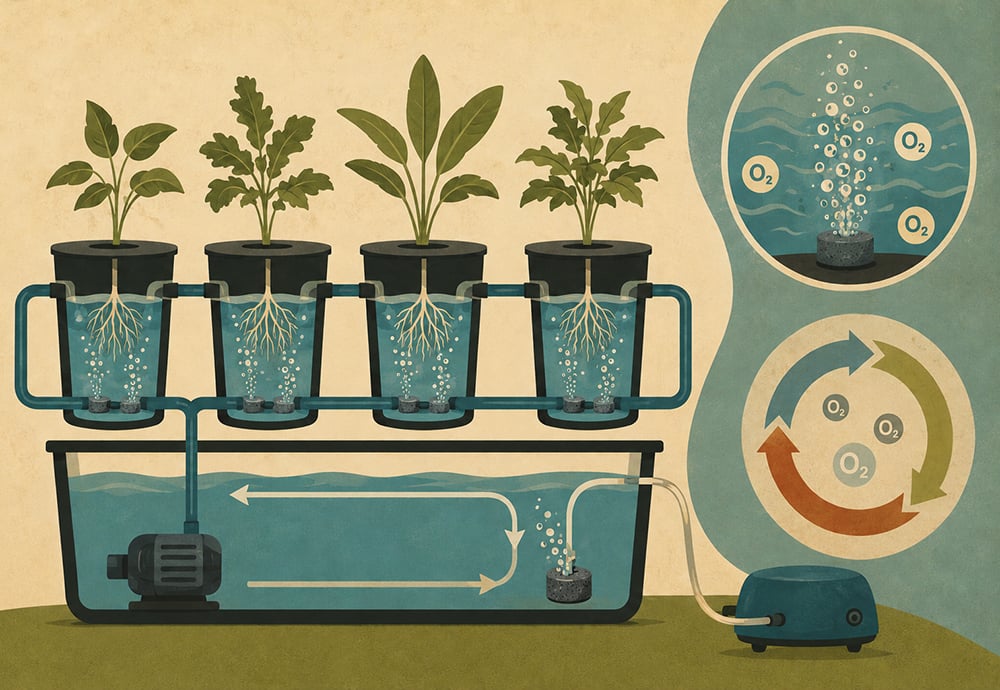
In high-performance RDWC systems, DO levels are often maintained above 6 mg/L, with many growers targeting even higher concentrations for aggressive growth phases.
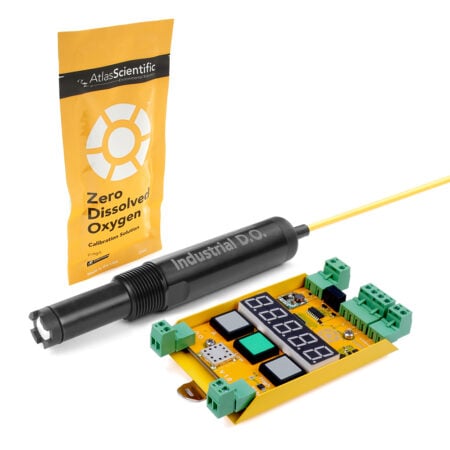
This is where measurement becomes critical. Relying on assumptions about oxygenation is risky in a shared-root-zone system. Continuous monitoring using a lab-grade dissolved oxygen probe, such as those engineered by Atlas Scientific, allows growers to verify that oxygen levels remain within an optimal range. In RDWC, oxygen is not optional. It is the engine of the entire system.
Total dissolved salts in the nutrient solution are reflected in electrical conductivity (EC). Simply put, it indicates the level of nutrient concentration.
Plants in an RDWC system get their nourishment from the same reservoir. EC progressively decreases as they take in nutrients. That decline occurs uniformly because the system recirculates. Consistency is the benefit. The difficulty lies in accuracy.
Every plant is instantly affected if EC increases as a result of evaporation or improper dosage. Deficits impact the entire crop at once if EC falls too low. RDWC is chemically direct, in contrast to soil systems, where localized buffering may take place. Everything that occurs in the reservoir happens everywhere.

High-quality conductivity probes, especially those designed for continuous immersion, provide real-time insight into nutrient strength. Atlas Scientific’s EC circuits and industrial conductivity probes are frequently integrated into hydroponic control systems to automate dosing and maintain stable nutrient concentrations. In a recirculating environment, EC monitoring is not a convenience. It is a safeguard.
pH determines nutrient availability. Even if EC is perfect, incorrect pH can lock out essential elements such as iron, calcium, or phosphorus.
In RDWC systems, pH drift can occur rapidly due to plant uptake patterns. For example, nitrate absorption can gradually raise pH, while ammonium uptake can lower it. Because the entire system shares one nutrient body, pH fluctuations affect all plants at once. Most RDWC growers maintain pH between 5.5 and 6.5, depending on crop type and growth stage.
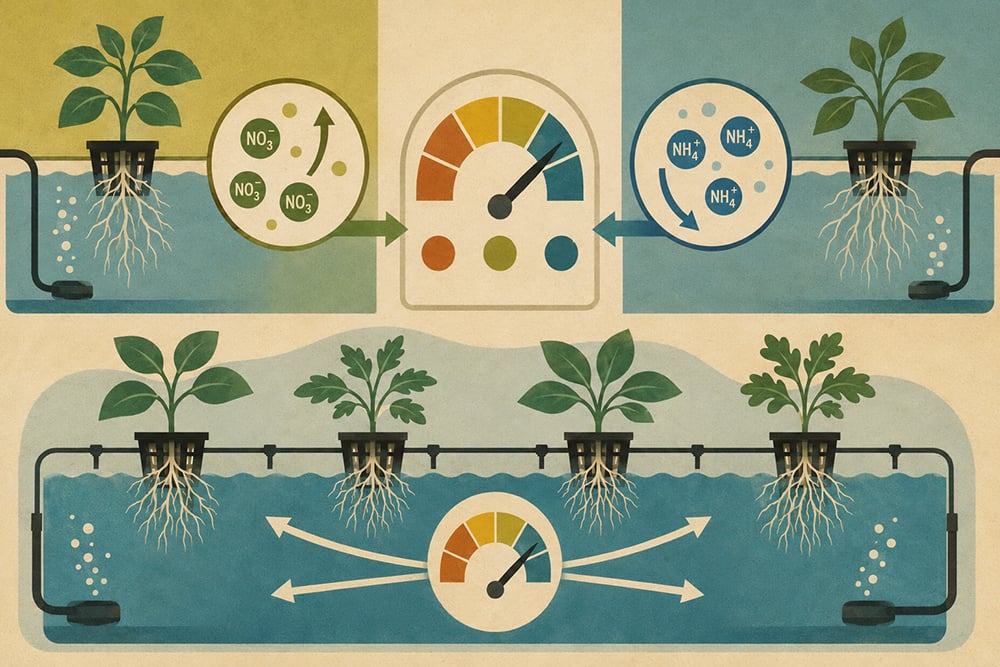
Continuous pH monitoring allows for timely correction. Lab-grade pH probes designed for hydroponic reservoirs provide more stable and drift-resistant readings than inexpensive handheld devices, particularly in high-nutrient, high-humidity environments.
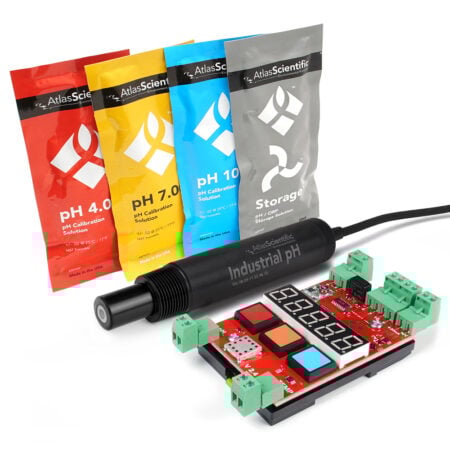
Atlas Scientific’s pH probes and EZO™ pH circuits are commonly embedded into custom hydroponic controllers, giving growers precise digital readings that can trigger automated dosing systems. In RDWC, pH stability translates directly into nutrient efficiency.
Water temperature influences nearly every other parameter in an RDWC system. As the temperature increases, the dissolved oxygen capacity decreases. Warmer water also encourages pathogen growth, particularly Pythium, which can devastate hydroponic root systems.
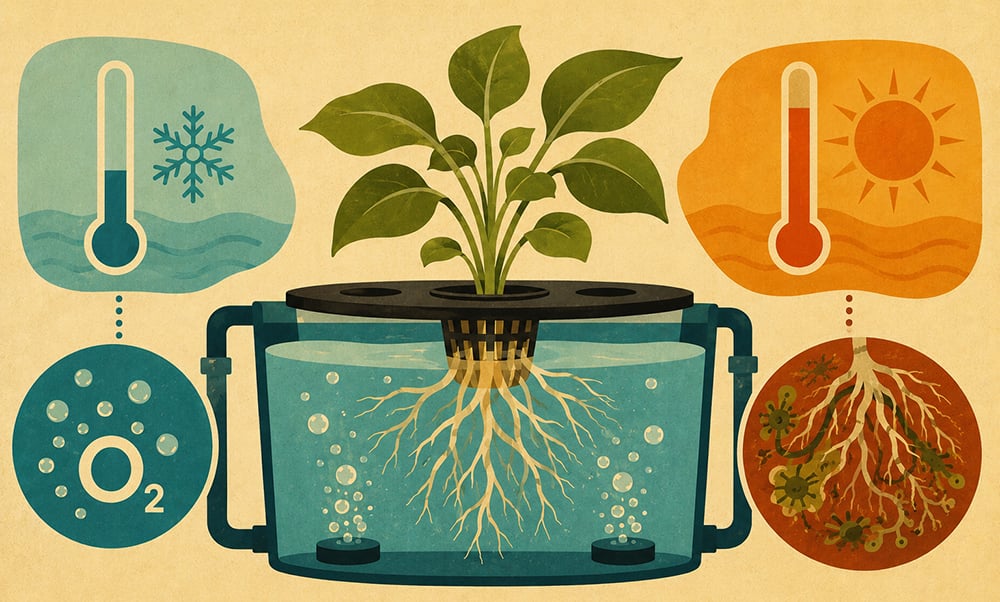
Most RDWC systems perform best with nutrient solution temperatures between 65°F and 70°F (18–21°C). Maintaining this range may require water chillers in warm environments.
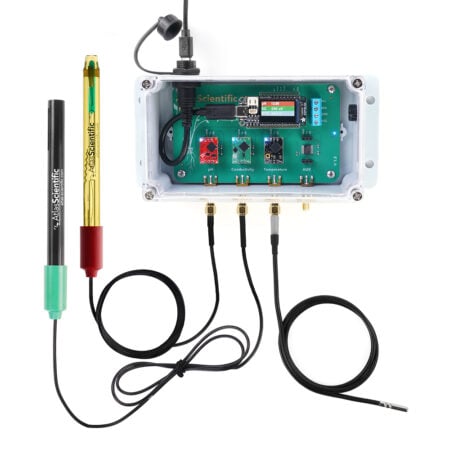
Temperature probes integrated into the reservoir provide continuous feedback. Atlas Scientific offers compact temperature sensors that can integrate alongside pH, EC, and DO probes, allowing growers to monitor all core water chemistry variables from a single platform. In many cases, temperature is the variable that determines whether a system thrives or struggles.
A balanced flow between each grow site is essential to an RDWC system. To avoid dead zones or unequal nutrient distribution, water must flow uniformly. Areas of stagnation where oxygen levels fall and root health deteriorates can be caused by poorly designed plumbing. It is crucial to choose the right pump, pipe diameter, and return flow design.
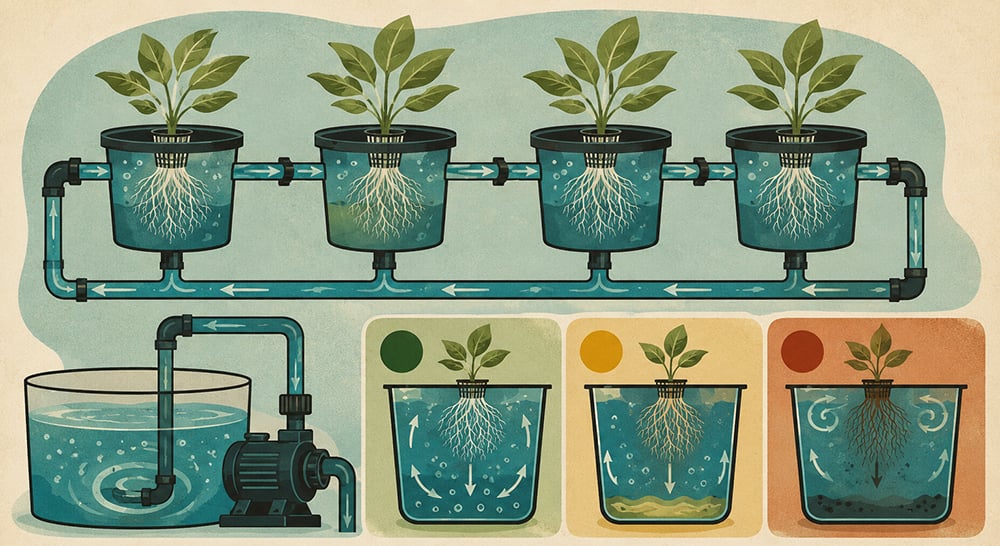
The rate at which nutrient changes spread throughout the system is influenced by the flow rate. Although faster recirculation speeds up stabilization, it can also make turbulence worse. Energy consumption is decreased by slower flow, but slight imbalances may persist longer.
In order to maximize flow dynamics, sophisticated growers frequently model their systems. For small setups, this might seem excessive, but careful hydraulic planning greatly enhances the performance of commercial RDWC installations.
Standard Deep Water Culture isolates plants in separate containers. Each bucket is its own micro-environment. This allows for individual adjustments but can result in variability across plants. RDWC connects those environments into one shared system. The primary benefit is uniformity. The primary risk is systemic exposure. If a pathogen enters the system, it can spread quickly. If nutrient dosing is incorrect, all plants are affected simultaneously.

For growers prioritizing consistency and scalability, RDWC offers advantages. For those experimenting with different nutrient regimens across plants, isolated DWC may offer more flexibility.
High-density plant production with remarkable growth rates can be supported by RDWC systems in commercial settings. Aggressive vegetative development is encouraged by the steady nutrient profile and continuous availability of oxygen. However, the significance of data rises with scale.
Accurate measurement is necessary in large reservoirs to avoid expensive crop loss. Centralized dashboards that monitor temperature, DO, EC, and pH in real time are advantageous for multi-site systems.

Commercial growers can incorporate lab-quality measurement straight into PLC systems or IoT platforms with Atlas Scientific’s modular sensor circuits. Facilities can use automated alerts and continuous monitoring in place of manual spot checks. Precision monitoring significantly lowers risk exposure in large RDWC systems.
An RDWC system is ideal for growers seeking accelerated growth, uniform plant development, and centralized nutrient management. It requires more infrastructure than simple hydroponic setups but offers higher performance when properly managed. It is not a “set it and forget it” system. It rewards attention to detail, accurate measurement, and proactive management.

For growers comfortable working with water chemistry and system design, RDWC can deliver exceptional results. For beginners, starting with simpler hydroponic methods may provide a gentler learning curve before scaling into recirculating systems.
If you would like to explore RDWC systems in more detail, or want advice on what monitoring systems we recommend, reach out to the world-class team at Atlas Scientific today.

Indoor air quality can have a major impact on the comfort and productivity of homes, offices, schools, laboratories, and industrial facilities. Carbon dioxide buildup, poor

UART and I2C are serial communication protocols, but they serve different purposes. UART is typically used for direct device-to-device communication and requires dedicated connections. I2C