

Blog
The Best Industrial Conductivity Transmitters
Conductivity is one of the most important measurements in industrial water systems. From water treatment and hydroponics to chemical processing and manufacturing, conductivity provides a





The amount of oxygen needed to chemically oxidize organic and inorganic materials in wastewater is measured by Chemical Oxygen Demand, or COD. High COD depletes dissolved oxygen in receiving waters, endangering aquatic life and regulatory compliance, which is why it matters. Treatment design, optimization, and environmental protection are guided by COD, which is monitored by laboratory dichromate digestion and supported by real-time sensor data.
When we talk about water quality, one of the most important, yet least understood, metrics is Chemical Oxygen Demand, or COD. For anyone working in wastewater treatment, environmental management, or industrial process control, COD isn’t just a number. It’s a window into the invisible metabolic load entering our ecosystems.
Understanding COD helps engineers design better treatment systems, regulators enforce stricter discharge limits, and scientists innovate new cleanup technologies.
But what exactly is COD? How is it measured? And why does it matter more now than ever?
Let’s dive in!
Chemical Oxygen Demand is referred to as COD. It is a measurement of how much oxygen is needed to chemically oxidize organic (and some inorganic) materials in water.
COD basically indicates how much oxygen the water would consume if all of the oxidizable material were broken down, if you were to imagine a river receiving wastewater from a city or plant. An increased organic load and environmental burden are associated with higher COD.

This is significant because the survival of aquatic life depends on dissolved oxygen. Microbes start breaking down the organic load in rivers, lakes, and estuaries when wastewater with a high COD enters. To do this, they use oxygen. But if the microbial demand is too high, dissolved oxygen drops, sometimes to zero, leading to dead zones where fish, invertebrates, and plants cannot survive. So, COD does not tell us exactly what’s in the wastewater. Instead, it tells us how much oxygen the water would need to break down whatever is there.
You may also have heard of BOD, or Biochemical Oxygen Demand. While COD and BOD both measure oxygen demand, they are not interchangeable.
BOD measures the amount of oxygen consumed by microorganisms during biological decomposition over a set period, usually five days (BOD₅). It reflects what biology removes under specific conditions. COD, on the other hand, measures the total chemical oxidizable load, whether or not microbes can break it down. It uses strong chemical oxidants, typically potassium dichromate, under acidic conditions, to force oxidation in the lab.
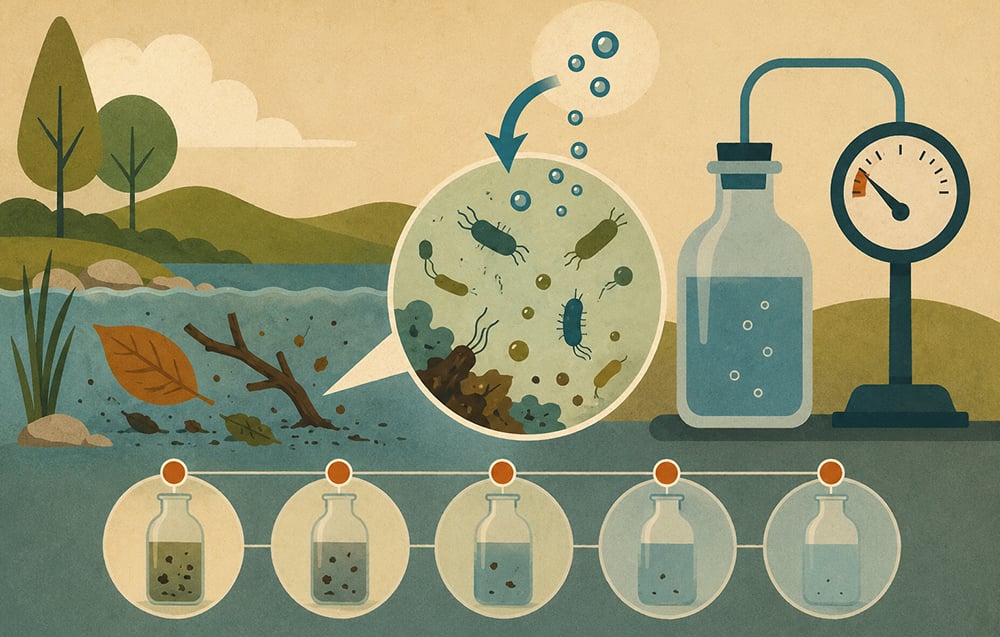
This means COD is generally faster to measure and captures a broader range of oxidizable compounds than BOD does, including substances that resist biodegradation. The outcome – COD is frequently higher than BOD for the same sample, and the ratio of BOD/COD can tell engineers whether wastewater is amenable to biological treatment.
COD is more than an academic metric. It drives key decisions in wastewater treatment design, regulation, and monitoring. Here’s why it matters in the real world:
COD lets operators know how hard their system needs to work. More oxygen must be added (either by aeration or chemical oxidation) to break down pollutants when the COD is higher.
COD limits are included in many discharge permits. If these limits are exceeded, there may be penalties or mandatory operational adjustments.
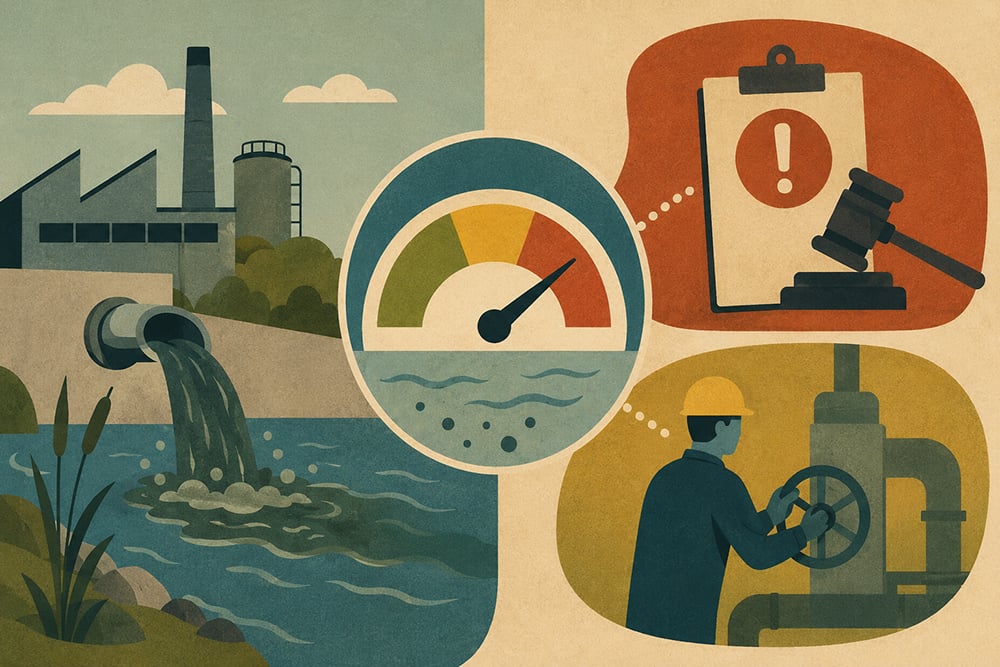
One of the largest energy costs in wastewater treatment facilities is aeration. Engineers can more precisely size blowers and oxygen delivery systems when they are aware of COD.
Wastewater discharged by industries frequently needs to be pretreated before being released. Pretreatment plans are influenced by COD levels.
Unexpected increases in COD could be a sign of new waste streams, treatment inefficiencies, or process disruptions.

These effects make precise COD measurement essential to the mission.
COD measurement isn’t intuitive for non-scientists because it involves strong chemical oxidants and controlled reactions.
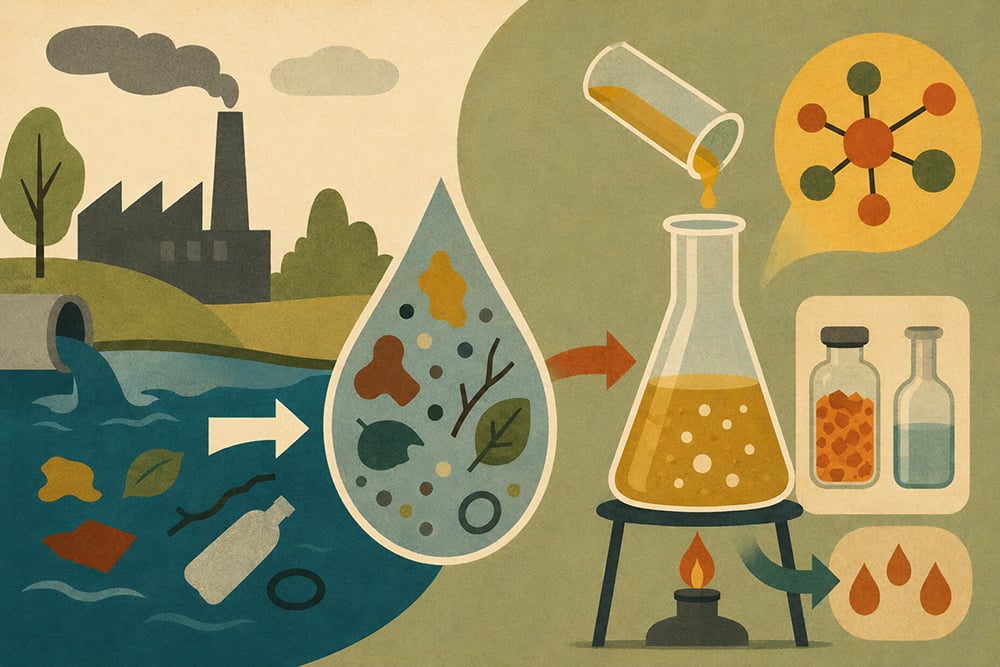
The standard COD procedure, as defined in methods such as EPA 410.4 or Standard Methods 5220, uses potassium dichromate in the presence of sulfuric acid and heat to oxidize organic compounds.
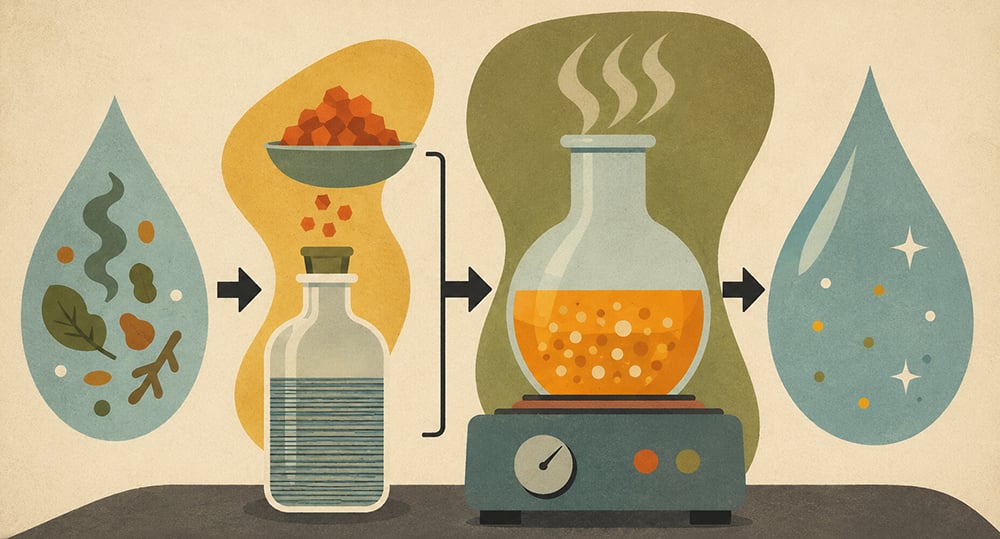
The sample is mixed with dichromate and acid
The sample is combined with a known excess of dichromate (Cr₂O₇²⁻) in strongly acidic conditions.
Oxidation takes place during digestion
The solution is heated for a period (usually 2 hours) to ensure oxidation.
Unreacted dichromate is measured
After digestion, the remaining dichromate is quantified (often by titration), and the difference corresponds to the oxygen demand.
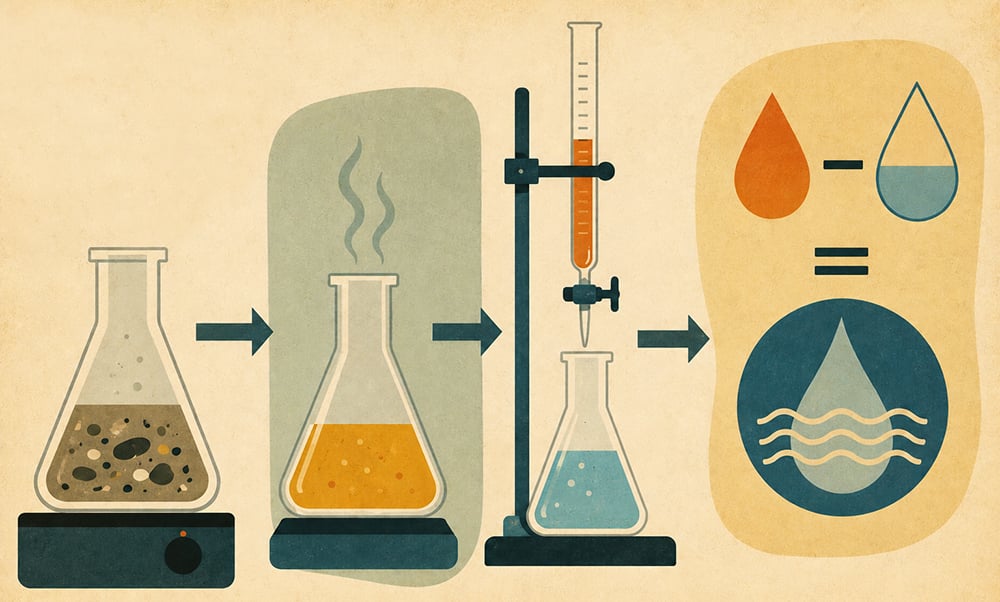
The result is expressed in milligrams of oxygen per liter (mg/L). While this method is robust, it is slow (typically multiple hours) and involves hazardous chemicals.
With modern sensor technology, real-time or near-real-time monitoring of related parameters is increasingly possible. While COD itself cannot be measured electrochemically in a direct, instantaneous way (because it depends on forced chemical oxidation), proxies like Total Organic Carbon (TOC) can be assessed using UV-persulfate oxidation. These measurements often correlate closely with COD and can be collected rapidly.
In industrial or continuous monitoring applications, operators rely on trends in TOC, BOD, and other indicators, sometimes supported by lab-based COD tests, to track organic load.
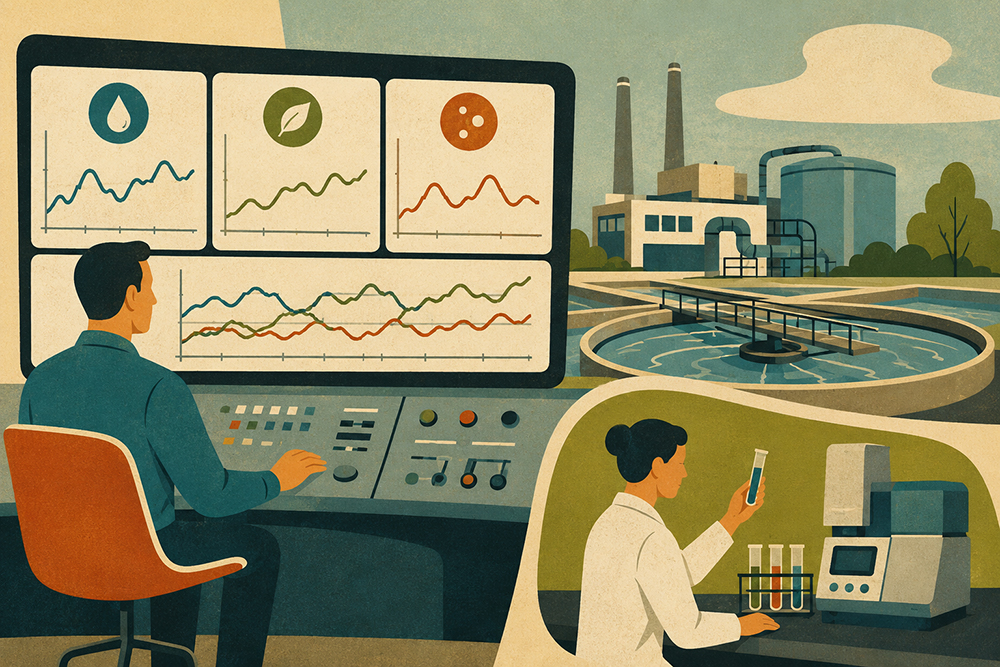
And even in traditional lab settings, accurate measurement of other water quality parameters such as pH, temperature, conductivity, and dissolved oxygen helps contextualize COD results.
For example:
In facilities where data integration matters, robust sensors (like those produced by Atlas Scientific) provide high-resolution measurement of these supporting parameters. These sensors aren’t directly measuring COD, but they enable confidence in lab data and real-time control of related processes such as aeration and neutralization.
Several factors determine how high or low the chemical oxygen demand will be:
High amounts of biodegradable and non-biodegradable organic matter raise COD. Food waste, fats, grease, sugars, and detergents are common contributors.
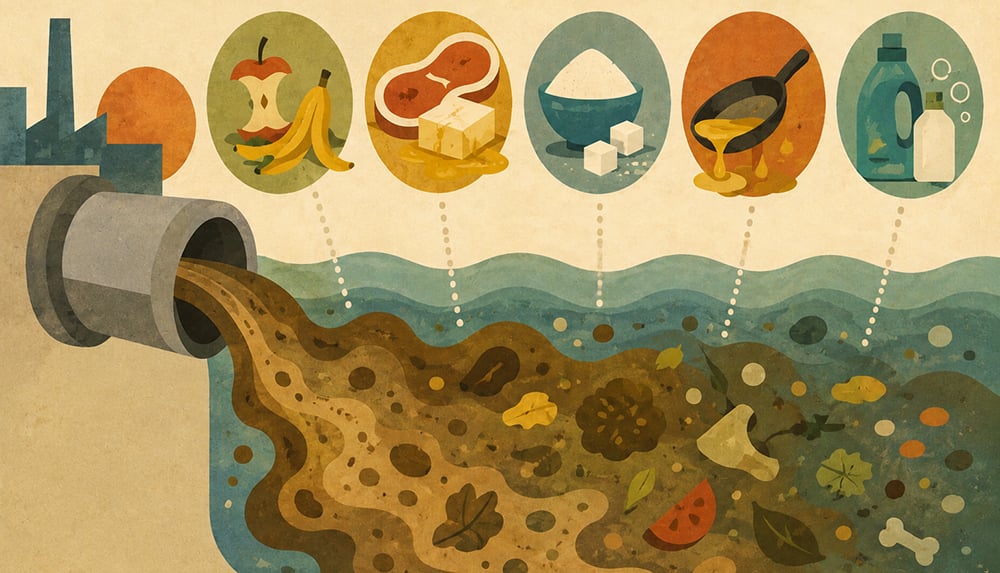
Textile effluent, pulp and paper operations, and chemical plants often generate wastewater with high COD.
Stormwater infiltration into sewer systems can dilute or spike COD, depending on what the runoff carries.
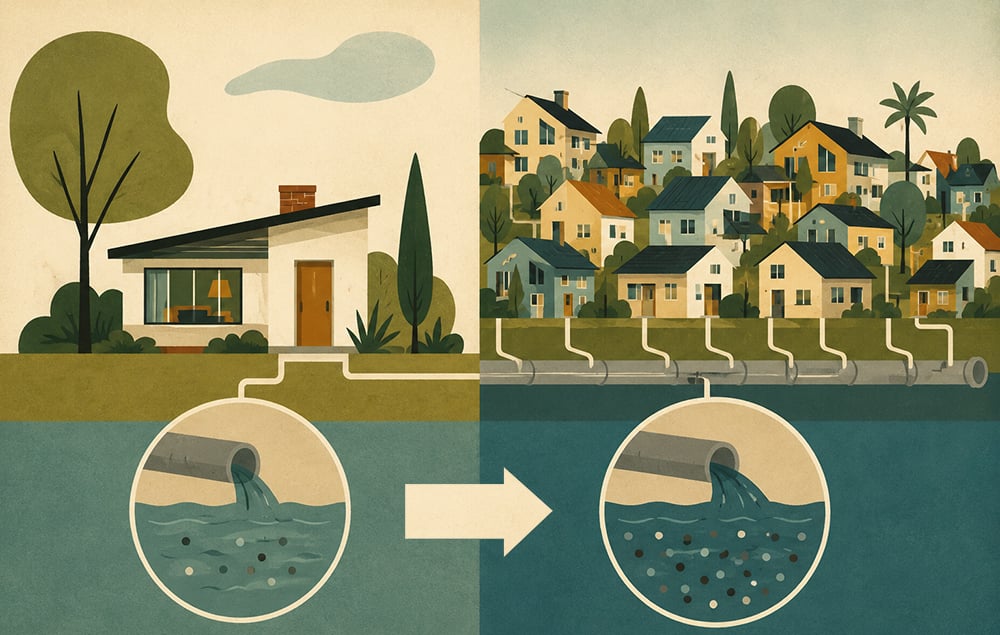
Domestic wastewater typically has lower and more predictable COD than industrial wastewater, but cumulative loads from many households add up quickly.
Certain cleaning agents, solvents, and chemical reagents resist biodegradation but still consume oxygen chemically, thus raising COD without necessarily increasing BOD proportionally.
Understanding the source helps treatment designers choose the right solution.
Removing COD from wastewater isn’t always straightforward, especially when the organic load is high or dominated by hard-to-break-down compounds.
But there are proven strategies.
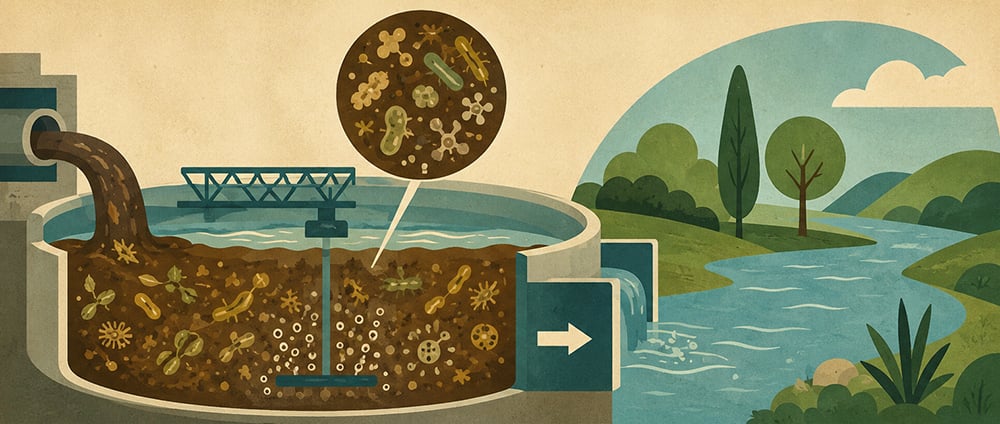
Activated sludge systems use microbial communities to oxidize organic matter naturally. These systems generally remove large fractions of biodegradable COD. However, they are limited when the wastewater contains non-biodegradable or toxic compounds. In such cases, advanced treatment steps are necessary.
AOPs use powerful oxidants such as ozone, hydrogen peroxide, or UV-activated hydroxyl radicals to break down complex organics. These processes can tackle compounds that biological systems struggle with. AOPs are energy-intensive and must be applied carefully, but they are essential for recalcitrant COD.
Membrane systems, such as ultrafiltration, can physically separate organic molecules. When combined with biological or oxidative processes, they create highly efficient COD removal systems.
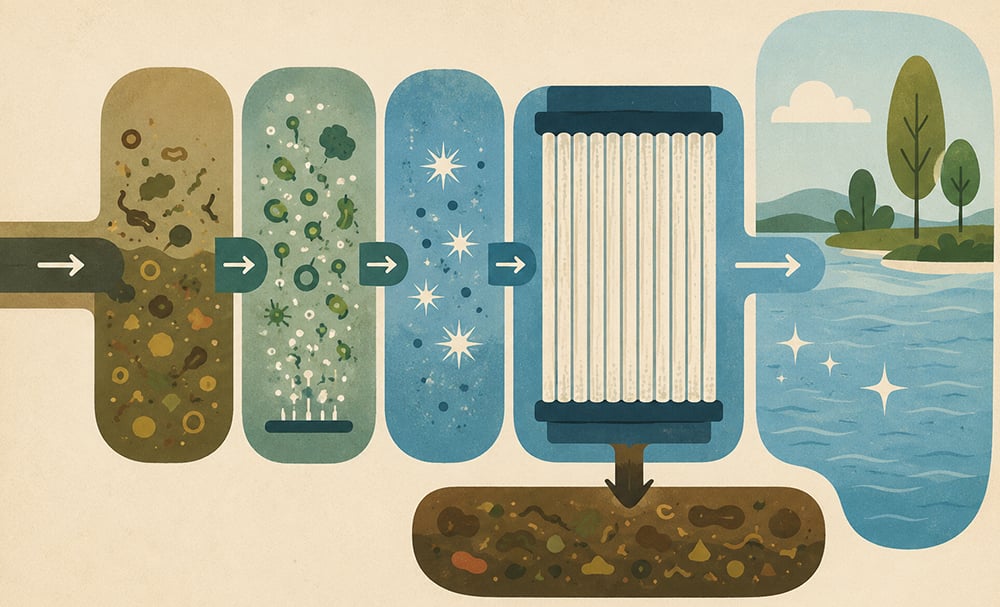
Activated carbon and specialized adsorbents can capture organic compounds. Chemical precipitation techniques can remove specific contaminants before they reach biological systems.
For any of these methods, monitoring is essential.
COD reduction doesn’t happen by accident. It requires coordinated process control, data analytics, and targeted intervention.
Operators rely on trends in:
In many modern wastewater facilities, centralized control systems ingest data from multiple probes and sensors to automate aeration, chemical dosing, and sludge handling.
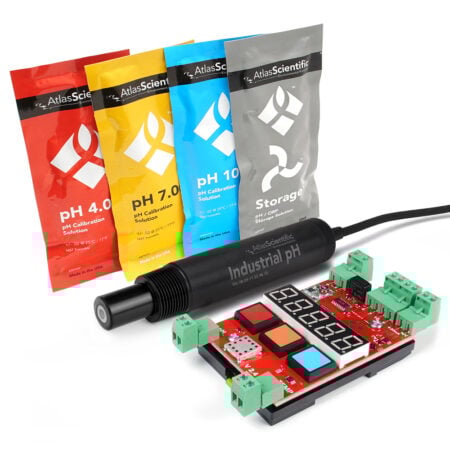
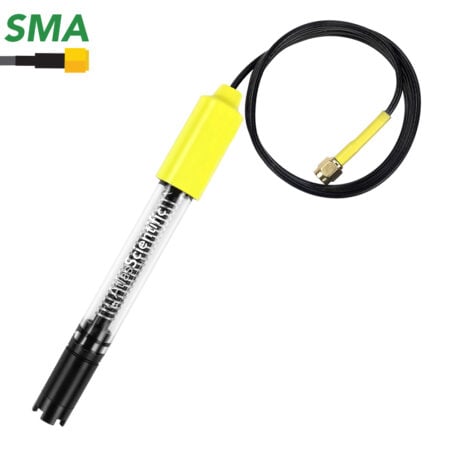
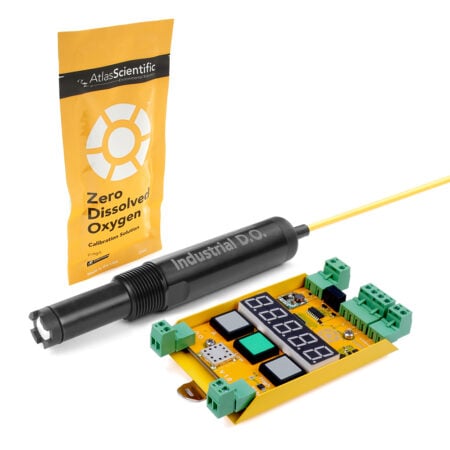
Atlas Scientific’s sensor technologies, including robust EZO complete-pH kit, dissolved oxygen, temperature, and conductivity probes, are commonly integrated into these platforms. They don’t measure COD directly, but they help operationalize the indirect metrics that drive real-time optimization and regulatory compliance.
When COD spikes unexpectedly, operators don’t just look at that number. They drill into supporting data streams.
They ask:
Answers to these questions inform immediate corrective actions, from adjusting aeration to altering nutrient balances.
Imagine a municipal wastewater treatment plant receiving both domestic sewage and stormwater inflow. During rain events, inflow spikes and COD begin to climb. Operators notice increasing oxygen demand and rising sludge volumes.
With continuous dissolved oxygen monitoring and frequent COD sampling, they can correlate increased load with reduced oxygen saturation in aeration basins. By adjusting blower speeds and timing oxygen delivery, they can match oxygen supply with demand, reducing energy waste while maintaining treatment performance.
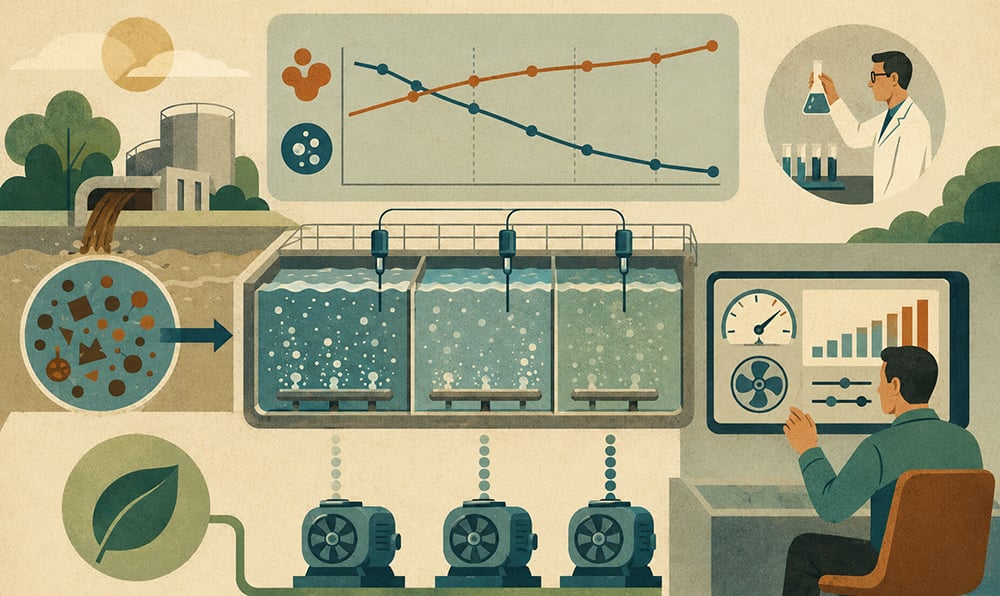
Without data on COD trends, aeration optimization would be guesswork, often resulting in either insufficient treatment or excessive energy use.
Chemical Oxygen Demand isn’t just an academic number on a lab report. It is a vital indicator of the oxygen burden that wastewater places on the environment and a cornerstone metric for engineers, operators, and regulators.
Understanding COD touches chemistry, biology, engineering, and environmental policy. It intersects with real-world concerns such as ecosystem health, energy optimization, and industrial sustainability.

While COD itself is measured in the lab using traditional analytical methods, the processes that support treatment (aeration, oxidation, filtration) all rely on real-time data from sensors that track pH, dissolved oxygen, temperature, and conductivity.
Whether you’re designing treatment systems, optimizing operations, or simply trying to understand wastewater quality, COD is a key part of the story. If you would like to learn more about measuring COD or what sensors we recommend, reach out to the world-class team at Atlas Scientific.


Conductivity is one of the most important measurements in industrial water systems. From water treatment and hydroponics to chemical processing and manufacturing, conductivity provides a

When a process requires more than one chemical, nutrient, reagent, or additive, using several independent dosing pumps can quickly become complicated. A multi-pump dosing system