

Blog
The Best Indoor Air Quality Monitors
Indoor air quality can have a major impact on the comfort and productivity of homes, offices, schools, laboratories, and industrial facilities. Carbon dioxide buildup, poor




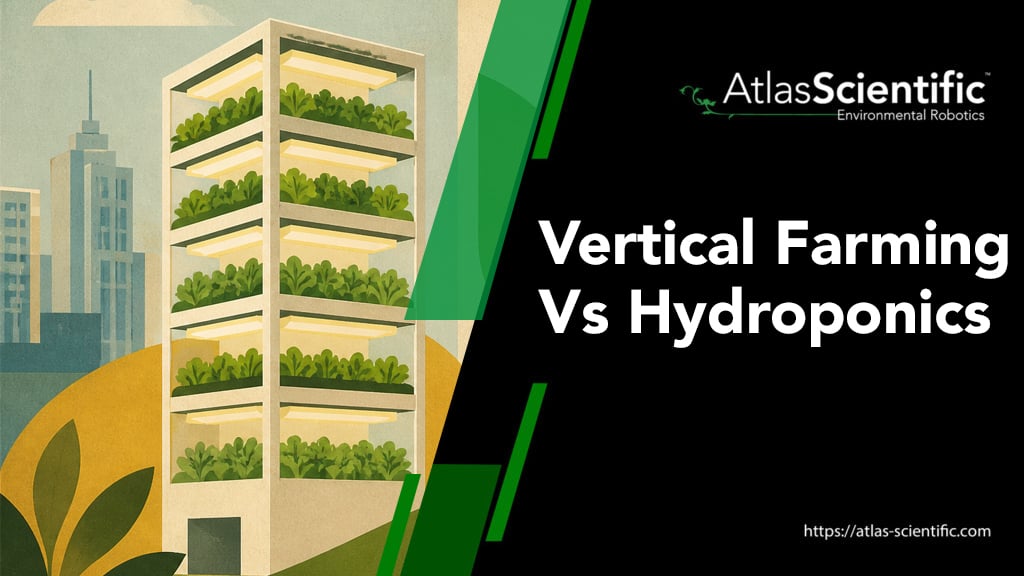
Hydroponics and vertical farming are not competitors; rather, they address distinct issues. Vertical farming makes the most of available space, while hydroponics regulates the way plants are fed. The true benefit comes from accuracy: energy efficiency, yield stability, scalability, and long-term profitability are all determined by constant monitoring of pH, EC, and oxygen.
If you search the web for “vertical farming vs hydroponics”, you will find many articles treating them like opposing systems, yet they aren’t. If you’ve been following us for a while, you will know that hydroponics is a method of feeding plants and that vertical farming is a way of organizing a growing space.
However, once you move beyond definitions, the comparison makes more sense and is meaningful. The main difference between vertical farming and hydroponics boils down to capital investment, energy demands, scalability, and how each system is measured and controlled.
In controlled environmental agriculture systems, precision is no longer an option. This is what draws the line between consistency and crop loss.
Hydroponics is a fantastic alternative to traditional growing methods as it removes the soil from the equation and replaces it with a carefully balanced nutrient solution. Plants in hydroponics receive dissolved nutrients directly through the water system, allowing growers to fine-tune nutrient availability in ways that traditional soil farming cannot. That precision, however, comes with some responsibility.
In soil, nutrient imbalances can be buffered temporarily, but in hydroponics, they can’t. For example, a small pH drift can lock out essential nutrients needed for crop growth. It only takes one unnoticed spike in electrical conductivity (EC) to stress the plant roots, andlow dissolved oxygen (DO) can suffocate the plant entirely. This is where measurement becomes fundamental.
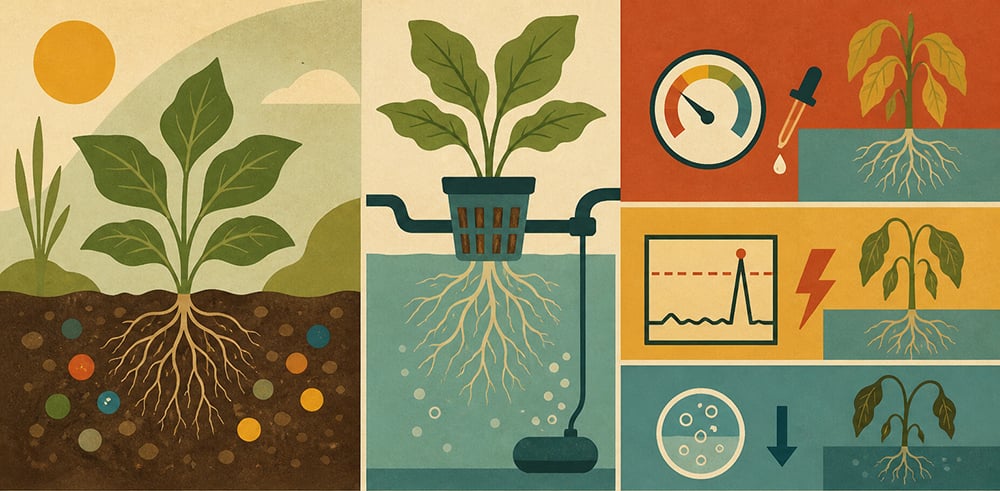
Professional hydroponic operations depend on continuous monitoring of EC, pH, DO, and temperature parameters. High-quality sensors, like probes manufactured by Atlas Scientific, are designed for environments where nutrient solutions must remain stable over long production cycles. Lab-grade pH probes and industrial EC sensors provide real-time feedback, allowing hydroponic growers to correct imbalances before they turn into yield losses.
Hydroponics works incredibly well when the data behind it is reliable.
Vertical farming adds another layer to alternative growing – quite literally!. Instead of growing horizontally across fields, vertical farming stacks crops in tiers. This increases production per square foot but also amplifies system sensitivity. This is because when dozens of growing racks share a recirculating nutrient system, small deviations scale quickly. In vertical farms, a pH imbalance doesn’t affect a single growing bed; it affects the whole vertical column of production.
Because of this, vertical farming heavily depends on integrated sensor networks. Inline pH probes, DO sensors, and EC monitors must therefore deliver stable, drift-resistant readings. One faulty measurement in a stacked system can impact hundreds of plants before it is detected and resolved.
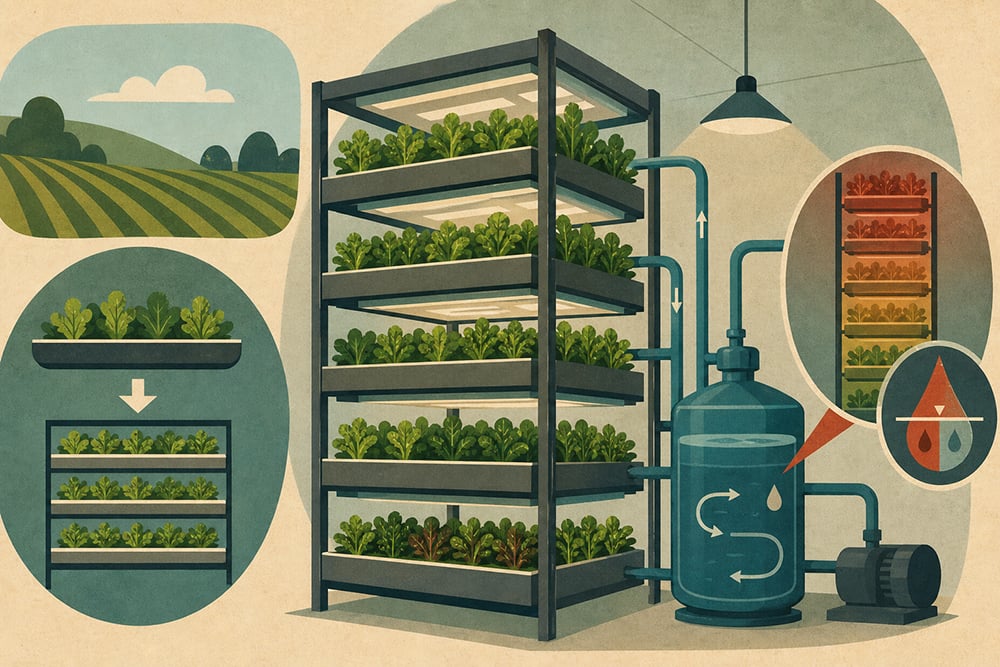
Advanced hydroponics farming facilities increasingly use modular sensing platforms such as the Atlas Scientific EZO circuits and industrial probes, which can be integrated directly into automated systems. These compact high-class sensor interfaces allow engineers to embed precision measurement into custom controllers, IoT-based farm management platforms, and PLC systems. In vertical farming, measurement is not just about optimization; it is also about risk management.
One of the most debated issues in the vertical farming vs hydroponics conversation is energy.
Artificial lighting and climate control systems are essential for indoor vertical farms. To maintain optimal growing conditions, dehumidifiers, HVAC systems, and LEDs run constantly. The amount of energy required is significant, especially when natural sunlight is replaced.
In contrast, hydroponic greenhouses make use of sunlight and frequently need less artificial input. However, nutrient instability under environmental stress is a critical vulnerability shared by both systems.
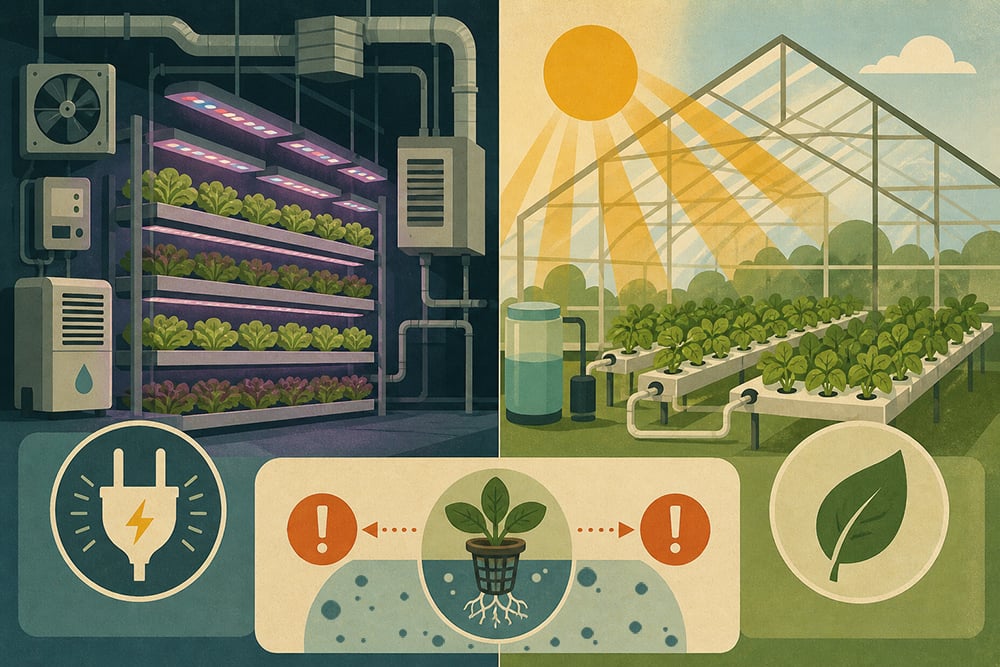
For example, temperature changes have an impact on the amount of dissolved oxygen in nutrient reservoirs. Less oxygen is held in warmer water, which increases root stress. In high-density indoor systems, where thermal loads from lighting can raise solution temperatures, continuous dissolved oxygen monitoring becomes crucial.
Growers can identify oxygen depletion prior to root damage by using robust DO probes, such as those designed for continuous immersion by Atlas Scientific. Similarly, even in the face of top-off or evaporation cycles, conductivity probes aid in maintaining accurate nutrient concentrations.
Although energy often makes the news, plant health is determined by water chemistry.
Both vertical and hydroponic systems are known for immense water efficiency. Recirculating nutrient solutions dramatically reduce water waste compared to traditional soil irrigation methods. But water efficiency depends on stability.
Without accurate EC monitoring, nutrient solutions can become too concentrated through evaporation, leading growers to flush systems too early. Without reliable pH measurement, nutrient uptake efficiency drops, increasing corrective dosing and water replacement.
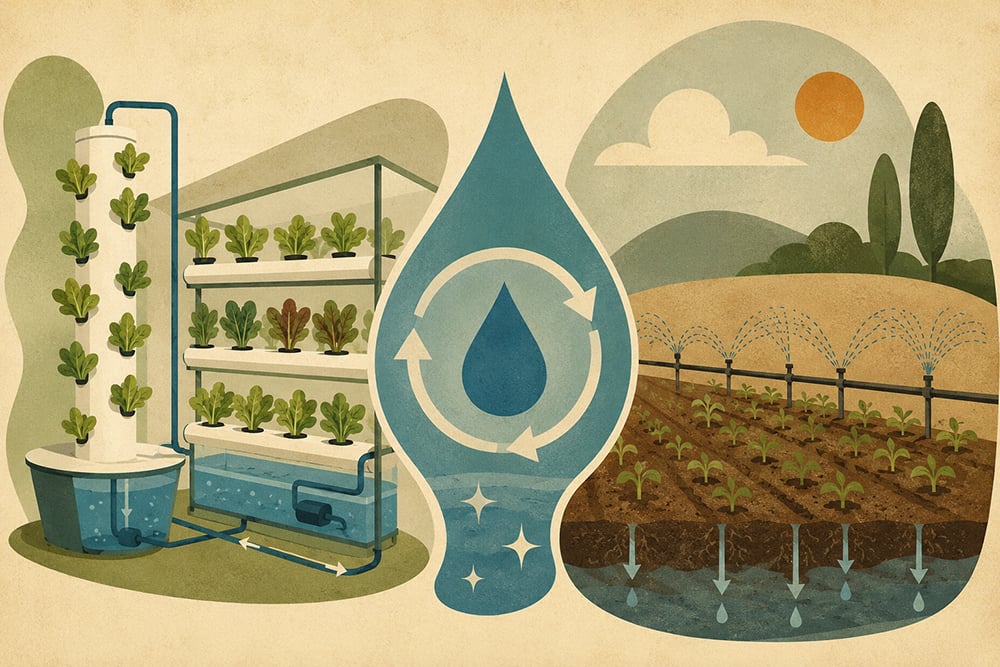
Long-life pH probes designed for hydroponic reservoirs provide users with stable readings in high-humidity, high-nutrient environments. When paired with automated dosing systems, pH sensors reduce overcorrection and prevent unnecessary water discharge. Therefore, precision measurement is key to supporting sustainability goals.
By maximizing nutrient delivery, hydroponics boosts growth efficiency. By stacking layers, vertical farming increases production density. However, without measurement integrity, neither system produces a consistent yield.
Thousands of plants that share a nutrient solution can be found in a vertical rack. Growth uniformity across tiers may be diminished by subtle EC drift. Visible crop variation brought on by an uneven pH distribution has a direct impact on marketability.
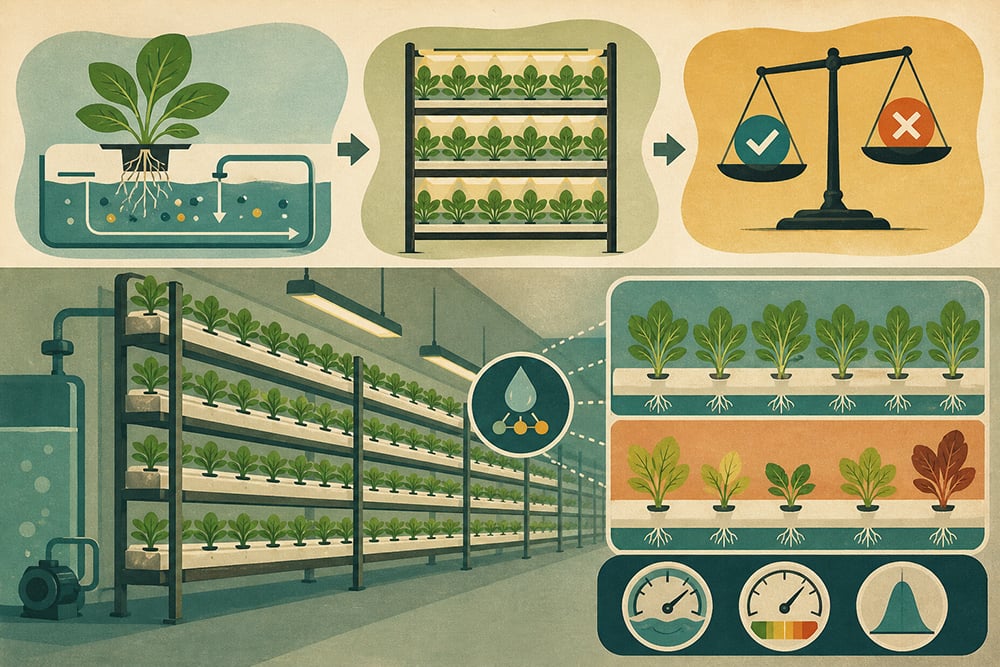
Distributed sensor arrays, which position pH and EC probes at various reservoir points to verify uniformity, are becoming more and more important in modern facilities. Even in vertical installations with limited space, multi-point monitoring is feasible thanks to Atlas Scientific’s small sensor modules, which enable farms to scale measurements without requiring an excessive hardware footprint. Higher yield is not the only objective. It is a predictable yield.
Vertical farms generally have a higher upfront investment in climate systems, lighting, and automation infrastructure than hydroponics because hydroponic greenhouses require less capital. However, hydroponics do still depend on precise nutrient control. In both systems, the cost of inaccurate measurement can outweigh the cost of instrumentation.
Crop loss from unnoticed pH drift, insufficient dissolved oxygen, root hypoxia, or nutrient burn from conductivity mismanagement can erase profit margins rapidly. High-quality probes are not simply an ‘add-on’ to the system. They are a safeguard for the entire investment.
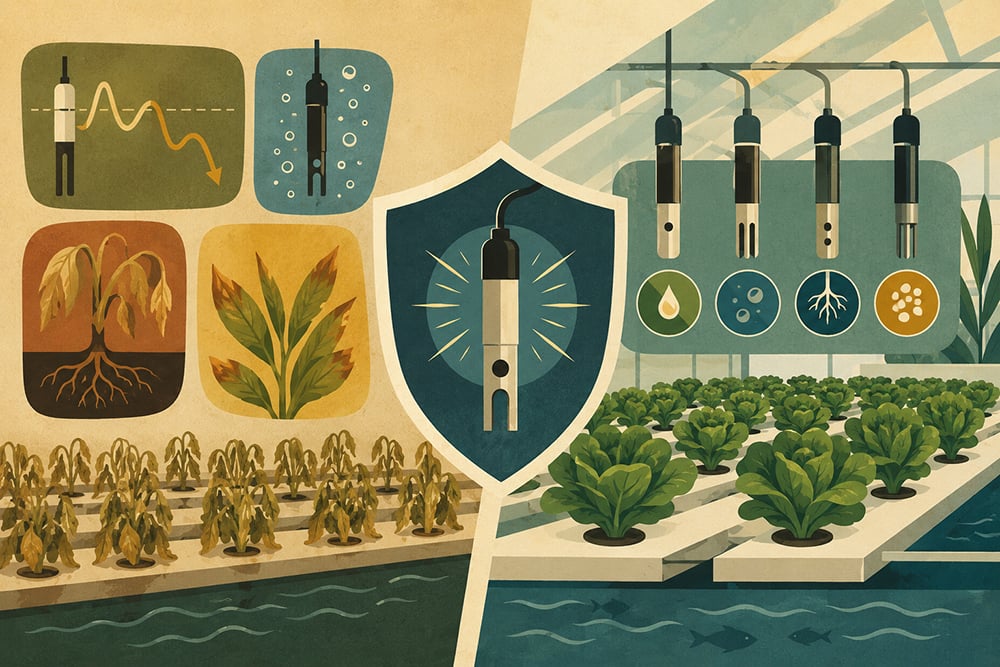
Atlas Scientific’s industrial-grade probes are engineered for chemical exposure, long-term stability, and continuous immersion – all conditions that are common in recirculating hydroponic reservoirs. When integrated into monitoring platforms, these probes provide the data backbone necessary for automation and scaling.
When talking about hydroponics and vertical farming, sustainability claims are frequently made. Both systems can cut down on the use of pesticides and water. Food miles and land use are decreased by vertical farms. Nutrient runoff is reduced by hydroponic systems. However, sustainability is only believable if it can be measured.
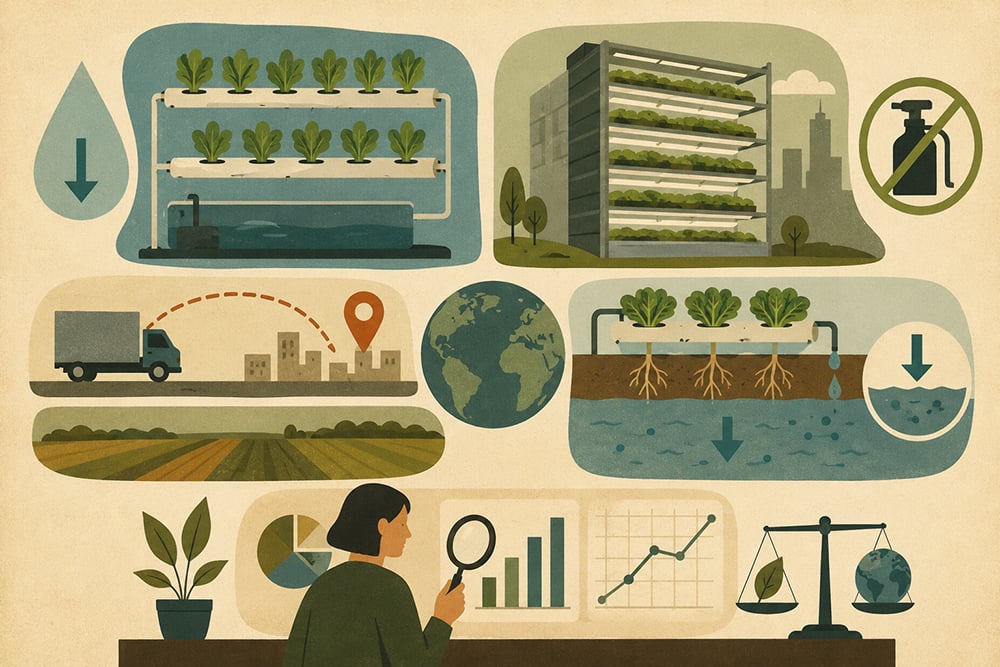
Water savings need to be measured. It is necessary to monitor nutrient efficiency. It is necessary to balance energy consumption and output.
The accountability for those assertions is provided by sensor-driven agriculture. Growers can prove resource efficiency and environmental responsibility using actual data, not assumptions, by maintaining accurate pH, EC, and DO monitoring.
The difference between vertical farming and hydroponics is not a choice between rivals. Hydroponics defines how plants receive nutrients, while vertical farming defines how production space is structured. In areas where land is scarce and urban proximity is critical, vertical farming may justify its energy requirements. Greenhouse hydroponics might provide a more balanced method if sunlight is plentiful and energy prices are fluctuating.
Precision is key to success in both situations.
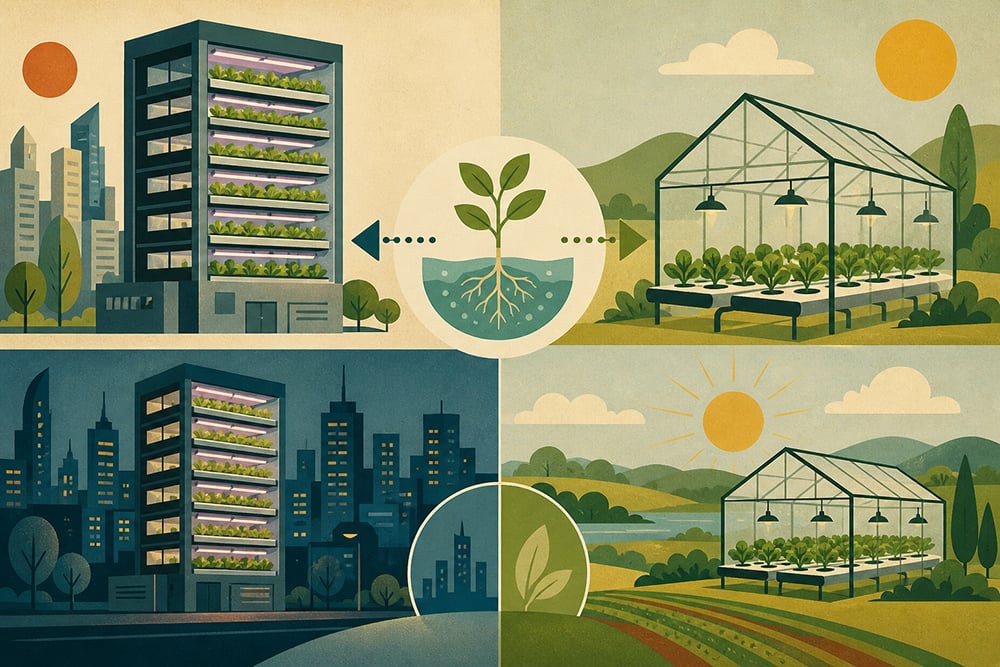
Instability is encouraged when nutrients are delivered without precise measurement. Risk is increased by stacked production in the absence of trustworthy monitoring.
The most successful operations are aware that controlled environment farming involves more than just eliminating soil and stacking plants higher. It involves determining what is important, reacting quickly, and creating systems that hold up under constant production pressure.
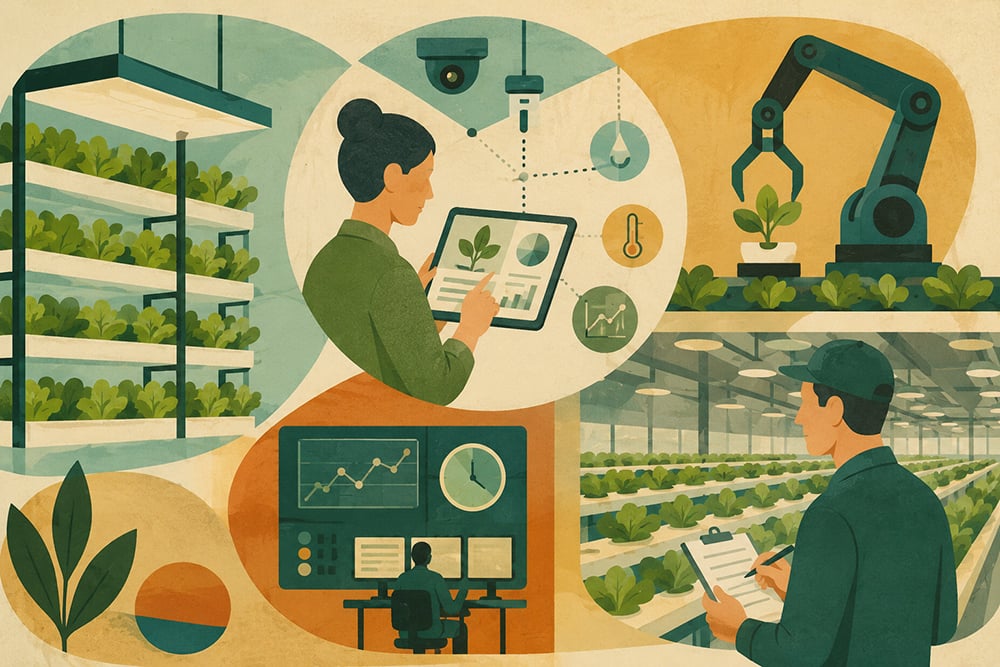
In the end, the vertical farming vs hydroponics debate misses the bigger truth. The real evolution in agriculture is not structural, it’s analytical – the farms that thrive are the ones that focus on measuring, monitoring, and adapting. And in that future, precision sensing is foundational.
If you would like to learn more about monitoring in vertical farms and hydroponic systems, or are looking for high-precision probes, contact the world-class team at Atlas Scientific.
Indoor air quality can have a major impact on the comfort and productivity of homes, offices, schools, laboratories, and industrial facilities. Carbon dioxide buildup, poor
UART and I2C are serial communication protocols, but they serve different purposes. UART is typically used for direct device-to-device communication and requires dedicated connections. I2C