

Blog
Understanding COD in Wastewater Treatment
The amount of oxygen needed to chemically oxidize organic and inorganic materials in wastewater is measured by Chemical Oxygen Demand, or COD. High COD depletes






Bernard Kratky at the University of Hawai‘i created the Kratky Method, a simple passive hydroponics technique for beginners. Without the need for pumps, electricity, or sophisticated machinery, plants balance oxygen and water using a static nutrient reservoir and a naturally occurring air gap.
The Kratky method is one of the easiest ways to begin growing plants without the need for soil, pumps, or other complex equipment. It doesn’t require electricity, moving parts, or circulating water, in contrast to the majority of hydroponic systems. With the help of this passive hydroponic method, plants can develop in a nutrient solution without the need for active aeration. When properly configured, the system essentially functions on its own.
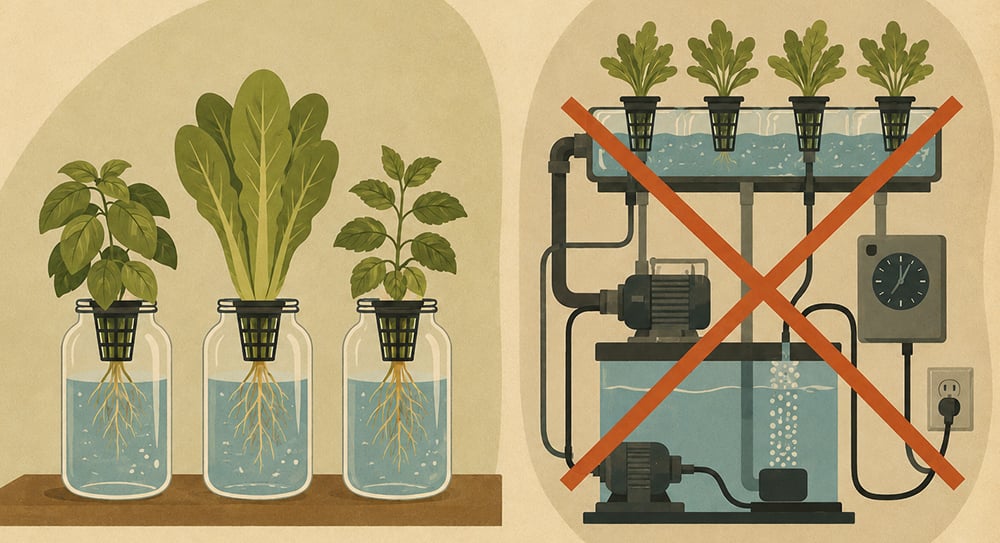
The Kratky method provides an approachable starting point for those who are new to hydroponics. However, guesswork is not synonymous with simplicity. A successful system can be distinguished from a failing one by knowing how and why it operates.
Dr. Bernard Kratky of the University of Hawai‘i created the non-circulating hydroponic Kratky method. Because it doesn’t require pumps or air stones to oxygenate the nutrient solution, it is sometimes referred to as “passive hydroponics.”
Water is constantly circulated in a typical hydroponic system to supply plant roots with nutrients and dissolved oxygen. The Kratky method involves suspending plants above a nutrient solution-filled reservoir. An air gap forms between the bottom of the net pot and the water’s surface as the plant gradually consumes water, lowering the solution’s level. The entire system depends on this air gap.
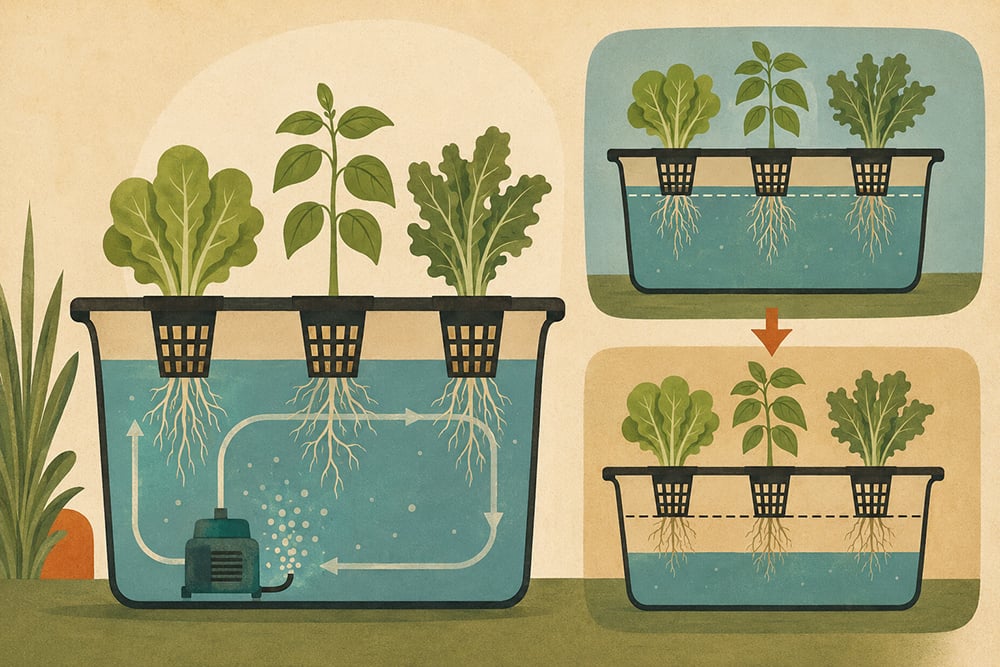
The upper portion of the roots is exposed to air and absorbs oxygen directly, while the lower portion remains submerged and absorbs nutrients. The plant effectively creates its own balance between hydration and oxygenation as the water level declines. There are no pumps. No timers. No recirculation. Just a static reservoir and a growing plant.
You must understand root physiology in order to comprehend why the Kratky method is effective.
Water and oxygen are both necessary for plant roots. Air stones or running water provide dissolved oxygen in conventional hydroponic systems. The exposed root zone that forms when the water level falls provides oxygen for the Kratky method.
The container is filled with nutrient solution at the start of the growth cycle so that the net pot’s bottom just barely touches the water. The plant lowers the solution level as it grows by consuming nutrients and water. The air space above the waterline expands due to this natural drop.
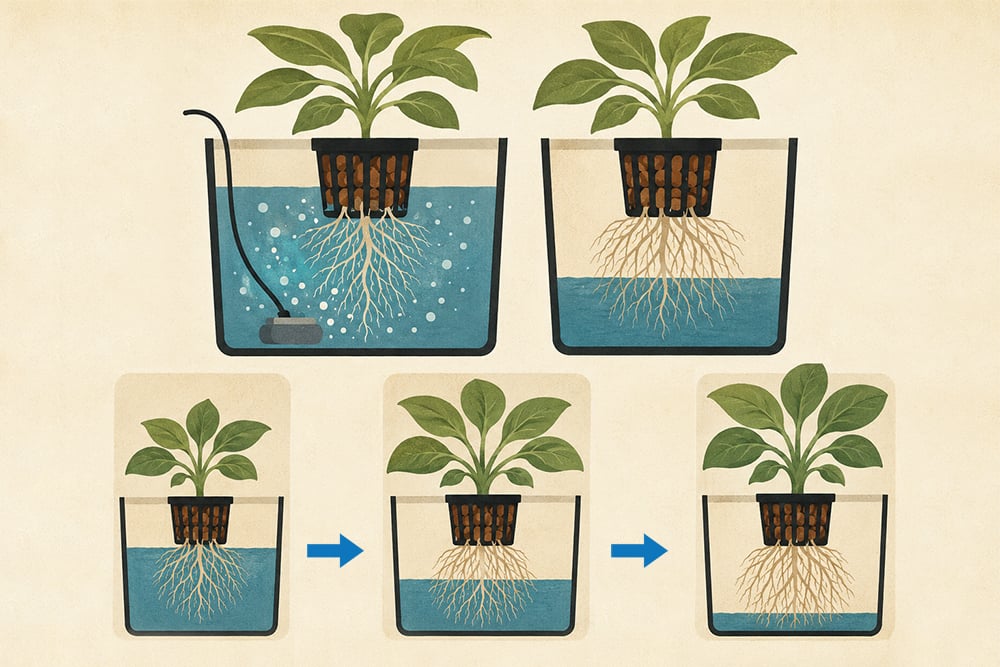
Roots eventually separate into two zones. While the exposed roots adapt to take in oxygen from the atmosphere, the submerged roots become adapted to absorb nutrients. Mechanical aeration is no longer necessary because of this passive oxygenation. This also implies that the system is highly dependent on proper initial configuration. The container size, nutrient concentration, and water level must all correspond to the plant’s anticipated growth cycle.
The simplicity of the Kratky method is one of the reasons it is so well-liked by novices. A container, a net pot, a growing medium (such as rockwool or clay pellets), and an appropriately blended nutrient solution can be used to put together a simple system. The container can be as basic as a storage bin or bucket made for food. It is advised to use opaque containers to keep light out of the nutrient solution, which could promote the growth of algae.
However, before planting, the nutrient solution needs to be thoroughly mixed. This is where a lot of novices undervalue the significance of measurement. Nutrient chemistry is active, but the system is not.
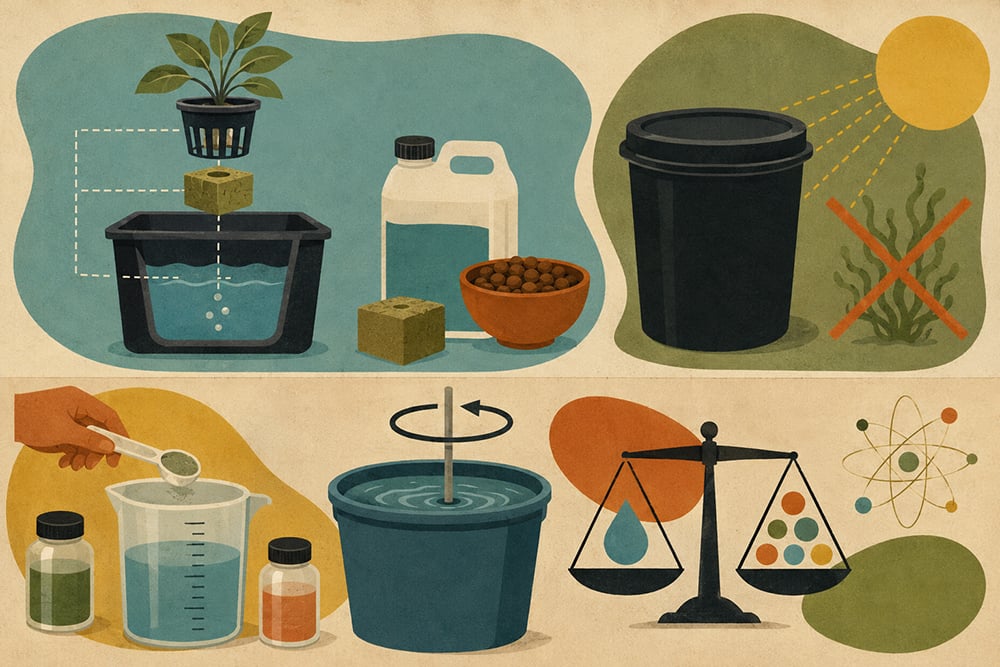
Generally speaking, pH levels must stay within a range that is appropriate for the crop being grown, which for leafy greens is typically between 5.5 and 6.5. Additionally, electrical conductivity (EC) needs to be appropriate for the plant’s growth stage. Roots may burn if nutrient concentrations are too high. Plants may become deficient before harvest if the level is too low.
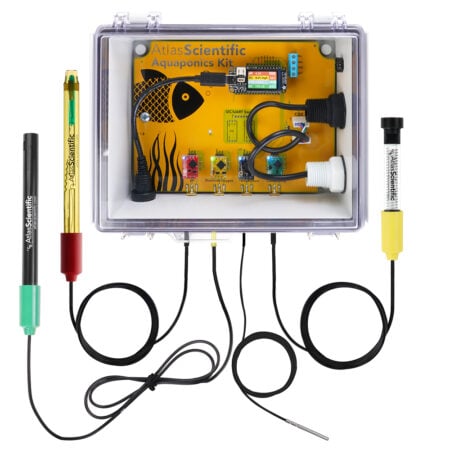
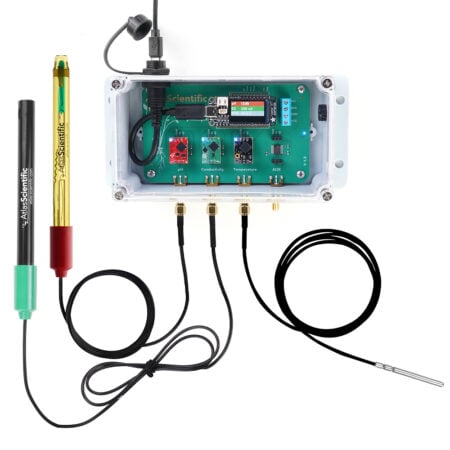
Accurate pH and EC measurement instruments can stop issues before they start, even in a basic Kratky setup. Growers can confirm nutrient balance without investing in sophisticated automation by using small sensor solutions, such as those offered by Atlas Scientific.
Handheld meters might be adequate for novices. EC circuits and inline pH probes can be integrated into larger monitoring systems for those scaling production. Precision is still necessary despite simplicity.
Fast-growing, leafy crops with brief life cycles are the ideal choices for the Kratky method. Since lettuce reaches maturity before nutrient depletion becomes an issue, it is the most widely grown plant in Kratky systems. Herbs that work well include cilantro and basil. Under the right circumstances, spinach, arugula, and some small greens can flourish.

It is more difficult to grow large fruiting crops like peppers and tomatoes. Plants with lengthy growth cycles may deplete nutrients before they reach full maturity because the Kratky method depends on a fixed nutrient volume. Larger reservoirs or modified systems are required in these situations. The best chance of success for novices is to start with leafy greens.
The simplicity of the Kratky method is its most evident benefit. There aren’t many moving parts or pumps, so mechanical failure is rare. Additionally, less energy is used, and less noise is produced when there is no circulating water. Because of this, the system is perfect for small-scale urban farms, classrooms, home growers, and areas with limited access to electricity.
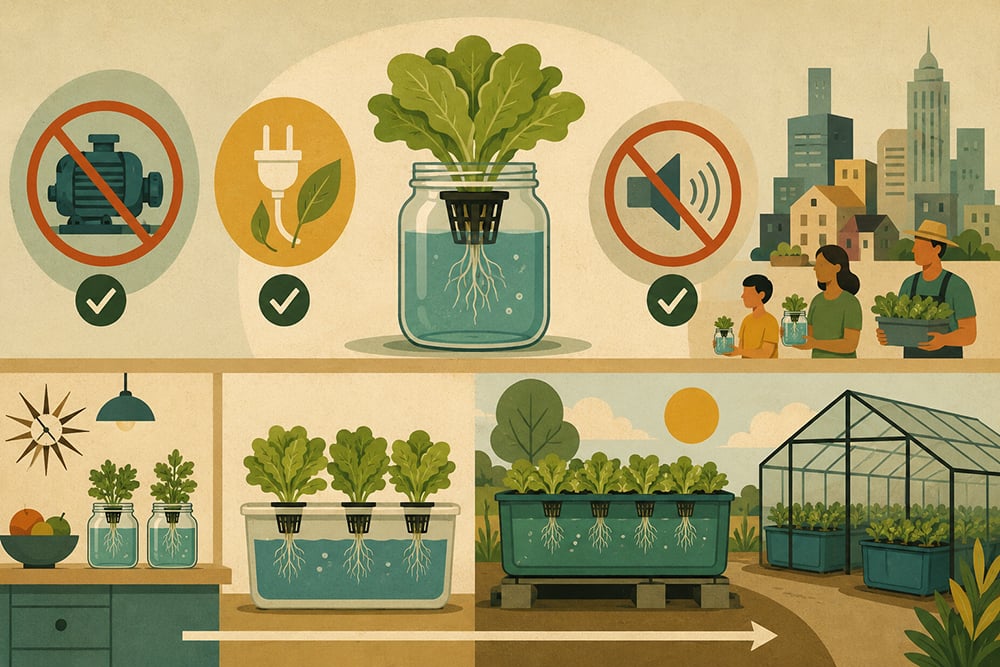
Additionally, the approach is scalable. Although mason jars on kitchen counters are often associated with Kratky systems, the same ideas can be used for larger containers in outdoor or greenhouse environments. After the initial setup is finished, operating costs stay low because the system is passive.
The Kratky method requires some upkeep despite its ease of use. Overfilling or refilling the reservoir during the growth cycle is the most frequent error made by novices. It is crucial that the air gap that develops when water levels fall. Repeatedly topping off the reservoir can completely submerge the roots and deprive them of oxygen, which can cause root rot.
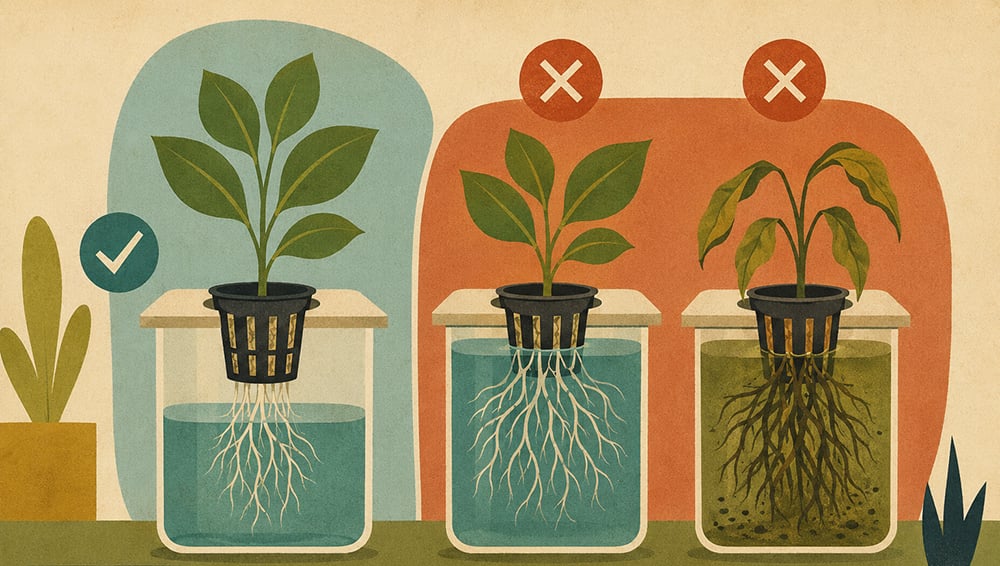
Ignoring nutrient measurement at the beginning is another frequent problem. Any imbalance that is introduced at the start of the cycle remains there because the system does not refresh or recirculate the solution.
It’s especially crucial to check pH before planting. Over time, even minor variations can lower the availability of nutrients. When accuracy is crucial, dependable pH probes, like lab-grade sensors made for hydroponic reservoirs, provide more consistent readings than inexpensive test strips.

Temperature is another overlooked factor. Warmer water holds less dissolved oxygen. In hot climates, reservoirs can become oxygen-poor even with an air gap present. While the Kratky method does not use aeration, understanding dissolved oxygen dynamics helps prevent root stress in warm environments.
The Kratky method is less dynamic than active hydroponic systems like deep water culture (DWC) or nutrient film technique (NFT). It doesn’t constantly move nutrients around or change the amount of oxygen in the air. This restricts its applicability to crops with long cycles or high demand. But it also removes a lot of variables. There are no plumbing systems to maintain or pumps to malfunction.
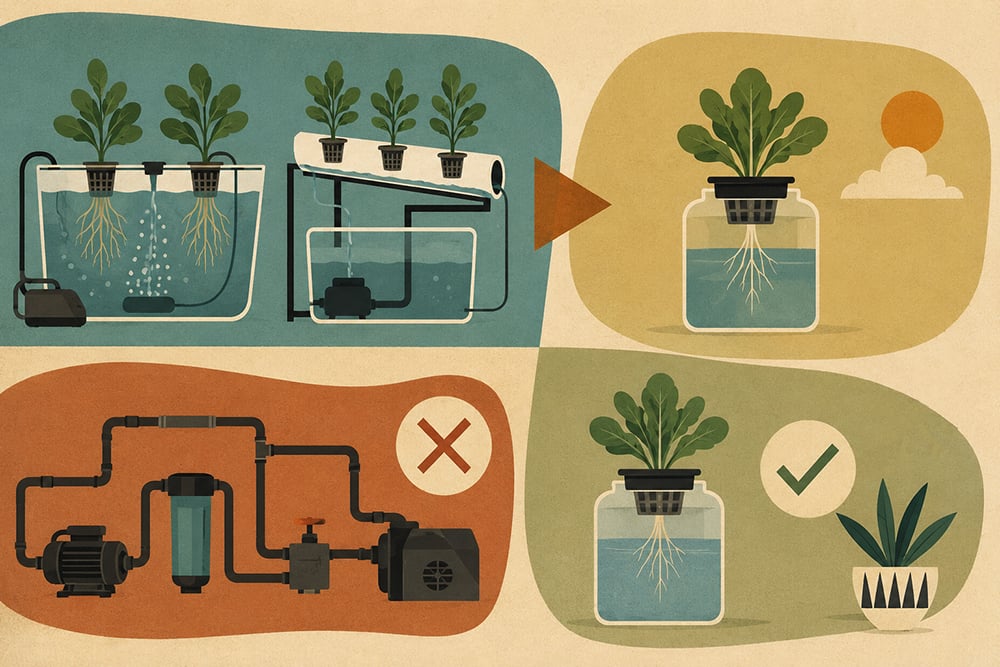
The entry barrier is lowered for novices due to the decreased complexity. The technique may have specialized uses for commercial growers, especially for certain crop types or in low-resource settings. The grower’s objectives ultimately determine the decision. Low input and simplicity are given priority in the Kratky method. Control and scalability are given top priority in active hydroponics.
Growers frequently start incorporating monitoring tools into even basic systems as they get more experience. Automation is not necessary for the Kratky method, but monitoring nutrient stability over time can increase consistency.

To determine how much nutrient solution is left, for instance, EC should be checked before harvest. Patterns in nutrient uptake can be found by monitoring pH trends over several grows.
For individuals who wish to gain more insight without switching to a fully recirculating system, Atlas Scientific provides high-precision pH probes and conductivity sensors that can be integrated into unique grow setups. When consistency is important, data helps even passive systems.
Precision sensors are becoming more and more important for commercial-scale passive hydroponics operations as reservoir sizes and crop density rise.
Beginners and small-scale growers seeking an inexpensive introduction to hydroponics will find the Kratky method ideal. It is also helpful when operational simplicity is a top concern or when electricity is erratic. Large fruiting crops or operations requiring continuous production cycles without resetting reservoirs are less well-suited for it.
Above all, the Kratky method imparts fundamental hydroponic knowledge. It illustrates how plants balance water and oxygen, how the chemistry of nutrients affects growth, and how minor changes can have a big impact. It provides a manageable beginning point for individuals who are unfamiliar with hydroponics. It serves as a reminder to seasoned growers that sometimes the most elegant solutions are also the most straightforward.

If you would like to learn more about the measuring tools to support the Kratky method, contact the world-class team at Atlas Scientific today.



The amount of oxygen needed to chemically oxidize organic and inorganic materials in wastewater is measured by Chemical Oxygen Demand, or COD. High COD depletes

An RDWC (Recirculating Deep Water Culture) system connects multiple deep water culture sites into one continuously circulating nutrient loop, creating a single, shared root zone.