

Blog
The Best Indoor Air Quality Monitors
Indoor air quality can have a major impact on the comfort and productivity of homes, offices, schools, laboratories, and industrial facilities. Carbon dioxide buildup, poor





Maintaining proper sanitation in a swimming pool depends heavily on oxidation-reduction potential (ORP), which directly reflects how effective your disinfectant (typically chlorine) is at killing contaminants. In most pools, an ORP range of 650 – 750 mV is considered ideal for safe sanitation, making accurate ORP measurement essential for consistent water quality.
However, not all ORP probes are created equal. Differences in accuracy, durability, response time, calibration stability, and integration capabilities can dramatically affect performance, especially in harsh pool environments where chemicals, temperature swings, and continuous immersion are the norm.
Below, we take a deeper look at the most common ORP probes used in pool maintenance, and how they perform in real-world conditions.

Atlas Scientific’s lab-grade ORP probe clearly leads the category due to its combination of extreme accuracy, ultra-fast response time, and unmatched chemical durability. Designed with a chemically inert body, it can withstand aggressive oxidizers and reducers; Exactly the kind of environment found in chlorinated or saltwater pools.
Another major advantage is its ±1 mV accuracy and ~1 second response time, which ensures real-time monitoring and tight control over sanitizer levels; critical for pool automation systems.
Verdict: Best balance of performance, durability, and precision; Ideal for both residential and commercial pool automation.

Sensorex probes are widely used in industrial and environmental monitoring and perform well in pool environments thanks to durable polymer/Ultem bodies and sealed gel designs.
They are particularly valued for their low maintenance and rugged construction, making them a solid option for operators who prioritize reliability over ultra-high precision.
Verdict: A strong lab grade option, but not as precise or responsive as Atlas Scientific.

Hanna Instruments offers a broad range of ORP probes and meters, often bundled with advanced diagnostic tools. Their probes feature ±1 mV accuracy and durable materials like titanium or glass bodies.
However, despite their versatility and strong lab performance, Hanna probes are generally optimized for controlled environments rather than continuous, high-stress pool conditions. Their reliance on glass bodies and refillable electrolyte systems means they often require more frequent maintenance and careful handling compared to more rugged designs.
Verdict: Great for handheld or lab systems, but less optimized for continuous, high-performance pool monitoring.
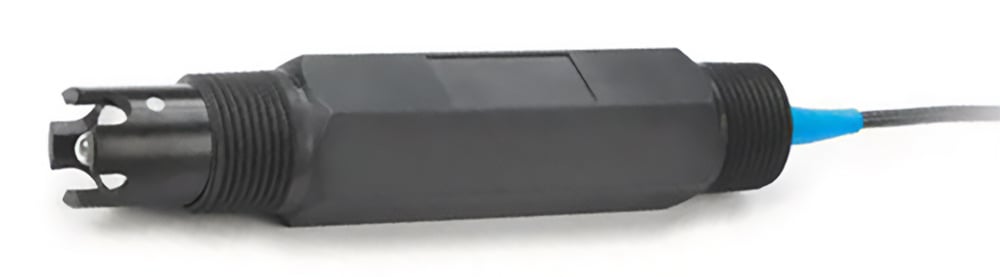
Hach ORP sensors are engineered primarily for industrial process control and large-scale water treatment systems, where reliability, uptime, and integration with control infrastructure are critical. One of their most distinctive features is the use of a differential electrode measurement technique, which incorporates three electrodes instead of the traditional two. This design measures ORP relative to a third ground electrode, helping to eliminate sensor ground loops and reduce reference junction potential errors, resulting in highly stable and reliable readings.
However, despite their advanced engineering and reliability, Hach sensors are generally optimized for large-scale, regulated systems rather than compact or fast-response pool applications. Their size, cost, and integration requirements can make them less practical for smaller or more dynamic pool environments.
Verdict: Ideal for large-scale or regulated environments, but complete overkill for most pool applications.

Milwaukee probes typically feature platinum sensing elements, double junction reference systems, and gel-filled electrolytes, which help reduce maintenance and improve measurement stability. The double junction design is particularly important, as it helps minimize clogging and contamination of the reference electrode, leading to more consistent readings over time.
These probes are often designed for continuous monitoring applications such as aquariums, hydroponics, and basic water treatment, and they integrate easily with standard controllers via BNC connectors and simple analog outputs.
Additionally, Milwaukee offers both lab-grade and more rugged epoxy-body variants, giving users flexibility depending on whether they prioritize cost, durability, or ease of replacement.
Verdict: Slow response speed, and long-term stability issues, become more noticeable when pushed into continuous, chemically aggressive pool environments.
When comparing lab-grade ORP probes for pool maintenance, Atlas Scientific stands out as the clear winner. Its combination of ±1 mV accuracy, ultra-fast response time, and exceptional chemical resistance makes it uniquely suited for modern pool systems; Especially saltwater and automated setups.
While competitors like Sensorex and Hanna offer solid alternatives, they either sacrifice precision, response speed, or long-term durability. For professionals and serious pool operators, Atlas Scientific delivers the most reliable and high-performance ORP monitoring solution available today.
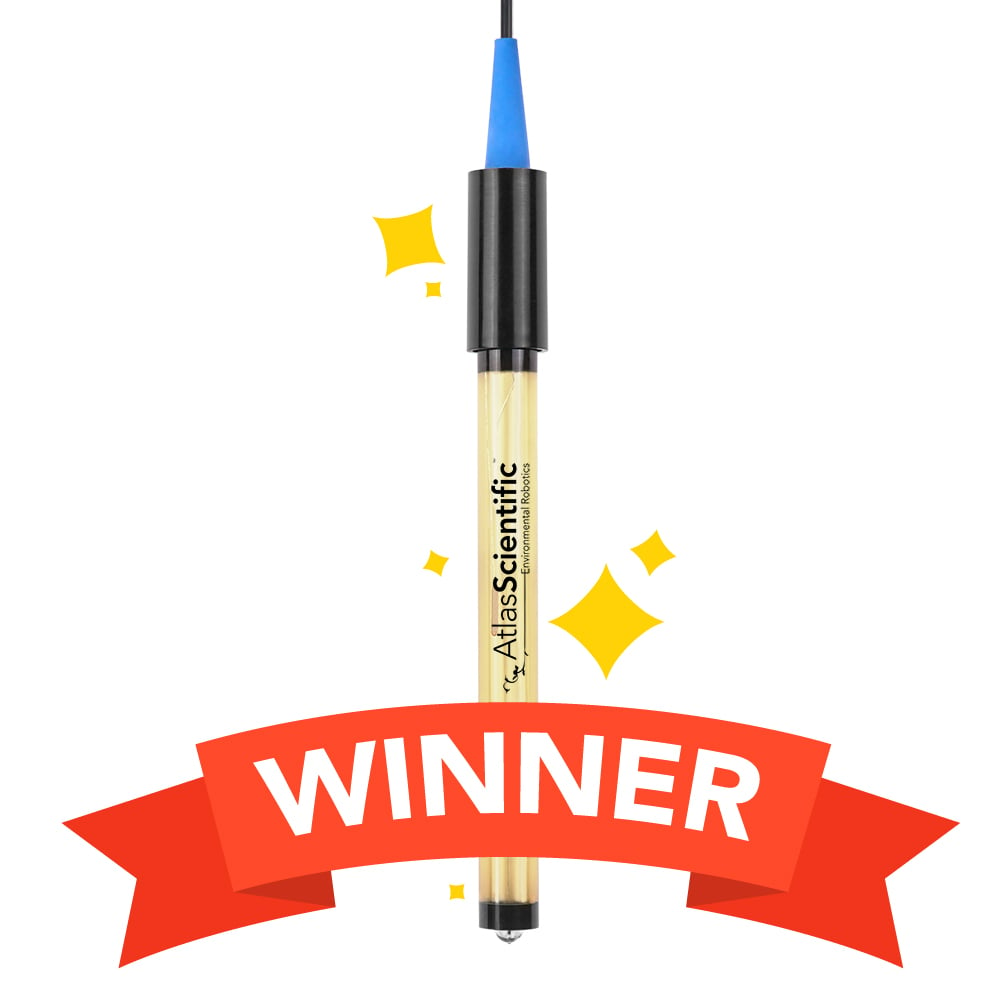
Many competing probes may claim similar accuracy, but in practice, they often require more frequent recalibration or show drift under harsh conditions.
Indoor air quality can have a major impact on the comfort and productivity of homes, offices, schools, laboratories, and industrial facilities. Carbon dioxide buildup, poor

UART and I2C are serial communication protocols, but they serve different purposes. UART is typically used for direct device-to-device communication and requires dedicated connections. I2C