

Blog
The Best Indoor Air Quality Monitors
Indoor air quality can have a major impact on the comfort and productivity of homes, offices, schools, laboratories, and industrial facilities. Carbon dioxide buildup, poor





Maintaining a thriving reef aquarium requires stability. Corals and other reef organisms consume calcium, alkalinity, magnesium, and trace elements daily, and inconsistent dosing can quickly destabilize a tank. Automated dosing pumps solve this problem by delivering precise amounts of additives throughout the day, helping reef keepers maintain optimal water chemistry with minimal manual effort.
In this guide, we’ll review five dosing pumps that can handle modern reef tanks, from simple hobbyist setups to fully advanced automated systems. These pumps were chosen based on precision, reliability, programmability, and overall value.
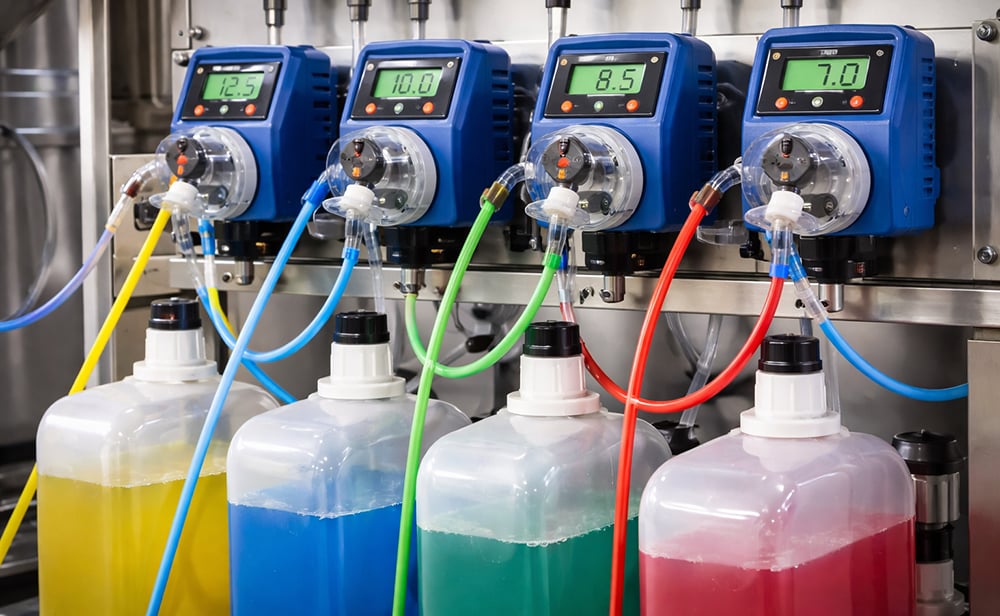
Before choosing a dosing pump, it’s important to understand the key features that matter:
Now let’s look at the best dosing pumps available today.
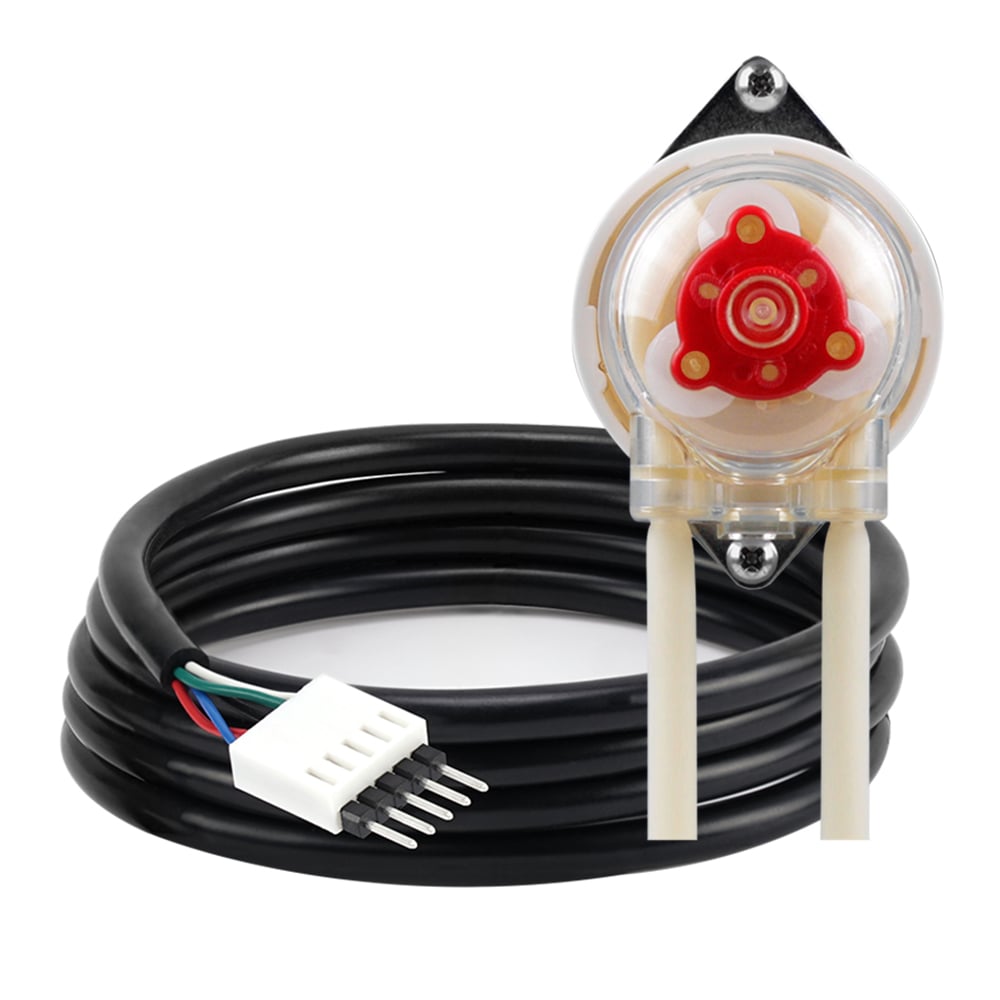
The Atlas Scientific Embedded Dosing Pump stands out as one of the most versatile and precise dosing pumps available for reef aquariums. Unlike many consumer aquarium pumps designed only for plug-and-play use, this pump is built with system integration and programmability in mind.
The pump uses a peristaltic mechanism, which means the liquid being dosed never touches internal mechanical parts. This minimizes contact between the fluid and internal components, reducing contamination risk and simplifying maintenance. It supports flow rates from 0.5 mL to 105 mL per minute with an accuracy of approximately ±1%, making it suitable for both micro-dosing trace elements and larger dosing tasks like calcium or alkalinity supplementation.
One of the biggest advantages of the EZO-PMP is its programmability. The pump supports both UART and I2C communication protocols, allowing integration with microcontrollers such as Arduino, Raspberry Pi, or custom aquarium controllers. This opens the door to advanced automation, like:
The pump also supports several operating modes, including continuous dispensing, volume dosing, constant flow rate, and timed dosing, making it highly adaptable to different reef tank strategies.
Best for: Advanced reef automation and precision dosing.
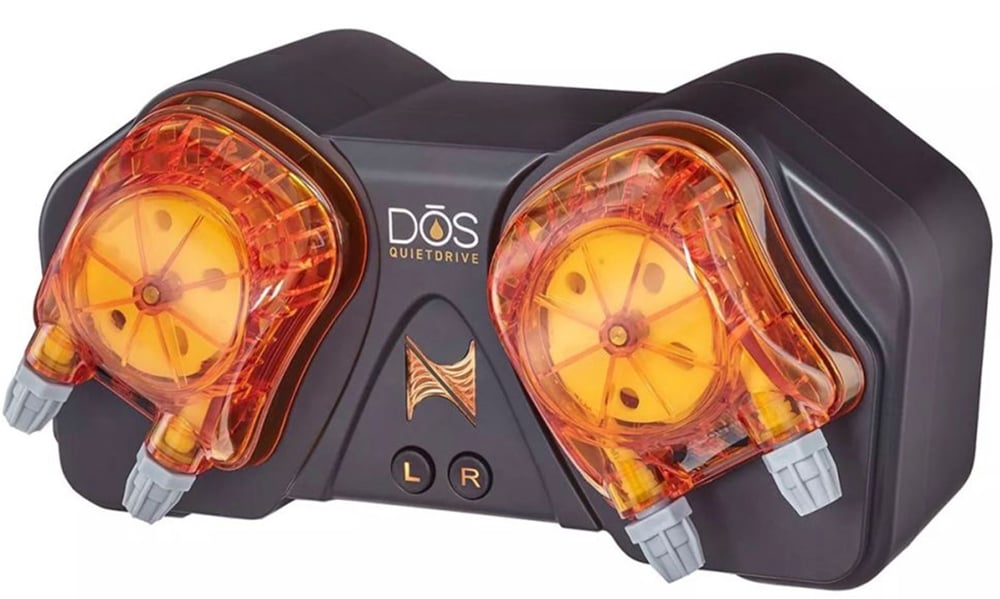
The Neptune Systems DOS QuietDrive is a high-end dosing pump designed primarily for users of the Apex aquarium controller ecosystem. When paired with Apex, it allows reef keepers to automate complex dosing schedules, water changes, and other system maintenance tasks.
Because it integrates directly with Apex, users can program dosing schedules through the Apex interface and combine dosing with sensor data such as pH, temperature, and salinity. This enables more advanced automation scenarios like adjusting alkalinity dosing when pH fluctuates.
However, the biggest limitation of the DOS system is that it is heavily tied to the Apex ecosystem. Without an Apex controller, its functionality is significantly reduced.
Best for: Apex controller users.
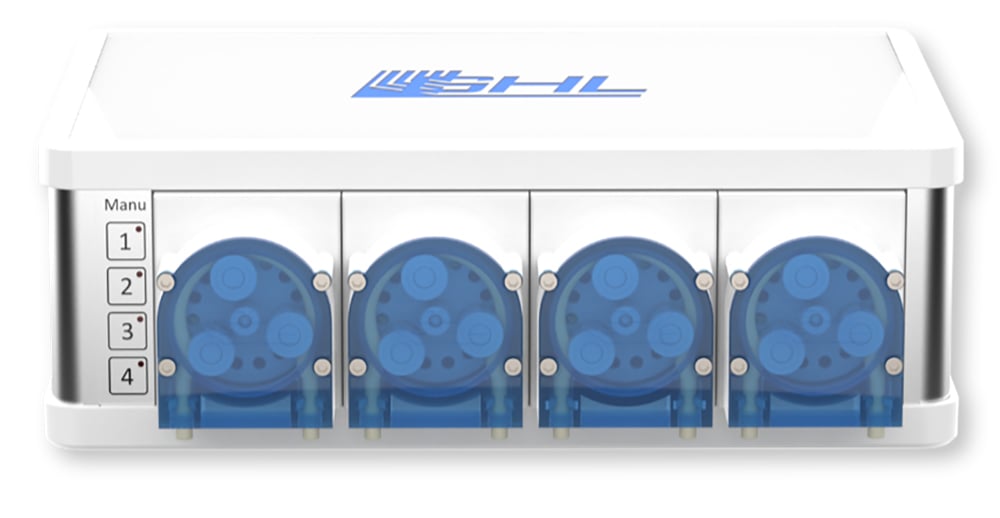
The GHL Doser 3 is considered one of the most premium dosing systems in the reef aquarium industry. Manufactured in Germany, it is designed for reliability, precision, and scalability.
One of its defining features is PrecisionDrive technology, which combines 24-volt stepper motors with planetary gear systems. This allows the pump to deliver extremely accurate dosing with minimal deviation and a resolution as precise as 0.1 mL per dose.
The system is available in two versions:
When paired with the GHL ProfiLux aquarium controller, the Doser 3 can manage complex dosing schedules and even scale up to large multi-pump installations for advanced reef aquariums.
Best for: High-end reef tanks and advanced multi-supplement dosing systems.
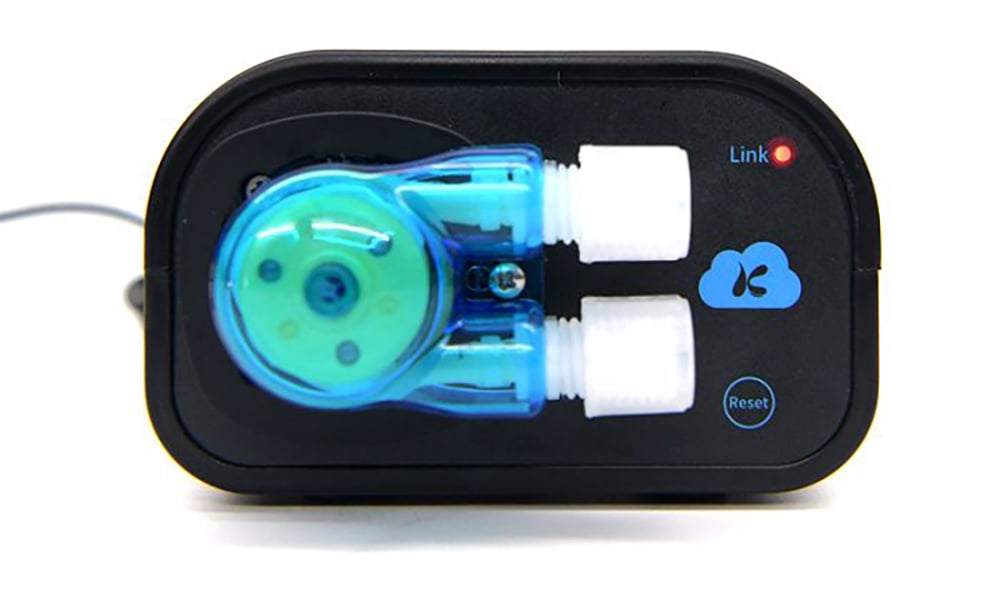
The Kamoer X1 Pro-T is a popular dosing pump for hobbyists who want smart features without a high price tag. It’s a compact single-head dosing pump designed for smaller reef tanks or supplemental dosing tasks.
One of the key features is Wi-Fi connectivity with smartphone app control, allowing users to program dosing schedules directly from their phone. The pump can deliver extremely small doses, making it useful for trace element supplementation and other fine adjustments.
However, because it only has a single dosing head, reef keepers typically need multiple pumps if they want to dose several additives like calcium, alkalinity, magnesium, and trace elements.
Best for: Small reef tanks or targeted additive dosing.
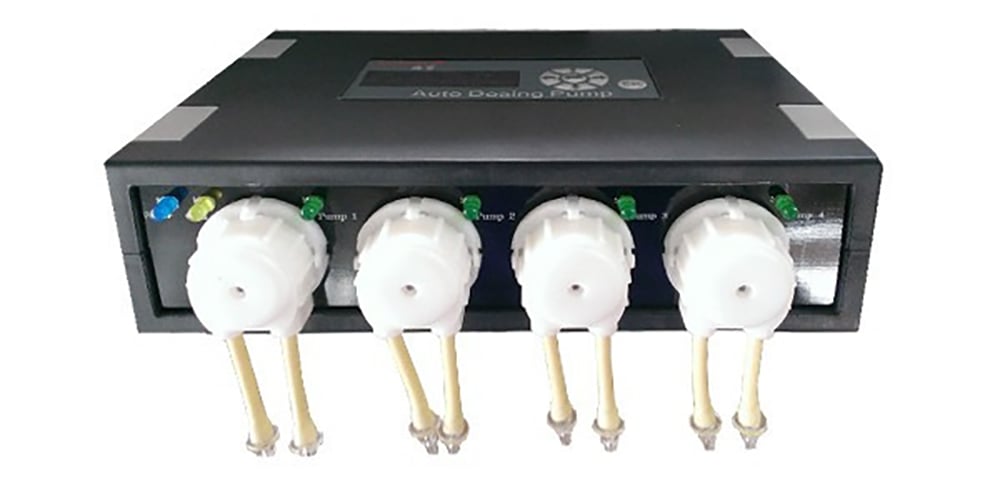
The Jebao DP-4 is one of the most widely used budget dosing pumps in the reef aquarium hobby. It includes four independent dosing channels, allowing reef keepers to automate multiple additives simultaneously.
Each pump head can be programmed individually, with dosing volumes ranging from 1 to 9999 mL per day and up to 24 dosing cycles daily. This allows reef keepers to distribute supplements evenly throughout the day to maintain stable water chemistry.
However, lower-cost pumps like the DP-4 can sometimes suffer from calibration drift and shorter component lifespans, which means users may need to recalibrate the pumps periodically.
Best for: Budget reef tank setups.
| Pump | Best For | Key Strength |
|---|---|---|
| Atlas Scientific Embedded Dosing Pump | Advanced automation | Precision + programmability |
| Neptune DOS | Apex users | Ecosystem integration |
| GHL Doser 3 | Large reef tanks | Expandability |
| Kamoer X1 Pro-T | Beginners | App control |
| Jebao DP-4 | Budget setups | Multi-channel dosing |
While several dosing pumps perform well in reef aquariums, the Atlas Scientific Embedded Dosing Pump stands out as the most capable solution for advanced reef systems. Many popular aquarium dosing pumps focus primarily on scheduled dosing, allowing users to set a fixed amount of liquid to dispense at certain times of the day. While this approach works for basic supplementation, it doesn’t offer the level of adaptability and precision that more advanced reef tanks often require.
The Atlas Scientific pump takes a different approach. Instead of being limited to a built-in timer or proprietary control app, it is designed to integrate directly with custom controllers, aquarium monitoring systems, and IoT devices. Through its UART and I2C communication interfaces, the pump can be controlled by platforms such as Arduino, Raspberry Pi, or custom aquarium controllers. This allows reef keepers to build systems where dosing is no longer based solely on time but instead responds to real-time water chemistry data.
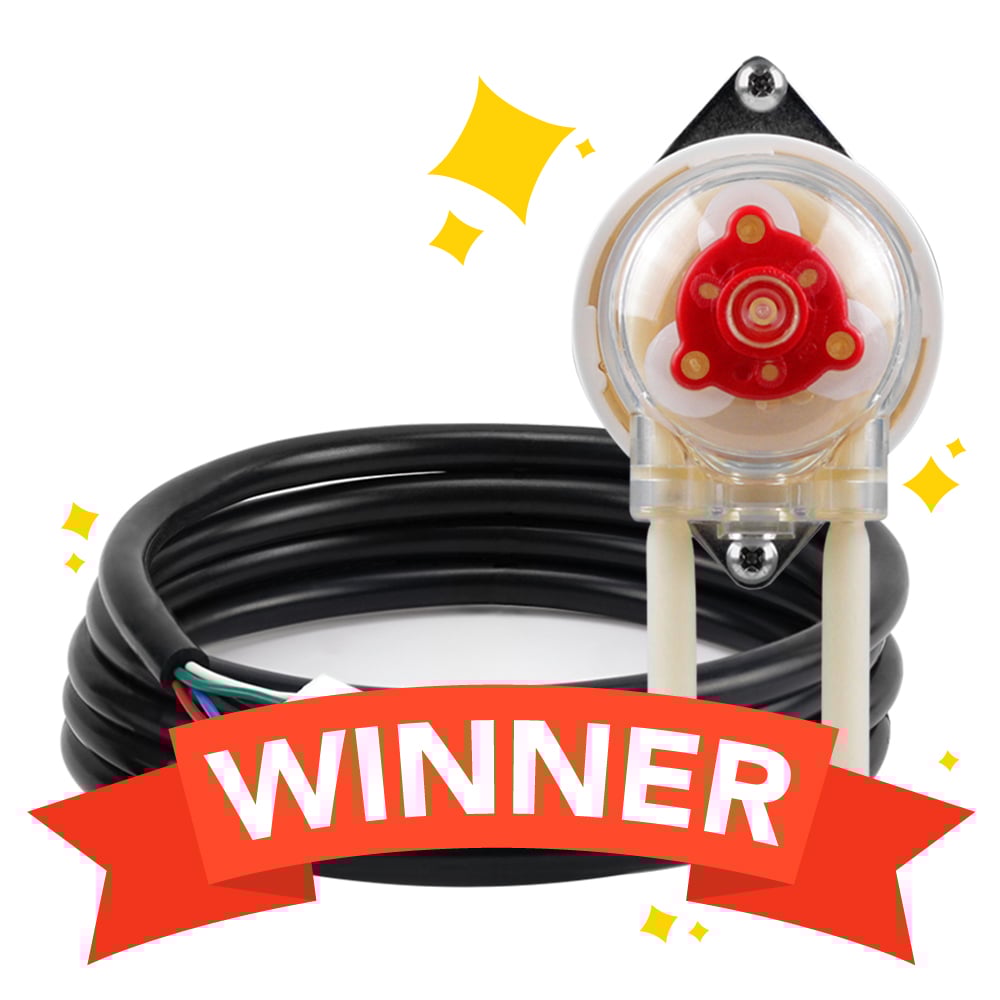
If you’re building a modern reef tank with automation, monitoring, and advanced dosing control, the Atlas Scientific Embedded Dosing Pump is one of the most powerful and flexible solutions available today. It offers the precision, integration capabilities, and scalability needed to support the next generation of automated reef aquariums. Contact the world-class team at Atlas Scientific to learn more.


Indoor air quality can have a major impact on the comfort and productivity of homes, offices, schools, laboratories, and industrial facilities. Carbon dioxide buildup, poor

UART and I2C are serial communication protocols, but they serve different purposes. UART is typically used for direct device-to-device communication and requires dedicated connections. I2C