

Blog
The Best Indoor Air Quality Monitors
Indoor air quality can have a major impact on the comfort and productivity of homes, offices, schools, laboratories, and industrial facilities. Carbon dioxide buildup, poor






A negative ORP indicates that water is relatively reducing under the specific conditions measured, while a positive ORP indicates relatively oxidizing conditions. However, ORP alone does not prove the presence of dissolved molecular hydrogen or establish antioxidant effects in the human body. Those claims require separate measurements and biological evidence.
Municipal tap water often has a positive ORP because disinfectants such as chlorine or chloramine create oxidizing conditions. Its exact ORP varies with pH, temperature, disinfectant concentration, dissolved oxygen, and other substances in the water; there is no universal required range of +200 to +600 mV. Likewise, evidence does not support the claim that water with an ORP of −200 to −800 mV is necessary for optimal hydration. Hydration depends primarily on consuming enough safe water and, in some circumstances, appropriate electrolytes.
ORP is an electrode-based measurement, reported in millivolts (mV), that reflects the combined tendency of dissolved chemical species to gain or lose electrons. In contrast, pH measures hydrogen-ion activity. ORP can provide useful information about processes such as disinfection, corrosion, wastewater treatment, and chemical reactions, but it is not a complete measure of water quality or health benefits. ORP and pH provide different, often complementary information, and neither should be interpreted in isolation.
ORP (oxidation-reduction potential) measures, in millivolts, the tendency of a water system to accept or donate electrons during redox reactions. A more positive ORP generally indicates a more oxidizing environment, while a more negative ORP indicates a more reducing environment. Unlike concentration-based tests, which measure a particular chemical species or group of species, ORP is a non-specific, system-level measurement and cannot identify individual oxidants, reductants, ions, or their concentrations.
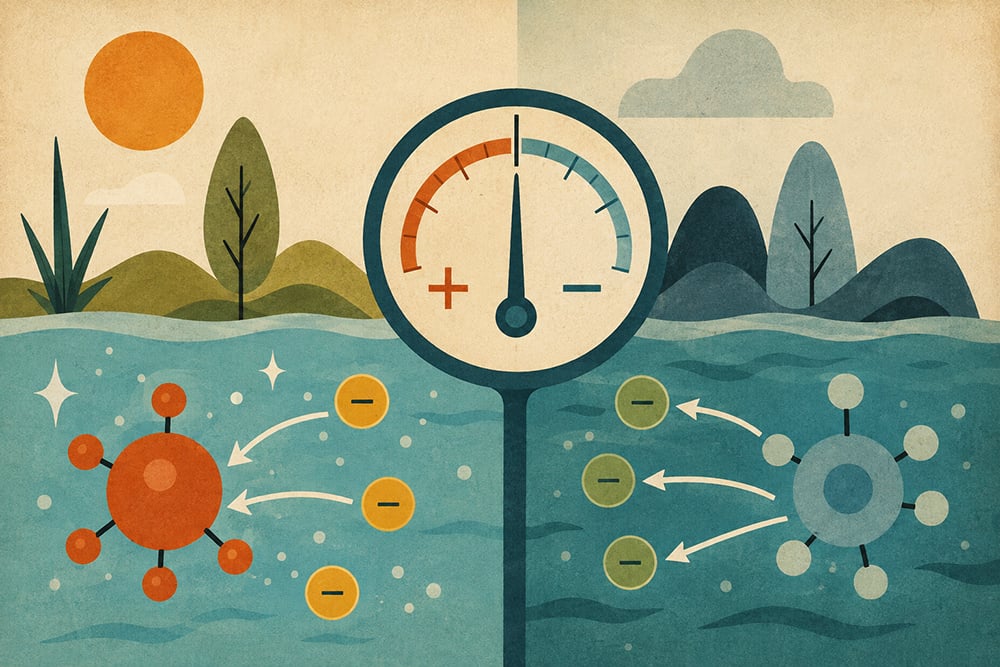
An ORP measurement develops from electron-transfer reactions at the surface of an inert sensing electrode, commonly platinum, relative to a stable reference electrode. The measured voltage reflects the combined influence of redox-active substances that can interact with the ORP sensor, along with factors such as their chemical activity, reaction kinetics, pH, and temperature. ORP is therefore often described as a “composite signal.” However, it should not be interpreted simply as the total concentration of all oxidizing and reducing substances in the water.
A single ORP reading provides limited information without supporting chemical data and operational context. Monitoring ORP over time is often more useful because sudden increases, gradual declines, or other departures from an established baseline can indicate a change in the water’s redox conditions. Although ORP cannot reveal the cause of that change by itself, it can serve as a valuable early-warning and process-control parameter in water treatment and environmental monitoring.
ORP provides information about water chemistry that pH alone cannot. While pH measures acidity or alkalinity, ORP indicates the overall tendency of a water system to support oxidation or reduction reactions. It therefore offers a useful—but non-specific—view of the water’s redox environment.
Biological fluids also have measurable redox potentials, but they do not share a universal ORP value. The ORP of saliva, milk, blood, and other fluids varies with composition, oxygen exposure, pH, microbial activity, temperature, health, storage, and measurement method. Living systems depend on tightly regulated networks of both oxidation and reduction reactions: electron transfer is essential for metabolism, while antioxidant systems help limit and repair oxidative damage. It is therefore inaccurate to characterize all living systems as uniformly reducing.
In drinking-water treatment and distribution, a positive ORP commonly reflects oxidizing conditions created by disinfectants such as chlorine, chloramine, or ozone. The observed value can vary considerably among systems and does not, by itself, prove that pathogens have been eliminated. Disinfection performance also depends on disinfectant concentration, contact time, pH, temperature, and the organisms present. Likewise, a positive ORP does not mean treated water has “no antioxidant potential”; ORP is not a direct measurement of antioxidant content or health effects.

Because ORP responds to the combined influence of redox-active substances that interact with the electrode, it can reveal changes that may not be apparent from pH or a single concentration measurement. However, it cannot identify the substances responsible for those changes. For this reason, ORP is most useful when tracked over time and interpreted alongside measurements such as pH, temperature, dissolved oxygen, conductivity, disinfectant residual, and specific chemical analyses.
Water with a negative oxidation-reduction potential (ORP) contains one or more reducing agents, but ORP does not measure a “surplus of electrons” available to neutralize free radicals in the body. ORP is a bulk electrochemical measurement influenced by pH, temperature, dissolved oxygen, minerals, and other redox-active substances. Free radicals are chemical species with an unpaired electron; some can initiate reactions that damage lipids, proteins, and DNA when their production overwhelms the body’s antioxidant defenses.
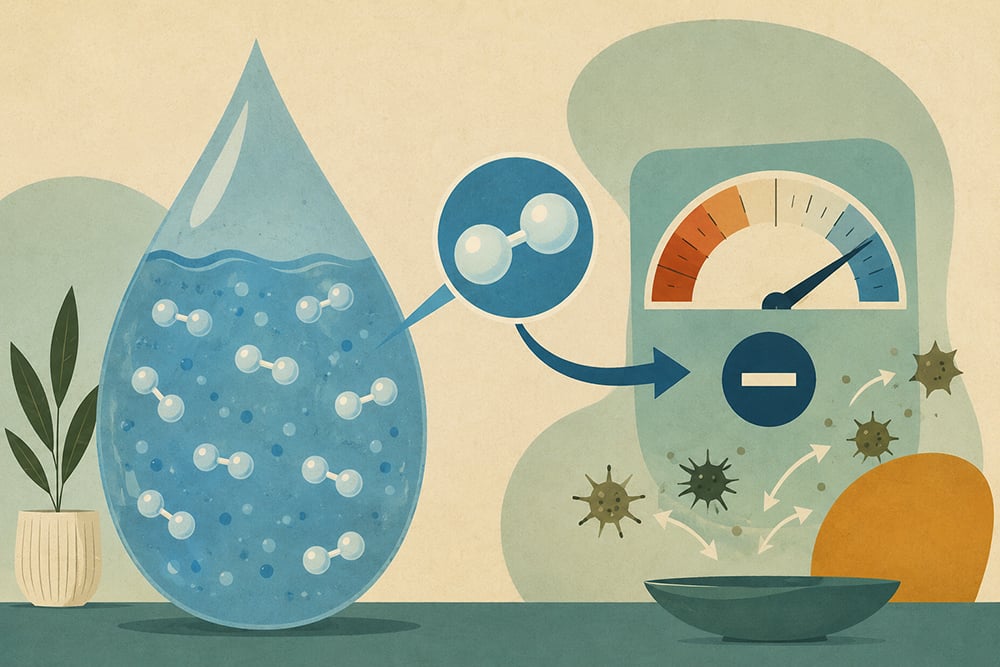
In hydrogen-rich water, dissolved molecular hydrogen (H₂) can contribute to a negative ORP. However, an ORP reading—including −200 mV or lower—cannot by itself establish the water’s H₂ concentration or predict a biological antioxidant effect; dissolved hydrogen must be measured directly. Because H₂ is small and nonpolar, it diffuses readily through biological membranes and can reach many tissues. Early laboratory and animal research found that H₂ reduced oxidative injury and reacted with highly damaging species such as hydroxyl radicals, while having less effect on some reactive species involved in normal cellular signaling. The foundational study was preclinical, however, and later research suggests that H₂ may also influence cellular signaling, inflammation, and antioxidant-response pathways. Its precise mechanisms, effective doses, and clinical benefits remain under investigation, so it is premature to state that hydrogen water reliably prevents cellular damage or exclusively targets harmful oxidants. A negative ORP alone should not be treated as evidence of a health benefit.
Is There a Therapeutic ORP Range?
Most therapeutic research has focused on administering molecular hydrogen (H₂)-through hydrogen-rich water, inhalation, or other methods-rather than on achieving a particular ORP range. Although dissolved H₂ often produces a negative ORP, values such as −200 to −600 mV do not make water a “potent electron donor” to the body or reliably indicate its hydrogen concentration. ORP is influenced by pH, temperature, minerals, dissolved oxygen, and measurement conditions, so H₂ must be measured directly.

Laboratory, animal, and preliminary human studies suggest that molecular hydrogen may influence oxidative stress, inflammation, and cellular signaling. Researchers have investigated possible effects on metabolic health, exercise recovery, gastrointestinal function, and tissue injury, but the clinical evidence remains limited and inconsistent. These potential effects cannot yet be described as established therapeutic benefits.
The negative ORP sign is therefore not the biological trigger for hydrogen’s proposed effects, nor does a nonnegative reading prove that water is biologically inactive. Any effects of hydrogen-rich water would depend on the amount of H₂ delivered, how long it remains dissolved, its absorption and distribution, and the specific biological context-not on ORP alone.
A common misconception is that alkaline water and antioxidant-or reducing-capacity are the same thing. They are not. Mineral-rich spring water and baking-soda solutions can have a high pH while exhibiting a neutral or positive oxidation–reduction potential (ORP). Conversely, some naturally hydrogen-rich geological waters can exhibit negative ORP even at near-neutral pH.

Some researchers propose that dissolved molecular hydrogen, rather than alkalinity itself, is the biologically relevant component of electrolyzed or “ionized” water. In these products, elevated pH may be a consequence of electrolysis rather than the source of any claimed benefit. Alkalinity therefore should not be treated as a proxy for reducing capacity. ORP can indicate the overall redox state of water, but it is influenced by pH, dissolved oxygen, temperature, and multiple redox-active substances; it does not identify the responsible compound or, by itself, establish antioxidant effects in the body. Direct measurement of dissolved hydrogen and other relevant constituents is needed to characterize the water accurately.
In freshly prepared hydrogen-enriched water, dissolved molecular hydrogen can contribute substantially to a negative oxidation–reduction potential (ORP), although the reading reflects a mixed electrochemical potential influenced by all redox-active species present—not solely the H₂/H⁺ couple. For example, a study found that water containing approximately 1,500 ppb (1.5 mg/L) of dissolved H₂ may produce an ORP near −453 mV under particular measurement conditions, but that value is not universal.
ORP cannot be used to calculate dissolved-hydrogen concentration reliably. The reading also depends on pH, temperature, dissolved oxygen, other oxidizing or reducing substances, electrode condition, and equilibration time. Consequently, waters with similar ORP values can contain very different amounts of H₂, and a negative ORP neither proves that hydrogen is present nor identifies what is causing the reducing conditions. Dissolved H₂ should instead be measured directly with a properly calibrated hydrogen sensor or a validated analytical method, such as gas chromatography.

In rivers, wetlands, and sediments, microbial decomposition of plant material and other organic matter consumes dissolved oxygen and can lower oxidation–reduction potential (ORP). Once oxygen becomes scarce, microorganisms may use alternative electron acceptors-such as nitrate, manganese(IV), iron(III), and sulfate-causing the environment to become progressively more reducing. Waterlogged wetland soils and organic-rich sediments therefore often have low, and sometimes negative, ORP values, although the exact reading varies with local chemistry and measurement conditions.
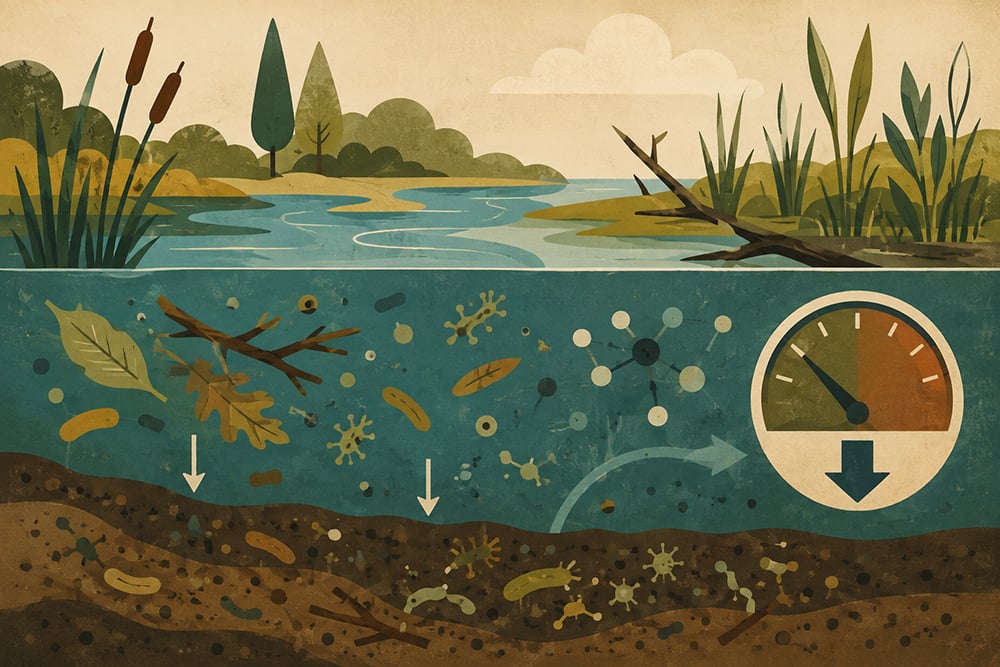
ORP can complement dissolved-oxygen measurements in environmental monitoring by indicating broader changes in redox conditions, including processes occurring after oxygen depletion. However, ORP is a mixed and sometimes slow-to-stabilize measurement, so it should not be assumed to provide earlier warning than dissolved oxygen in every setting. The two measurements are most informative when interpreted together with pH, temperature, and relevant chemical species.
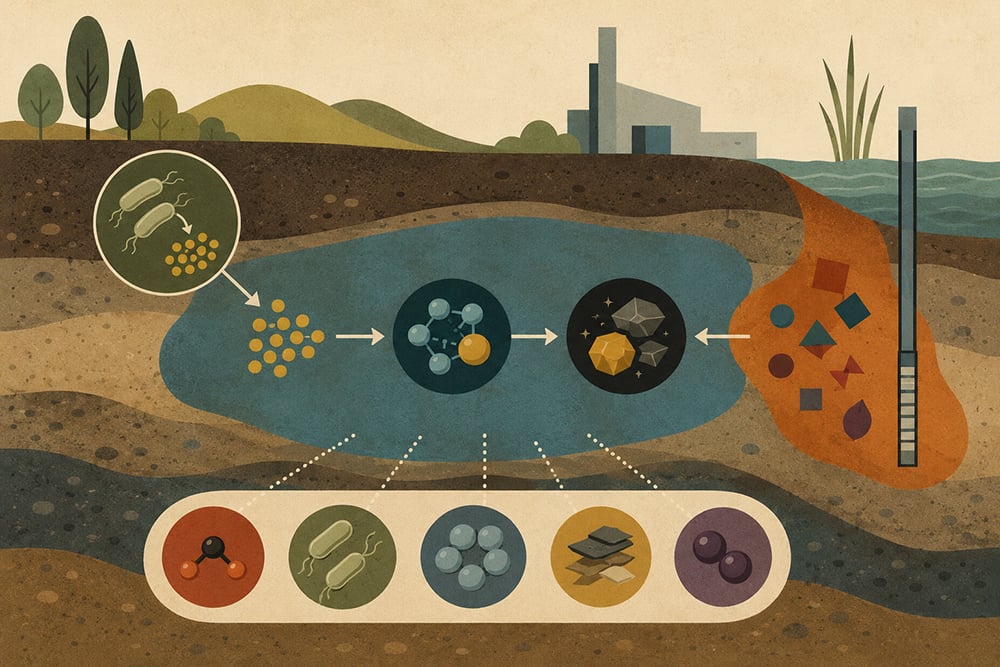
In anoxic groundwater, sulfate-reducing microorganisms can use sulfate as an electron acceptor, producing sulfide after more energetically favorable electron acceptors-such as oxygen and nitrate-have been depleted. Sulfate-reducing conditions are commonly associated with low ORP, but there is no universal value such as −270 mV; measurements vary with pH, temperature, electrode reference, groundwater chemistry, and sampling method.
Where dissolved sulfide encounters ferrous iron, poorly crystalline iron sulfide phases may precipitate, often including metastable mackinawite (FeS). These reactive solids can sorb or chemically transform certain metals, metalloids, and organic contaminants, although their effectiveness depends on contaminant type and site conditions.
Sulfate reduction and iron-sulfide formation can strongly influence contaminant mobility and degradation, but they are only part of the redox system and do not alone determine an anoxic zone’s ORP. Groundwater-plume models and treatment designs should therefore consider the full geochemical setting, including electron donors and acceptors, iron and sulfur speciation, mineral phases, pH, and microbial activity.
ORP is commonly used alongside dissolved oxygen, nitrate, pH, and process data to monitor denitrification in anoxic wastewater-treatment zones. It is especially useful for detecting trends and characteristic transition points, but fixed ORP ranges are not universally applicable because readings depend on the wastewater composition, pH, temperature, electrode condition, and treatment configuration.

In general:
Efficient denitrification does not occur within a universal “optimal” ORP band such as +50 to −50 mV. Operators typically establish site-specific targets and use ORP profiles or inflection points—such as the nitrate knee that appears when nitrate is depleted—to guide aeration, mixing, internal recycle, and carbon dosing. ORP is therefore most actionable when interpreted as a process trend and combined with direct measurements of dissolved oxygen and nitrogen species.
Redox conditions strongly influence whether groundwater contaminants persist, transform, or interact with aquifer minerals. ORP can help characterize these conditions, but it is not sufficient on its own; dissolved oxygen and the concentrations of nitrate, iron, manganese, sulfate, sulfide, methane, and other redox-sensitive species provide essential supporting evidence.
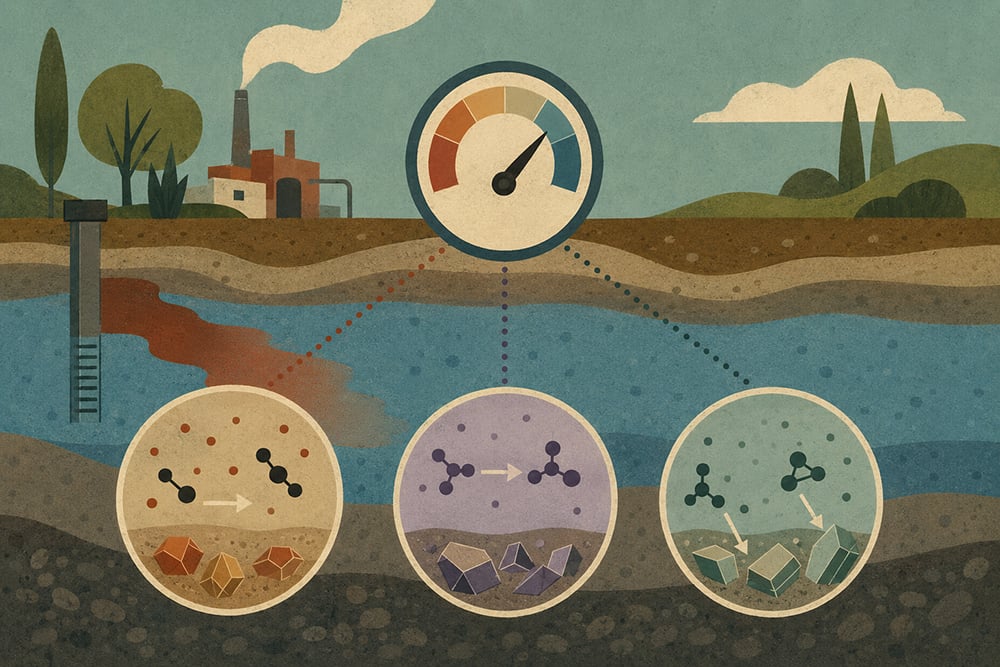
Some chlorinated solvents—particularly highly chlorinated ethenes such as PCE and TCE—can undergo microbial reductive dechlorination under reducing, anaerobic conditions. However, more negative ORP does not automatically mean faster or complete degradation. Successful treatment also depends on suitable microorganisms, electron donors, nutrients, pH, temperature, and the absence of inhibitory conditions. Less-chlorinated products may persist unless complete dechlorination to ethene occurs, while other contaminants degrade more readily under aerobic conditions.
Groundwater ORP values vary widely with aquifer chemistry, pH, electrode reference, sampling practices, and instrument performance; therefore, broad ranges such as +800 to −400 mV should not be treated as universal benchmarks. Remediation professionals and regulators evaluate ORP as one component of a broader lines-of-evidence approach—together with contaminant trends, degradation products, geochemical indicators, microbial evidence, and hydrogeology—to assess monitored natural attenuation or determine whether active remediation is warranted.
When algal blooms die, microbial decomposition of the organic material can consume dissolved oxygen and contribute to hypoxic conditions. Hypoxia is often defined as dissolved oxygen below approximately 2 mg/L, although ecological effects and regulatory thresholds vary by species and jurisdiction. Severe oxygen depletion can create “dead zones,” but these areas are not necessarily devoid of all life; rather, they cannot support many fish and bottom-dwelling organisms, while some oxygen-tolerant or anaerobic organisms may persist.

The number and extent of documented coastal hypoxic zones have increased substantially since the mid-20th century. Nutrient enrichment from agriculture, wastewater, and other sources is an important driver, although water-column stratification, circulation, temperature, and climate also affect their formation and persistence. ORP can complement dissolved-oxygen monitoring by identifying increasingly reducing conditions, particularly in sediments and near-bottom waters. However, it does not consistently provide advance warning before dissolved oxygen declines and should be interpreted alongside direct DO measurements, temperature, stratification, and nutrient data.
A negative oxidation-reduction potential (ORP)—for example, −200 to −600 mV—indicates that water is relatively reducing under the specific measurement conditions. Dissolved molecular hydrogen can contribute to a negative ORP, but ORP alone does not confirm its presence or concentration; pH, temperature, dissolved oxygen, electrode condition, and other redox-active substances also affect the reading. In treatment systems and aquifers, ORP can help identify conditions favorable to processes such as oxygen depletion, denitrification, sulfate reduction, and the transformation of certain contaminants.

Standard water-quality tests identify and quantify substances dissolved in water. ORP provides different, complementary information: it measures the water’s overall tendency to accept or donate electrons relative to a reference electrode. It does not measure electron flow directly, nor does a negative reading by itself establish health benefits or the neutralization of free radicals in human tissue. ORP is most useful when interpreted alongside pH, dissolved oxygen, chemical composition, and other relevant measurements.
If you would like to learn more about ORP measurements or are unsure which industrial ORP probe is best for water treatment, do not hesitate to reach out to the world-class team at Atlas Scientific.


Indoor air quality can have a major impact on the comfort and productivity of homes, offices, schools, laboratories, and industrial facilities. Carbon dioxide buildup, poor

UART and I2C are serial communication protocols, but they serve different purposes. UART is typically used for direct device-to-device communication and requires dedicated connections. I2C