

Blog
The Best Industrial Conductivity Transmitters
Conductivity is one of the most important measurements in industrial water systems. From water treatment and hydroponics to chemical processing and manufacturing, conductivity provides a
briefcase-elementor-widgets domain was triggered too early. This is usually an indicator for some code in the plugin or theme running too early. Translations should be loaded at the init action or later. Please see Debugging in WordPress for more information. (This message was added in version 6.7.0.) in /home/mng1eon/public_html/wp-includes/functions.php on line 6170





pH in wastewater treatment is a critical variable that controls the biology and chemistry of every major treatment process. The speciation of coagulants, the metabolic activity of microbial communities, the solubility of heavy metals, and the efficacy of disinfectants all respond to pH in well-defined and quantifiable ways. The pH of wastewater typically ranges from 6.0 to 9.0.
The pH of wastewater is one of the most important parameters that treatment plants must control. pH controls the solubility of metal compounds, affects the metabolic activity of microbial communities, determines the speciation of disinfectants, and dictates the efficiency of every major chemical dosing process in wastewater. A change of one pH unit represents a change of a factor of 10 in hydrogen ion concentration and can have a downstream effect on all aspects of treatment. Therefore, it is important to understand the science and biology of pH in wastewater.
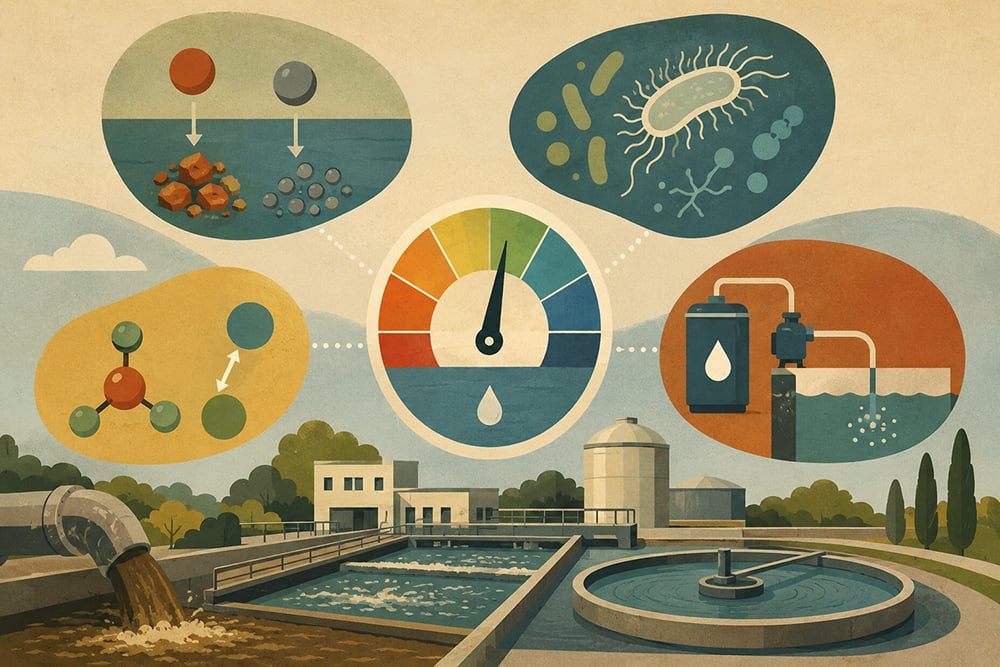
pH is defined as the negative base 10 logarithm of the activity of hydrogen ions in solution: pH = − log [H +]. At pH 7 , [ H + ] and [ OH − ] are equal ( 1×10 −7 mol/L ) . This is the definition of thermodynamic neutrality at 25 °C. At pH values below 7, the hydrogen ions are on the rise; above 7, the hydroxide ions are predominant.
Wastewater is a chemically complex matrix containing organics in solution, suspended solids, inorganic ions, surfactants, ammonia, and a dense biological community. These constituents are affected by pH shifts and also constantly influence pH changes themselves in both directions. Metabolic products of biological activity include organic acids, carbonic acid, and ammonia; industrial effluents contain strong acids or alkalis; even the exchange of atmospheric CO2 changes the pH in open tanks and channels.
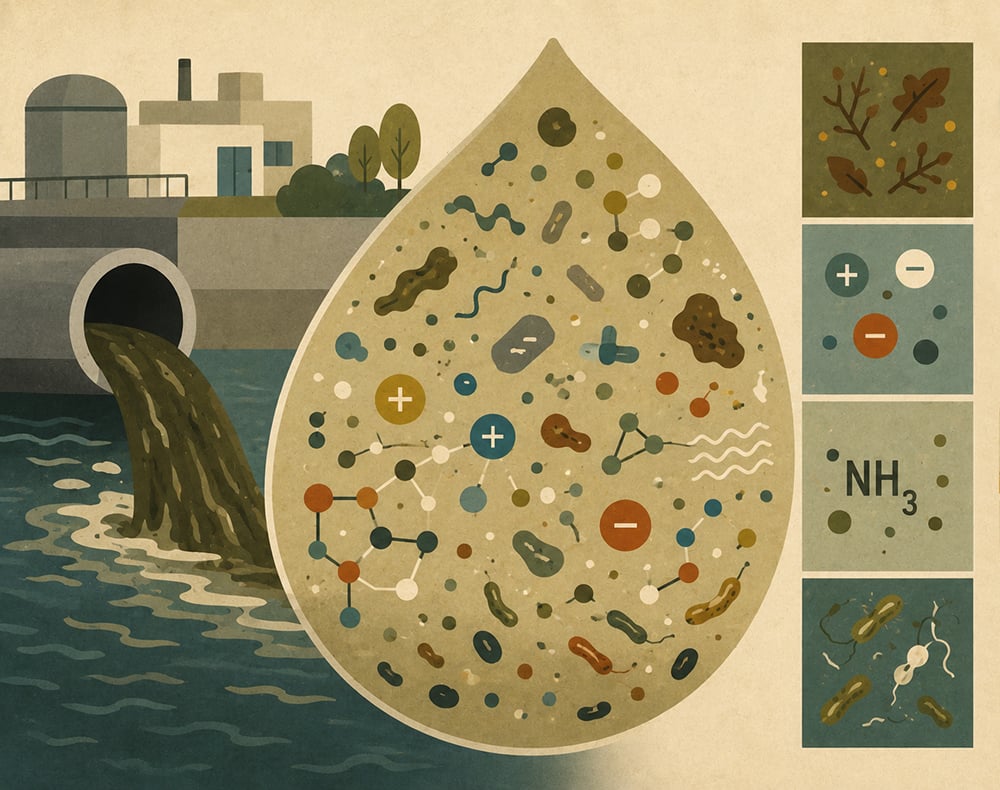
This bidirectionality makes pH in wastewater a dynamic equilibrium instead of a static parameter, which is precisely why continuous in-situ monitoring is so important.
In wastewater treatment, both primary and secondary clarification rely on coagulation and flocculation to aggregate suspended organics and colloids into settleable floc. This chemical process is massively pH-sensitive.
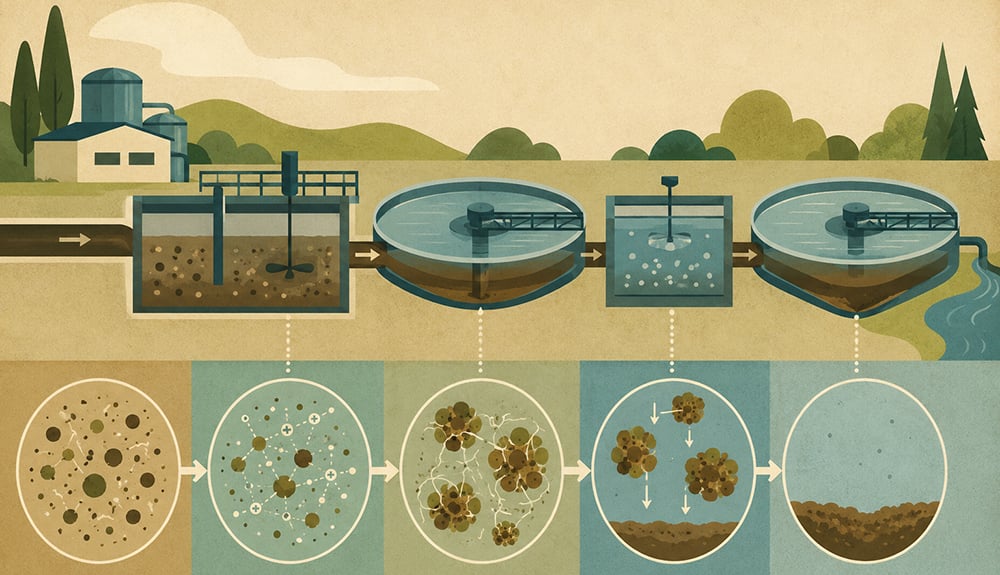
Aluminium-based coagulants (alum, aluminium sulphate) hydrolyse in water to produce a cascade of aluminium hydroxide species: Al3+, Al(OH)2+, Al(OH)3, and Al(OH)4⁻. The distribution of these species is a pH-dependent function and controls the coagulation efficiency directly. In the pH range 5.0–6.5, positively charged mono- and polynuclear aluminium species predominate and are effective in neutralising the negative surface charge on colloids. Above pH 8, the anionic aluminate species Al(OH)4- dominates, which has a negative charge and therefore repels colloidal particles instead of neutralizing them, leading to a significant reduction in coagulation efficiency.
Ferric coagulants, like ferric chloride and ferric sulfate, also have similar patterns, but they operate at an optimal pH of 4.5-6.0. Some studies on coagulation-flocculation of complex industrial effluents in wastewater have demonstrated that pH 8.0 maximizes chemical oxygen demand (COD) removal and color removal when alum is used, showing a narrow window where charge neutralization and sweep floc formation coincide. Polyacrylamide-based flocculants reach peak turbidity and suspended solid removal at a pH level of 7.2 – 7.4, which is consistent with the near-neutral conditions needed for effective polymer bridging between particles.
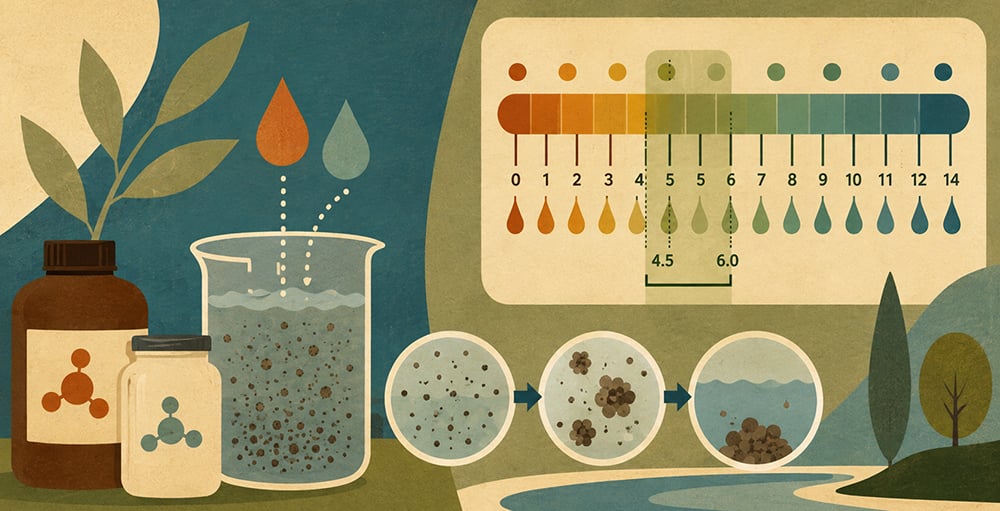
Even a 0.5-unit deviation from the optimal coagulation pH can shift speciation enough to significantly degrade floc formation, carry over colloidal material into downstream biological stages, and increase effluent turbidity.
One of the most important treatment goals for industrial wastewater is the removal of heavy metals. This is regulated almost exclusively by pH via the principle of hydroxide precipitation. The solubility of metal hydroxides is governed by the solubility product constant (Ksp):
M2+ + 2OH⁻ ⇌ M(OH)2 ↓
Copper hydroxide, Cu(OH)2, has Ksp = 2.2×10^-20, meaning that copper is virtually insoluble above about pH 7.0, and precipitates out of solution. There are similar equilibria for lead, zinc, cadmium, and nickel, each with a characteristic Ksp and an optimum pH for precipitation.
In general, cation solubility decreases with increasing pH into the alkaline range, and anionic metal species (chromate, arsenate, molybdate) are more soluble under alkaline conditions. Therefore, the optimal precipitation pH is metal-specific. For many divalent metals, hydroxide precipitation is at its highest removal efficiency around pH 7.5, and any further advantage above pH 9.5 is usually only marginal. However, amphoteric metals such as zinc and lead display a minimum in solubility and then re-dissolve in strongly alkaline conditions (pH > 11) due to the formation of soluble zincate or plumbate ions, a phenomenon called re-dissolution that must be actively monitored by the operators.
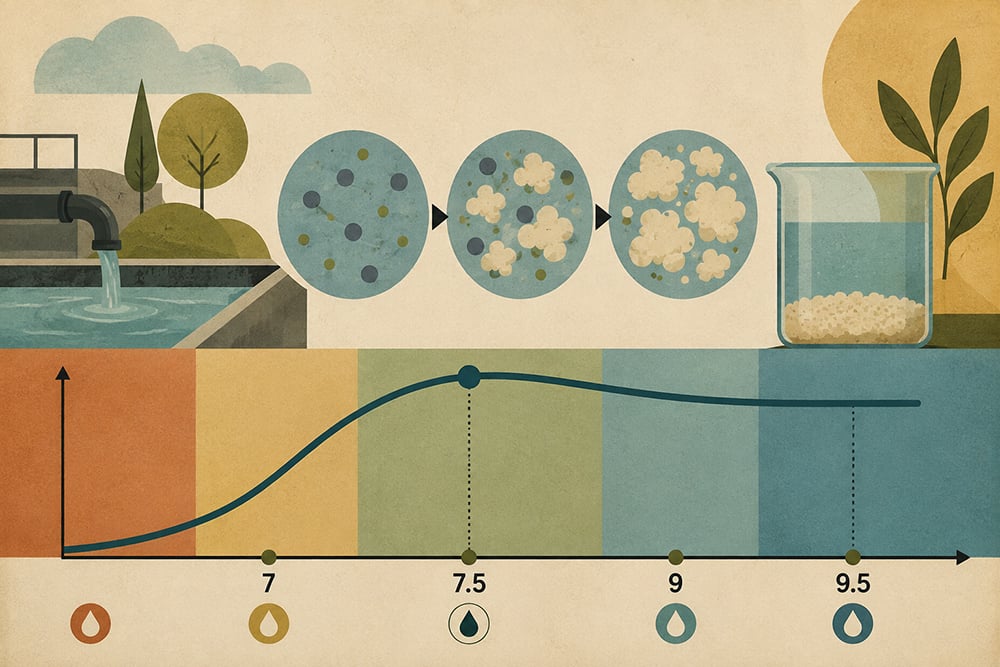
Chromium is a special case. Hexavalent chromium (Cr6+) has to be reduced to trivalent chromium (Cr3+) with a reducing agent at pH 2–3 before the pH is raised to 8–9 to precipitate Cr(OH)3. This two-step pH manipulation is a typical example of sequential pH control on metal treatment.
Adsorption processes used for polishing of metal-contaminated effluents have a different profile: the removal efficiency normally increases up to a pH of 6 and then reaches a plateau. This is because the surface charge of adsorbent materials, activated carbon, zeolites, and iron oxyhydroxides, is itself dependent on the pH. At low pH, the protonation of surface functional groups reduces the affinity for metal ion binding, which is restored under near-neutral conditions.
The biological heart of most wastewater treatment systems, activated sludge in aerobic tanks, anaerobic digesters, and sequencing batch reactors, is a structured microbial ecosystem. The pH directly affects the enzyme kinetics, membrane integrity, and the inter-species interactions, which directly constrain the performance.
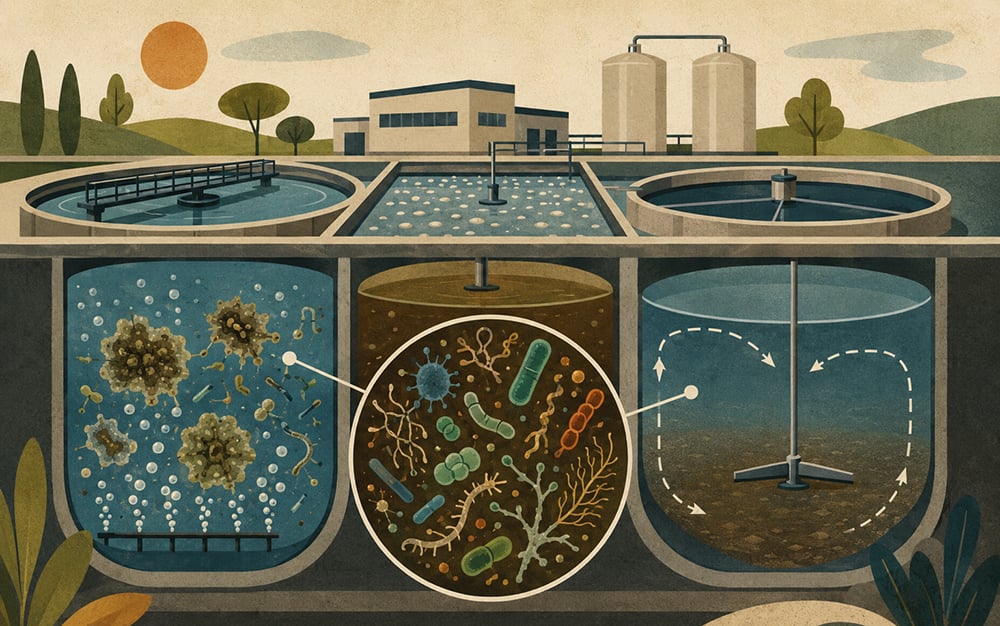
Aerobic biological treatment is most effective at a pH of 6.5 to 8.5. In this range, heterotrophic bacteria have normal metabolic rates for BOD and COD removal. Outside the pH range of 6.0 to 8.0, enzyme denaturation reduces metabolic efficiency, while sudden drops in pH below 6.0 are particularly damaging to activated sludge floc structure. Studies have shown that the COD removal rates at the extreme pH values of 4 and 10 are significantly lower than the median values, confirming the narrow biological operating window. Rapid acidification is more harmful than shifts to alkaline conditions of the same magnitude because protonation of cellular enzymes and membrane transporters disrupts metabolism faster than alkaline conditions disturb important biochemical pathways.
Anaerobic digestion is a multi-stage process and is even more sensitive to pH, with at least four distinct microbial guilds :
Methanogens are the most pH-sensitive group, with a narrow optimum between pH 6.8 and 7.2. Acetogens can tolerate a wider range (pH 6.0-7.5), but acidogens can function down to pH 5.0. If the organic load is too high, the accumulation of volatile fatty acids (VFAs) causes the pH to fall below the methanogenic threshold, a phenomenon known as “souring”, resulting in a self-reinforcing process failure: lower pH inhibits methanogens further, allowing the accumulation of more VFAs. Recovery requires careful addition of alkalinity and load reduction, with continuous pH measurement.

This sensitivity also explains why alkalinity (mainly bicarbonate, HCO3-) is measured in addition to pH in anaerobic systems. The bicarbonate buffer system (H2CO3 ⇌ H+ + HCO3−, pKa 6.35) provides a natural form of pH stability, and a declining alkalinity to VFA ratio is a leading indicator of digester instability that can be detected before any significant pH change.
Chlorine-based disinfection is the last treatment stage and is highly pH-dependent due to the equilibrium between hypochlorous acid (HOCl) and the hypochlorite ion (OCl −):
HOCl ↔ H + + OCl − (pKa ~7.5 @ 25°C)
Because it is uncharged, HOCl penetrates bacterial cell membranes readily, whereas OCl− is repelled by the negatively charged outer membrane of most bacteria, making HOCl 80–100 times more effective as a biocide than OCl−. At pH 7.4-7.6, about 50% of free chlorine is in the form of HOCl. The equilibrium moves strongly to OCl- above pH 8.0. At pH 9.0, more than 97% of the free chlorine is in the form of the less active hypochlorite. Operators that desire a certain log-inactivation of pathogens at high pH need to add significantly higher doses of chlorine to achieve the same disinfection credit, which could lead to increased chemical costs and disinfection by-product formation.
Ultraviolet (UV) disinfection is not pH dependent, but if pH control is not maintained upstream, coagulation will not work properly, and suspended solids will be poorly removed. This will reduce UV transmittance and indirectly link pH control upstream to disinfection.
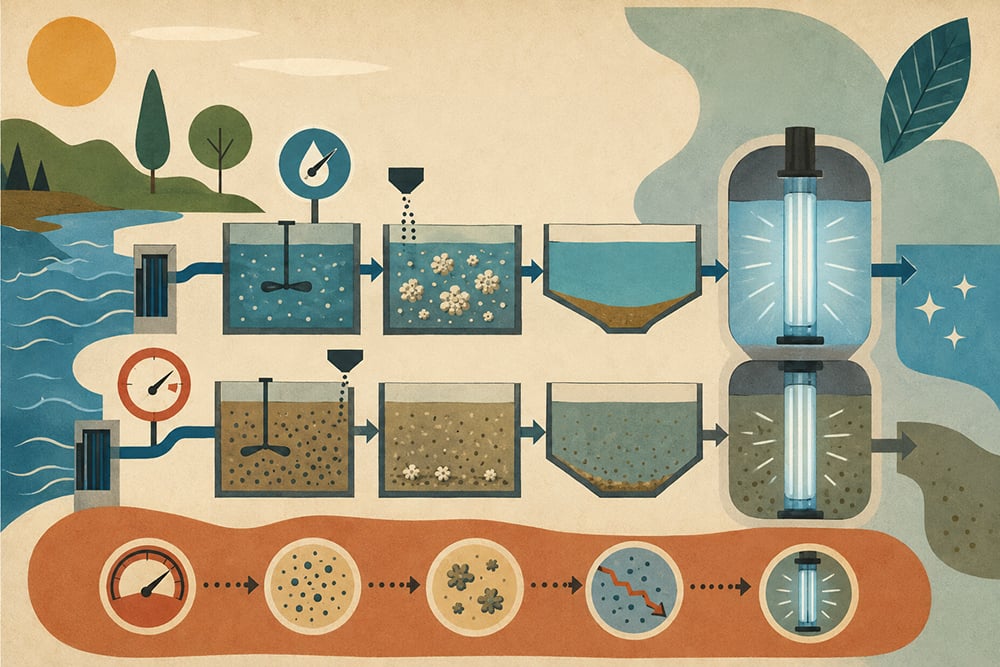
Reliable in-line and in-situ pH measurement is not a supplementary check but a foundational requirement of plant operation, as pH has cascading effects across all stages of treatment.
The industrial pH measurement is based on the glass electrode, which generates a potential difference across a pH-sensitive glass membrane according to the Nernst equation:
E=E0-(RT/nF)×log[H+]
The electrode potential varies by about 59.16 mV per pH unit at 25 °C. Hence, temperature compensation is a must. A 10°C error in temperature compensation leads to a measurement error of about 0.2 pH units, enough to affect dosing decisions at each of the above-mentioned steps.
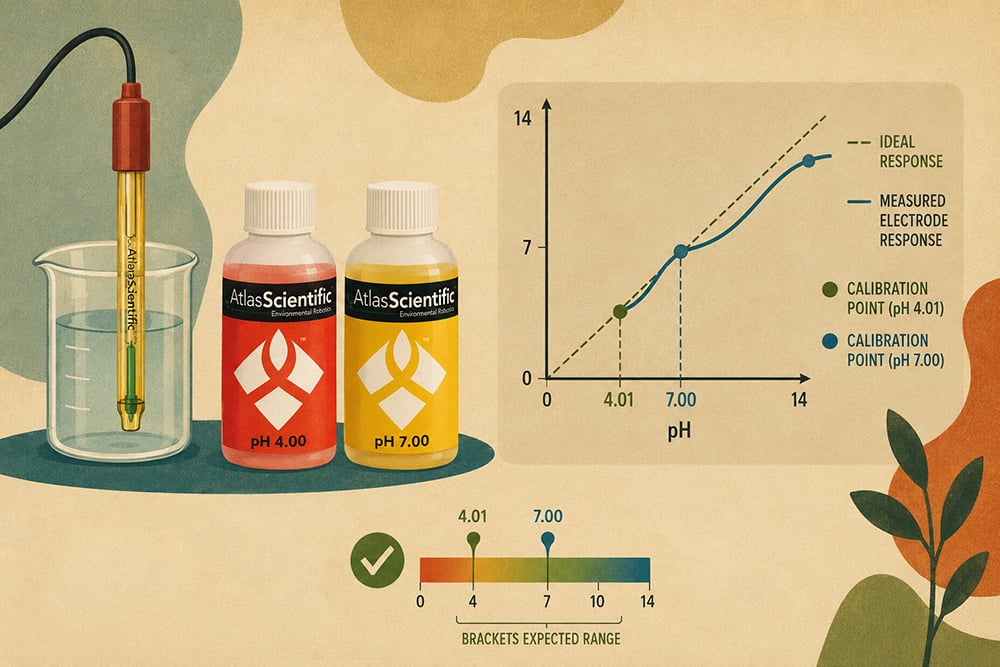
A two-point pH calibration with a pH buffer solutions that bracket the expected measurement range (typically pH 4.01 and 7.00, or pH 7.00 and 10.00) is needed to correct for both the slope and offset of the electrode response curve. A decreasing slope, typically 95 to 105% of theoretical, is an early indicator of membrane fouling or blockage of the junction, both of which are common in the high-solids, chemically complex environment of wastewater treatment.
Differential pH sensors solve a major problem with traditional single-junction reference electrodes for wastewater applications: reference junction poisoning by sulfide ions, which precipitate as silver sulfide and lead to drift. Differential designs use a second measuring electrode as a reference, eliminating the liquid junction entirely and dramatically extending the sensor life in aggressive matrices.
Sensor selection is as important as the placement strategy. pH sensors installed at points of coagulant dosing, at the inlet and outlet of biological reactors, and immediately before disinfection stages provide the process data needed for closed-loop chemical dosing, the difference between reactive pH correction and real pH control. The backbone of an optimized treatment process is modern pH sensor installations, combined with continuous temperature monitoring and automated cleaning systems, which can extend service intervals from daily manual cleaning to monthly cycles.
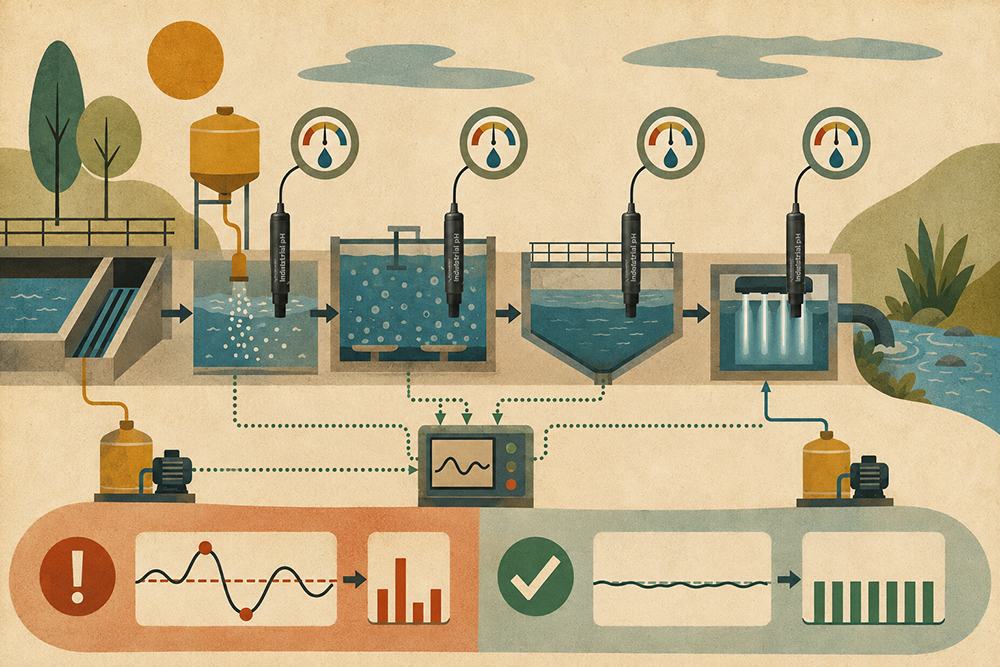
pH in wastewater treatment is vital in every major treatment process. Accurate and continuous pH measurement is required to understand heavy metals, microbial communities, coagulants, and the effectiveness of disinfectants.
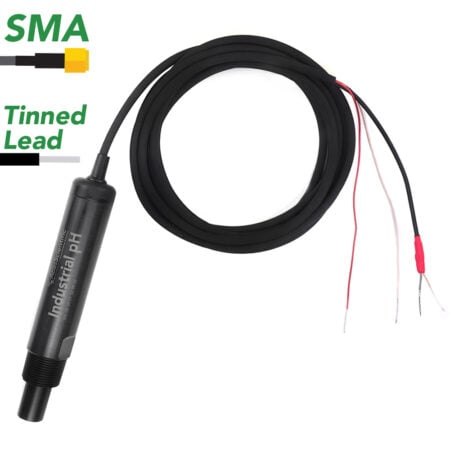
If you are working in an environment that requires high-precision pH readings but are unsure which pH sensor is best for your testing needs, reach out to the world-class team at Atlas Scientific today for expert advice.


Conductivity is one of the most important measurements in industrial water systems. From water treatment and hydroponics to chemical processing and manufacturing, conductivity provides a

When a process requires more than one chemical, nutrient, reagent, or additive, using several independent dosing pumps can quickly become complicated. A multi-pump dosing system