

Blog
The Best Indoor Air Quality Monitors
Indoor air quality can have a major impact on the comfort and productivity of homes, offices, schools, laboratories, and industrial facilities. Carbon dioxide buildup, poor





Aeroponics delivers the fastest growth, highest yields, and greatest water efficiency, but demands technical precision and backups. Hydroponics offers reliability, affordability, and flexibility. The best results come from matching system complexity to experience, resources, and production goals for modern growers.
As farmers around the world look for alternatives to conventional soil-based farming, the agricultural landscape is changing quickly. Hydroponics and aeroponics, two soilless farming techniques that significantly increase crop yields, water efficiency, and space utilization, are among the most promising innovations. Although these systems have similar objectives and some overlapping principles, each is best suited for a different set of applications and skill levels due to their fundamental differences in nutrient delivery, resource requirements, and complexity.
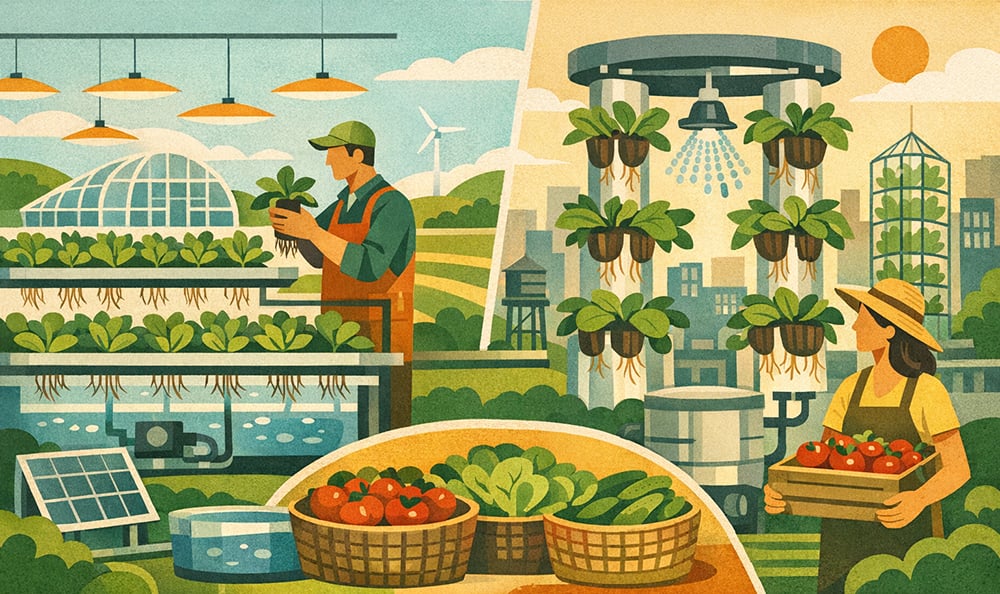
Anyone thinking about soilless cultivation, whether they are a commercial operator planning a large-scale farming facility or a home gardener investigating indoor growing, needs to understand the differences between aeroponics and hydroponics. To assist you in making an informed choice, this thorough comparison looks at both systems from a technical, practical, and financial standpoint.
With hydroponics, plants are grown without soil and are given all the nutrients they need through water-based solutions. Plant roots obtain nutrition directly from enriched water instead of extracting minerals from the earth, which removes many of the constraints of conventional agriculture.
The Greek words “hydro” (water) and “ponos” (labor) are the source of the term hydroponics, which literally translates to “water working.” Although the commercial application is relatively new, the idea has been around for centuries; plant nutrition experiments have been documented since the 1600s.
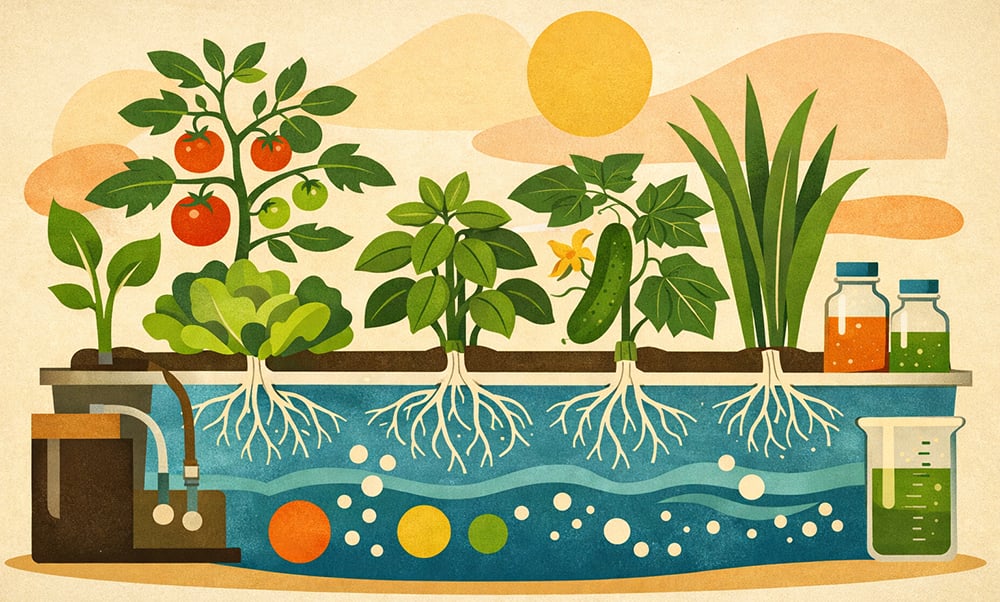
There are various configurations of contemporary hydroponic systems, and each one uniquely delivers nutrients. In Deep Water Culture (DWC), roots are suspended in a nutrient solution that is continuously aerated. A thin layer of solution is flowed past roots in sloped channels using the Nutrient Film Technique (NFT). Growing beds are periodically flooded and drained by ebb and flow systems. Drip systems use emitters to deliver the solution straight to plant bases.
Despite these differences, the fundamental features of all hydroponic techniques are the same. Plants are fed precisely and under control. Regardless of the weather or the seasons, growth takes place indoors or in protected areas. When compared to soil farming, the system’s water recirculation significantly lowers consumption.
Aeroponics is a sophisticated method of soilless farming in which the roots of plants are entirely suspended in the air. Aeroponic systems expose roots to an enclosed, humid environment and provide nutrients through fine misting, as opposed to immersing them in water or supporting them in a growing medium.
This air-based method is reflected in the word aeroponics, which combines the words “aero” (air) and “ponos” (labor). Plants in an aeroponic system are usually placed in holders at the top of a growing chamber, with their roots hanging freely below. Misting nozzles provide both hydration and nutrition by spraying nutrient solution directly onto the exposed roots at predetermined intervals.
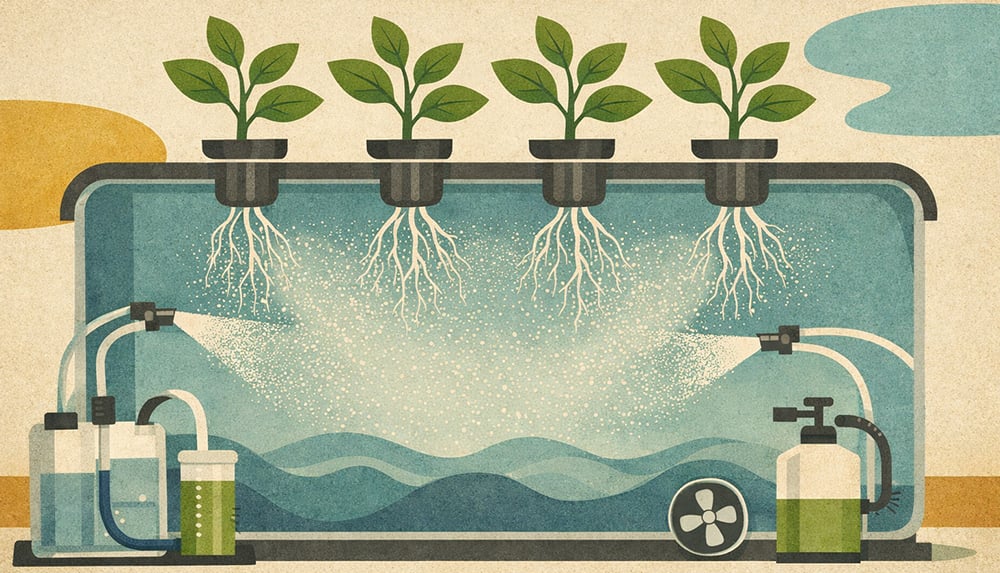
The availability of oxygen is significantly improved by this exposure to air. Atmospheric air has about 30,000 times more oxygen than fully saturated water, despite water’s limited capacity to hold dissolved oxygen. Aeroponic systems’ high oxygen content encourages incredibly effective nutrient uptake and faster growth.
As a particular subset of soilless farming, aeroponics is technically a part of hydroponics. But when selecting a growing method, its special qualities and needs should be taken into account separately.
The way these systems supply nutrients to plant roots is the primary difference between them. The main medium in hydroponics is water, and roots are either constantly or sporadically exposed to a flowing or stationary nutrient solution. Plants can be placed in growing media that allow solution contact while offering support, such as perlite, coconut coir, or clay pebbles.
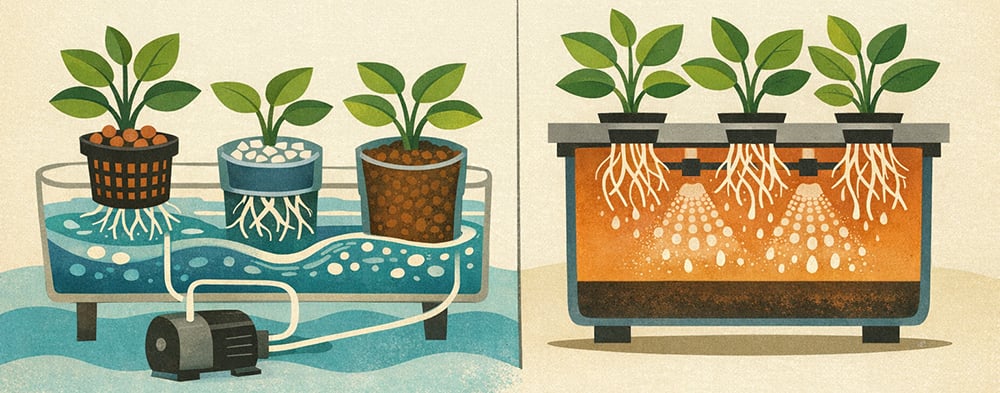
Water immersion is eliminated with aeroponics. Only misting allows nutrient solution to reach roots; in between spray cycles, roots are left exposed to the air. In order to provide micro-doses of nutrition while maintaining maximum oxygen exposure, this mist usually operates at short intervals, such as spraying for five to ten seconds every few minutes.
One important aspect of plant health and growth rate is root oxygenation. This necessary component is supplied in hydroponic systems by dissolved oxygen in the water solution. To maintain sufficient dissolved oxygen levels, typically aiming for 6–8 mg/L, growers must actively aerate water using air pumps and stones or rely on water movement.
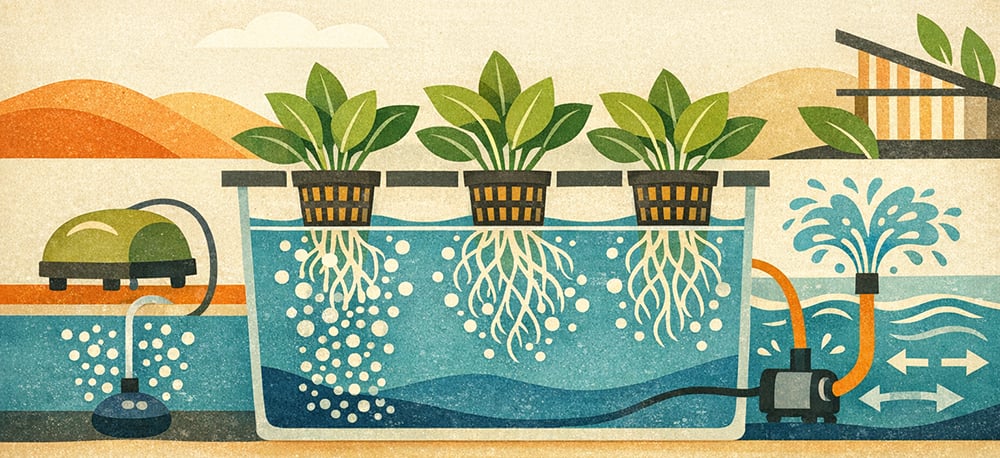
By leaving roots outside in between misting cycles, aeroponic systems naturally provide better oxygenation. The risk of oxygen deprivation, which can affect hydroponic systems if aeration fails or water temperatures rise above ideal levels, is eliminated by this direct air exposure. Aeroponic environments have an abundance of oxygen, which facilitates more effective cellular respiration and nutrient absorption.
Although both systems differ in efficiency, water conservation sets them apart from conventional agriculture. When compared to soil farming, hydroponic systems usually use 80–90% less water thanks to controlled environments and recirculation. Large amounts of standing water are still maintained in reservoirs by these systems, though.
Compared to hydroponics, aeroponics uses about 30–50% less water, making it even more water-efficient. With little waste, the misting method delivers exact amounts straight to the roots. Reduced evaporation results from less standing water, and the targeted delivery guarantees that almost all of the water applied benefits the plants. According to some estimates, aeroponic systems have better water efficiency than alternative growing methods like ebb and flow systems.
Similar trends are seen in nutrient efficiency. Higher nutrient concentrations are needed in hydroponic systems to compensate for the system’s water volume. Concentrated solutions are used in aeroponic misting, but they are applied in smaller amounts; for comparable growth, 40–60% fewer nutrients are frequently needed.
In order to anchor plants and give them structural support, hydroponic systems usually need some kind of growing medium. Expanded clay pellets, rockwool, coconut coir, perlite, or vermiculite are examples of common media. These substances stay inert, neither supplying nor absorbing nutrients; they only act as structural support, letting air and water get to the roots.
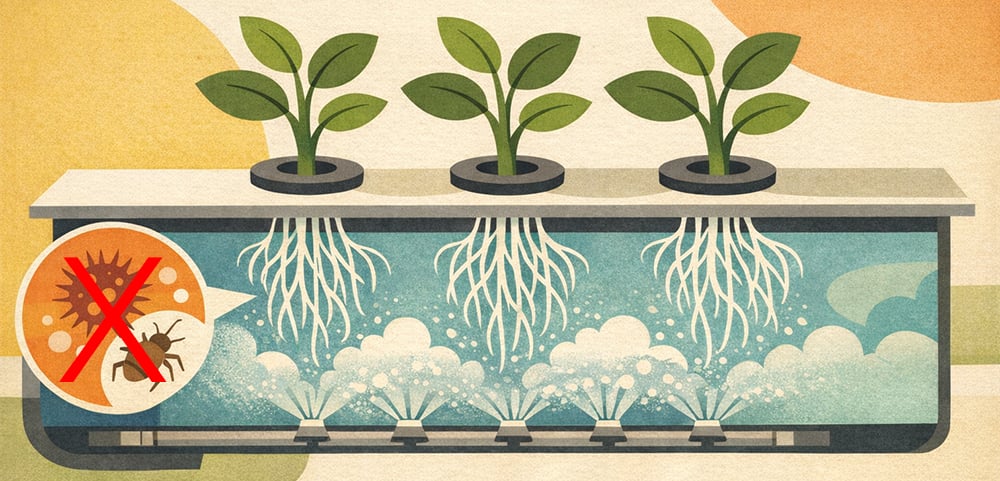
Growing media are eliminated in aeroponic systems. Plants are positioned in collars or specialized holders that allow the roots to freely extend into the growth chamber while supporting the stem. There are a number of advantages to this lack of media, such as lower startup costs, the removal of diseases and pests carried by media, simpler system cleaning in between crops, and no need to replace or dispose of spent media.
One relatively simple method of soilless farming is hydroponics. Pumps for circulation or aeration, reservoirs for nutrient solution, timers for automated watering, and pH/EC monitoring equipment are all necessary for basic systems. With little technical knowledge, many growers are able to successfully run hydroponic systems.
More advanced machinery and exact control are required for aeroponics. It is crucial to have high-quality misting nozzles that generate fine droplets without clogging. Frequent, brief misting cycles are managed by more sophisticated timing systems. The right droplet size is guaranteed by pressure pumps or specialized aeroponic misters. Since roots dry quickly without frequent misting, backup systems guard against equipment failure.
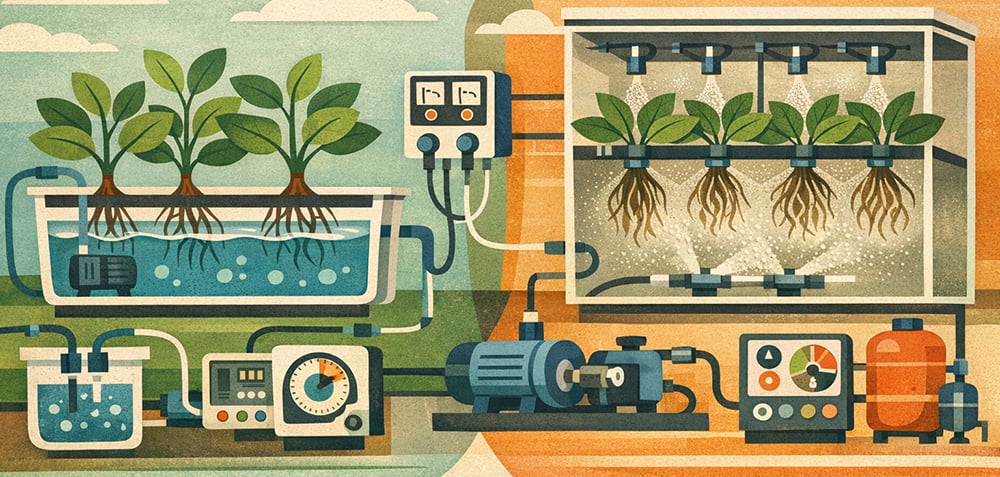
Because of its increased complexity, aeroponics is usually best suited for growers with more experience or those who are prepared to devote time to learning the technology.
There are many advantages to hydroponics, which include:
Accessibility and Simplicity: Hydroponics offers an approachable entry point for those new to soilless cultivation. Systems can start simply and scale in complexity as growers gain experience and confidence.
Established Track Record: Decades of commercial hydroponic farming have generated extensive knowledge bases, troubleshooting guides, and proven techniques for virtually any crop and climate.
Equipment Availability: Hydroponic components are widely available from numerous suppliers at various price points, making it easy to source parts, find replacements, or start projects on limited budgets.
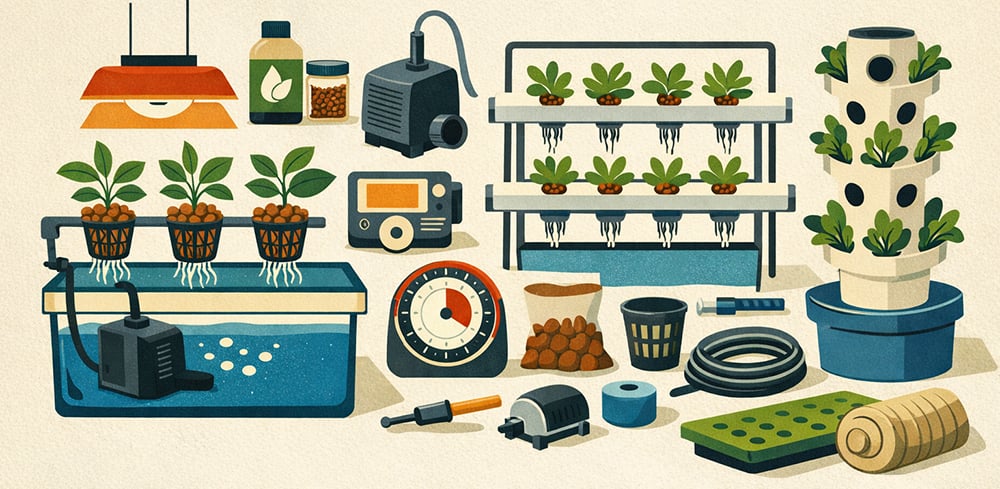
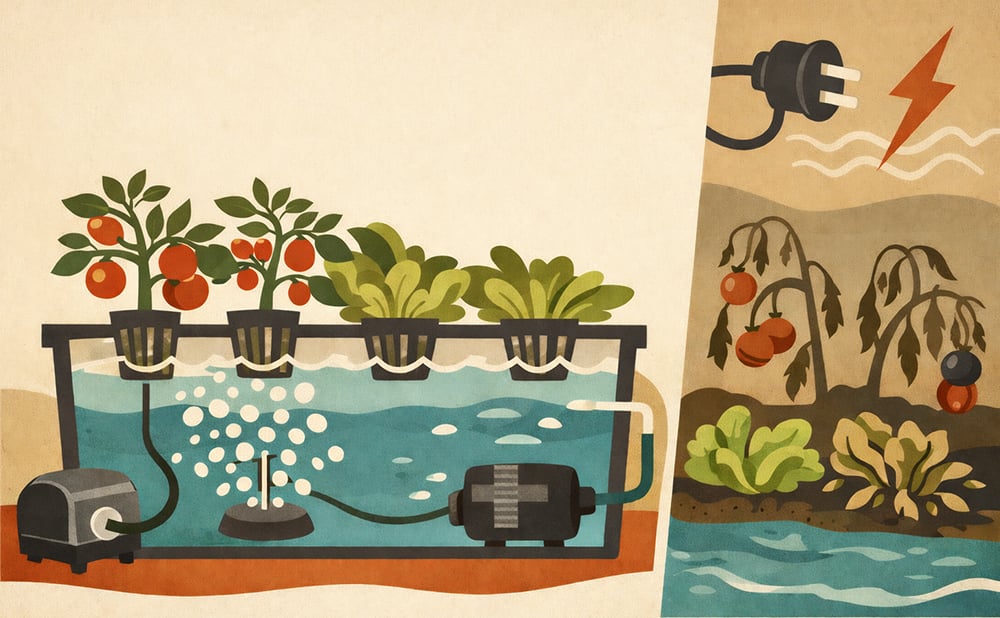
System Resilience: The large volume of water in hydroponic reservoirs provides buffer time if equipment fails. Roots remain hydrated for hours even if pumps stop, allowing time to address problems before crop damage occurs.
Versatile Applications: Hydroponic systems work well for diverse crops, from leafy greens and herbs to fruiting plants like tomatoes and peppers, with proven protocols for most species.
Lower Technical Barriers: Managing pH, nutrient concentrations, and system operations in hydroponics requires less precision than aeroponics, making it forgiving for beginners learning the fundamentals.
There are many advantages to aeroponics, which include:
Exceptional Growth Rates: The abundant oxygen and efficient nutrient delivery in aeroponic systems often produce growth rates 20-40% faster than hydroponics, with some crops reaching harvest significantly earlier.
Maximum Water Efficiency: For regions facing water scarcity or operations prioritizing sustainability, aeroponics offers unmatched conservation, using a fraction of the water required by other methods.
Superior Yields: The optimal growing conditions in aeroponic systems frequently deliver larger harvests per plant and per square foot than comparable hydroponic setups.
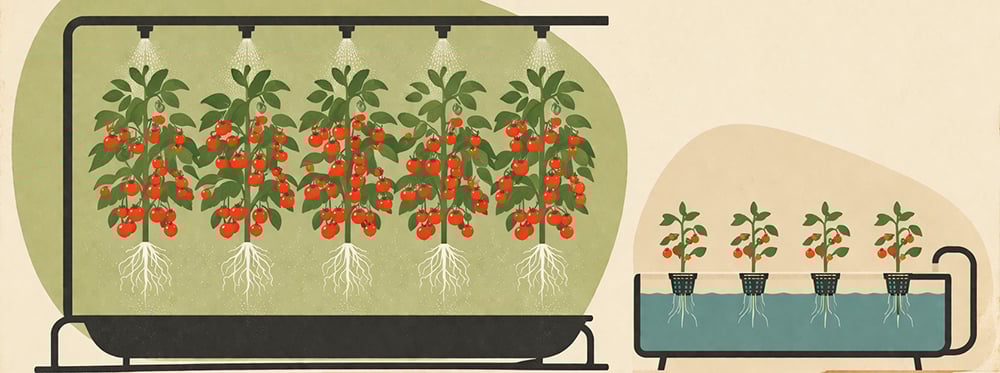
Reduced Disease Risk: The absence of growing media and standing water eliminates many pathways for soilborne diseases, fungi, and pests. The dry environment around stems reduces mold and mildew problems.
Space Optimization: Aeroponic systems naturally lend themselves to vertical configurations, allowing dramatic increases in production within limited footprints.
Minimal Nutrient Waste: Precise delivery directly to roots with immediate recapture of excess solution virtually eliminates nutrient runoff and waste.
Root Inspection: The exposed root structure in aeroponic systems allows easy visual inspection for health monitoring, early disease detection, or educational observation of root development.
Higher Water Requirements: While dramatically more efficient than soil farming, hydroponics still uses more water than aeroponics, a consideration for water-limited environments.
Oxygenation Demands: Maintaining adequate dissolved oxygen requires continuous energy for air pumps or water circulation, with potential growth impacts if systems fail.
Disease Vulnerability: Water-borne pathogens can spread quickly through recirculating systems if introduced, potentially affecting entire crops before detection.
Media Management: Growing media requires initial purchase, periodic replacement, and eventual disposal, adding ongoing costs and logistics.
Technical Complexity: The precision required in aeroponic systems demands more knowledge, more sophisticated equipment, and more careful monitoring than basic hydroponics.
Higher Initial Investment: Specialized misting equipment, precision timers, and quality components increase startup costs, sometimes significantly above comparable hydroponic systems.
Vulnerability to Failure: Exposed roots dry within minutes if misting stops, making backup power and redundant systems critical for protecting crops against equipment failure.
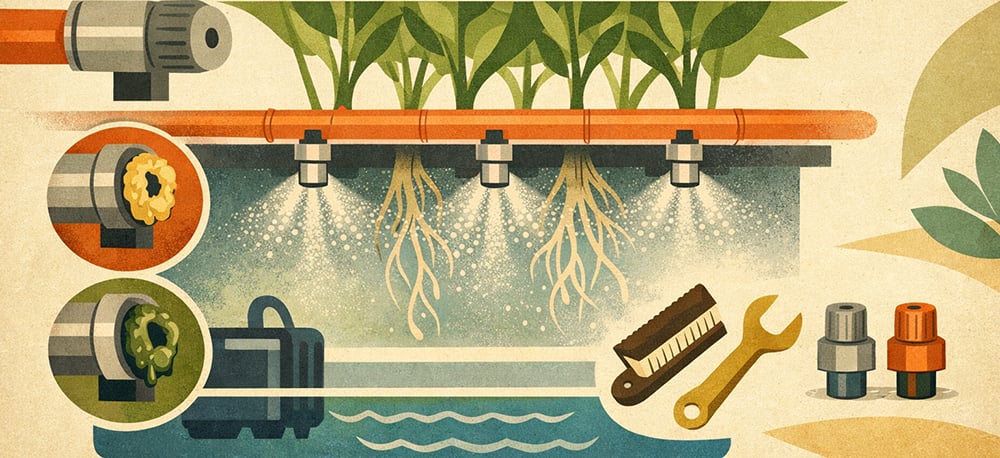
Nozzle Maintenance: Misting nozzles can clog with mineral deposits or algae, requiring regular cleaning and occasional replacement to maintain proper droplet size and distribution.
Limited Resources: Fewer growers use aeroponics compared to hydroponics, resulting in less available information, fewer troubleshooting resources, and smaller communities for support.
Success in both systems depends heavily on precise monitoring and control of critical parameters. pH levels must remain within narrow ranges specific to each crop, typically between 5.5 and 6.5. Nutrient concentrations, measured as electrical conductivity (EC), require regular testing and adjustment. Solution temperatures should stay within optimal ranges, usually 65-72°F (18-22°C). Dissolved oxygen in hydroponic systems needs monitoring to prevent deficiency.
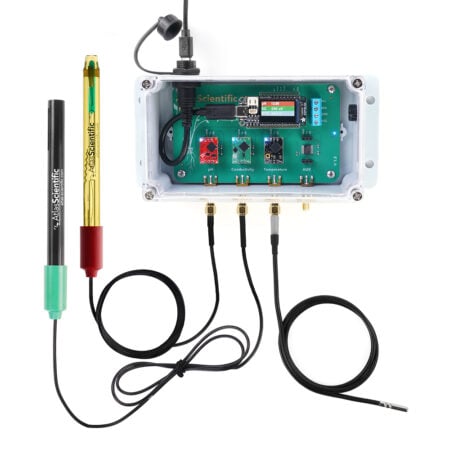
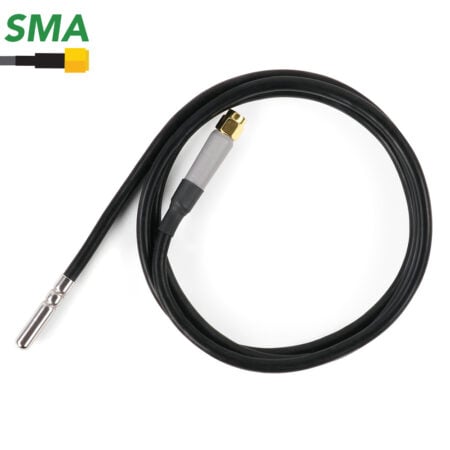
Modern automated monitoring solutions dramatically improve the management of these parameters. Continuous pH and EC sensors provide real-time data on solution chemistry, allowing immediate detection of pH drifts or problems. Atlas Scientific’s temperature probes track solution warmth to prevent stress. Dissolved oxygen sensors ensure adequate aeration in hydroponic reservoirs.
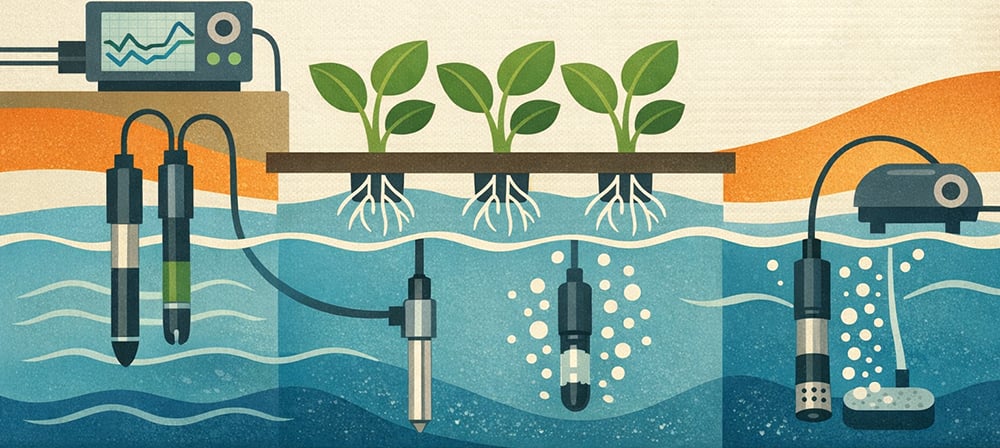
For aeroponic systems, especially, where precision proves critical to success, automated monitoring becomes nearly essential. Data logging tracks trends over time, helping growers understand their systems and optimize conditions. Alert systems notify operators immediately when parameters exceed acceptable ranges, enabling quick intervention before plants suffer damage.
Integration with automated dosing systems takes control to the next level, maintaining perfect pH and nutrient concentrations with minimal manual intervention. This automation reduces labor while improving consistency and outcomes.
The choice between aeroponics and hydroponics depends on multiple factors specific to your situation, goals, and resources.
Choose Hydroponics if:
Choose Aeroponics if:
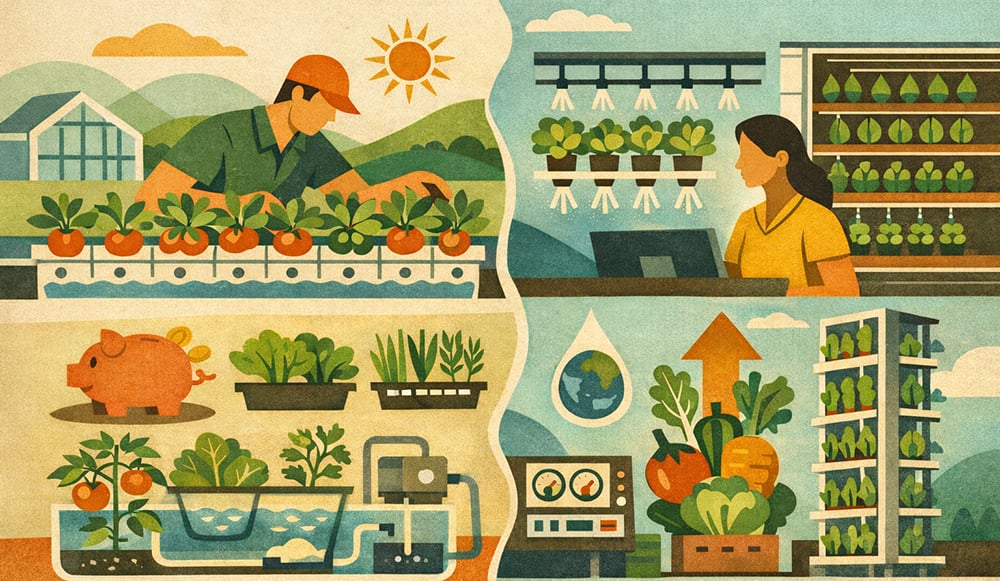
For many growers, the practical answer involves starting with hydroponics to learn fundamental principles of soilless cultivation, then potentially transitioning to aeroponics as experience and confidence grow. This progression allows skill development while managing risk and investment.
Compared to conventional soil-based agriculture, hydroponics and aeroponics both offer significant gains in resource efficiency, yield potential, and environmental control. With manageable complexity and a wealth of support resources, hydroponics offers an approachable, tried-and-true method for soilless farming. For those who are prepared to meet its technical requirements, aeroponics raises performance and efficiency to new heights.
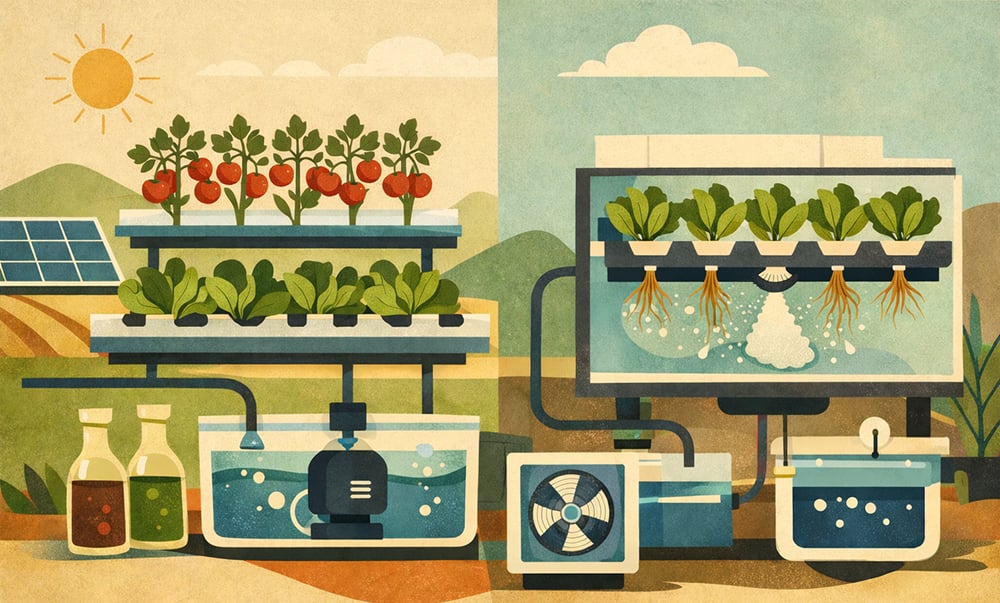
In general, neither system is better than the other. Depending on the grower’s skill level, resources, priorities, and growth goals, each performs well in various situations. The secret to success is to choose the strategy that best suits your unique situation and capabilities rather than the “best” system.
If you would like to learn more about aeroponics or hydroponic systems, or are unsure which testing kits you need, reach out to the world-class team at Atlas Scientific.



Indoor air quality can have a major impact on the comfort and productivity of homes, offices, schools, laboratories, and industrial facilities. Carbon dioxide buildup, poor

UART and I2C are serial communication protocols, but they serve different purposes. UART is typically used for direct device-to-device communication and requires dedicated connections. I2C