

Blog
The Best Indoor Air Quality Monitors
Indoor air quality can have a major impact on the comfort and productivity of homes, offices, schools, laboratories, and industrial facilities. Carbon dioxide buildup, poor





Hydroponics and traditional farming serve different purposes. Hydroponics offers superior water efficiency, space utilization, and climate control, while traditional farming remains essential for large-scale crops and soil-based ecosystems. Choosing between them depends on the crops grown, available resources, and long-term production goals.
The agricultural landscape is being transformed. As climate change intensifies and water scarcity deepens, farmers are exploring alternative methods of growing food. At the center of this revolution stands hydroponics – a soilless cultivation method challenging centuries of agricultural tradition.
But is hydroponics truly superior to traditional farming, or does it simply offer different trade-offs? In this guide, we will look at both methods to help you make informed decisions about your growing operation.
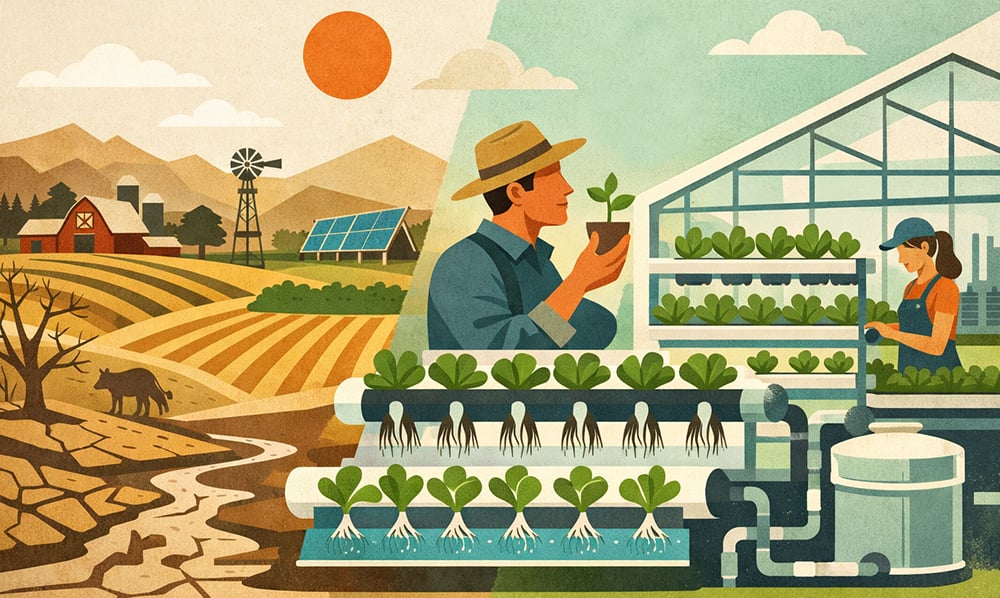
Traditional farming relies on soil as the primary growing medium, where plants extract water and nutrients via their root system. Growers must prepare the land, manage complex ecosystems with soil microorganisms and weather patterns, and work with seasonal challenges and constraints. Traditional farming requires significant physical space, with crops spread across acres for commercial operations.
Hydroponics eliminates the need for soil. Alternatively, plants receive nutrients via water solutions delivered to their root systems. Modern hydroponic systems include Nutrient Film Technique (thin flowing nutrient film), Deep Water Culture (roots suspended in oxygenated solutions), Aeroponics (nutrient misting), and Drip Systems (precise delivery to individual plants).
What combines these approaches is precise control of every growth variable. Temperature, light, humidity, pH, and electrical conductivity (EC) can be monitored and adjusted in real-time, creating optimal conditions year-round regardless of external environmental conditions.
According to UNESCO, traditional farming uses approximately 70% of global freshwater resources. Much of this water is lost to evaporation, runoff, and deep soil percolation before plants can use it. On the other hand, studies have found that hydroponics system reduce water consumption by up to 90% compared to conventional farming methods. This is because in hydroponics, water circulates through a closed-loop system with minimal evaporation loss. This efficiency proves invaluable in drought-prone regions and areas facing water restrictions, like in-land megacities.
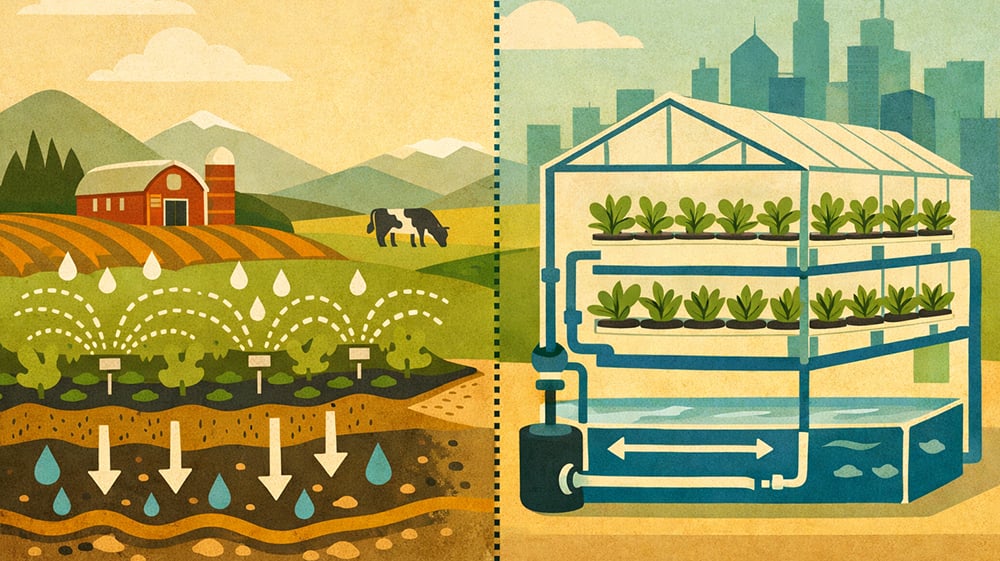
But the benefits extend beyond conservation. Traditional irrigation can leach nutrients into groundwater and waterways, contributing to ecosystem degradation. Hydroponic systems contain all nutrients within the growing environment, eliminating agricultural runoff.
Traditional farming operates horizontally, so each plant needs space for roots to spread through the soil, searching for water and nutrients. Commercial soil-farming operations require substantial acreage, limiting production capacity where land costs are high. Additionally, when weather conditions are poor, traditional farming crops suffer, as they have to battle the external environmental conditions.
Vertical hydroponic systems stack growing areas, utilizing three-dimensional space. A single acre of vertical hydroponic greenhouse can produce yields equivalent to 200-350 acres of traditional farmland, depending on the crop. This enables agriculture in urban warehouses, rooftops, and repurposed buildings.
Indoor hydroponic operations need lighting, climate control, water pumps, and monitoring systems to function, all consuming electricity. Critics have pointed out that this energy demand is a significant drawback, particularly when power comes from fossil fuels. However, vertical farming is increasingly moving towards using renewable energy to generate electricity. According to a study by Rystad Energy, solar energy can become 10 times cheaper than electricity. Plus, many companies like Hydropolis have stated that renewable energy sources like solar and wind power are very well-suited for vertical farming.
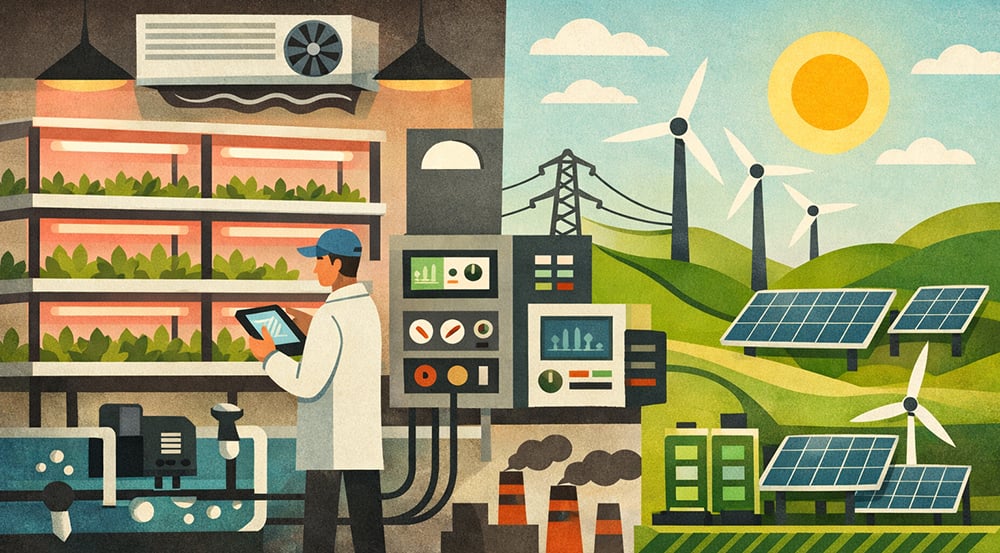
Other modern operations have also addressed these concerns through innovation. Hybrid systems maximize natural sunlight with supplemental LED lighting only when needed. Other advanced designs employ mobile light bars that move between plant rows, reducing energy costs by up to 12%.
The energy calculation must also account for traditional farming’s hidden costs. These include fuel for machinery, production and transportation of fertilizers and pesticides, and extensive distribution networks moving produce from rural farms to urban consumers.
Industrial farming operations have degraded soils worldwide. Erosion removes topsoil 10-40 times faster than natural regeneration. Monoculture depletes soil nutrients, requiring escalating fertilizer inputs. The United Nations estimates that at current rates, the world has less than 60 years of topsoil remaining.
Hydroponics eliminates soil degradation by removing soil entirely from the equation. The same system can produce crops indefinitely without soil erosion or nutrient depletion. However, while hydroponics doesn’t degrade soil, it doesn’t build it either. Regenerative agriculture practices like cover cropping, crop rotation, and composting can actually improve soil health over time, sequestering carbon and enhancing ecosystem services. So it is not a simple win for the hydroponics side, yet.
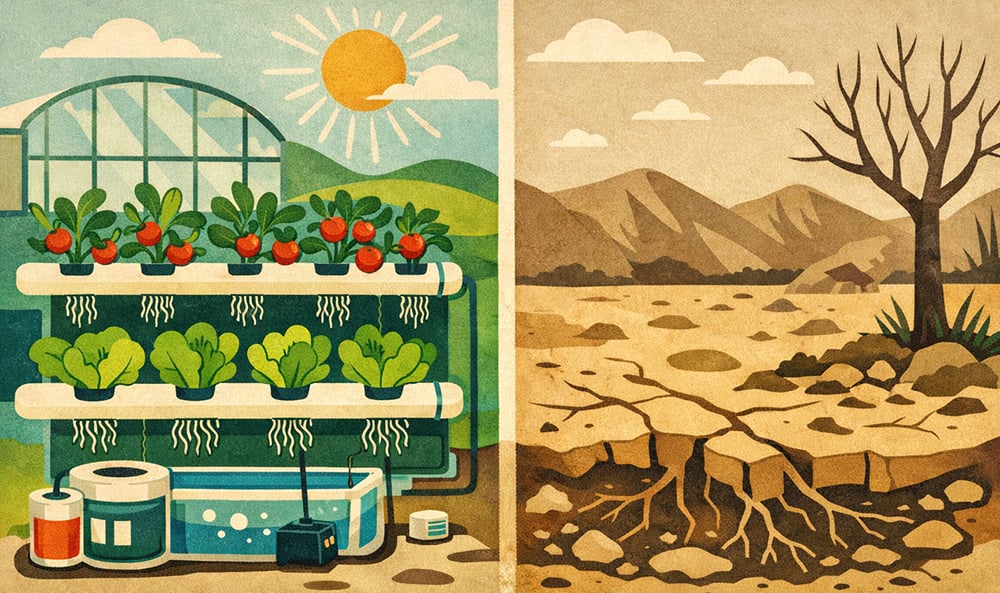
Traditional agriculture uses approximately one billion pounds of pesticides annually in the US alone, with residues appearing on produce and in waterways. Indoor hydroponic systems dramatically reduce or eliminate pesticide requirements as controlled environments exclude most pests naturally. When problems arise, growers employ biological controls like beneficial insects rather than chemical sprays. Additionally, the absence of weeds in hydroponics eliminated herbicide needs.
Traditional farming is facing mounting climate risks, including extended droughts, flooding, unseasonal frosts, and growing seasons. Hydroponic systems create climate-independent growing environments where external weather becomes irrelevant. In hydroponics, crops grow reliably in arctic regions, deserts, and urban centers thousands of miles from traditional agricultural zones.

Hydroponic success depends on precise environmental control, as unlike soil, which buffers against rapid changes, hydroponic solutions respond immediately to any imbalance. A pH swing of just 0.5 units can dramatically impact nutrient availability.
If you are new to hydroponics (or traditional farming), read our guide – How To Detect, Analyze, And Treat Nutrient Deficiencies In Plants.
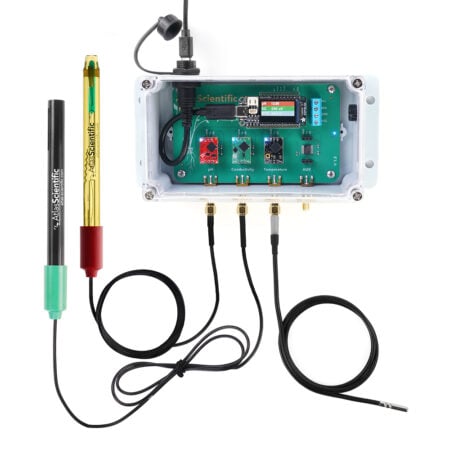
Professional operations use continuous monitoring systems that track pH, EC, dissolved oxygen (DO), and temperature every few seconds, automatically alerting growers to deviations from optimal ranges. This precision enables automation that makes commercial hydroponics economically viable, as systems automatically adjust nutrients, regulate pH, and maintain optimal conditions without constant human intervention. Atlas Scientific offers the Wi-Fi Hydroponics Kit for your testing needs.
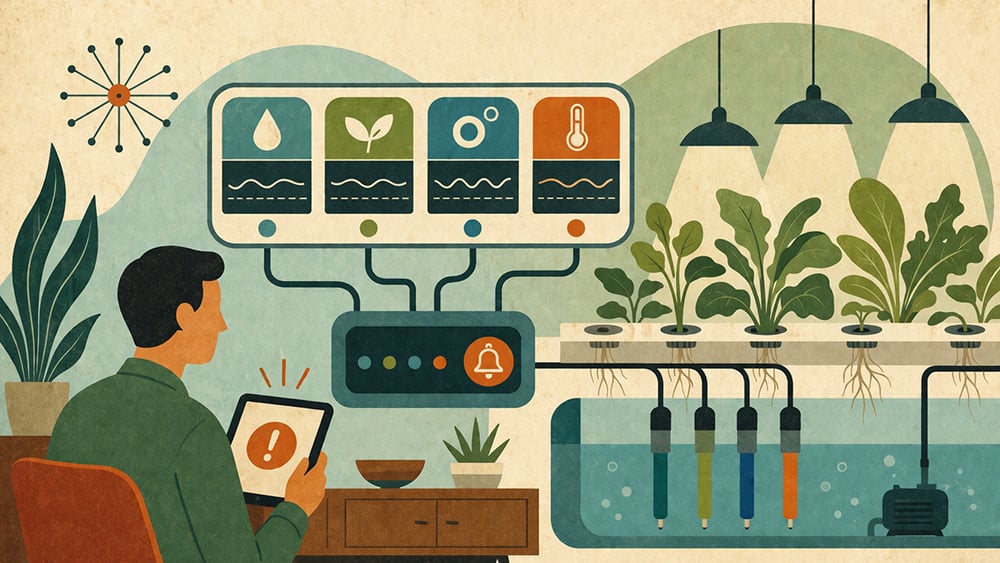
As operations grow, modular monitoring platforms are essential. A small setup may begin with basic pH and EC monitoring, then expand to include DO sensors, CO2 sensors, or additional parameters as and when needed. The infrastructure grows with the operation without requiring a complete system replacement.
Startup Costs: Land is the main expense barrier in traditional farming. Infrastructure, irrigation systems, machinery, and a sizable acreage investment are all necessary for starting a commercial farm.
A vertical farm with yields comparable to 200 acres may take up only 1.5 acres thanks to hydroponic systems. Infrastructure costs, however, are significantly higher. A substantial initial investment is needed for greenhouse structures, growing systems, lighting, climate control, and monitoring equipment.
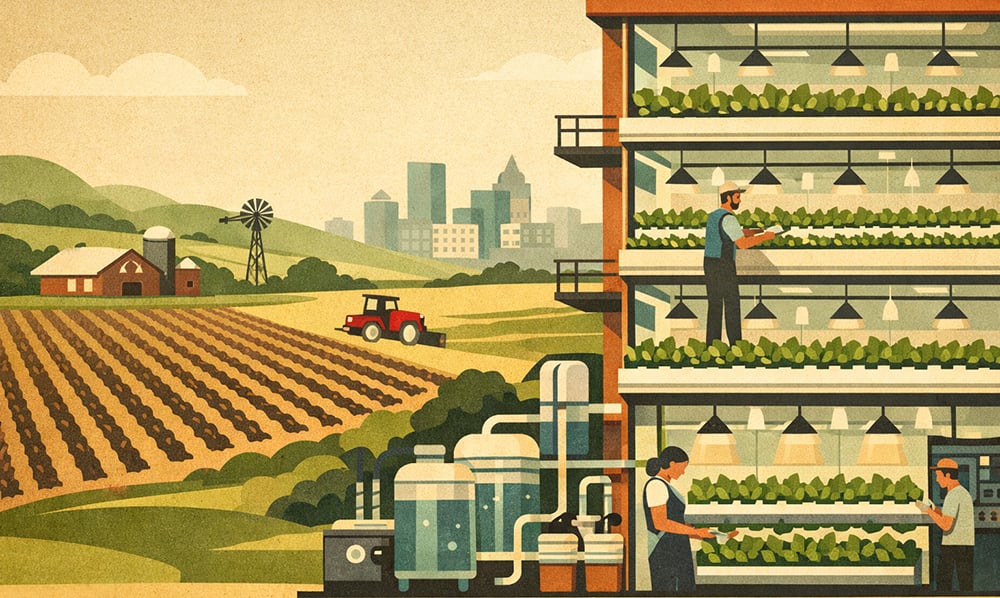
Operating Costs: Labor, water, fertilizers, pesticides, fuel, and equipment upkeep are the main costs associated with traditional farming. These are affected by weather and commodity prices.
These costs are shifted by hydroponic operations. The price of water drastically decreases. The cost of pesticides almost goes away. For indoor operations, however, electricity costs prove to be substantial. Instead of field work, labor is concentrated on system upkeep and monitoring, usually in climate-controlled settings.
Profitability: Crop selection plays a major role in this equation. Hydroponically grown leafy greens, herbs, microgreens, and some specialty crops are highly valued. In hydroponic systems, commodity crops like corn, wheat, or soybeans are not economically viable.
There are significant financial benefits to year-round production. While hydroponic farms continuously harvest every few weeks, creating consistent revenue streams, traditional farms in temperate climates may harvest once or twice a year.
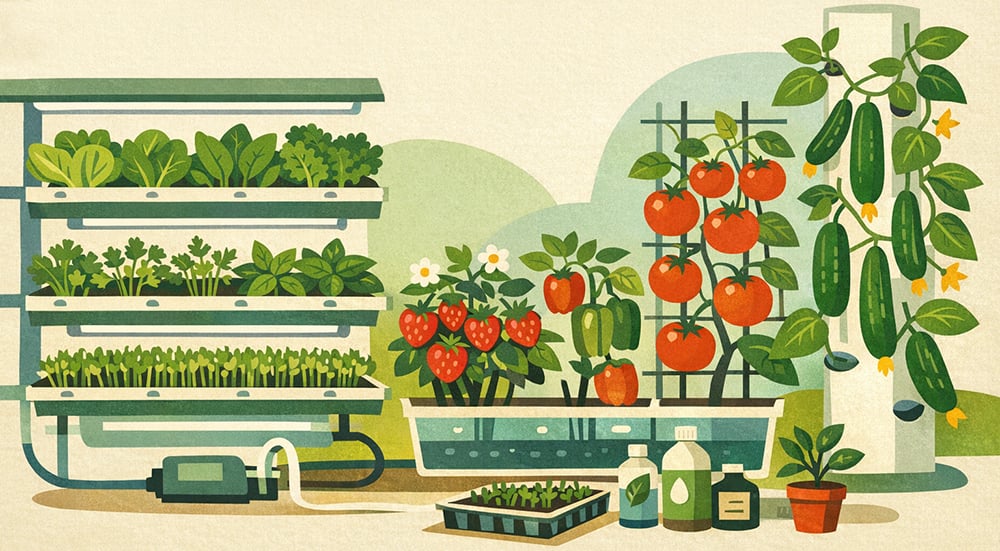
Hydroponic Sweet Spots: In hydroponic systems, leafy greens (lettuce, spinach, kale), herbs (parsley, cilantro, basil), microgreens, strawberries, tomatoes, peppers, and cucumbers thrive. Compact growth, quick maturation times, and high value in relation to space requirements are traits that these crops have in common.
Traditional Agriculture’s Domain: Large fruit trees, nut trees, grain crops like wheat, corn, and rice, and root vegetables like potatoes, carrots, and onions. These necessitate a large amount of space or rooting volume, which renders hydroponic production unfeasible and unprofitable.
This drawback does not lessen the significance of hydroponics. Much of the fresh produce consumed is made up of crops that are best suited for hydroponic production. While traditional agriculture concentrates on grains, legumes, root vegetables, and large-scale commodity production, urban hydroponic farms can provide these goods locally all year long.
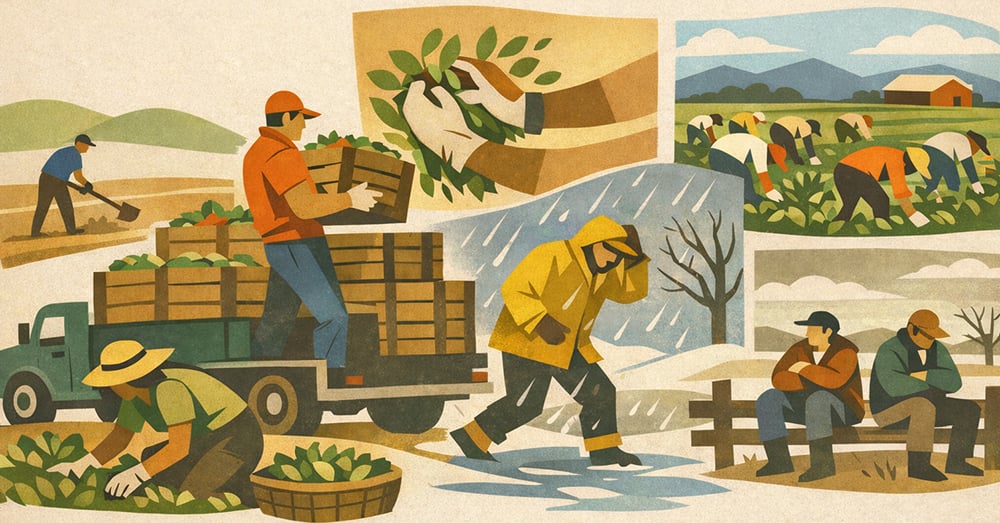
Traditional Farming: Field work is physically taxing due to heavy lifting, repetitive motions, and harsh weather. Workforce instability is caused by seasonal employment patterns, which require large crews for brief harvest periods and little labor during the off-season.
Hydroponics: Indoor operations turn agricultural labor into year-round, climate-controlled jobs. Employees work in weather-protected, stable environments. However, different skills are needed for operations, such as technical troubleshooting, equipment maintenance, and system monitoring. More than traditional farming, the work is similar to facility operations.
Selecting between methods requires an honest assessment of your specific circumstances, goals, and resources.
Choose traditional farming if:
Choose hydroponics if:
Hybrid Approaches: Many successful operations combine both methods, leveraging each approach’s strengths. A farm might grow leafy greens hydroponically for year-round production while cultivating root vegetables and grains in fields during suitable seasons.
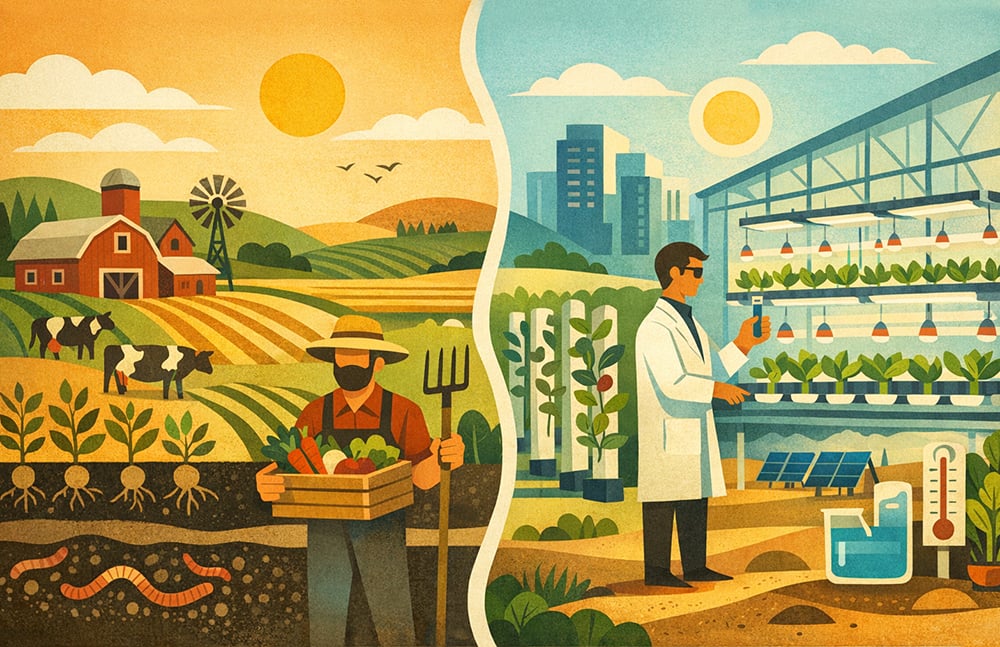
Hydroponics versus traditional farming isn’t about declaring one superior. Each offers distinct advantages and faces specific challenges. The choice depends on your circumstances, goals, resources, and intended crops. Traditional farming provides the foundation for global food security, offering lower entry barriers and suitability for most crop types. Modern traditional farming, particularly when employing regenerative practices, can build soil health and support biodiversity sustainably. Hydroponics offers revolutionary efficiency for specific applications, urban farming, water-scarce environments, harsh climates, and crops where its advantages overcome costs. It enables year-round local production, reducing transportation impacts and increasing food security.
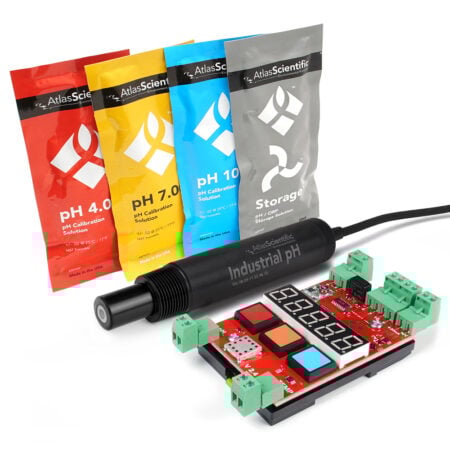
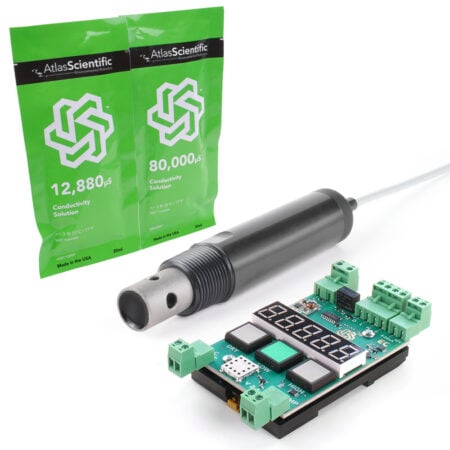
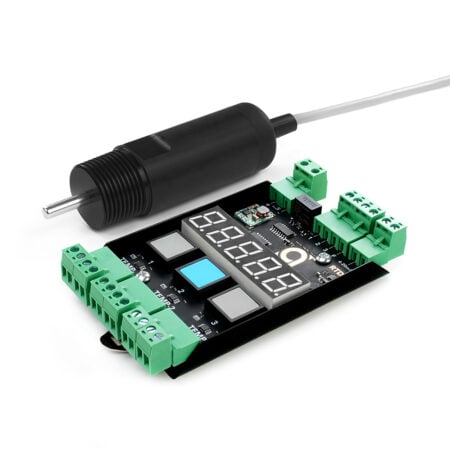
Ready to optimize your growing operation with precision monitoring? Contact the world-class team at Atlas Scientific to learn more about our comprehensive line of pH probes, conductivity sensors, and complete monitoring solutions designed for growers who demand laboratory-grade accuracy in their cultivation systems, whether traditional, hydroponic, or hybrid approaches.
Precise monitoring forms the foundation of successful hydroponic growing. Professional-grade sensors and monitoring systemsenable the data-driven decisions that separate thriving operations from struggling ones, optimizing yields while reducing waste and maintaining ideal growing parameters.
Indoor air quality can have a major impact on the comfort and productivity of homes, offices, schools, laboratories, and industrial facilities. Carbon dioxide buildup, poor

UART and I2C are serial communication protocols, but they serve different purposes. UART is typically used for direct device-to-device communication and requires dedicated connections. I2C