

Blog
The Best Industrial Conductivity Transmitters
Conductivity is one of the most important measurements in industrial water systems. From water treatment and hydroponics to chemical processing and manufacturing, conductivity provides a


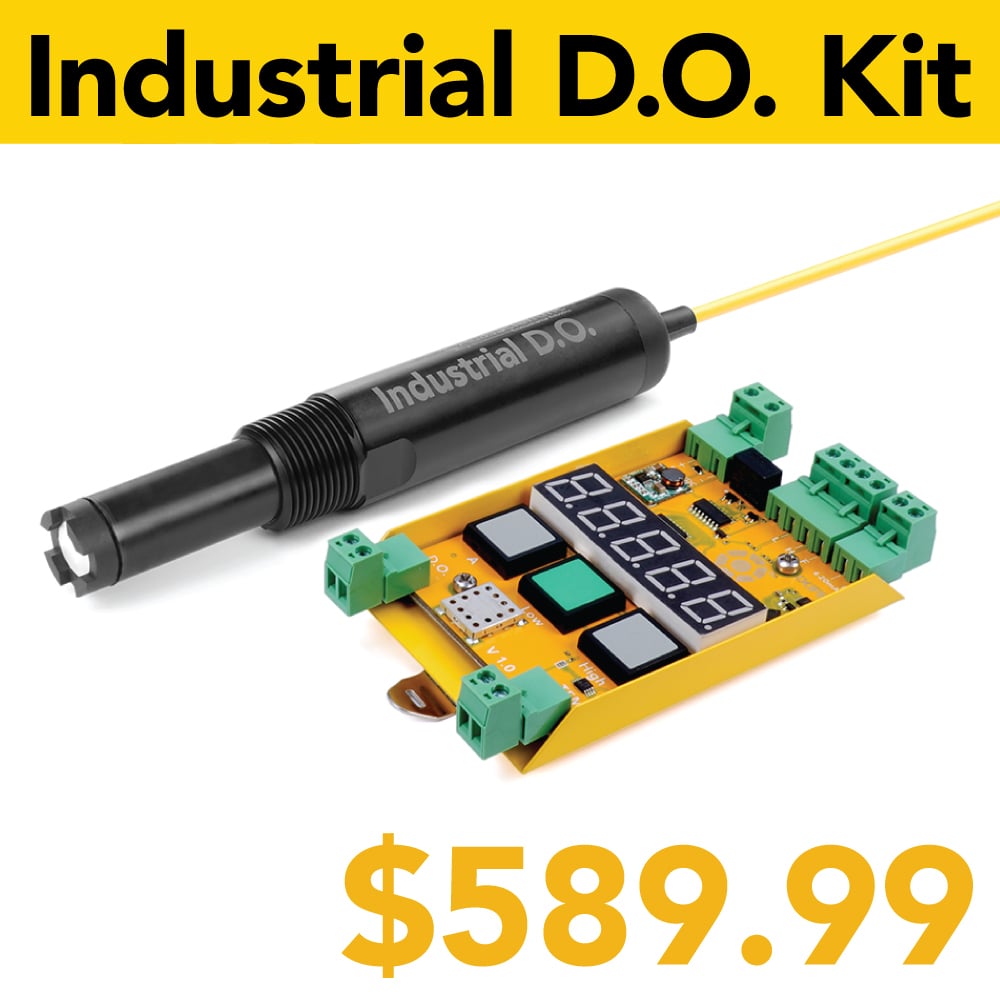


Dissolved oxygen is one of the most important measurements in water treatment, aquaculture, environmental monitoring, industrial processing, research, and many other applications. When a dissolved oxygen probe is expected to remain installed for months or years, however, measurement range is only part of the equation.
An industrial dissolved oxygen probe must also withstand pressure, temperature changes, continuous immersion, demanding installation environments, and extended periods of operation without excessive maintenance.
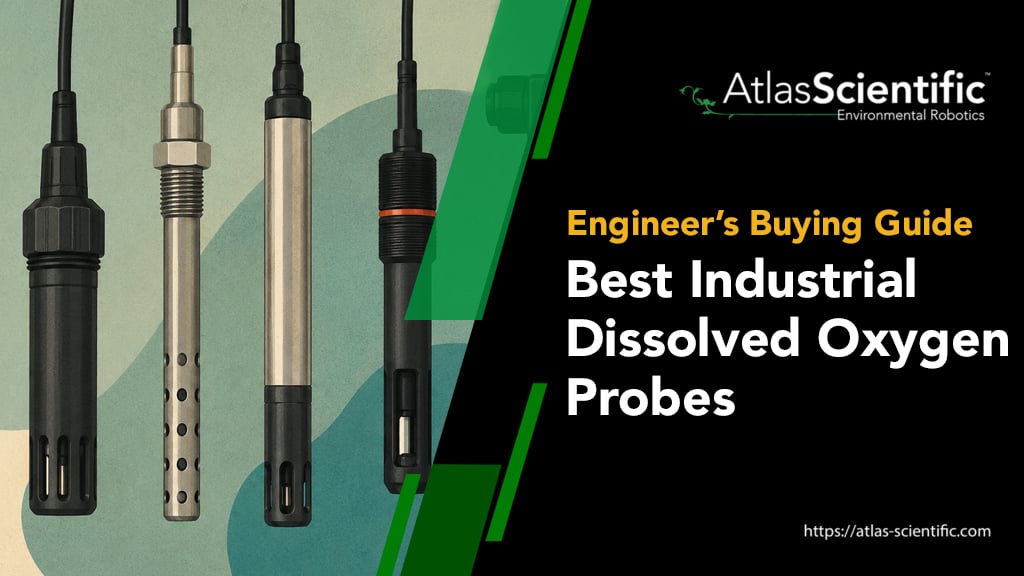
There are numerous industrial DO sensors on the market, ranging from sophisticated optical instruments to rugged electrochemical probes. In this comparison, we’ll look at four well-known options:
While each has applications where it excels, the Atlas Scientific ENV-50-DO stands out as our overall choice for demanding industrial and continuous-monitoring applications, particularly when wide measurement range, pressure tolerance, temperature capability, accuracy, and long service intervals are priorities.
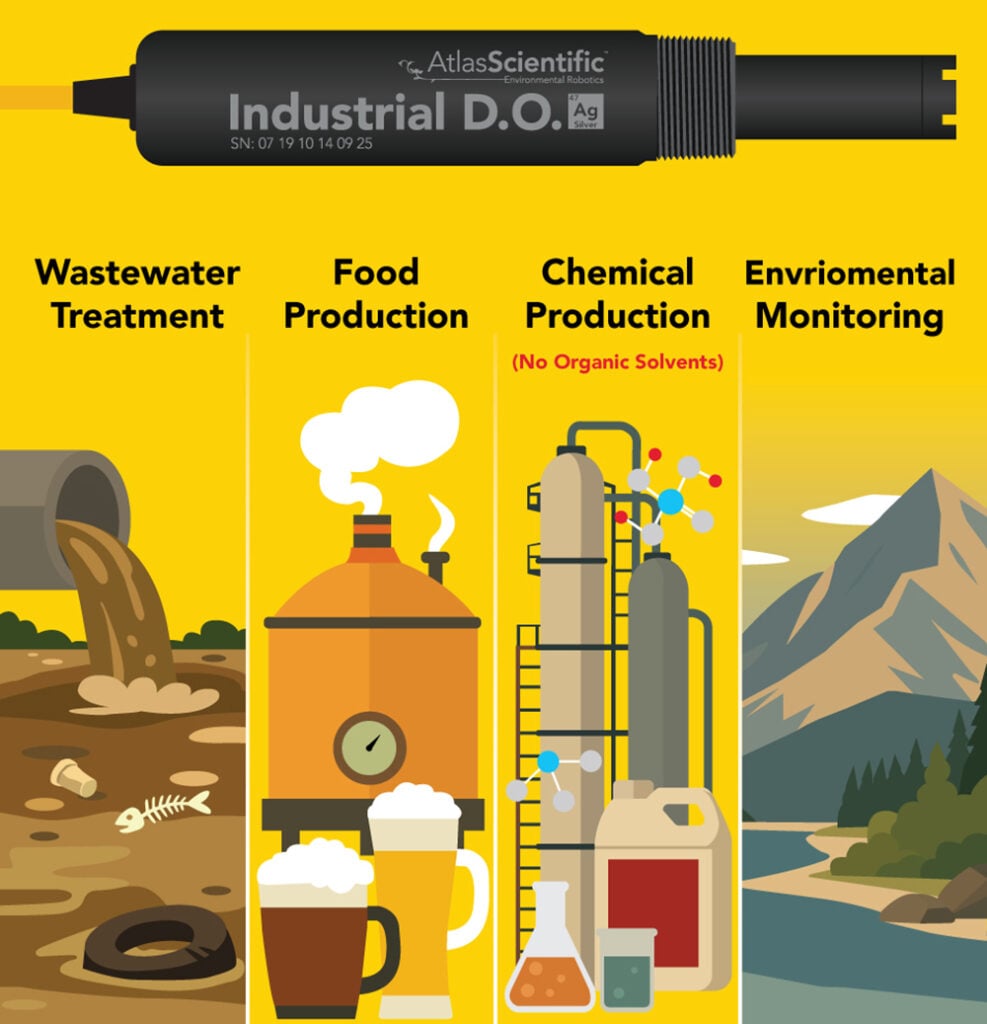
Our Pick for Demanding Industrial DO Monitoring
The Atlas Scientific ENV-50-DO is built around a straightforward idea: make an industrial dissolved oxygen probe that can stay in service for long periods while surviving conditions beyond those encountered by many conventional water-quality DO sensors.
That approach produces several important advantages.
One of the biggest differences appears immediately in the measurement range.
The ENV-50-DO measures dissolved oxygen from 0 to 100 mg/L.
Hach’s LDO sc Model 2 and Endress+Hauser’s COS61D are both specified to 20 mg/L.
For conventional surface-water or wastewater measurements, 20 mg/L may be perfectly adequate. But applications involving oxygen enrichment, pressurized systems, research equipment or unusual process conditions can demand substantially more headroom.
That makes the ENV-50-DO’s 5× higher upper measurement limit versus these two competitors a significant advantage.
Atlas specifies the ENV-50-DO at ±0.05 mg/L accuracy.
That compares favorably with the Hach LDO sc Model 2, which specifies ±0.1 mg/L below 5 mg/L and ±0.2 mg/L above 5 mg/L.
Different manufacturers define and test accuracy differently, so specifications should not be treated as perfectly interchangeable laboratory tests. Nevertheless, the Atlas specification is impressive for an industrial probe designed for long-term deployment.
Pressure tolerance is another area where the ENV-50-DO separates itself from much of the field.
Atlas rates the probe for a maximum pressure of 300 PSI and maximum depth of approximately 212 meters (694 feet).
Compare that with:
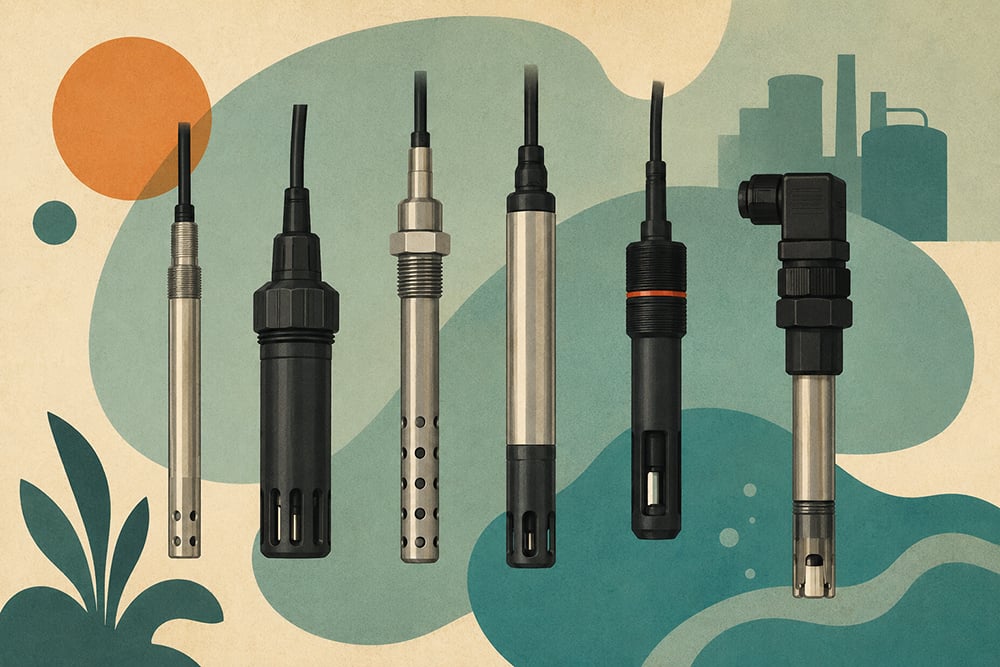
For pressurized pipes, deep installations, industrial vessels and other demanding environments, that additional pressure tolerance can dramatically expand where a probe can be installed.
Industrial sensors are not judged only by what happens on the first day of operation.
Downtime matters.
Maintenance matters.
Calibration frequency matters.
And replacing sensors repeatedly matters.
Atlas specifies approximately one year between recalibration, 18 months between maintenance, and a life expectancy of roughly four years for the ENV-50-DO.
The probe carries a large electrolyte reservoir specifically intended to extend the time before reconditioning is required.
For remote monitoring stations, industrial systems and permanently installed equipment, reducing the number of times a technician has to access the probe can be a major operational advantage.
Dissolved oxygen measurement is highly dependent on temperature, making temperature compensation an essential part of an accurate DO system.
The ENV-50-DO includes an integrated PT-1000 temperature sensor.
This gives system designers access to temperature measurement directly at the DO probe rather than requiring an entirely separate temperature probe at another measurement point.
The result is a cleaner installation and a more integrated measurement system.
The ENV-50-DO also stands out in operating temperature.
Atlas specifies a measurement temperature range of 1–99°C.
For comparison, Hach specifies the LDO sc Model 2 for 0–50°C, while Endress+Hauser specifies the COS61D for -5–60°C.
The METTLER TOLEDO InPro 6860i has substantial mechanical temperature resistance and can withstand sterilization conditions, but its specified oxygen measuring temperature range on the referenced model is 5–60°C.
That distinction is important: surviving a temperature and measuring dissolved oxygen at that temperature are not necessarily the same specification.
For applications that require actual DO measurements at elevated temperatures, the ENV-50-DO’s specified 99°C upper measurement limit is particularly noteworthy.
The Hach LDO sc Model 2 is a strong competitor and has an important advantage: optical dissolved oxygen technology.
Its luminescent measurement method requires no oxygen consumption and no sample flow. Hach specifies a 0–20 mg/L measurement range, T90 response below 40 seconds and 10-meter standard cable, along with compatibility with Hach’s SC controller ecosystem.
That makes it particularly attractive for municipal water and wastewater installations already standardized around Hach equipment.
However, its 20 mg/L maximum range, 50 PSI pressure limit and 50°C maximum operating temperature leave the ENV-50-DO with considerably more headroom for demanding industrial conditions.
Winner for: Existing Hach water/wastewater installations.
Overall advantage: Atlas Scientific ENV-50-DO for broader operating range and higher pressure capability.
The Endress+Hauser Oxymax COS61D is another excellent optical DO sensor.
Its Memosens technology provides digital measurement and allows calibration data to be stored in the sensor. It is specifically positioned for wastewater treatment, waterworks, utilities and fish farming.
Endress+Hauser specifies a measurement range of 0–20 mg/L, process temperatures from -5 to 60°C, and process pressure up to 10 bar absolute (145 PSI).
Its technical documentation also lists a T90 response of 60 seconds and a sensor-cap operating life exceeding two years under reference conditions.
The COS61D is therefore a compelling option for facilities already using the Endress+Hauser/Memosens ecosystem.
But for applications prioritizing maximum DO range, high pressure and high-temperature measurement capability, the ENV-50-DO again comes out ahead on the published specifications.
Winner for: Memosens-based water and wastewater facilities.
Overall advantage: Atlas Scientific ENV-50-DO for demanding installations requiring a broader measurement envelope.
The METTLER TOLEDO InPro 6860i is a different type of competitor.
This optical sensor is specifically designed around pharmaceutical, life-science and bioprocess applications. Depending on configuration, it offers digital and analog integration, can be sterilized and autoclaved, and is designed for hygienic installations.
That specialization makes it an excellent choice for pharmaceutical manufacturing and bioreactors.
But specialization can also mean paying for features that many water-monitoring and general industrial applications simply don’t need.
For broader industrial monitoring, the ENV-50-DO’s combination of a 100 mg/L upper range, 300 PSI pressure tolerance, 99°C maximum measurement temperature and long maintenance intervals makes it the more versatile choice.
Winner for: Pharmaceutical and hygienic bioprocess installations.
Overall advantage: Atlas Scientific ENV-50-DO for general industrial and environmental monitoring.
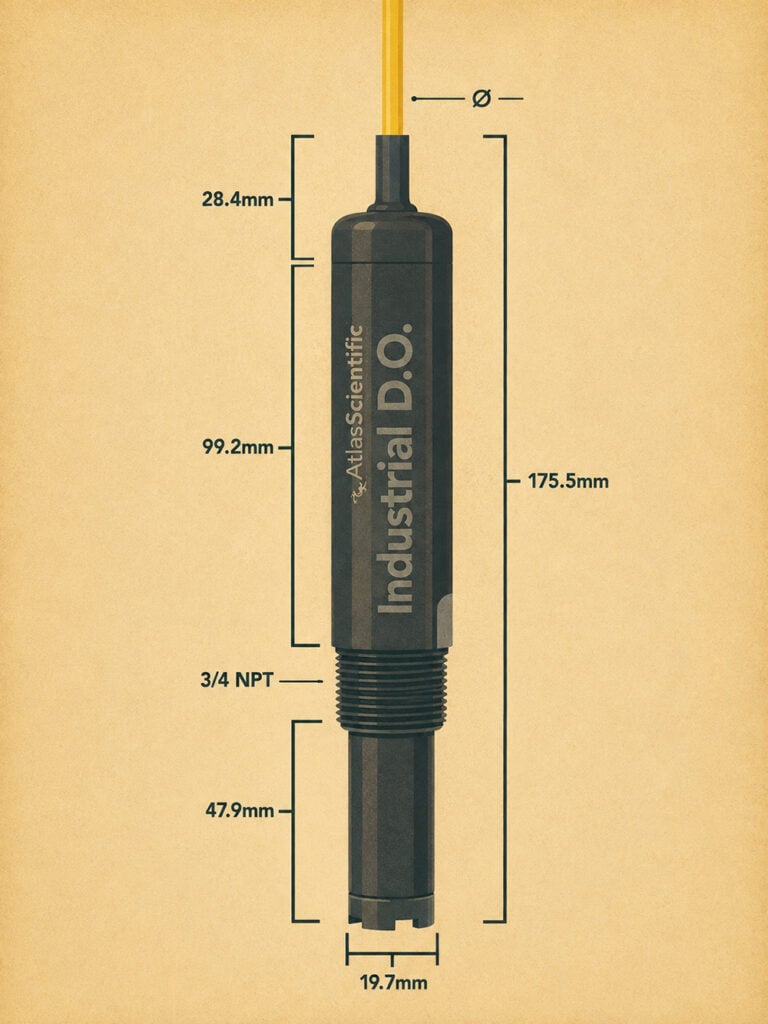
There isn’t one dissolved oxygen sensor that’s best for every possible application.
A pharmaceutical facility that requires sterilizable hygienic instrumentation may prefer the METTLER TOLEDO InPro 6860i. A municipal treatment plant built around Hach controllers may have good reasons to choose the Hach LDO. A facility standardized on Memosens instrumentation may naturally prefer Endress+Hauser.
But when we look specifically for an industrial dissolved oxygen probe with the broadest combination of measurement capability, durability and long-term deployment potential, the ENV-50-DO makes an exceptionally strong case.
Its standout specifications include:
| Specification | Atlas Scientific ENV-50-DO | Hach LDO sc Model 2 | Endress+Hauser Oxymax COS61D | METTLER TOLEDO InPro 6860i* |
|---|---|---|---|---|
| Technology | Electrochemical DO | Optical luminescent | Optical | Optical fluorescence quenching |
| DO Range | 0–100 mg/L | 0–20 mg/L | 0–20 mg/L | 0–saturation |
| Published Accuracy | ±0.05 mg/L | ±0.1 mg/L below 5 mg/L; ±0.2 mg/L above 5 mg/L | 0.01 mg/L or ±1% below 12 mg/L; ±2% from 12–20 mg/L | ±(1% of reading + 8 ppb) |
| Operating / Measurement Temperature | 1–99°C | 0–50°C | -5–60°C | 5–60°C |
| Maximum Pressure | 300 PSI | 50 PSI / 3.5 bar | 145 PSI / 10 bar abs. | 87 PSI / 6 bar on referenced model |
| Integrated Temperature Sensor | Yes – PT-1000 | Yes | Yes – NTC 30K | Yes |
| Standard Cable | 3 m / 10 ft | 10 m | Configuration dependent | Configuration dependent |
| Published Maintenance Interval | ~18 months | Sensor-cap based maintenance | Sensor cap >2 years under reference conditions | Optical-cap based |
| Published Recalibration Interval | ~1 year | Factory calibrated; field calibration supported | Calibration stored in sensor | Calibration stored in sensor |
| Published Life Expectancy | ~4 years | — | — | — |
| Best Fit | Industrial, high-pressure, wide-range and continuous monitoring | Water/wastewater | Water/wastewater & utilities | Biopharma/process applications |
*Specifications vary among InPro 6860i configurations.
Published manufacturer specifications confirm the unusually broad operating envelope of the ENV-50-DO. Atlas specifies a 0–100 mg/L range, ±0.05 mg/L accuracy, 1–99°C temperature range, 300 PSI maximum pressure, 212 m maximum depth, approximately one year between recalibration, approximately 18 months between maintenance, and approximately four-year life expectancy.
By comparison, Hach specifies its LDO sc Model 2 for 0–20 mg/L, with ±0.1 mg/L accuracy below 5 mg/L and ±0.2 mg/L above 5 mg/L, an operating range of 0–50°C, and maximum pressure of 3.5 bar. Endress+Hauser specifies the COS61D for 0–20 mg/L, -5–60°C and up to 10 bar absolute pressure.
All four sensors in this comparison are capable industrial instruments, but they’re optimized for different environments.
For our overall industrial dissolved oxygen probe pick, the Atlas Scientific ENV-50-DO takes first place.
Why?
Because instead of competing solely on one feature, it combines an unusually broad set of capabilities into a single rugged probe.
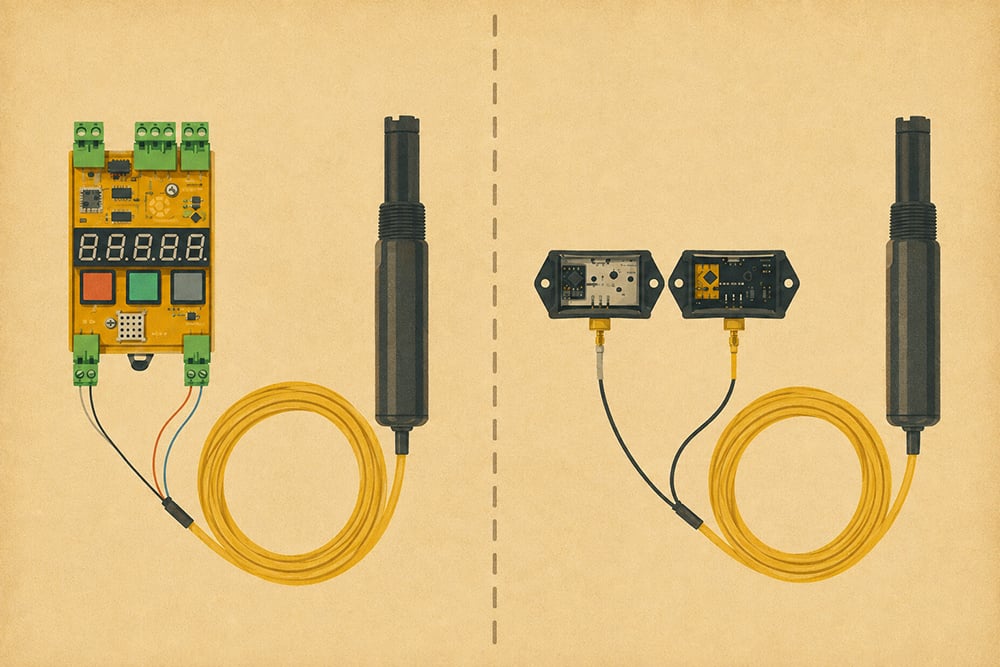
Its 100 mg/L measurement ceiling is five times that of the Hach LDO sc Model 2 and Endress+Hauser COS61D. Its 300 PSI maximum pressure rating is six times Hach’s published maximum and more than twice the COS61D’s published maximum. At the same time, its 99°C maximum measurement temperature substantially exceeds the normal DO measurement temperature ranges published for the competitors examined here.
Combine those capabilities with ±0.05 mg/L accuracy, integrated PT-1000 temperature sensing, approximately annual recalibration and an approximately 18-month maintenance interval, and the ENV-50-DO becomes an especially compelling choice for long-term industrial monitoring.
For engineers, researchers, system integrators and OEMs looking for a rugged dissolved oxygen probe without unnecessarily limiting measurement range, pressure capability or operating temperature, the Atlas Scientific ENV-50-DO offers the strongest overall combination of specifications in this comparison.
Conductivity is one of the most important measurements in industrial water systems. From water treatment and hydroponics to chemical processing and manufacturing, conductivity provides a

When a process requires more than one chemical, nutrient, reagent, or additive, using several independent dosing pumps can quickly become complicated. A multi-pump dosing system