

Blog
The Best Indoor Air Quality Monitors
Indoor air quality can have a major impact on the comfort and productivity of homes, offices, schools, laboratories, and industrial facilities. Carbon dioxide buildup, poor




There are different types of dissolved oxygen sensors, including optical, polarographic, and galvanic. Galvanic sensors are affordable and ready to use right away, but they require adequate sample movement and regular maintenance. Polarographic sensors are very accurate in controlled settings, but they need time to warm up and a steady flow. Optical sensors Optical sensors do not require sensor polarization and consume virtually no oxygen during measurement, and they don’t need a lot of maintenance. They’re also very stable. The best choice depends on where you are, how much maintenance you can do, and whether you need long-term monitoring or quick field measurements the most.
Dissolved oxygen (DO) is one of the most critical measurements in industrial water quality monitoring. So, whether you are running a wastewater treatment plant, managing an aquaculture system, or building a custom embedded sensing device, accurate DO measurements have real-world consequences.
The challenge is that not all DO sensors function the same. With advances in technology, there are many different types of DO sensors on the market, and each has its distinct weaknesses, strengths, and ideal uses. Selecting the wrong one could cost you money, but also time, accuracy, and in some systems, its health.
In this guide, we will break down how each DO sensor works and help you select the best sensor for your monitoring needs.
Dissolved oxygen is the concentration of oxygen molecules present in a fluid or liquid, typically water. It is expressed in mg/L (milligrams per liter) or as a percentage of saturation. Dissolved oxygen levels are influenced by salinity, pressure, temperature, and biological activity; therefore, these variables are often measured alongside DO.
For example, colder water holds more oxygen than warm water, and saltwater (high salinity) holds less DO than freshwater. In aquatic environments and aquariums, living organisms constantly consume and produce oxygen, so DO levels can shift greatly within hours.

The consequences of low DO in water are severe. Aquatic life needs DO to thrive, and in industrial applications, DO directly controls the efficiency of microbial activity. This is why dissolved oxygen is important and why reliable DO measurement is fundamental.
Galvanic DO sensors are electrochemical devices that have two electrodes made from a zinc or lead anode and a silver cathode immersed in an electrolyte solution and separated from the fluid by an oxygen-permeable membrane. Galvanic sensors are self-polarizing as the two metals have a naturally large electrode potential difference. In simpler terms, this means that a galvanic sensor can generate its own voltage without any external power source.
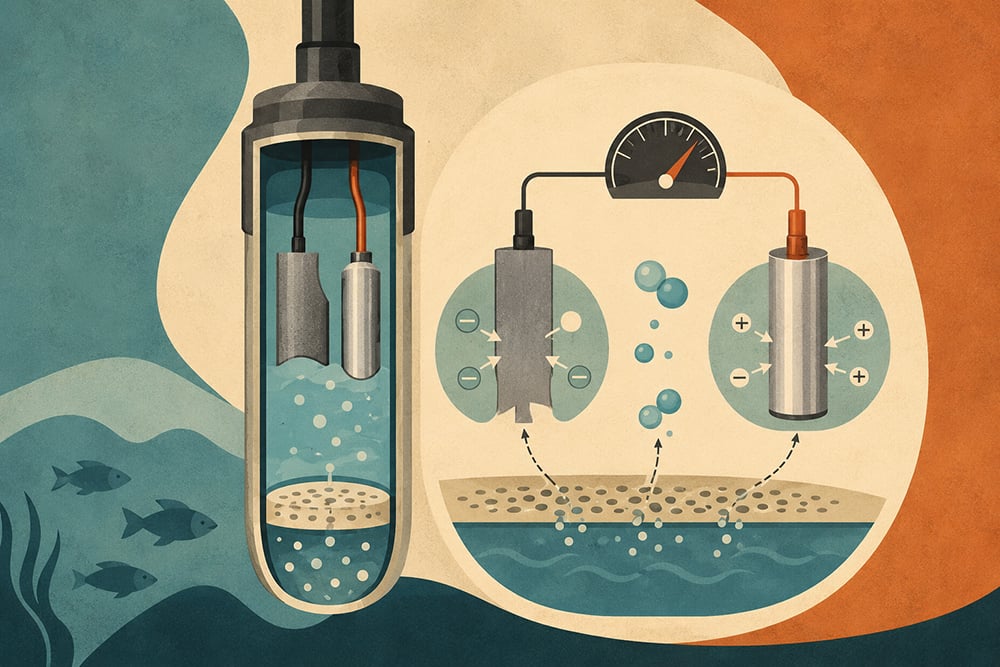
When DO diffuses across the oxygen-permeable membrane, it is reduced at the cathode, producing an electrical current which is proportional to the oxygen concentration in the fluid. As no warm-up time is needed, you can use a galvanic DO sensor immediately after DO probe calibration. This sensor is often used in the field where speed is important.
The downside to this fast response is that they consume oxygen during measurement, leading to oxygen depletion around the probe. There must be a consistent flow or stirring of the sample to maintain accuracy. For example, if a galvanic DO sensor were left in stagnant water, it could cause errors.
Polarographic DO sensors have similar structures to galvanic sensors, like a membrane, an anode, a cathode, and an electrolyte, but polarographic sensors need an external voltage to be applied between the electrodes before taking measurements. This polarization voltage must be maintained constantly, which requires a warm-up period of 5-15 minutes before accurate and stable readings can be recorded.
Once polarized, polarographic DO sensors are very capable of producing stable and highly accurate measurements. This is why, for decades, they have been used profoundly in laboratory and controlled industrial environments. Compared to galvanic sensors, polarographic sensors have a longer lifespan during storage because their electrodes are not self-oxidizing. Yet, they do consume oxygen during sample measurement, and therefore, accurate results are flow-dependent.
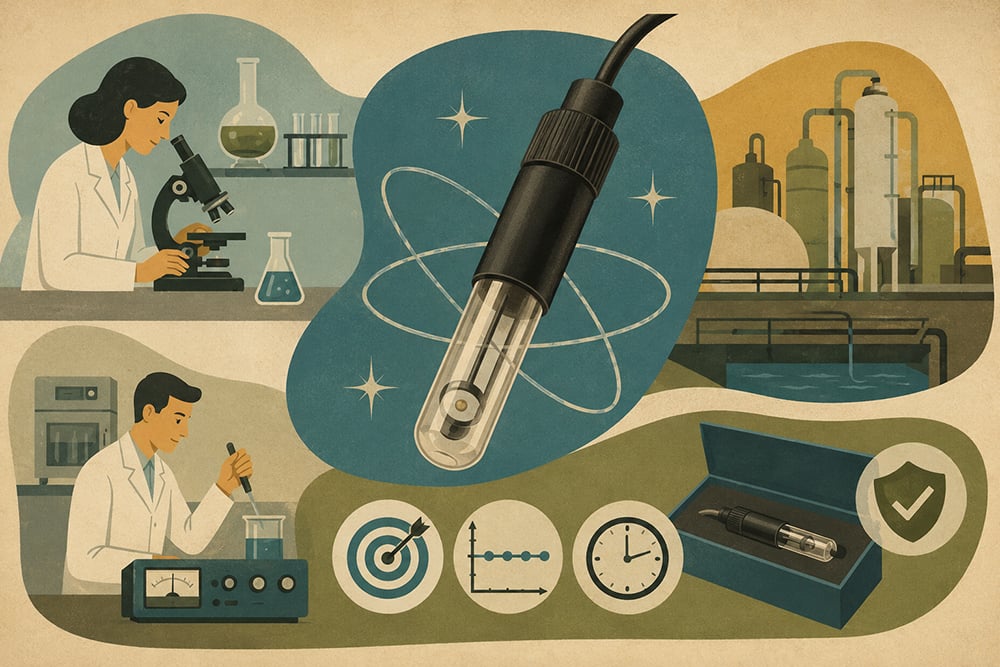
When operating conditions are controlled, polarographic DO sensors perform very well. So just ensure that you have a stable temperature, regulated flow, and a good maintenance and calibration routine. These sensors are also commonly used in biotechnology and fermentation, the food and beverage industry, aquaculture and fish farming, and environmental water monitoring (like wastewater).
Optical DO sensors are completely different from galvanic and polarographic sensors. Instead of an electrochemistry principle, optical DO sensors use luminescence quenching. This phenomenon occurs when the sensor cap, which contains a luminescent dye, emits a specific wavelength of light when activated by a blue LED light. It gets the term from the process when oxygen molecules interfere with (or “quench”) the luminescence. This reduces the duration and intensity of the wavelength. But, it is the photodetector that measures this change and allows the sensor to calculate the DO concentration – it works it out by how much “quenching” has occurred.
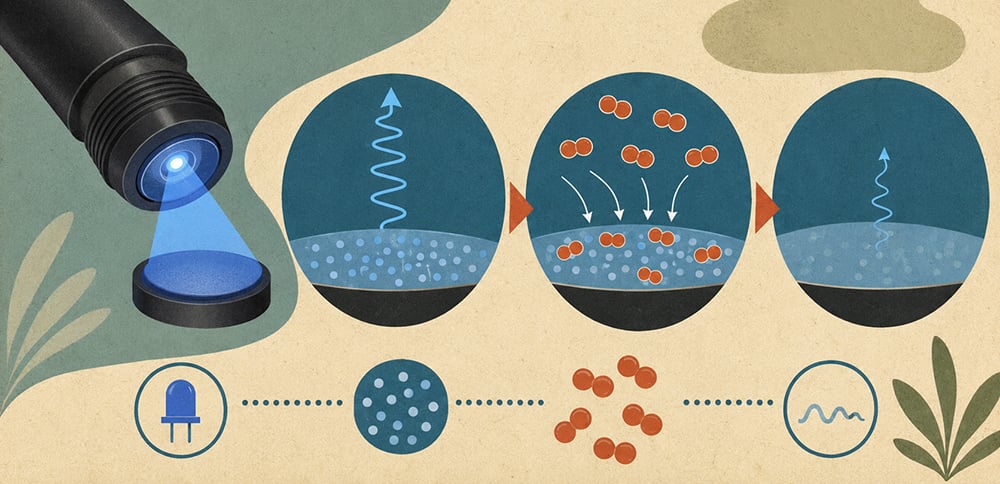
As no electrochemical reaction takes place, the good thing about optical DO sensors is that they do not consume any oxygen. This eliminates flow dependency, as the sensor can provide accurate DO readings in still water AND in flowing water. Additionally, there are no membranes to maintain and replace, no electrolyte to replenish, and zero warm-up time.
These sensors are best suited for remote deployment, long-term continuous monitoring, such as municipal water and wastewater pipes, and applications where maintenance access may be tricky to access.
In applications where drift could lead to regulatory violations, failed experiments, or product losses, accuracy and long-term stability are deciding factors when selecting which dissolved oxygen sensor to use.
Optical sensors are the best for long-term stability, as we mentioned above, they have no consumable electrochemical components that degrade over time. Therefore, they can maintain their calibration for much longer than polarographic or galvanic sensors. Optical DO sensors are also not affected by hydrogen sulfide, typically found in wastewater, which can permeate the membranes and corrupt readings of electrochemical alternatives.
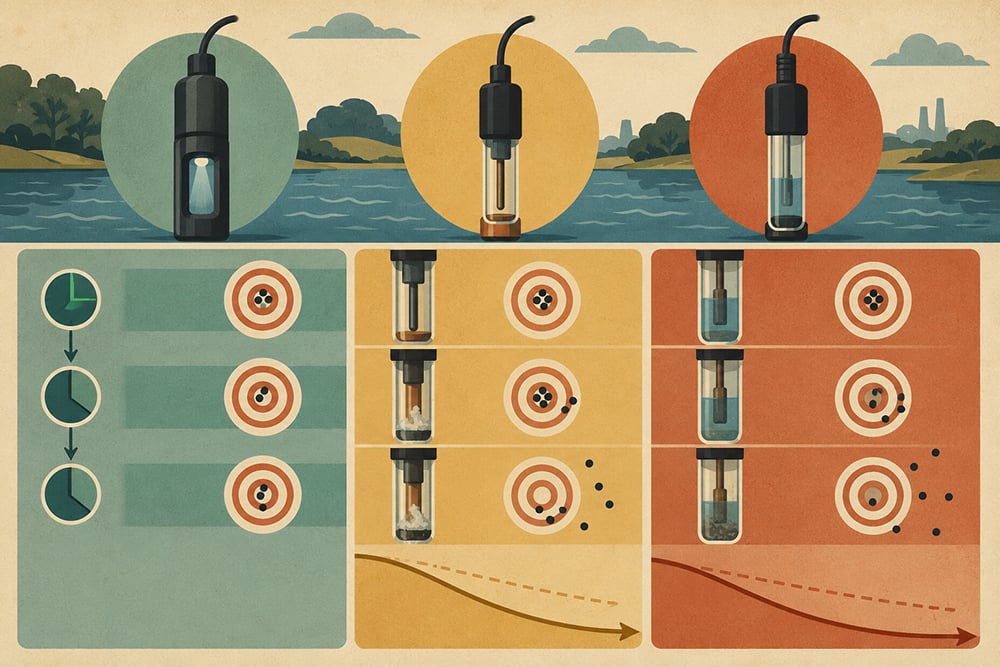
Galvanic and polarographic sensors can match the accuracy of optical sensors under well-maintained conditions, but they are more likely to drift over time, and their accuracy degrades over time when the membrane is compromised or electrolyte levels drop.
When working in low DO applications (readings lower than 1mg/L), for reliable measurements, we recommend optical sensors because electrochemical sensors have problems with depletion effects at very low DO concentrations.
As with any probes on the market, DO sensors need maintenance of some sort. But how much maintenance is often the factor that sways the decision of which type in real-world deployments, especially when sensors need to be installed in remote or difficult-access locations.

Electrochemical sensors like galvanic and polarographic sensors require periodic membrane replacement, regular calibration with calibration solutions, and electrolyte replenishment. In demanding environments, galvanic sensor membranes may need to be replaced every 1-2 months. Polarographic sensors have slightly longer lifespans, but their continuous power means they must remain energized to provide accurate DO readings and go through a fresh warm-up cycle each time they are rebooted.
At Atlas Scientific, our Lab Grade Dissolved Oxygen Membrane Replacement Kit and the Dissolved Oxygen Electrolyte Solution help you keep electrochemical sensors operating at their best!
Optical sensors are less finicky. The sensing cap only needs to be replaced periodically, and calibration intervals are much longer. For installations where maintenance visits are difficult or costly, the lower upkeep of optical DO sensors can quickly justify the higher initial price tag.
The biggest practical difference between these three DO sensors is how each sensor responds to sample flow conditions.
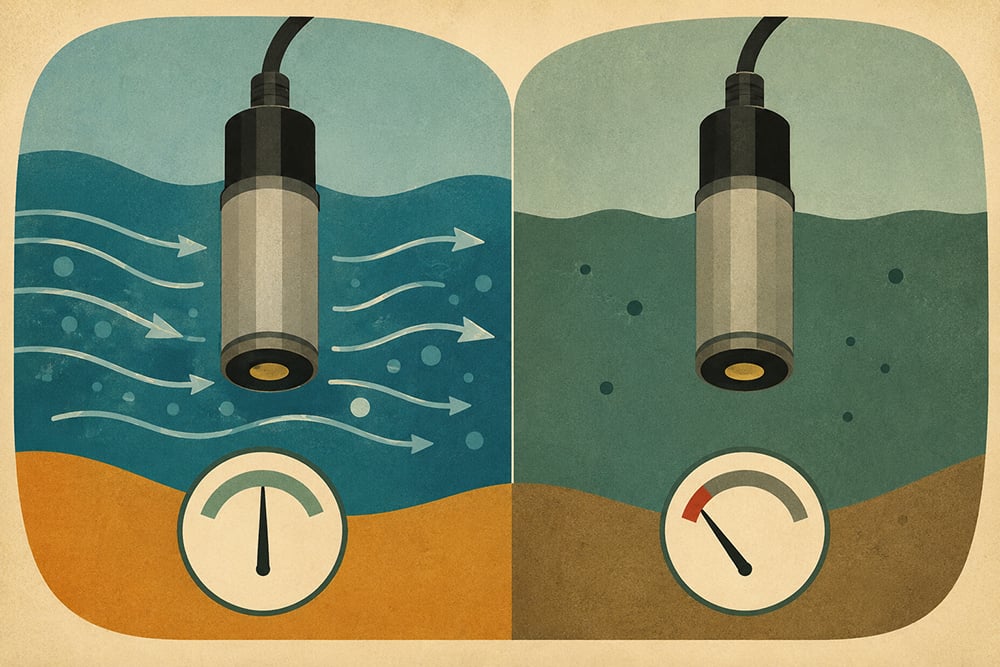
Optical sensors are not flow-dependent, meaning they deliver consistent and accurate readings in both still and flowing water. This is why they are the best choice for environmental monitoring in groundwater wells and ponds. They are also used in sealed-vessel applications where stirring is virtually impossible.
Galvanic and polarographic sensors are flow-dependent. So, without a fresh sample being presented to the DO sensor face, readings will be inaccurate and appear low. Polarographic sensors are more sensitive than galvanic sensors, which is why we recommend a minimum flow velocity of around 2 inches per second past the sensor to maintain accuracy.
Integrating a DO sensor into a microcontroller, automated control system, or data logger presents its own challenges, and this is where the Atlas Scientific EZO product line changes the game.
Raw analog signals from dissolved oxygen sensors demand significant signal conditioning before they can be easily read by a microprocessor. Temperature and pressure compensation, and salinity correction must be applied to translate raw signals into a reliable DO reading.
The Atlas Scientific EZO-DO Dissolved Oxygen Circuit handles all of this for you. It functions internally, outputting clean, calibrated ASCII data over UART or I2C directly to any microcontroller, Arduino system, or Raspberry Pi.The EZO-DO circuit automatically applies temperature, salinity, and pressure compensation when those values are supplied from external sensors.
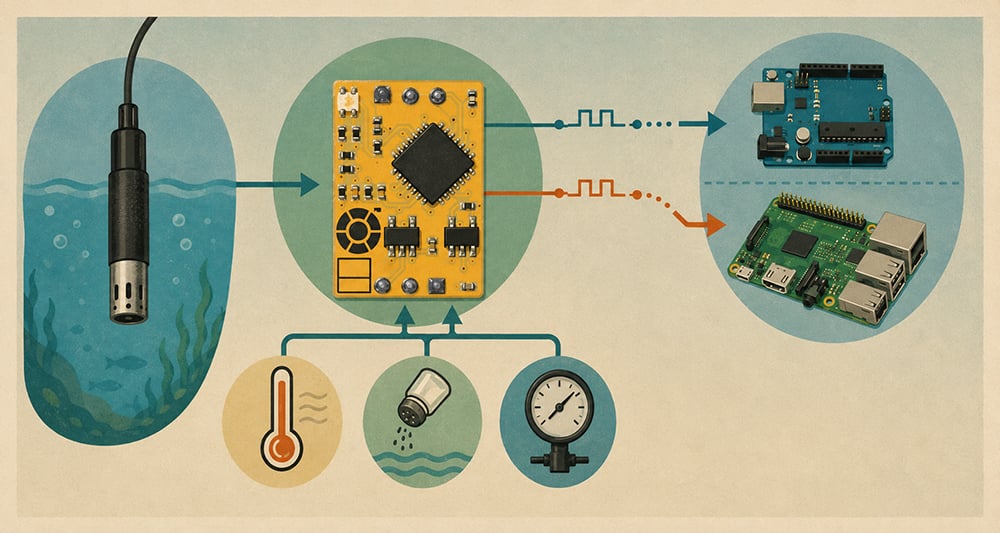
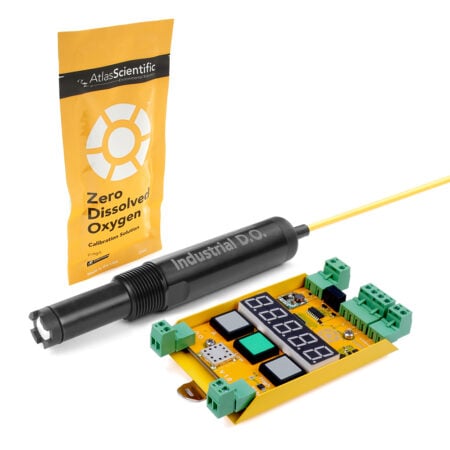
If you want a more ‘plug-in-and-go’ method, the EZO-Complete Dissolved Oxygen Kit is ready to deploy without building around a circuit board. If you are just getting started with electrochemical sensing but want high-accuracy, readings with minimal interference in a single package, you can start with the Atlas Scientific EZO Dissolved Oxygen Kit.
Cost is important when choosing a sensor, but it’s not the only thing that matters.
Galvanic sensors cost the least up front, but they need more maintenance (membranes, electrolyte, and frequent calibration), which makes them more expensive in the long run.
The prices of polarographic sensors are about the same, and they need less maintenance, but they need power all the time and time to warm up.

Optical sensors are more expensive at first, but they need less maintenance and fewer calibrations, which makes them a better value over time, especially for big or remote installations.
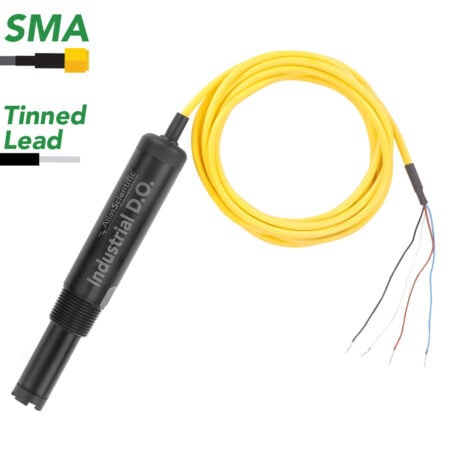
The Atlas Scientific Lab Grade Dissolved Oxygen Probe offers laboratory-grade electrochemical performance at an accessible cost, while the Mini Lab Grade Dissolved Oxygen Probe brings the same accuracy for space-constrained environments. For demanding industrial settings, the full Atlas Scientific Dissolved Oxygen range covers every scale of application deployment.
| Sensor Feature | Galvanic | Polarographic | Optical |
| Operating Principle | Electrochemical (self-polarizing) | Electrochemical (external voltage) | Luminescence quenching |
| Warm-up Time | 0 | 5 – 15 minutes | 0 |
| Flow Dependency | Moderate | High | 0 |
| Oxygen Consumption | Yes | Yes | No |
| Long-Term Stability | Moderate | Moderate | Excellent |
| Maintenance | High | Moderate to high | Low |
| Hydrogen Sulfide Interference | Yes | Yes | No |
| Initial Cost | Low | Low to moderate | Higher |
| Total Cost of Ownership | Moderate | Moderate | Competitive long-term |
| Best Environment | Field use, portable meters | Lab, controlled environments, industrial | Remote, continuous, still water |
While optical and polarographic sensors each have advantages in certain applications, Atlas Scientific has focused on galvanic dissolved oxygen technology because it delivers fast response times, dependable accuracy, and straightforward operation for a wide range of laboratory, industrial, environmental, and OEM applications. Combined with Atlas Scientific’s EZO™ electronics and complete monitoring kits, our galvanic dissolved oxygen solutions make it easy to build reliable, high-performance measurement systems.
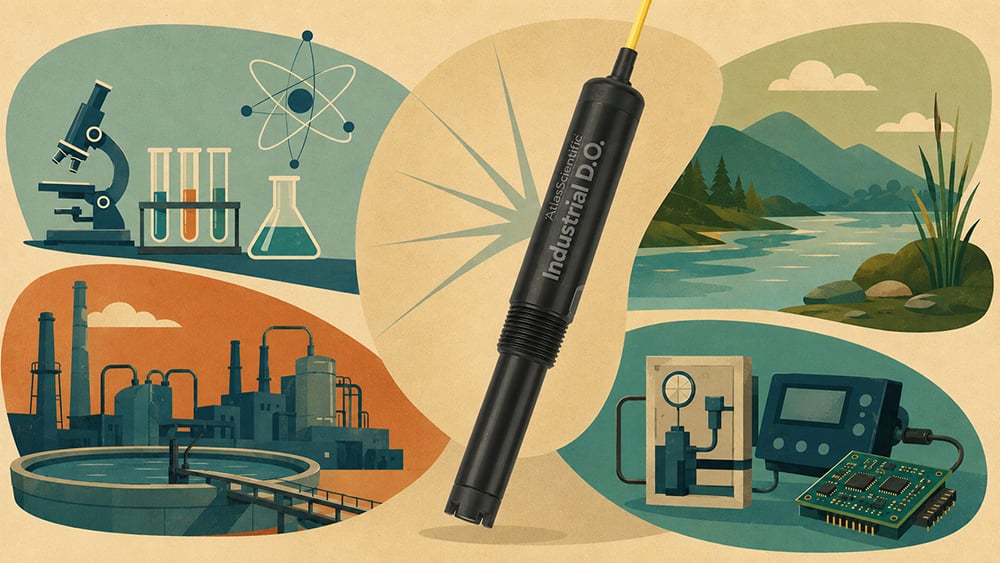
By taking care of signal conditioning and compensation, the EZO-DO circuit makes integration easier and lets engineers focus on designing the system. Lab-grade and mini lab-grade probes give you accurate measurements in formats that last. The Surveyor Analog Dissolved Oxygen Kit has easy-to-use analog output, and the EZO-Complete kit lets you set up a monitoring system in just a few minutes.
The first step is to choose the right sensor technology. The second step is to pair it with the right embedded solution to measure a working system. If you would like to learn more about how DO sensors work or need help with choosing the best dissolved oxygen sensor for your testing needs, reach out to the world-class team at Atlas Scientific.



Indoor air quality can have a major impact on the comfort and productivity of homes, offices, schools, laboratories, and industrial facilities. Carbon dioxide buildup, poor
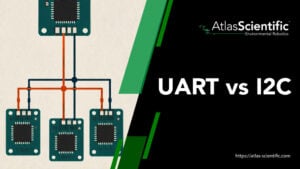
UART and I2C are serial communication protocols, but they serve different purposes. UART is typically used for direct device-to-device communication and requires dedicated connections. I2C