

Blog
What is a 4 – 20mA Current Loop?
The 4-20mA current loop is the dominant analog signaling method in industrial process control. It transmits sensor measurements, such as temperature, pressure, pH, and flow,




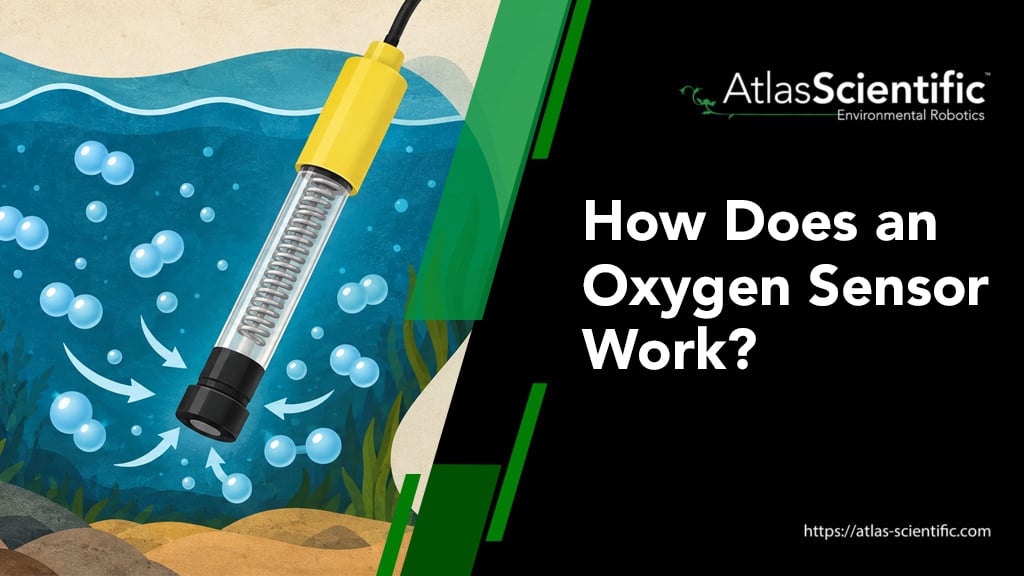
An oxygen sensor is a device that measures the concentration of oxygen, either dissolved in water or present in gas. It converts the measurement into a readable electrical signal.
Oxygen sensors are used across a wide range of industries, from aquaculture and hydroponics to wastewater management and environmental monitoring. Without accurate oxygen sensing, it becomes almost impossible to maintain healthy aquatic environments, optimize biological processes, or ensure that water quality meets the standards required.
But how does an oxygen sensor detect something as invisible as dissolved oxygen, and what is happening inside the probe while it is sitting in a sample? Let’s break it down.

However, before we get into the mechanics of it all, it is worth taking a moment to understand why oxygen measurement is so important.
Dissolved oxygen (DO) is the oxygen that is directly dissolved in water. In an aquatic environment, it is one of the most important indices of water quality. Fish, plants, and aquatic microorganisms all need dissolved oxygen to survive. When DO levels get too low, aquatic life can’t survive. Dissolved oxygen is a key factor in wastewater treatment because it supports the microorganisms that break down harmful compounds. In hydroponics, this is directly related to the health of the roots and their ability to take up nutrients. In aquaculture, it decides whether your fish flourish or choke.

Several factors affect DO levels at any given time, including water temperature, atmospheric pressure, salinity, water depth, and biological activity. Which is why continuous, accurate monitoring is so crucial, as oxygen levels can shift quickly without warning.
There are two main technologies for measuring oxygen in liquids: electrochemical sensors and optical (luminescent) sensors. They each work in different ways and are suited to different applications.
Electrochemical oxygen sensors are the most mature technology and continue to be the most common types used in embedded monitoring systems, laboratory equipment, and field deployments.
An electrochemical dissolved oxygen probe contains two electrodes, a cathode and an anode, both immersed in an internal electrolyte solution. Everything is coated with an oxygen-permeable membrane, generally made of a material like PTFE (polytetrafluoroethylene), which allows oxygen molecules to pass through but keeps the surrounding water out.
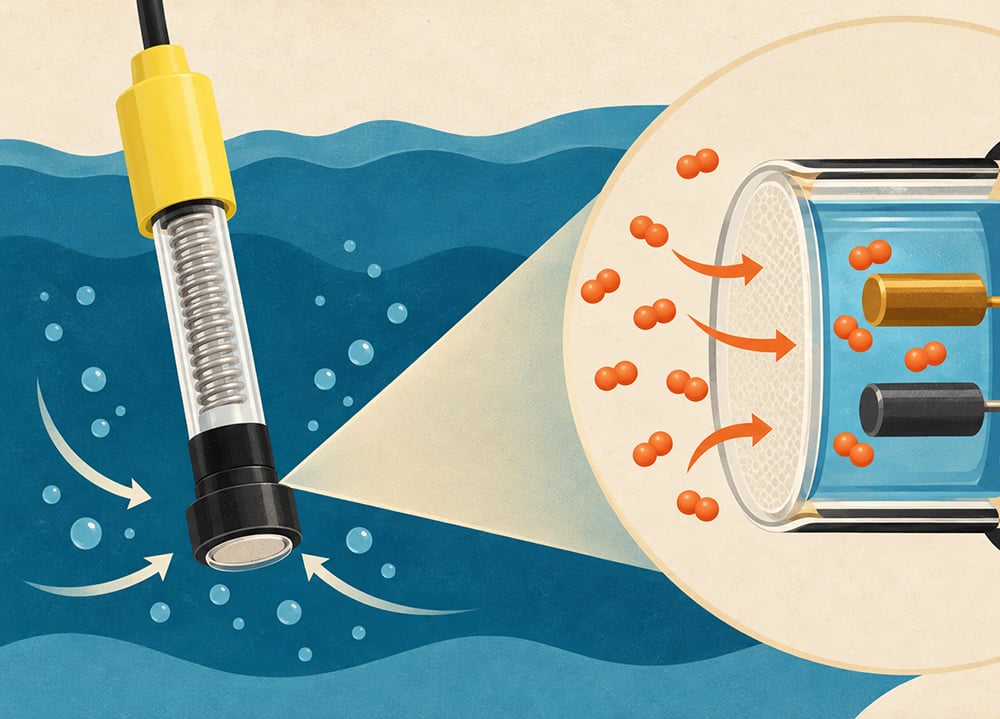
Here’s what happens during a measurement:
It’s important to note that a galvanic dissolved oxygen probe doesn’t actually measure oxygen concentration directly. A galvanic dissolved oxygen probe generates an electrical current as oxygen diffuses through its membrane and is reduced at the cathode. The current is related to the oxygen partial pressure in the sample, allowing the measurement circuit to determine dissolved oxygen concentration. The EZO circuit then uses this information, alongside temperature compensation data, to calculate an accurate dissolved oxygen reading.
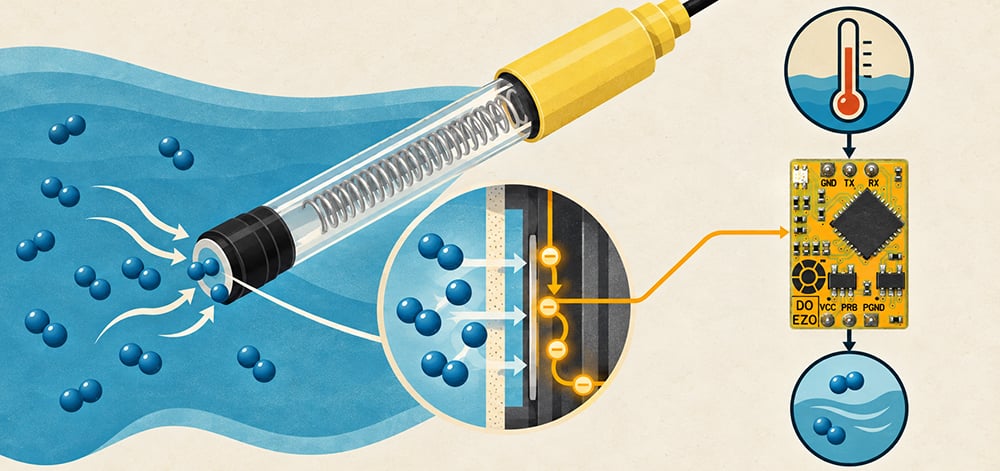
Because the probe relies on a chemical reaction inside the electrolyte, it is a consumable sensor. Over time, the electrolyte depletes, and the membrane can wear, which is why regular maintenance and periodic recalibration are necessary. Atlas Scientific’s dissolved oxygen probe has a recalibration interval of approximately one year under normal operating conditions.
Optical oxygen sensors are a newer technology that works on an entirely different principle: fluorescence quenching.
In an optical DO sensor, light from an LED is projected onto a cap coating of a special luminescent (fluorescent) dye. The dye absorbs light and rapidly emits it again when there is no oxygen. Oxygen molecules are present, and when they collide with the excited dye, they take away some of its energy; this is known as quenching. As oxygen concentration increases, more oxygen molecules interact with the excited luminescent dye, reducing the intensity and shortening the lifetime of the emitted light. The sensor measures these changes to determine dissolved oxygen levels.
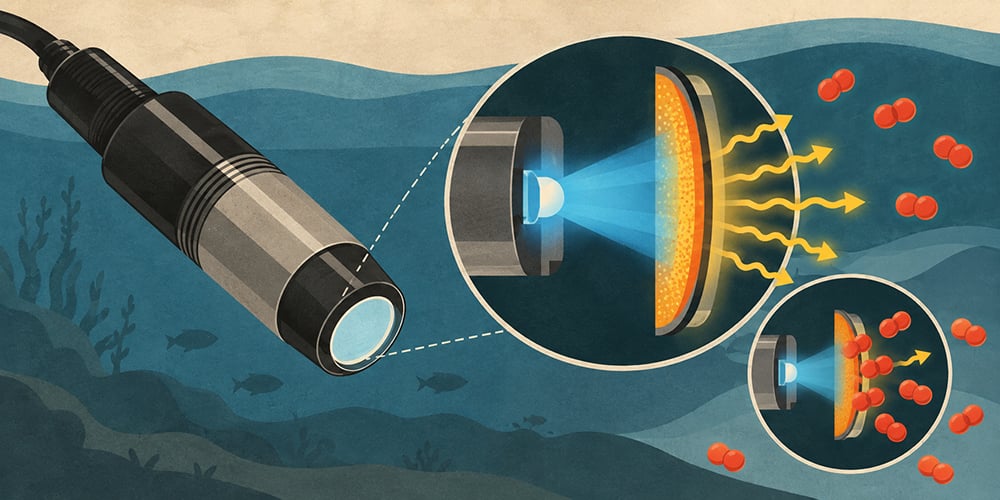
The sensor then measures the change in the time and intensity of the emitted light and determines the concentration of dissolved oxygen.
Optical sensors have a number of advantages: they don’t consume electrolyte, they require less frequent maintenance, and they’re less sensitive to interference from other dissolved substances. However, the luminescent dye cap does degrade over time, particularly in harsh or abrasive environments, and must be replaced periodically. They also tend to come at a higher cost.
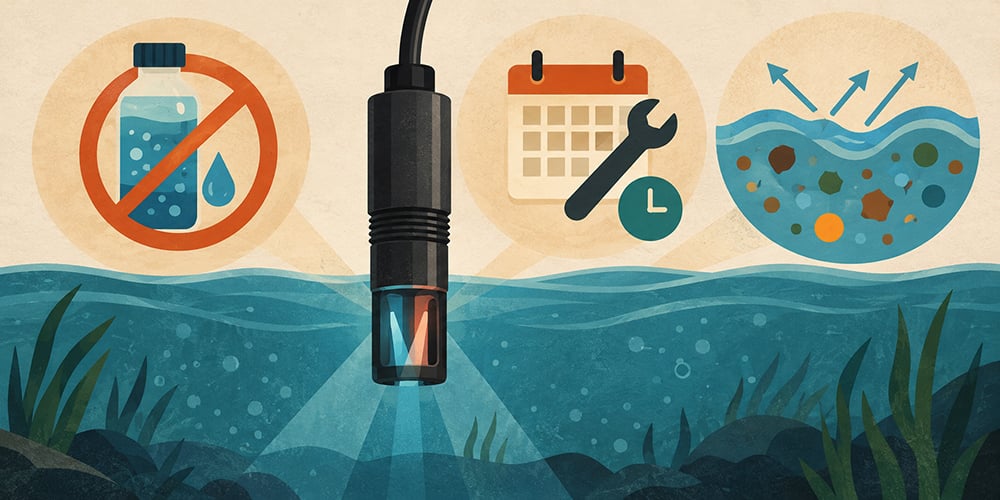
For most embedded systems, aquaculture, hydroponics, and water quality monitoring applications, electrochemical sensors like those used in Atlas Scientific’s EZO-DO system remain the practical choice due to their proven accuracy, rugged design, and straightforward integration.
Understanding the individual parts of a DO probe helps explain both how it works and how to maintain it properly.
This semipermeable membrane is the first point of contact between the probe and the surrounding water. It allows oxygen to pass through while blocking water, contaminants, and other dissolved substances. The condition of this membrane directly affects measurement accuracy; fouling or damage will reduce the sensor’s responsiveness.
The internal electrolyte is the medium in which the electrochemical reaction takes place. The electrolyte supports the electrochemical reactions inside the probe. Over time, its composition and performance can change, requiring periodic replacement to maintain accurate measurements. Atlas Scientific supplies electrolyte solution as part of its EZO complete dissolved oxygen sensor kit.
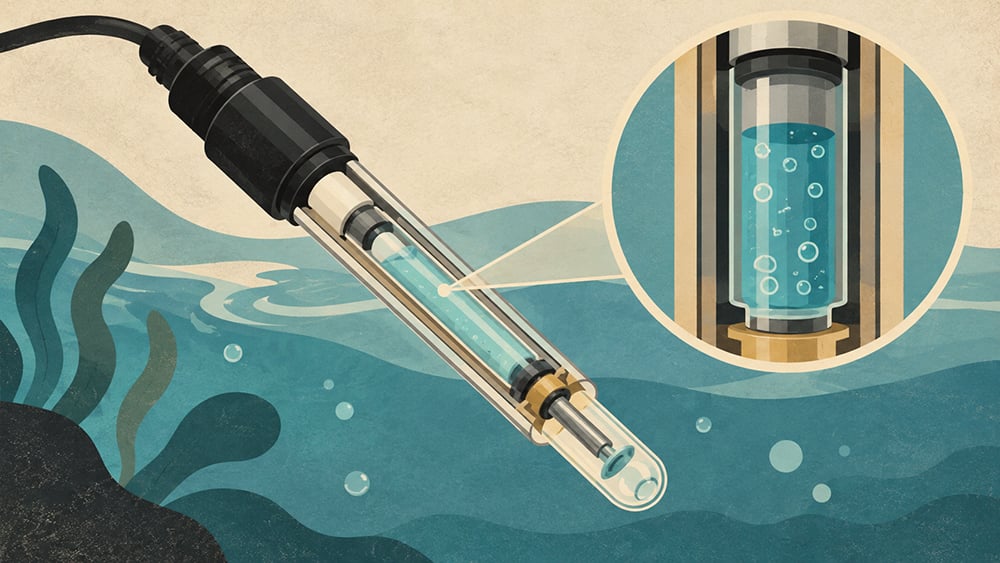
The two electrodes that facilitate the reduction reaction and generate the electrical current proportional to oxygen levels.
The brains of the operation. The EZO circuit takes the raw electrical signal from the probe, processes it, applies temperature compensation, and outputs accurate DO readings in mg/L or percentage saturation via UART or I2C.
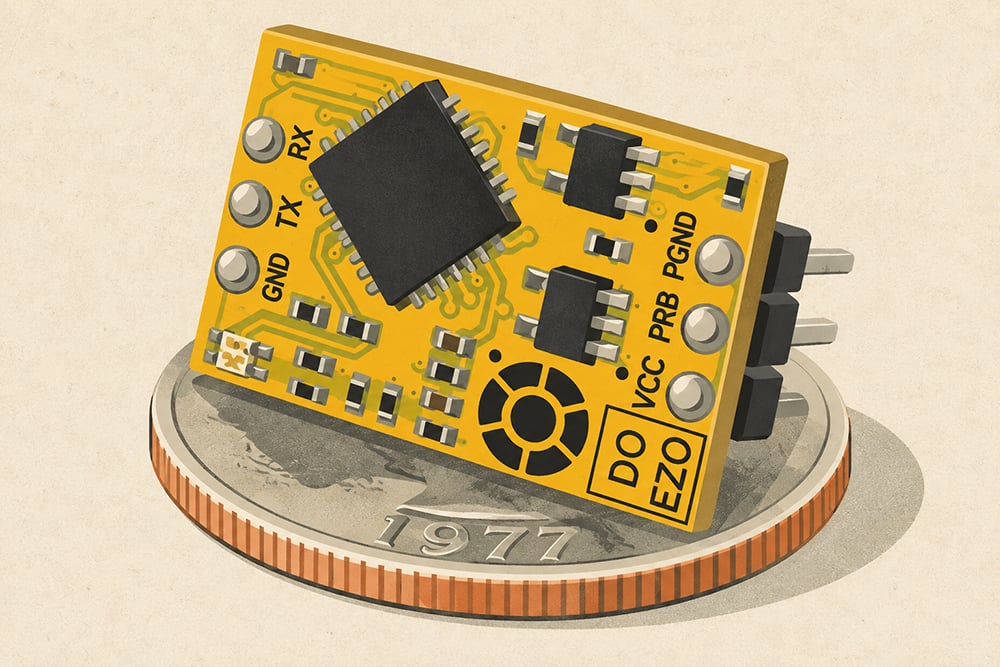
Even with a high-quality DO sensor, some environmental variables can influence the accuracy of DO readings if left unaccounted for.
Temperature is the most common factor that affects dissolved oxygen, as it is a basic property of gas solubility. For example, cold water contains more dissolved oxygen than warm water. This is why accurate DO measurement requires temperature compensation. Pair your DO probe with a temperature sensor and configure your microcontroller to send updated temperature readings to the EZO-DO circuit. The circuit uses these values to compensate dissolved oxygen measurements for temperature changes.
Salinity also influences how much oxygen the water can hold. Saltwater contains less dissolved oxygen than freshwater at the same temperature. Salinity compensation should be used if you are monitoring a saltwater environment (e.g., reef tank, marine aquaculture system, or coastal monitoring station).

Altitude and atmospheric pressure matter too. At higher elevations, baseline DO values will be lower because there is less oxygen to dissolve into the water due to lower atmospheric pressure.
Biofouling is the gradual accumulation of bacteria, algae, and other biological material on the membrane, which can restrict the ability of oxygen to diffuse into the probe, resulting in artificially low readings over time. Long-term deployment requires regular cleaning and use of an anti-fouling probe screen.
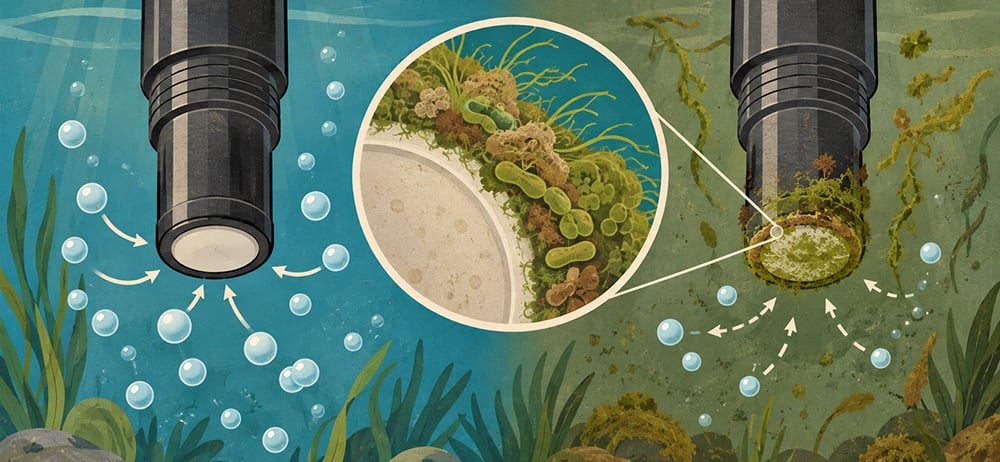
NOTE: Atlas Scientific recommends the use of a temperature probe with the DO probe for accurate dissolved oxygen monitoring and the use of the built-in temperature and salinity compensation functions of the EZO-DO circuit. This will provide you with readings that are the true dissolved oxygen concentration, not just the uncorrected raw values.
Calibration is key to confirming that your sensor’s readings match known reference values. For dissolved oxygen probes, there are two key calibration points: high-point (atmospheric) calibration and low-point (zero) calibration.
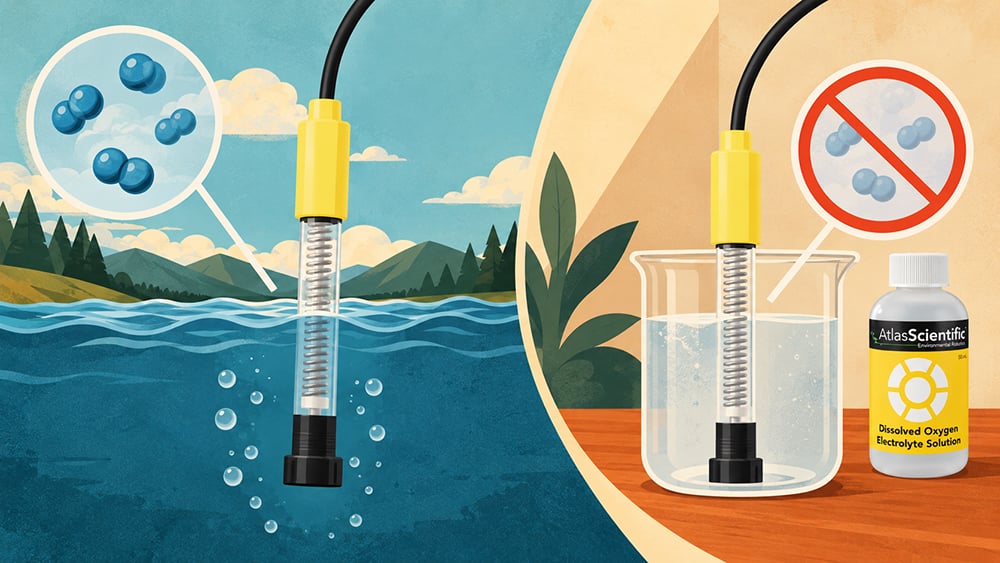
For high-point (atmospheric) calibration, the probe is exposed to open air. At sea level and with the default compensation values, you would expect to see a stable reading of around 9.09 – 9.1 mg/L.
A zero dissolved oxygen calibration solution, a solution in which all oxygen has been chemically removed, is used to perform a low-point (zero) calibration by immersing the probe in the solution. This confirms that the sensor is reading zero correctly when there is no oxygen.
The Atlas Scientific dissolved oxygen sensor kit comes with zero dissolved oxygen calibration solution pouches and electrolyte solution, so you have everything you need to calibrate right from the start.
Atlas Scientific’s Lab Grade Dissolved Oxygen Probe is an electrochemical galvanic sensor built for long-term deployment in demanding environments.
Key specifications include:
The probe works seamlessly with the EZO-DO Circuit, which outputs readings via UART or I2C, making it straightforward to integrate with any microcontroller-based system. It is compatible with a wide range of applications, including hydroponics, aquaculture, fish keeping, environmental monitoring, food production, laboratory use, and winemaking.
An oxygen sensor works by detecting the presence of oxygen, either through an electrochemical reaction that generates a measurable current or through optical fluorescence quenching that measures changes in light behaviour. In both cases, the output is converted into an accurate dissolved oxygen reading in mg/L or percentage saturation.
For most embedded and field monitoring applications, an electrochemical dissolved oxygen probe paired with an EZO circuit is the most practical, accurate, and cost-effective solution available. Proper calibration, temperature compensation, and regular membrane maintenance are the keys to getting reliable long-term performance from your sensor.

If you would like to learn more about Atlas Scientific’s dissolved oxygen probes and EZO circuits, or if you need help selecting the right sensing solution for your project, contact the world-class team at Atlas Scientific. We’re here to help.
The 4-20mA current loop is the dominant analog signaling method in industrial process control. It transmits sensor measurements, such as temperature, pressure, pH, and flow,
An oxygen sensor is a device that measures the concentration of oxygen, either dissolved in water or present in gas. It converts the measurement into