

Blog
The Best Industrial Conductivity Transmitters
Conductivity is one of the most important measurements in industrial water systems. From water treatment and hydroponics to chemical processing and manufacturing, conductivity provides a





Hydroponic root rot is caused by oxygen-poor, warm, and imbalanced nutrient solutions, which allow waterborne pathogens such as Pythium to infect weakened roots. Scientifically, it arises when dissolved oxygen drops, temperature rises, and system hygiene declines. Treatment involves cleaning, oxygenating, and restoring solution chemistry, while prevention depends on maintaining stable environmental parameters and continuous monitoring to stop conditions that enable infection.
Hydroponic root rot is one of the most destructive problems a grower can face, but it is not a mystery. It is a predictable, chemistry-driven outcome that occurs when specific environmental conditions allow opportunistic pathogens to take hold in the root zone.
Understanding the science behind why it happens is the most reliable route to preventing it, and to rescuing a crop when it does. This guide covers the biology of root rot, the measurable parameters that trigger and sustain it, and the evidence-based steps to eliminate it from your system for good.
“Root rot” describes a cluster of symptoms – brown, slimy, foul-smelling roots and wilting foliage, rather than a single disease. In hydroponics, Pythium species (especially P. ultimum and P. aphanidermatum) are the most common culprits, though Fusarium, Phytophthora, and certain bacteria can produce similar outcomes. These are oomycete water molds, not true fungi, explaining why many conventional fungicides fail.
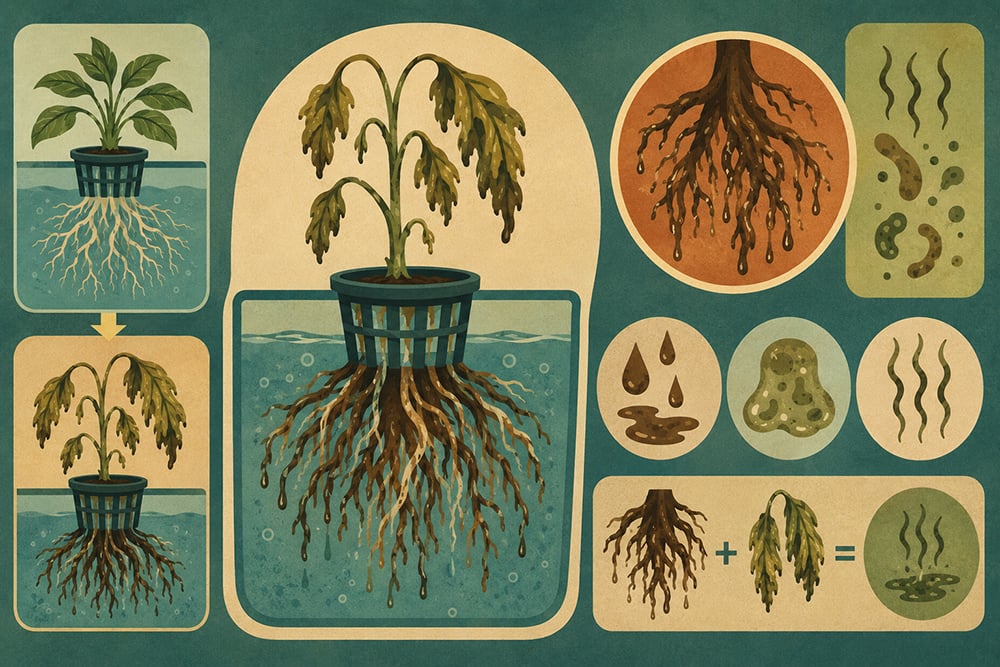
Oomycetes thrive in aquatic environments and reproduce via mobile zoospores that swim through the nutrient solution, efficiently infecting roots. Browning roots are a symptom, not the disease itself. The actual disease manifests when three factors converge to form the Disease Triangle: a susceptible host, a viable pathogen, and favorable environmental conditions. Remove any side, and infection cannot establish itself.
Root rot does not appear randomly. It follows predictable chemistry. The conditions that trigger and accelerate it are well established, and, crucially, all of them are measurable.
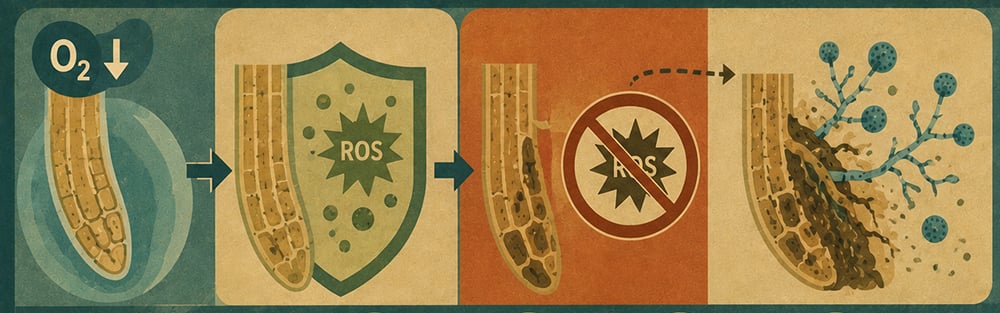
This is the primary driver. Plant roots require molecular oxygen (O₂) dissolved in the nutrient solution to perform aerobic cellular respiration, producing the ATP that powers nutrient uptake and root cell maintenance. When dissolved oxygen (DO) falls below approximately 4–5 mg/L, roots begin to shift towards anaerobic fermentation. This is energetically inefficient and produces toxic metabolic by-products that degrade root cell walls, leaving them vulnerable to pathogen penetration.
More significantly, Pythium and related oomycetes actively thrive in low-oxygen, stagnant conditions. They are not just opportunistic; they preferentially target hypoxic root zones because the absence of oxygen suppresses the root’s own immune response, including the production of reactive oxygen species (ROS) that would normally form part of its defence against infection. A root zone deprived of oxygen is, in biological terms, a root zone that has disarmed itself.
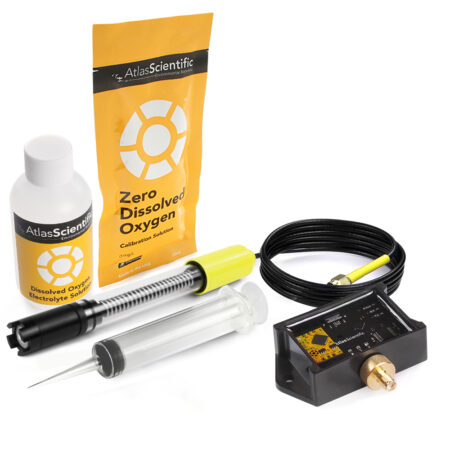
Target DO levels of 7–8 mg/L or above. For a detailed breakdown of how dissolved oxygen interacts with root health and pathogen suppression, Atlas Scientific’s article on the importance of dissolved oxygen in hydroponic systems covers the mechanisms in depth. Continuous in-line measurement using a calibrated EZO-DO™ dissolved oxygen circuit is the most reliable way to detect DO drops before they create conditions for pathogen growth.
Water temperature is directly and inversely related to dissolved oxygen saturation. As the temperature rises, the maximum amount of O₂ water can hold decreases. At 68°F (20°C), water at full saturation holds approximately 9.1 mg/L of dissolved oxygen. At 86°F (30°C), that figure drops to around 7.5 mg/L, and in a system running air stones or pumps, actual measured DO will often be considerably below saturation. This means that warm water creates a dual threat: lower oxygen availability and a temperature range that directly stimulates Pythium sporulation and motility.
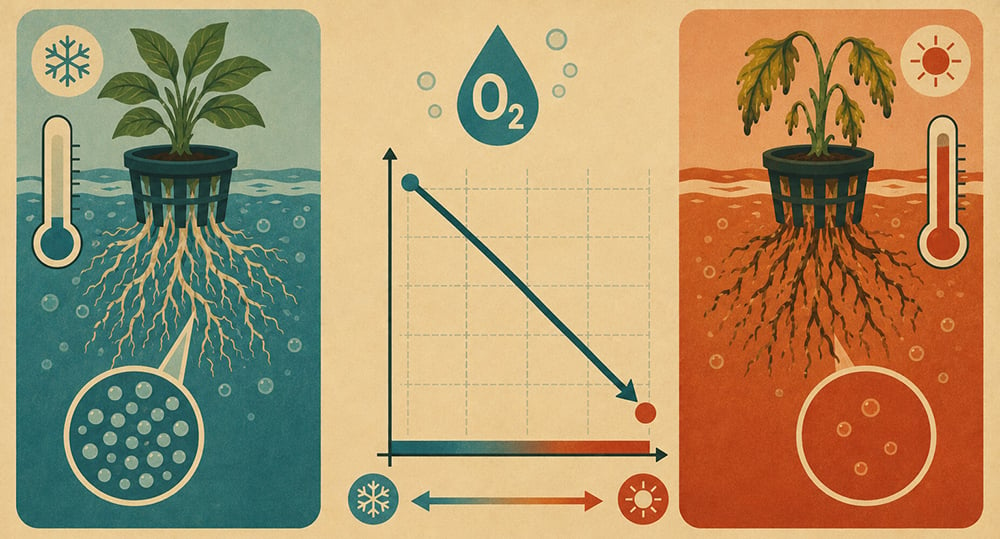
The optimal solution temperature range for most hydroponic crops is 65–72°F (18–22°C). Above 75°F (24°C), pathogen risk increases sharply. This relationship is covered in detail in Atlas Scientific’s piece on how temperature affects dissolved oxygen. Real-time temperature monitoring, paired with DO measurement, is essential in any system running in a warm grow room.
ORP is a measure of the solution’s oxidative state, its capacity to neutralise pathogens and organic contaminants. Expressed in millivolts (mV), a healthy hydroponic solution should maintain ORP values between 300 and 400 mV. At these levels, the solution is sufficiently oxidative to inhibit Pythium zoospore activity and suppress bacterial biofilm formation.
When ORP drops, due to organic contamination, warm temperatures, or reduced aeration, the solution becomes reductive, creating exactly the kind of low-energy, pathogen-friendly environment that root rot thrives in. ORP in hydroponics can detect deteriorating solution quality that pH and EC alone would miss entirely. For a grower who has already experienced a root rot outbreak, ORP monitoring with a sensor like Atlas Scientific’s EZO Complete-ORP Kit provides the earliest possible warning of conditions recurring.
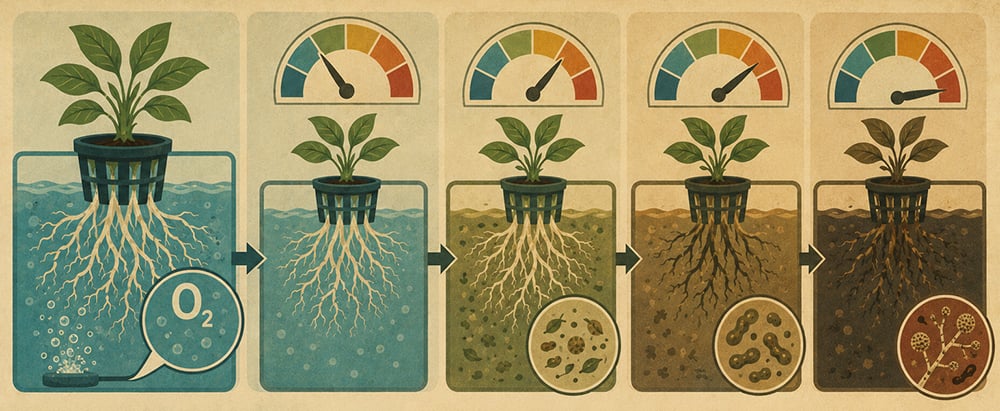
A pH drifting outside the 5.5–6.5 optimal range does not directly cause root rot, but it weakens the plant’s physiological resilience. Nutrient lockout caused by incorrect pH means that roots operating under nutritional stress, with depleted energy reserves and compromised cell wall integrity, become significantly more susceptible to Pythium infection. pH instability and root rot frequently co-occur not by coincidence but because the same management lapses (infrequent monitoring, insufficient solution changes) allow both to develop simultaneously. Monitor pH levels using a reliable pH probe.
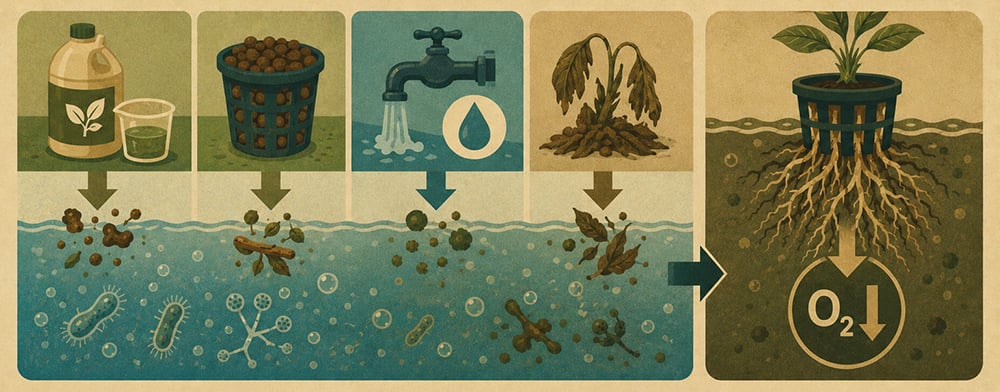
Introducing organic matter into a hydroponic garden,whether through nutrient additives, incompatible growing media, unfiltered source water, or decomposing plant material, provides both a substrate for pathogen growth and a source of biological oxygen demand (BOD) that depletes dissolved oxygen in the solution. Maintaining strict hygiene protocols and using inorganic, hydroponic-grade nutrient formulations is essential for a clean root zone.
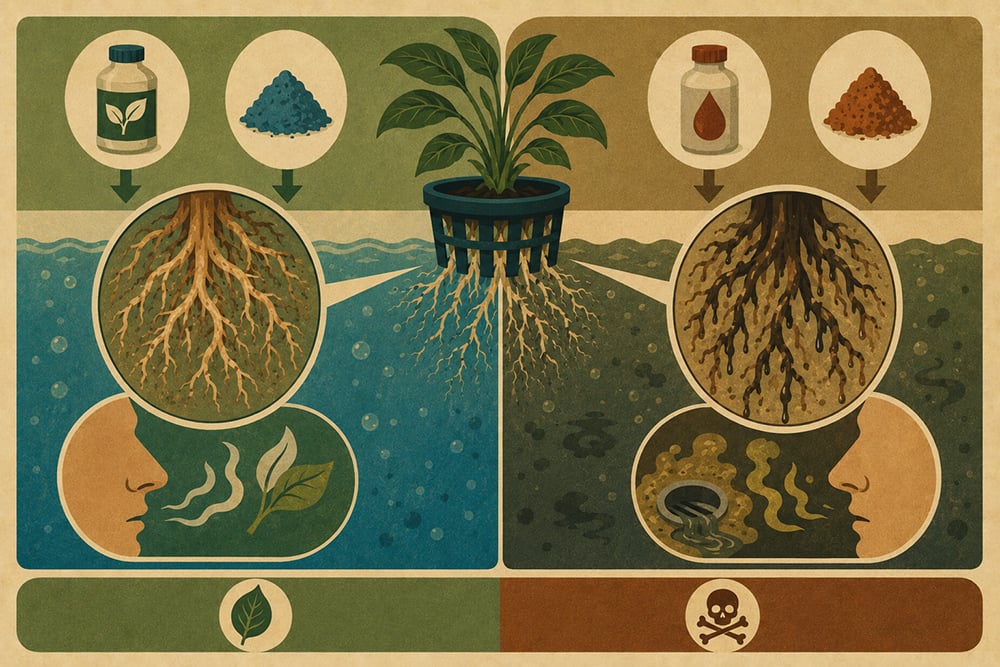
Early detection is key. Inspect roots during reservoir changes:
Top tips to remember: Not all brown roots indicate infection. Nutrient additives or substrate dyes can stain roots harmlessly. Odor is the most reliable indicator: healthy roots smell earthy; Pythium-infected roots smell sulfurous or sewage-like.
Root rot is recoverable, particularly if caught at early to intermediate stages. The following protocol addresses both the symptom (damaged roots) and the underlying cause (the environmental conditions that allowed infection).
Remove all plants and place roots in a bucket of fresh, oxygenated water at the correct temperature. Drain the reservoir entirely and clean all surfaces, channels, and tubing with a hydrogen peroxide solution (3% concentration) or dilute bleach solution (1:9 ratio). Rinse thoroughly. Residual Pythium zoospores can survive on dry system surfaces for extended periods, so thoroughness here directly determines whether the outbreak recurs.
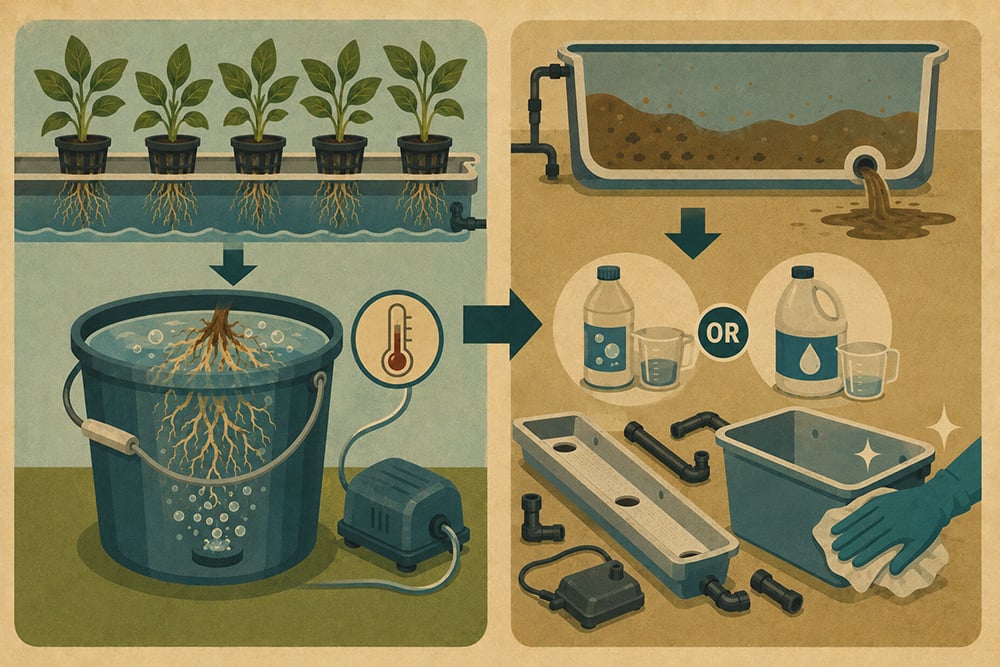
Trim away any completely necrotic root tissue; black, disintegrating roots cannot recover and serve only as a reservoir of ongoing infection. Healthy brown roots at the periphery of damaged zones can sometimes regenerate if conditions are corrected.
For chemical treatment, 3% hydrogen peroxide (H₂O₂) at 3 ml per litre is the most widely used intervention. H₂O₂ releases molecular oxygen on contact with biological material, creating a brief burst of highly oxidative conditions that kills anaerobic pathogens. It degrades rapidly and does not accumulate in the solution. Some growers use hypochlorous acid (HOCl) instead, which provides a more sustained oxidative effect. Both raise ORP substantially, which is precisely the mechanism by which they act against Pythium.
Treatment without environmental correction will result in reinfection. Before returning plants to a cleaned system, verify and correct:
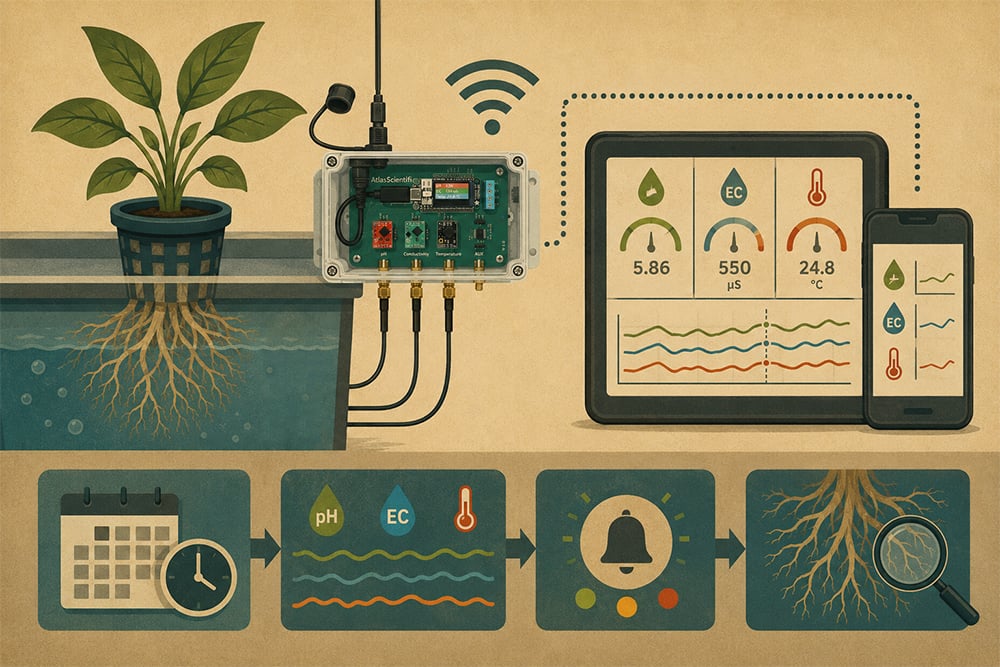
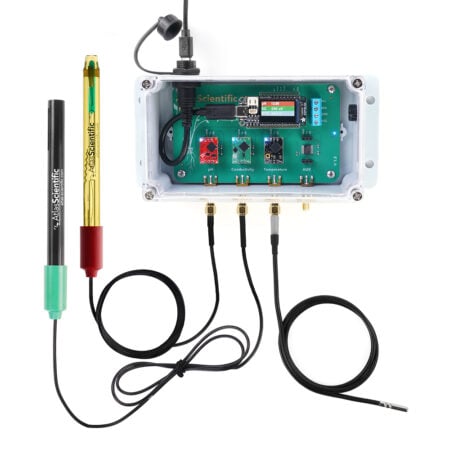
Continuous multi-parameter monitoring removes the guesswork from this process entirely. The Atlas Scientific Wi-Fi Hydroponics Kit monitors pH, EC, and temperature simultaneously, with automatic temperature compensation, creating a real-time data log that makes environmental drift immediately visible rather than discovered retrospectively during a root inspection.
Maintaining ideal environmental parameters is simpler than treatment:
Adequate DO is the primary barrier to infection. Aerate reservoirs properly, monitor DO actively, and ensure pumps function correctly.
Keep solution below 22°C to limit pathogen virulence and maximize DO saturation. Water chillers may be necessary in warm grow rooms.
Declining ORP often precedes visible symptoms. Maintain 300–400 mV to suppress Pythium and bacterial biofilms. Atlas Scientific’s EZO-ORP™ circuit integrates with the same embedded architecture as their pH and DO circuits, making multi-parameter monitoring practical in both hobbyist and commercial systems. For background on the relationship between ORP and dissolved oxygen, the Atlas Scientific article comparing them for water quality provides useful context.
Reverse osmosis water eliminates background pathogens and allows full control of nutrient chemistry.
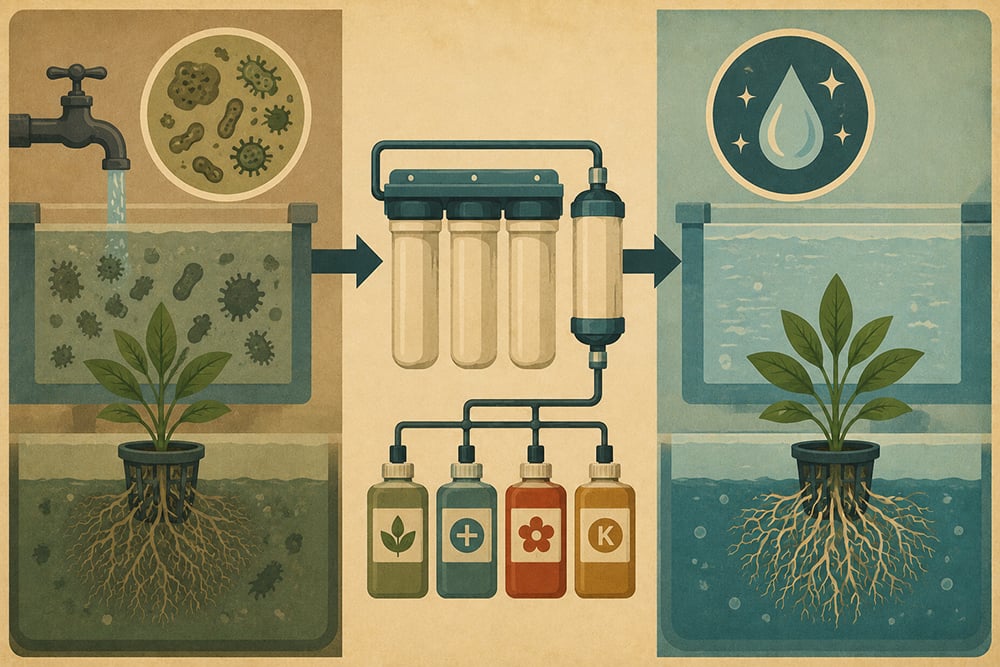
Sterilize all system components between crop cycles. Oospores can survive months on dry surfaces. Hygiene is the most commonly skipped prevention step.
Beneficial microbes such as Trichoderma or Bacillus subtilis may offer some protection, but hydroponic systems rarely support stable populations. These products can conflict with H₂O₂ treatments and elevate BOD, so careful testing and monitoring are required.
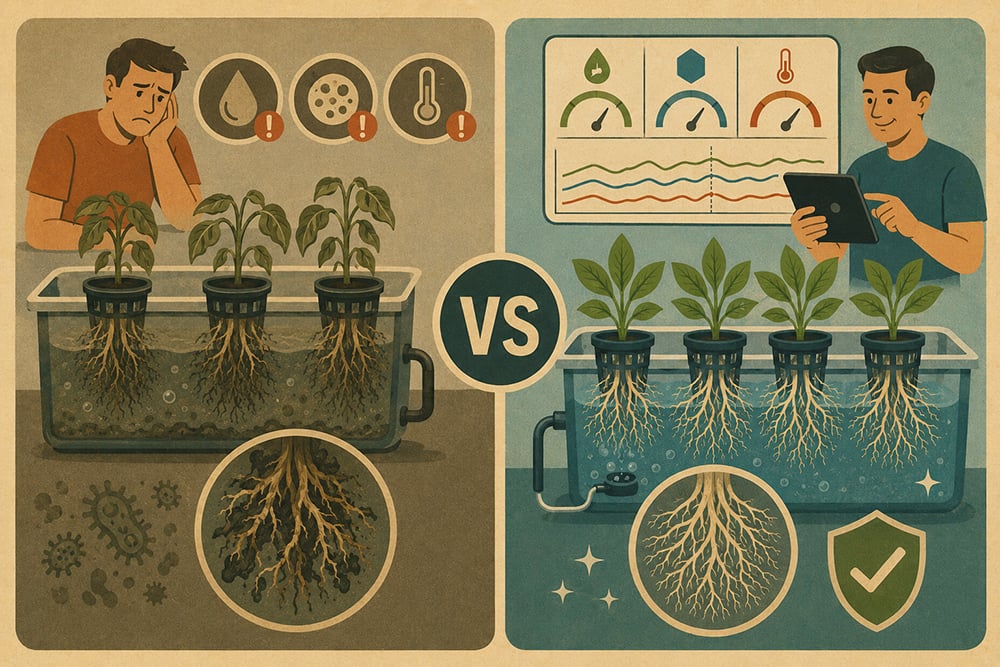
Hydroponic root rot is not an inevitable hazard of growing without soil; it is an environmental failure that can be predicted, measured, and prevented to ensure you maintain a healthy garden. The chemistry is clear: maintain adequate dissolved oxygen above 7 mg/L, keep solution temperature below 72°F (22°C), monitor ORP in the 300–400 mV range, and keep your system free of organic contamination. Get those parameters right consistently, and you deny Pythium the conditions it needs to establish.
The difference between growers who experience root rot repeatedly and those who rarely encounter it is almost always a monitoring discipline gap, not a knowledge gap. Tools that enable continuous, temperature-compensated measurement of DO, ORP, pH, and EC at every scale, from a single DWC bucket to a commercial recirculating system, remove the dependence on periodic manual testing that leaves windows of undetected drift.
Atlas Scientific’s dissolved oxygen probes, ORP sensors, and pH circuits are designed precisely for this kind of embedded, always-on monitoring, giving growers the data to act before problems become visible, not after. To learn more about hydroponic monitoring, contact the world-class team at Atlas Scientific for expert advice.


Conductivity is one of the most important measurements in industrial water systems. From water treatment and hydroponics to chemical processing and manufacturing, conductivity provides a

When a process requires more than one chemical, nutrient, reagent, or additive, using several independent dosing pumps can quickly become complicated. A multi-pump dosing system