

Blog
The Best Indoor Air Quality Monitors
Indoor air quality can have a major impact on the comfort and productivity of homes, offices, schools, laboratories, and industrial facilities. Carbon dioxide buildup, poor





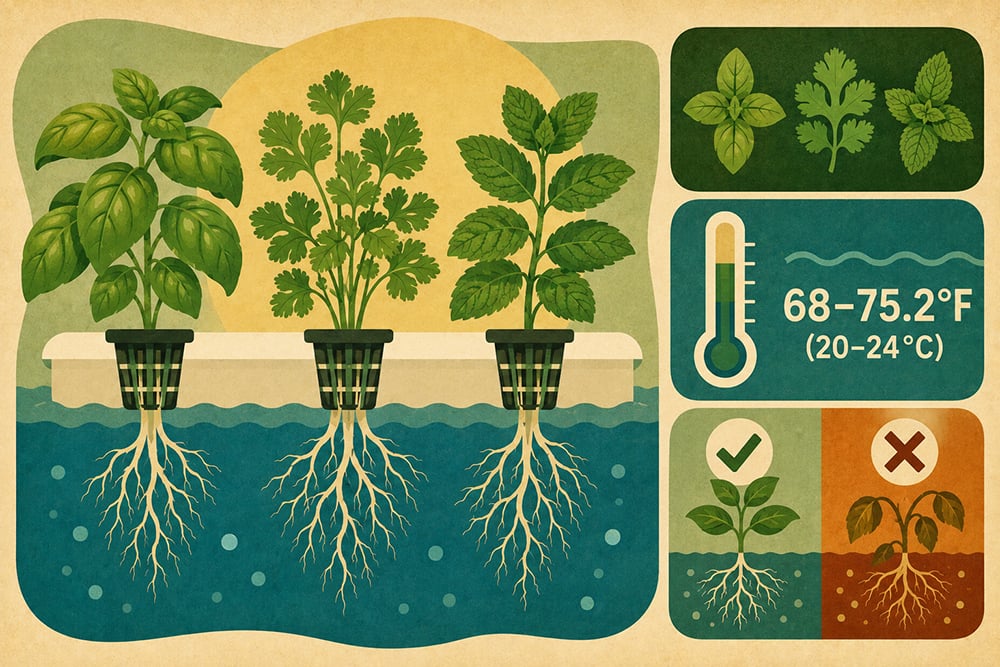
Hydroponic water temperature controls plant health by directly affecting dissolved oxygen levels, nutrient uptake, enzyme activity, and pathogen growth. Scientifically, temperatures between 65–72°F (18–22°C) optimize root function and system stability, while higher temperatures reduce oxygen and increase disease risk. Managing temperature through monitoring, cooling, or heating is essential to maintain balance, prevent root issues, and ensure consistent crop performance.
Hydroponic water temperature is the variable that simultaneously determines dissolved oxygen availability, nutrient uptake efficiency, enzyme function, and pathogen risk. Keep it in the 65–72°F (18–22°C) sweet spot, and everything else in your system becomes easier to manage. Let it drift above 75°F (24°C), and no amount of nutrient tuning or pH correction will fully compensate.
This guide explains the science behind why temperature matters so much, what happens at each end of the spectrum, and the practical steps to keep your hydroponic system under control.
Of all the parameters a hydroponic grower monitors, water temperature has the broadest downstream effect. It determines how much dissolved oxygen your solution can hold, how active root-zone pathogens will be, how efficiently plant enzymes catalyse nutrient uptake reactions, and whether your pH and electrical conductivity (EC) readings are even accurate. The other parameters, dissolved oxygen (DO), pH, and EC, are all temperature-dependent. Control temperature, and you make every other measurement more meaningful and every intervention more effective.
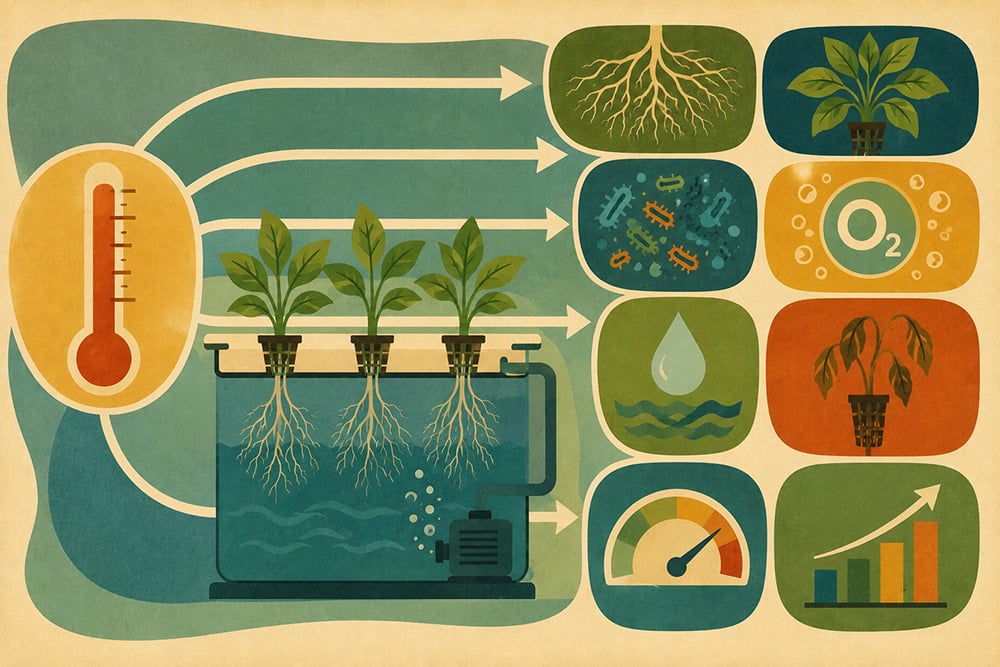
Yet temperature is consistently the most under-monitored parameter in small and mid-scale hydroponic setups. Growers invest in pH sensors and EC meters but leave solution temperature to chance, not realizing that a warm reservoir is quietly undermining every other aspect of their water chemistry management.
As water temperature rises, its ability to dissolve and retain oxygen decreases. This reflects Henry’s Law, which states that the solubility of a gas in a liquid decreases as temperature increases. The effect is not linear; the decline in oxygen solubility becomes noticeably sharper above about 72°F (22°C).
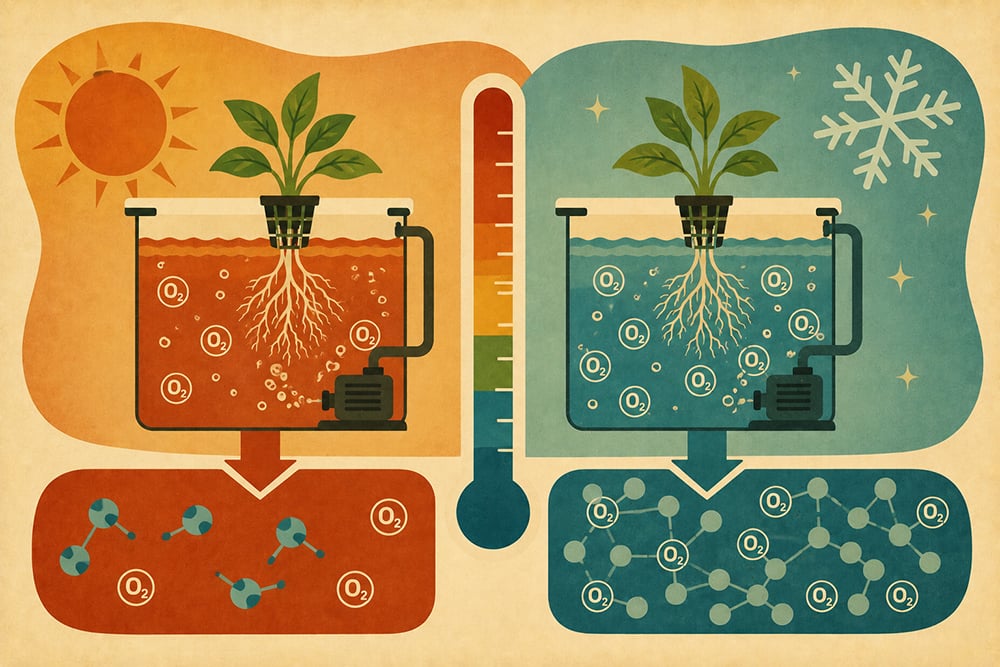
The figures below represent approximate DO saturation values at atmospheric pressure. In a real hydroponic system, actual measured DO will typically be below saturation, making the buffer against hypoxic conditions even thinner at higher temperatures.
| Temperature | DO Saturation | Pythium Risk | Root Efficiency |
| 59°F (15°C) | ~10.1 mg/L | Very Low | Good (if nutrients permit) |
| 64°F (18°C) | ~9.5 mg/L | Low | Optimal |
| 68°F (20°C) | ~9.1 mg/L | Low | Optimal |
| 72°F (22°C) | ~8.7 mg/L | Moderate | Good |
| 77°F (25°C) | ~8.3 mg/L | Elevated | Declining |
| 82°F (28°C) | ~7.8 mg/L | High | Poor |
| 86°F (30°C) | ~7.5 mg/L | Very High | Severely compromised |
Table: Temperature, DO saturation, and relative pathogen/root health risk in hydroponic systems.
The practical implication is clear: a reservoir running at 82°F (28°C) has roughly 25% less oxygen-holding capacity than one at 64°F (18°C). In a DWC system running a single air stone, this difference can be the margin between healthy roots and the onset of anaerobic conditions that allow Pythium to take hold.
Cold water is not automatically safe water. Below 59°F (15°C), root metabolic activity slows significantly. Enzyme-catalysed processes that drive mineral ion uptake, including the ATPase proton pumps embedded in root cell membranes that actively transport nutrient ions, operate far less efficiently at low temperatures. The result is reduced nutrient uptake even when EC and pH are perfectly calibrated: the ions are available in solution, but the biological machinery to absorb them is running in low gear.
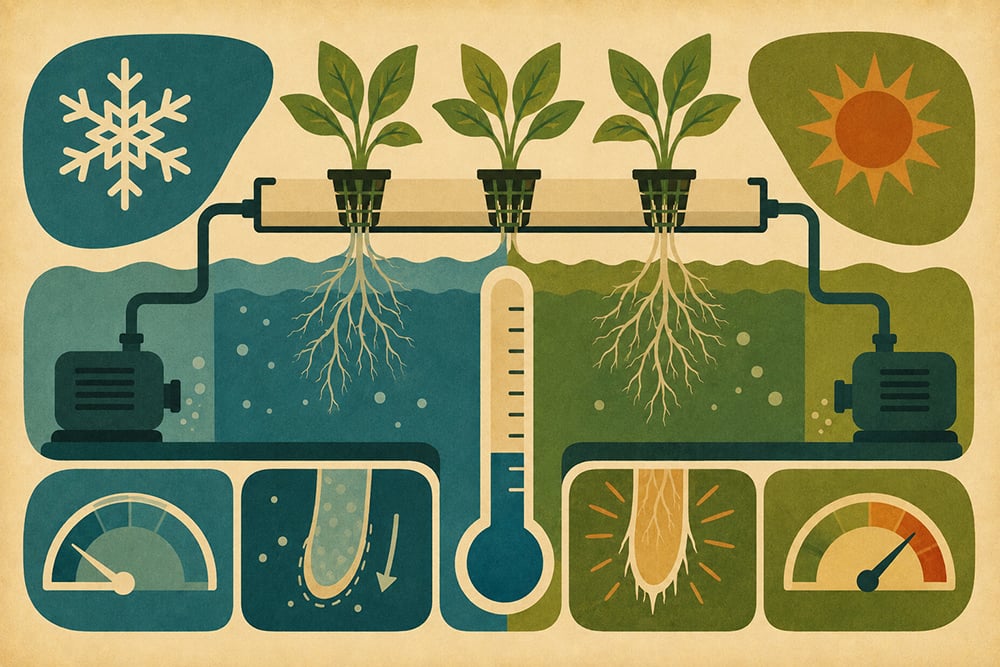
Germination and early root development are particularly sensitive to cold. Below 50°F (10°C), many warm-season crops, including tomatoes, basil, and cucumbers, will refuse to germinate or will produce stunted root systems that never fully recover even once temperatures are corrected. For cold-tolerant crops like lettuce and spinach, slightly cooler temperatures (60-64°F/16–18°C) are acceptable and actively suppress pathogen risk, which is one reason these crops perform so reliably in hydroponic systems.
This is where the more serious risks accumulate, and where most growers encounter problems.
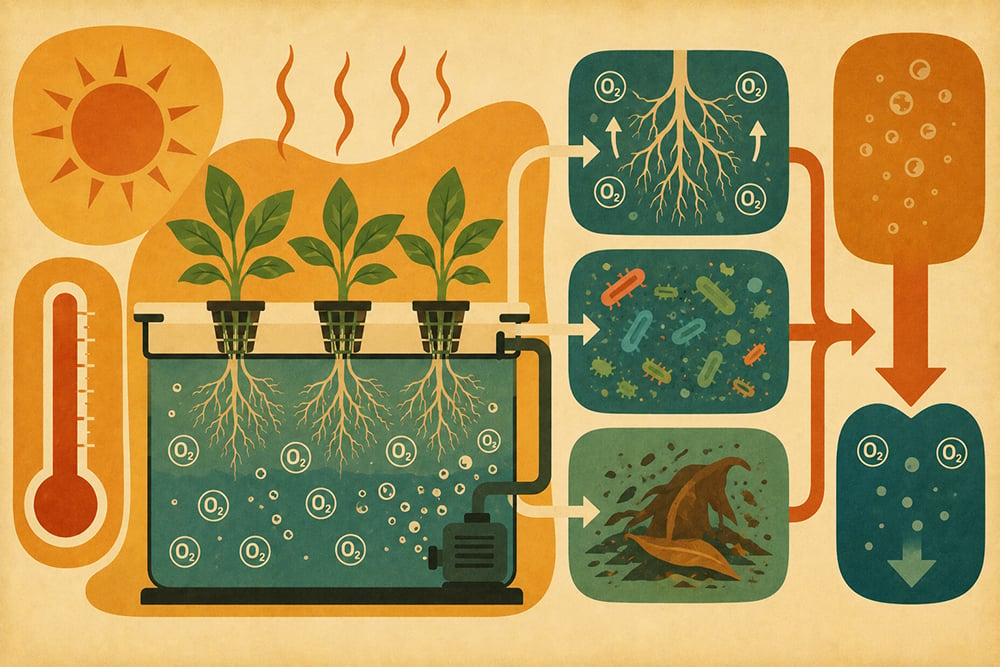
As explained above, warm water simply cannot hold as much oxygen as cold water. But the compounding factor is that warm temperatures also increase the biological oxygen demand (BOD) of the system: root respiration accelerates, microbial activity in the reservoir intensifies, and any organic matter present decomposes faster, all consuming dissolved oxygen simultaneously. The result is a double-sided squeeze on DO: less capacity to hold it, and greater demand consuming what little is available.
Pythium aphanidermatum, the most virulent root rot pathogen in hydroponic systems, has an optimal growth temperature range of 82.4–89.6°F (28–32°C). Below 68°F (20°C), its sporangial production and zoospore motility are substantially suppressed. Above 75.2°F (24°C), the window opens rapidly. This is not a gradual degradation. In fact, Pythium activity can escalate from negligible to crop-threatening within 48–72 hours after a temperature excursion above 78.8°F (26°C), particularly in systems with some organic contamination already present.
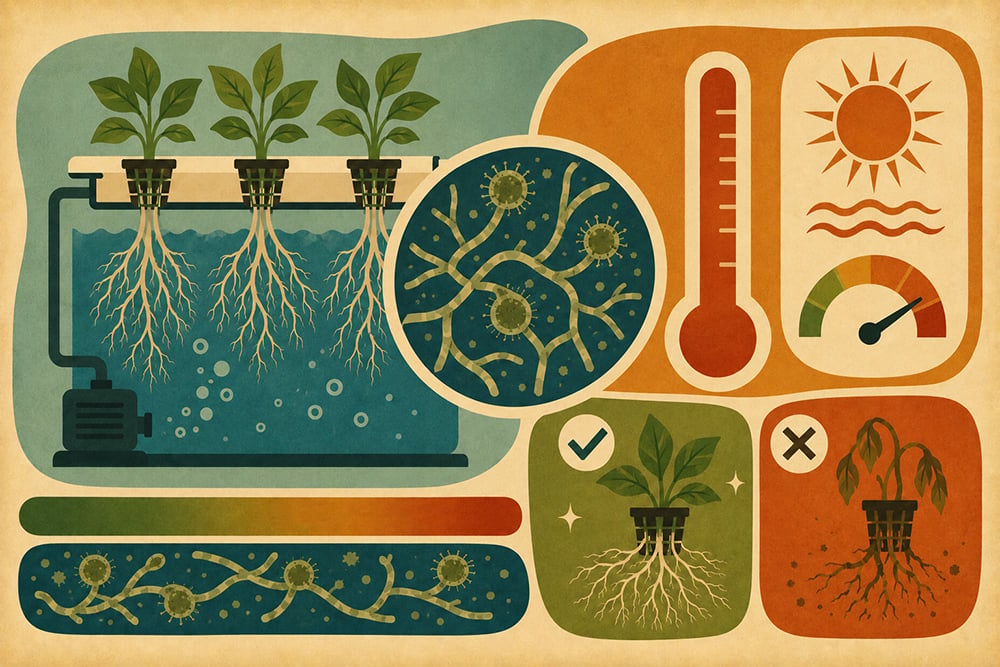
The relationship among temperature, DO, and root-rot risk is central to dissolved oxygen in hydroponic systems. It reinforces why temperature monitoring cannot be treated as separate from DO monitoring; the two parameters are inseparable.
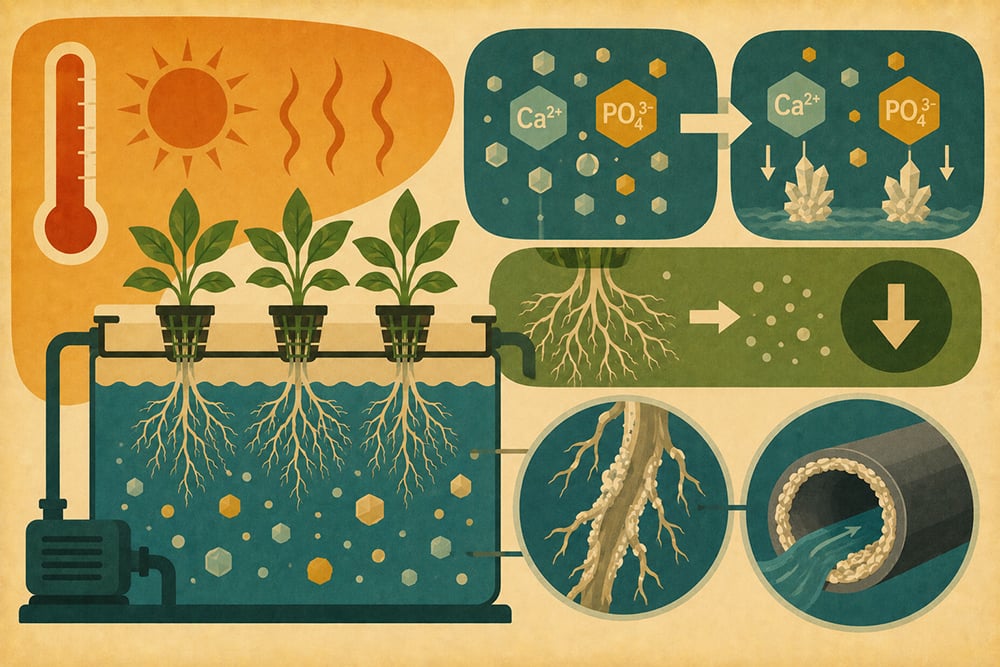
Elevated temperatures accelerate the precipitation of certain mineral salts, particularly calcium and phosphate compounds, out of solution. This reduces nutrient availability and can coat root surfaces and irrigation channels with mineral deposits. Temperature also affects the dissociation constants of the weak acids and bases in your nutrient solution, meaning pH will drift more unpredictably at higher temperatures, requiring more frequent correction and making stable management harder to sustain.
A practical note often overlooked in temperature discussions: both pH electrodes and EC probes produce temperature-dependent readings. A pH probe reading the same solution at 59°F (15°C) and 77°F (25°C) will produce measurably different raw outputs.
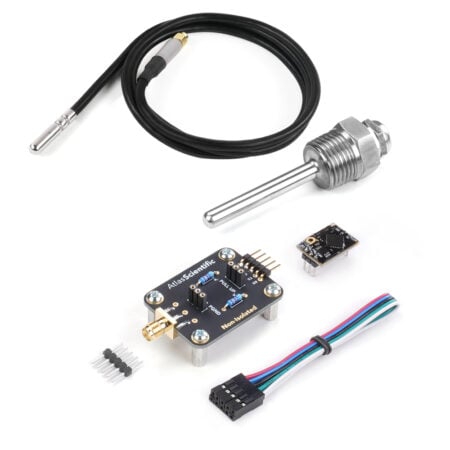
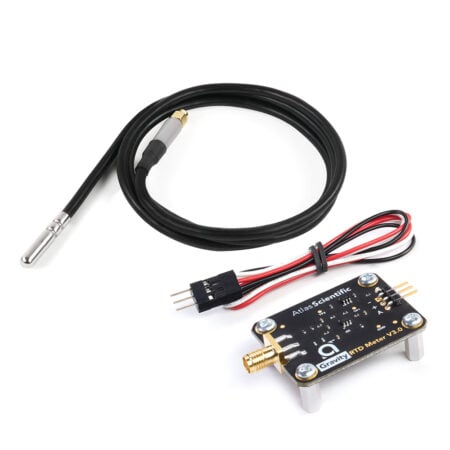
High-quality instruments apply automatic temperature compensation (ATC), but this requires a concurrent temperature measurement. Running an RTD temperature circuit alongside your pH and EC sensors, as Atlas Scientific’s EZO™ pH circuit and EZO-EC™ conductivity circuit are designed to support, ensures your readings reflect actual chemistry rather than temperature artefacts.
While 64.4–71.6°F (18–22°C) is the broadly safe window for most hydroponic crops, there is meaningful variation:
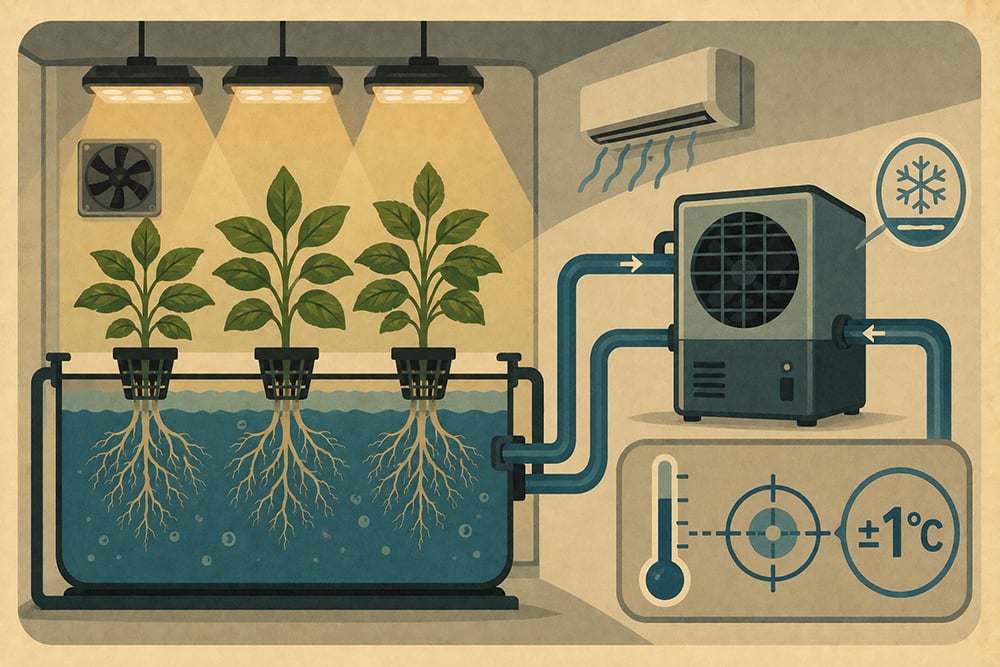
In a sealed grow room with high-wattage lighting, passive cooling is rarely sufficient. A dedicated hydroponic water chiller circulates reservoir water through a refrigeration unit, maintaining the temperature within ±1°C of the target temperature regardless of ambient conditions. For smaller systems, placing the reservoir in an insulated housing, painting it white to reflect radiant heat, and ensuring it is not positioned directly beneath grow lights can meaningfully reduce the thermal load. Still, these are mitigations, not solutions, in a warm environment.
In unheated spaces in winter, a submersible heater with a built-in thermostat is sufficient for most small- to medium-sized systems. Ensure it is rated for the reservoir volume, undersized heaters run continuously and fail faster, and position it to circulate heated water through the full reservoir rather than creating localised warm zones.
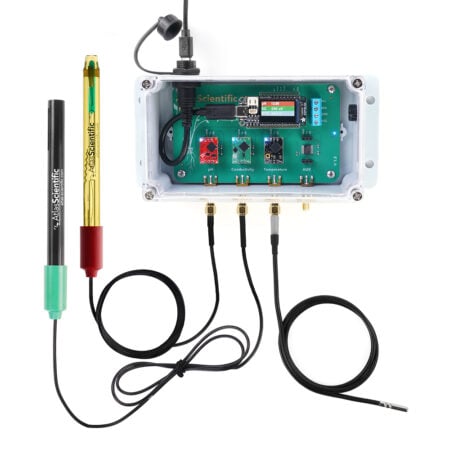
Temperature should be measured continuously rather than spot-checked. A trip above 78°C (26°C) for six hours at night can initiate a Pythium infection that takes days to manifest, by which point intervention is reactive rather than preventive. The Atlas Scientific Wi-Fi Hydroponics Kit includes real-time temperature monitoring alongside pH and EC readings, with automatic temperature compensation applied to all readings, giving growers the complete picture that individual sensors cannot provide in isolation.
Hydroponic water temperature is the master variable that sets the ceiling on every other aspect of your system’s performance. Get it right, 64-71°F (18–22°C) for most crops, and you maximise dissolved oxygen, suppress the conditions that allow Pythium to thrive, keep your nutrient chemistry stable, and ensure your pH and EC readings are actually accurate. Let it drift, and no amount of nutritional fine-tuning will fully recover what the biology loses.
The investment in temperature management using a continuous temperature sensor feeds real-time data to your monitoring system, delivering returns across every other parameter you track. It is the simplest lever with the broadest effect in the entire hydroponic toolkit.
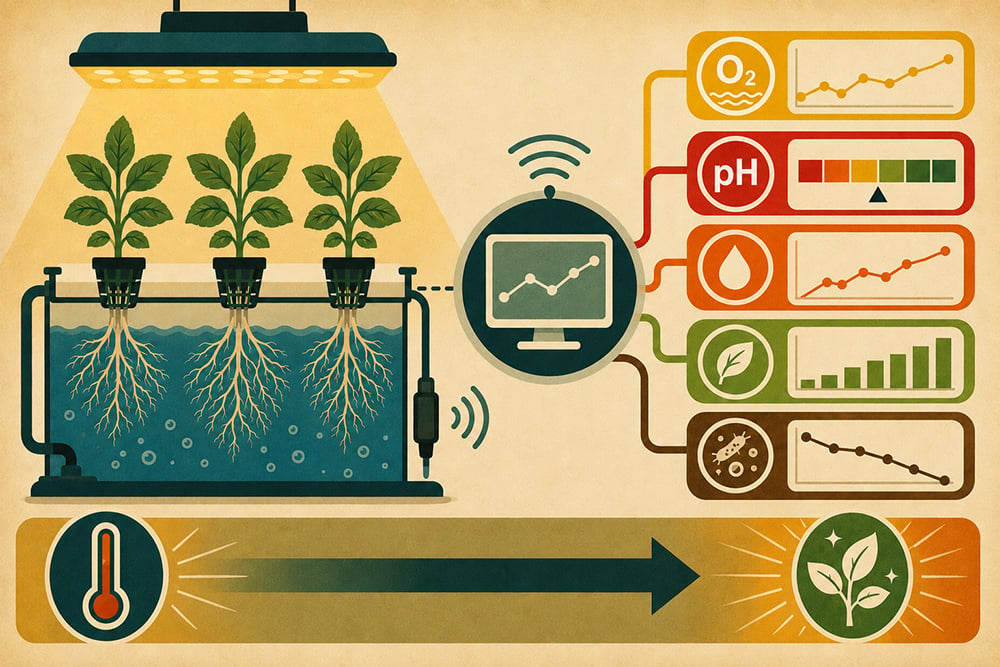
To learn more about why temperature is important in hydroponics or for advice on the best measuring kits for your hydroponic setup, contact the world-class team at Atlas Scientific today.
Indoor air quality can have a major impact on the comfort and productivity of homes, offices, schools, laboratories, and industrial facilities. Carbon dioxide buildup, poor

UART and I2C are serial communication protocols, but they serve different purposes. UART is typically used for direct device-to-device communication and requires dedicated connections. I2C