

Blog
The Best Industrial Conductivity Transmitters
Conductivity is one of the most important measurements in industrial water systems. From water treatment and hydroponics to chemical processing and manufacturing, conductivity provides a




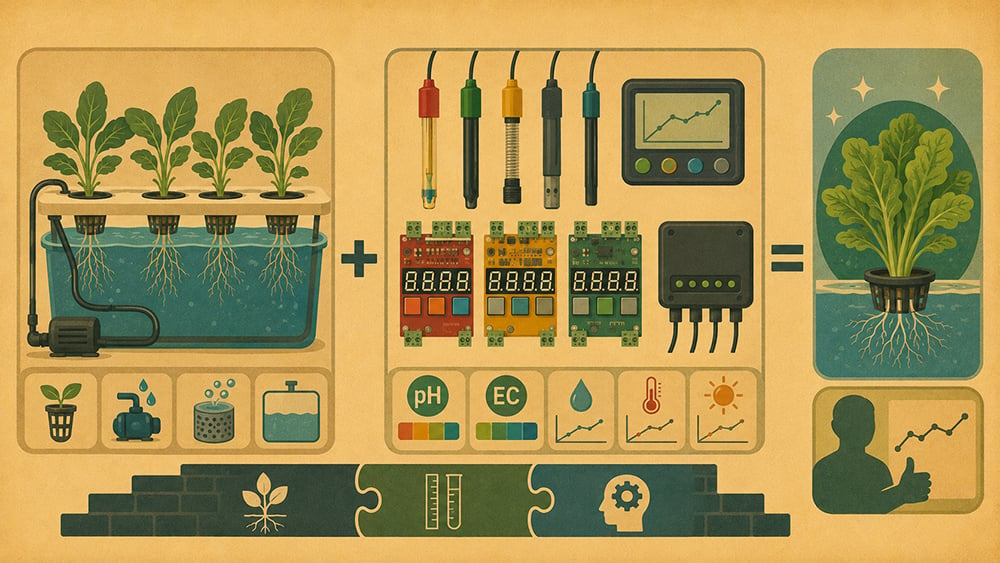
The best hydroponic system for beginners is about managing data. While systems like Deep Water Culture are simple and effective, success depends on monitoring key variables such as pH, EC, temperature, and oxygen levels in real time. Beginners who use continuous data to guide decisions can prevent common failures, optimise growth conditions, and achieve consistent results from their very first grow.
Most guides on the best hydroponic system for beginners spend a lot of time debating equipment and very little time on what actually determines whether your first grow succeeds or fails. The truth is, the conversation has recently shifted fundamentally. The systems themselves, the tanks, channels, and pumps, are largely solved technology. What separates thriving first-time growers from frustrated ones comes down to a single question: Are you flying blind or flying with data?
This guide takes a different approach. We’ll tell you which system type to start with and why, but we’ll also show you how the latest advances in connected sensing technology have changed what’s possible for beginners, and why setting up smart monitoring from day one is no longer just for commercial operators.
Hydroponics has been around for decades, but over the past few years, its adoption has accelerated dramatically. Urban food insecurity, the explosion of indoor-growth culture, and significant declines in the cost of LED lighting and sensor hardware have brought it squarely into the mainstream. For beginners entering this landscape today, the good news is that the core system types are well understood, well documented, and increasingly well supported by affordable technology.
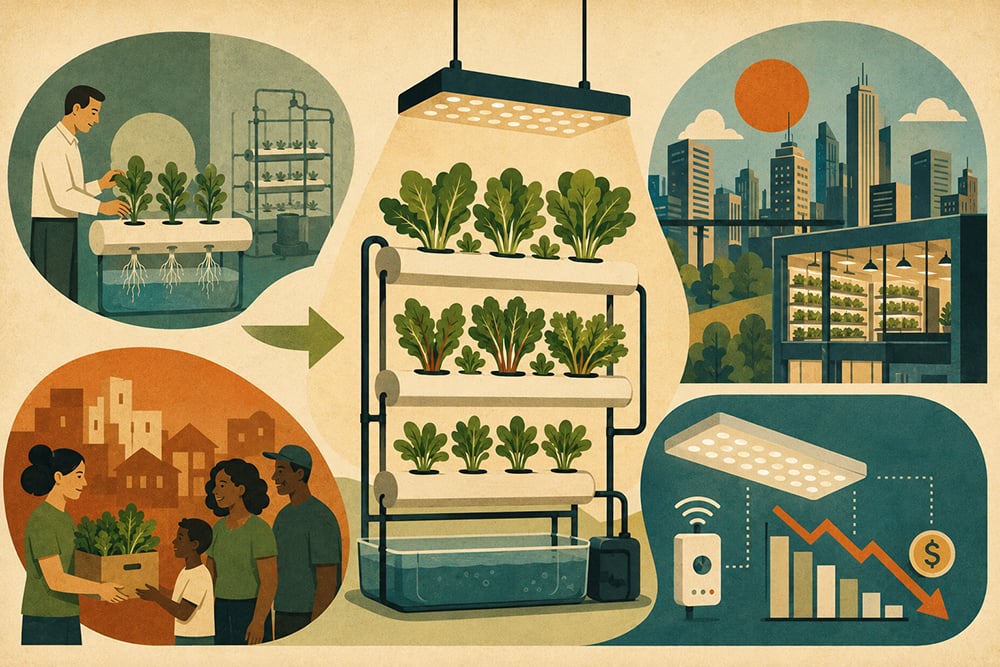
The five main configurations you’ll encounter are:
For most beginners, the recommendation is clear: start with Deep Water Culture. It’s mechanically transparent; you can see and interact with every part of the system. It’s forgiving on a budget. And it performs brilliantly for fast-turnover crops, such as lettuce, basil, kale, and spinach, that give first-time growers rapid, satisfying feedback.
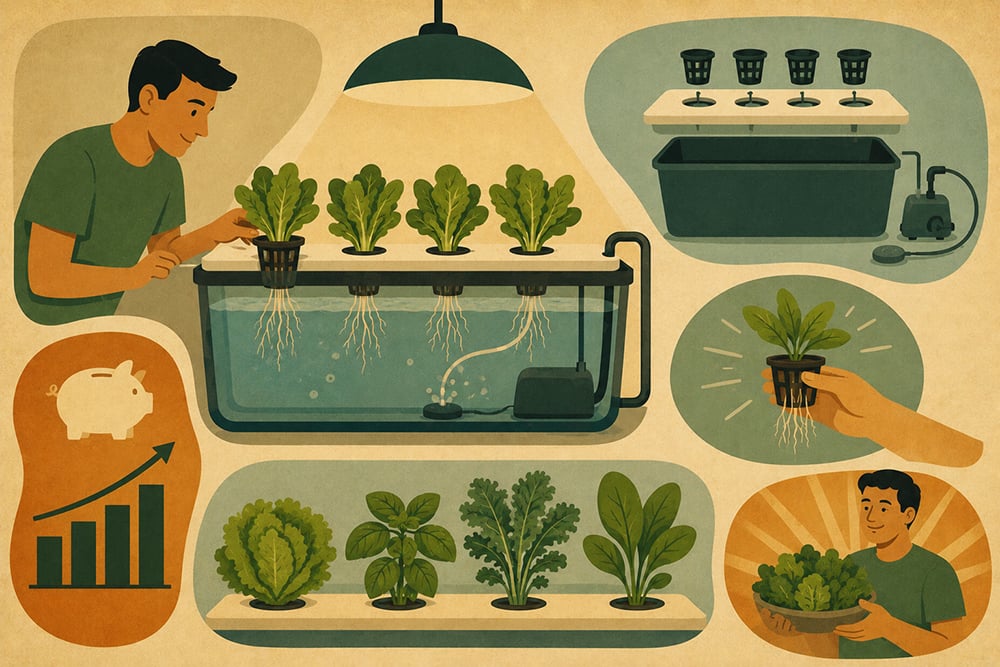
That said, no system type will save a grow where the water chemistry is wrong. And this is where most beginner guides stop short.
When plants first underperform, with yellowing leaves, stunted growth, root problems, and poor yields, the culprit is almost always water chemistry. Specifically, pH and electrical conductivity (EC) drift outside optimal ranges, often without the grower noticing until visible symptoms appear.
Here’s what’s happening biologically: even a perfectly formulated nutrient solution becomes ineffective at the wrong pH. Ions precipitate out of solution or become chemically bound in forms that roots cannot absorb, a phenomenon called nutrient lockout. Meanwhile, EC (a measure of total dissolved nutrient concentration) shifts constantly as plants feed and water evaporates. These two parameters interact with each other, with temperature, and with your specific plant variety in ways that are genuinely difficult to predict without measurement.
The most common beginner mistake isn’t choosing the wrong system. It’s treating pH and EC monitoring as an optional extra rather than the non-negotiable foundation of every hydroponic grow. The old approach to this problem was manual testing: dipping a pH pen or test strip every day or two, logging readings on paper, adjusting, and hoping nothing dramatic happened between measurements. This works, but it has a fundamental flaw. A pH crash at midnight isn’t caught until the next morning’s check. A gradual EC creep over three days isn’t spotted until a plant starts showing burn symptoms.
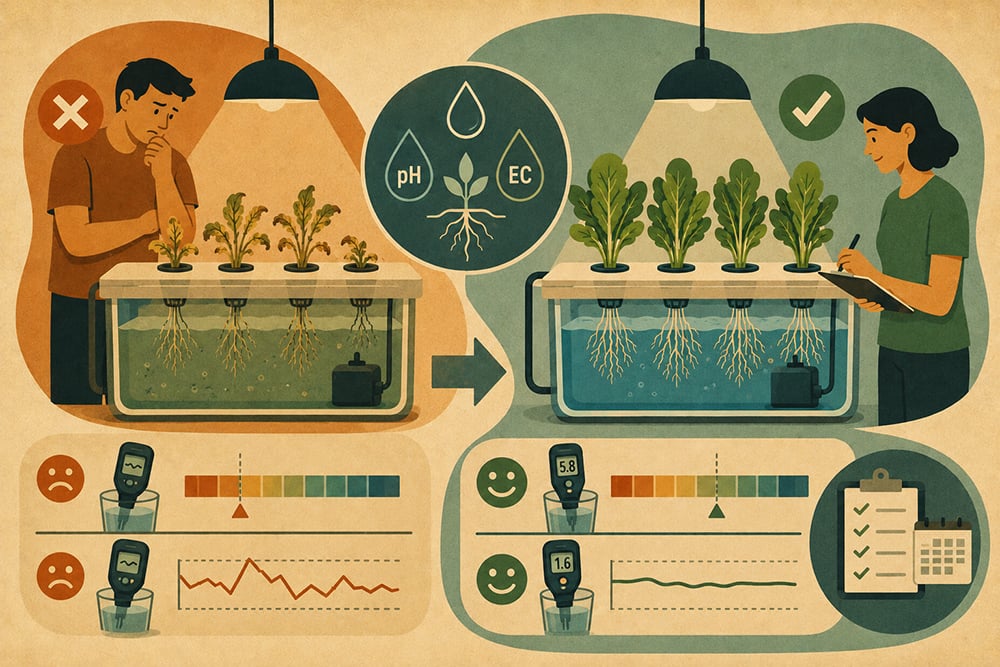
The shift that’s happened recently is that continuous, connected monitoring, the kind that was once exclusive to commercial greenhouse operations, is now genuinely accessible to home growers. And it changes everything.
Recent research published in peer-reviewed journals has consistently demonstrated that IoT-enabled hydroponic systems, those using continuous sensor monitoring integrated with microcontrollers and cloud dashboards, produce measurably better outcomes than manually managed setups. One 2026 study found that LED-lit systems with real-time IoT monitoring produced increases of 15–20% in leaf count and biomass compared to equivalent setups without continuous environmental tracking. The reason is straightforward: plants don’t communicate problems on a schedule that aligns with your testing routine. They respond to conditions in real time. Continuous monitoring means problems are caught when they start, not after they’ve had twelve hours to compound.
For beginners, this matters even more. An experienced grower develops intuition about how their specific system behaves, how quickly pH drifts after a nutrient top-up, and how EC responds when plants hit a growth surge. A first-time grower doesn’t have that intuition yet. Continuous data builds it far faster than manual snapshots ever could.
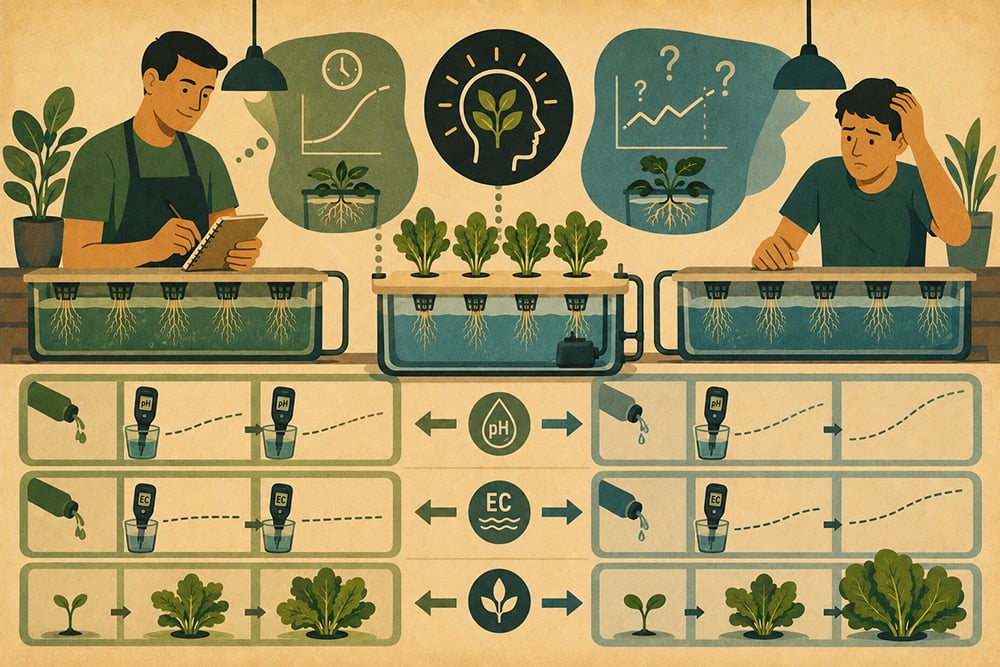
In a DWC or any recirculating system, these are the critical variables:
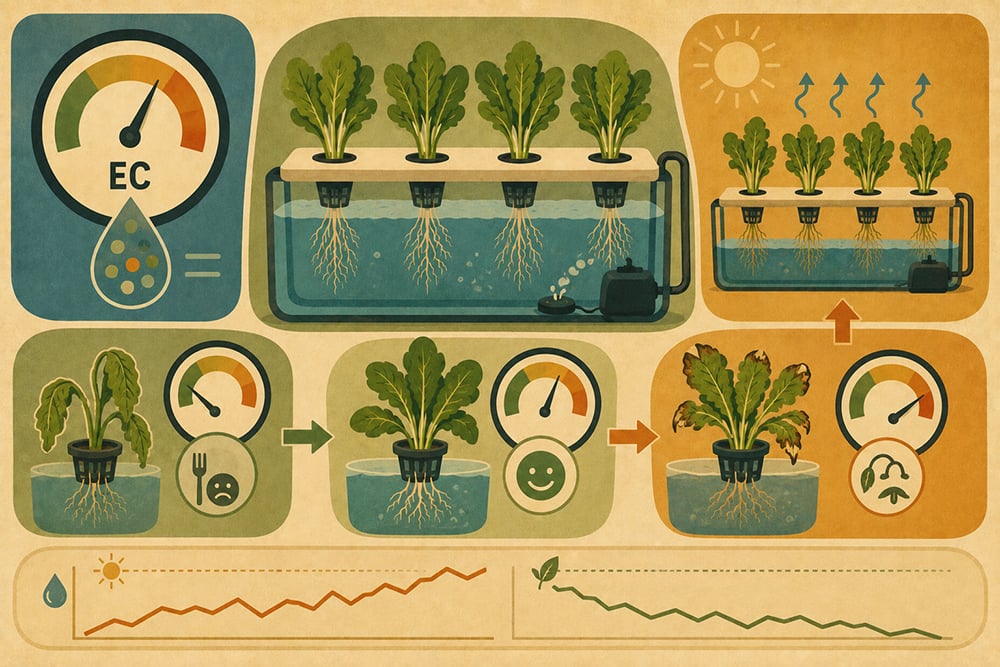
These four parameters don’t operate independently. A temperature rise reduces dissolved oxygen, which stresses roots, which changes nutrient uptake patterns, which in turn shifts EC and pH. Managing them in isolation gives you an incomplete picture. Managing them continuously, together, gives you the whole story.
At Atlas Scientific, we manufacture electrochemical sensors and embedded sensor circuits used across some of the world’s most demanding measurement environments, pharmaceutical production, industrial water treatment, aquaculture research, and large-scale controlled-environment agriculture. Our technology is built for deployment in systems where inaccurate readings have serious consequences.
That same precision engineering is now available in configurations designed specifically for hydroponic growers, from home hobbyists to research institutions.
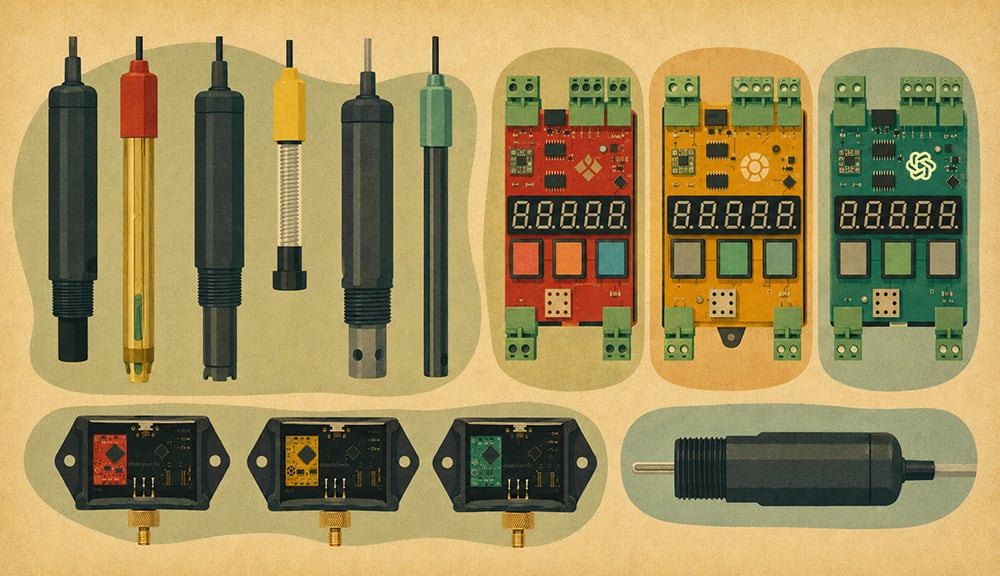
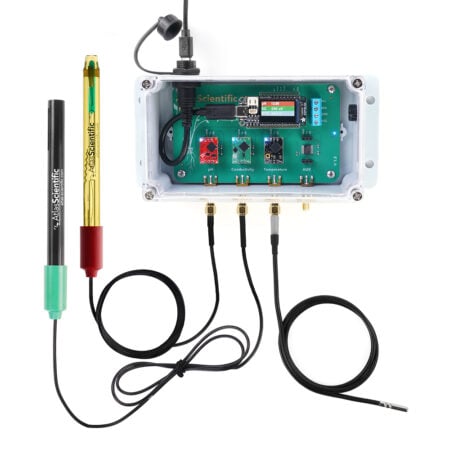
For beginners who want to go from zero to continuous data-driven growth without building a custom system, the Atlas Scientific Wi-Fi Hydroponics Kit is the most direct path. It integrates pH, EC, and temperature sensing into a single connected unit, with automatic temperature compensation ensuring that readings remain accurate regardless of reservoir fluctuations.
Data uploads to the cloud via ThingSpeak, making your solution chemistry visible from any device, phone, tablet, or computer. For a first-time grower, this is genuinely transformative. Instead of wondering whether your pH held steady overnight, you can check a time-series graph that shows you exactly what happened and when. Instead of catching a problem after symptoms appear, you can respond to the data before your plants ever feel the stress.
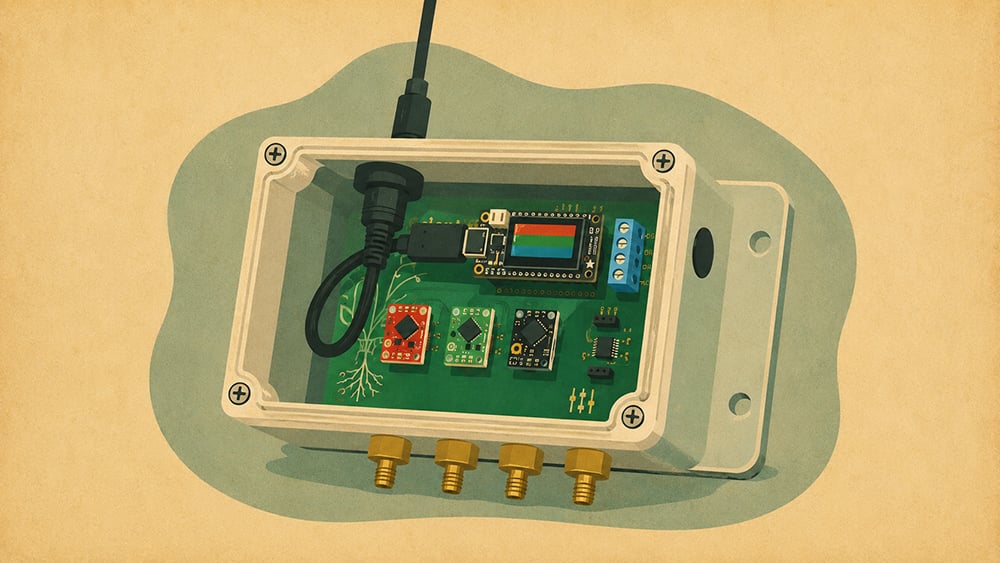
The kit is built on an ESP-based microcontroller platform running on 5V, with I²C sensor modules and a pre-drilled, wall-mountable enclosure. Sensor modules are electrically isolated within the enclosure, an important practical detail, since ground loops from submersible pumps sharing a circuit can corrupt readings if isolation isn’t addressed.
For growers who want to build their own monitoring setup, integrating sensors into an Arduino, Raspberry Pi, or ESP32/ESP8266 platform, Atlas Scientific’s EZO™ embedded sensor circuits are the standard choice among serious DIY hydroponic builders. They communicate via I²C or UART, and they deliver the accuracy of laboratory bench instruments in a compact, embedded-ready format.
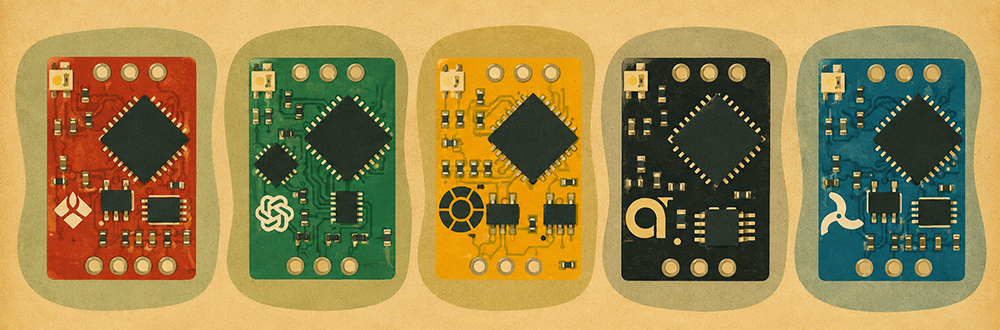
The full EZO™ lineup relevant to hydroponics includes:
We also strongly recommend using electrical isolation hardware when deploying sensors in systems with other electrical components, particularly submersible pumps. A ground loop in a shared circuit can introduce measurement errors that are difficult to diagnose without knowing to look for them. Proper isolation is a one-time hardware step that protects data integrity throughout the system’s life.
Every sensor is only as accurate as its calibration, and this matters more for pH probes than almost anything else in hydroponics. pH electrodes drift over time, and an uncalibrated probe can deliver readings that are off by half a unit or more. On the logarithmic pH scale, half a unit represents a tenfold difference in hydrogen ion concentration. That’s the difference between optimal nutrient availability and the beginning of nutrient lockout.
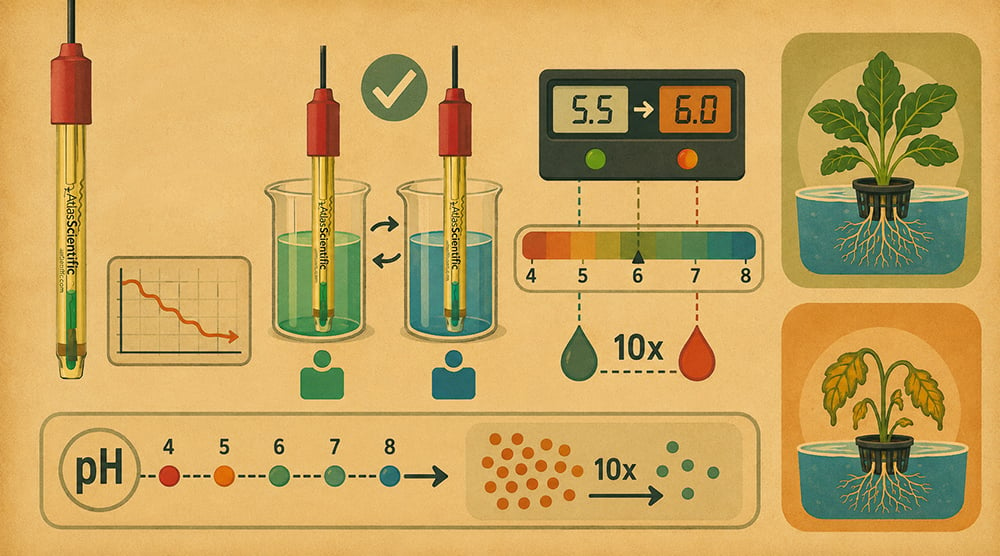
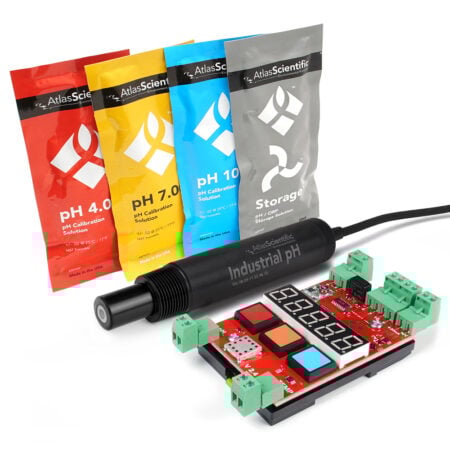
Atlas Scientific’s purpose-formulated calibration solutions, pH buffer standards at 4.00, 7.00, and 10.00, are designed to work precisely with their electrode chemistry. Calibrating against traceable, high-accuracy buffer solutions is what separates reliable, repeatable data from readings that gradually drift away from reality.
Here’s how to structure your first grow to put data at the centre of the process from day one, rather than bolting it on as an afterthought.
A single DWC reservoir supporting four to six leafy green plants is all you need to learn the fundamentals. Resist the urge to scale up immediately. The purpose of your first grow is to understand how your specific system, in your specific environment, behaves chemically over time. A small, heavily monitored system teaches you far more than a large, intermittently tested one.
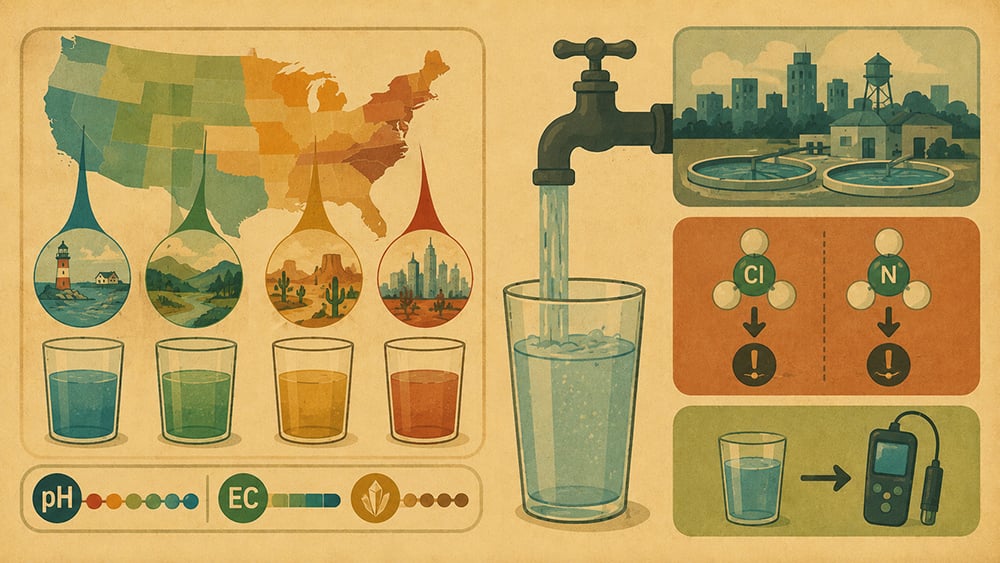
Tap water varies dramatically between regions in pH, EC, and mineral content. Hard water can carry a background EC of 0.3–0.5 mS/cm before you’ve added a single nutrient. Municipal water often contains chlorine or chloramine that can interfere with pH stability. Measure your source water first. This baseline is the foundation for every subsequent reading.
Two paths make sense for a beginner. If you want an all-in-one connected solution with minimal setup, the Atlas Scientific Wi-Fi Kits cover your three most critical parameters with automatic temperature compensation and remote visibility from day one. If you’re comfortable with a microcontroller and want to build a more customisable system over time, starting with an EZO-pH™ and EZO-EC™ circuit on a Raspberry Pi or Arduino is a logical path that you can expand with EZO-DO™ and EZO-RTD™ circuits as your system grows.
Lettuce, basil, mint, spinach, and kale are ideal starting crops, not just because they grow quickly, but because their feedback loop is tight. You’ll see problems manifest in days, not weeks, and you’ll see recoveries just as fast once you correct them. Quick feedback is the fastest teacher.
With continuous monitoring in place, the habit is to read and respond to your data rather than react to visual symptoms. Check your dashboard daily.
Learn what normal looks like for your system. Note when pH tends to drift and in which direction. Understand how your EC changes throughout the day when the reservoir temperature rises in the afternoon. This is the intuition that experienced growers have built over years; continuous monitoring lets you build it in weeks.
The best hydroponic system for beginners is a system type plus the monitoring infrastructure to run it intelligently. The growers who see consistent results in their first season are those who treat measurement as the foundation, not a feature to add later.
The convergence of affordable, lab-grade sensor technology with connected cloud monitoring has removed the main barrier that separated hobbyist growing from data-driven growing. That barrier used to be cost and complexity. Now, it’s simply a setup decision. Plants don’t communicate on a schedule. They respond to conditions continuously. Your monitoring system should, too.
If you would like to learn more about hydroponics or the full range of hydroponic sensors, monitoring kits, and calibration solutions available, don’t hesitate to contact the world-class team at Atlas Scientific.
Conductivity is one of the most important measurements in industrial water systems. From water treatment and hydroponics to chemical processing and manufacturing, conductivity provides a

When a process requires more than one chemical, nutrient, reagent, or additive, using several independent dosing pumps can quickly become complicated. A multi-pump dosing system