

Blog
Best pH Sensor for Bioreactors
Maintaining the correct pH inside a bioreactor is essential for successful fermentation, cell culture, and bioprocess optimization. Even small pH fluctuations can dramatically affect enzyme




Vertical farming automation integrates advanced sensors, IoT technology, and AI systems to create self-regulating agricultural environments that optimize plant growth, resource efficiency, and yield while minimizing human intervention throughout the cultivation process.
The future of agriculture faces ongoing challenges: a growing global population, diminishing arable land, climate change impacts, and resource scarcity. Against this backdrop, vertical farming has emerged as a revolutionary approach to food production that addresses these challenges through innovative technology and spatial efficiency.
By stacking growing systems vertically in controlled environments, producers can maximize yield per square foot while dramatically reducing water usage, eliminating pesticides, and growing crops year-round regardless of external conditions.
The true potential of vertical farming, however, is unlocked through automation. This article explores the comprehensive world of vertical farming automation, examining the technologies that make it possible, the monitoring systems that ensure optimal growing conditions, and the future innovations that will further revolutionize how we grow food in an increasingly resource-constrained world.
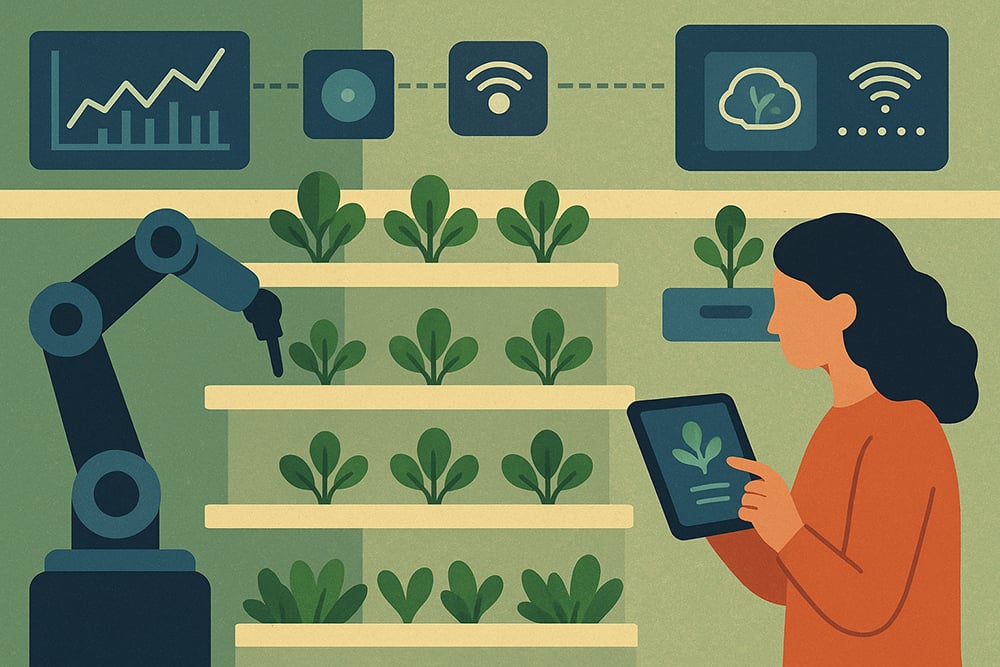
Vertical farming automation is the integration of technological systems that manage and control all aspects of plant cultivation in vertically stacked growing environments with minimal human intervention.
These systems combine precision sensors, robotics, artificial intelligence, and Internet of Things (IoT) connectivity to create self-regulating agricultural ecosystems that optimize growing conditions while maximizing efficiency and output.
A fully automated vertical farm operates as a complex plant data center, where environmental parameters such as temperature, humidity, light intensity, carbon dioxide levels, nutrient concentration, and pH are continuously monitored and adjusted to maintain ideal growing conditions. Automation extends beyond environmental control to include seeding, transplanting, harvesting, cleaning, and packaging operations—creating a comprehensive system that manages the entire growth cycle.
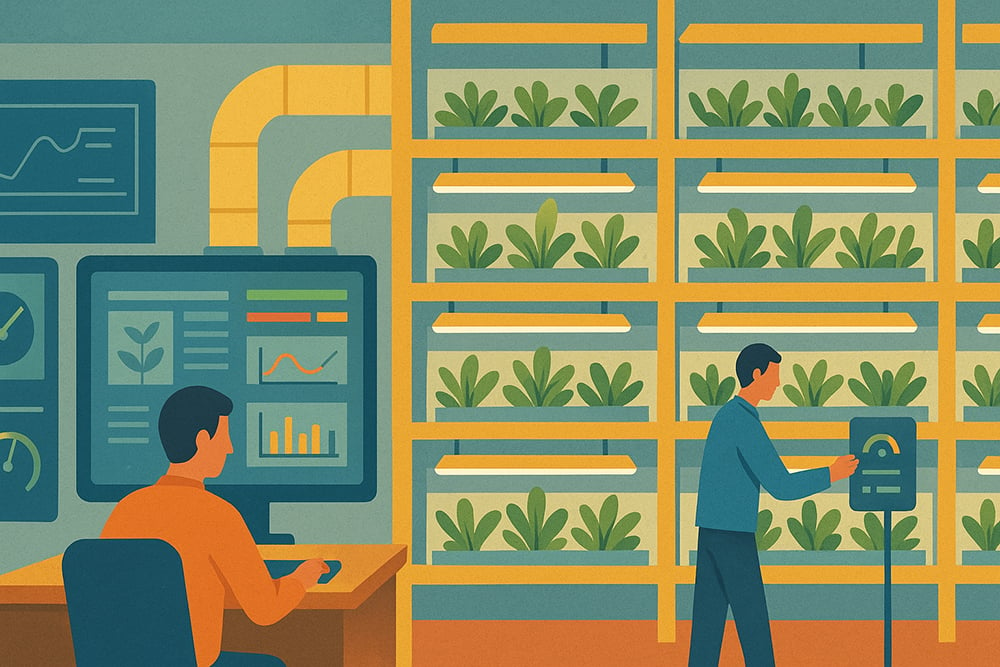
The world’s largest example of this technology in action is Bustanica, developed by Emirates Crop One. This massive 330,000-square-foot vertical farm represents current vertical farming capabilities. Located in Dubai near Al Maktoum International Airport, Bustanica produces over 1,000,000 kilograms of high-quality, pesticide-free leafy greens annually using 95% less water than conventional agriculture. The facility employs advanced automation systems that manage over 1 million plants at any given time, with robotic systems handling everything from seeding to harvest while machine learning algorithms continuously optimize growing conditions.
Bustanica just shows how vertical farming automation can achieve great scale and efficiency. The farm’s closed-loop irrigation system recycles water, its LED lighting systems provide precisely calibrated light spectrums for optimal photosynthesis, and its climate control systems maintain perfect growing conditions despite the harsh desert environment outside. This remarkable facility supplies fresh produce to Emirates airline flights and local UAE supermarkets, demonstrating how automated vertical farming can successfully address food security challenges even in climatically challenging regions.
The foundation of most vertical farming systems lies in soilless growing technologies, primarily hydroponics and aeroponics, which are particularly well-suited to automation due to their precision and control capabilities.
Hydroponics systems grow plants with their roots submerged in nutrient-rich water solutions, eliminating soil entirely. In automated hydroponic vertical farms, sensors continuously monitor nutrient levels, pH, electrical conductivity, dissolved oxygen, and temperature in the water solution. Automated dosing systems then adjust these parameters in real-time to maintain optimal growing conditions.
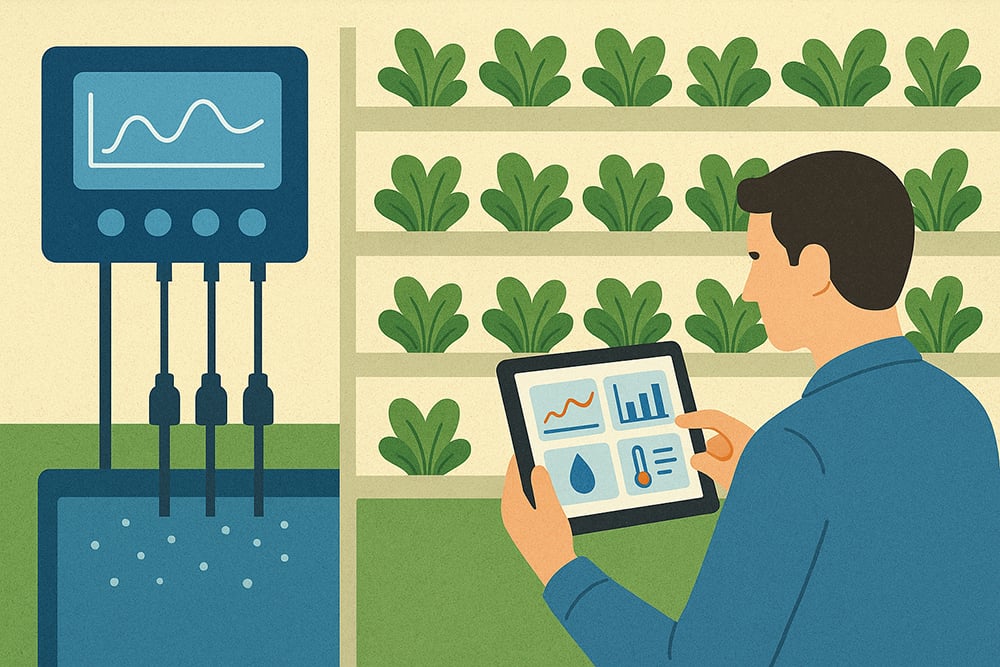
Common hydroponic methods in automated vertical farms include:
Aeroponics, a more advanced technique, suspends plant roots in air and delivers nutrients through a fine mist. Developed initially by NASA for space-based agriculture, aeroponics offers even greater resource efficiency than hydroponics, using up to 95% less water than conventional farming.
In automated aeroponic systems:
Both hydroponics and aeroponics eliminate the variability and inefficiencies of soil-based agriculture, creating highly controllable environments where every aspect of plant nutrition can be precisely managed through automation. These systems dramatically reduce water usage (up to 98% less than conventional farming), eliminate agricultural runoff, and allow for denser planting, all key advantages for vertical farming operations seeking maximum efficiency and minimal environmental impact.
Vertical farming automation represents a fundamental shift in agricultural practice, offering numerous advantages over traditional farming methods:
While traditional farming remains essential for many crops and food systems, automated vertical farming offers compelling advantages for leafy greens, herbs, strawberries, and certain high-value crops.
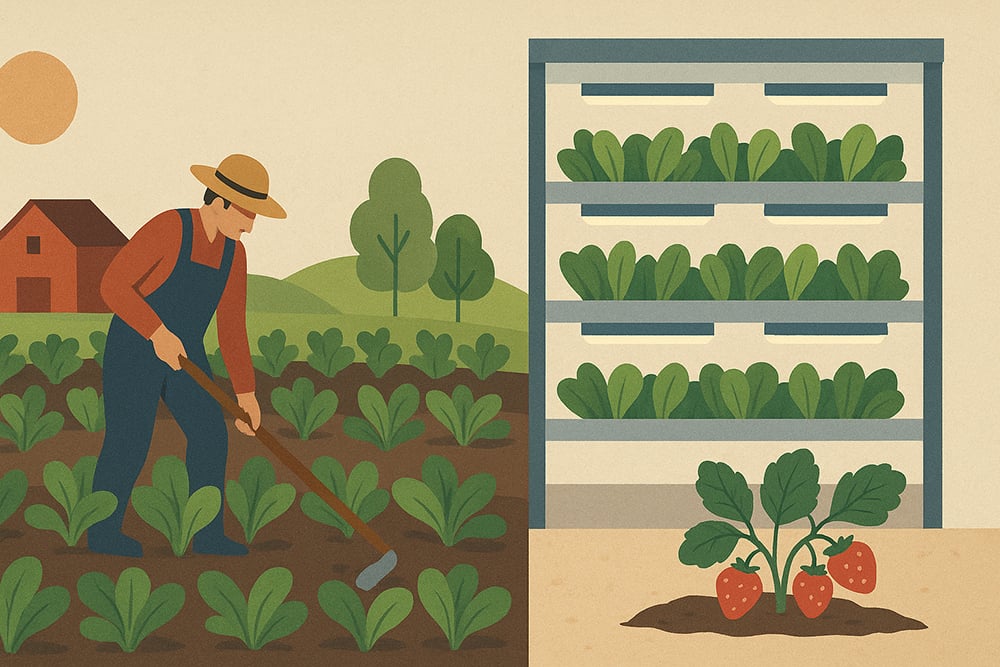
Successful vertical farming relies on accurate measurement and monitoring systems that track key environmental factors affecting plant growth. These systems collect real-time data that helps automated controls maintain perfect growing conditions.
Vertical farms use networks of sensors throughout their growing areas to monitor conditions at both the individual plant level and across the entire facility. This data feeds into control systems that make automatic adjustments to keep plants healthy and productive. Let’s explore the six key parameters that every automated vertical farm must monitor:
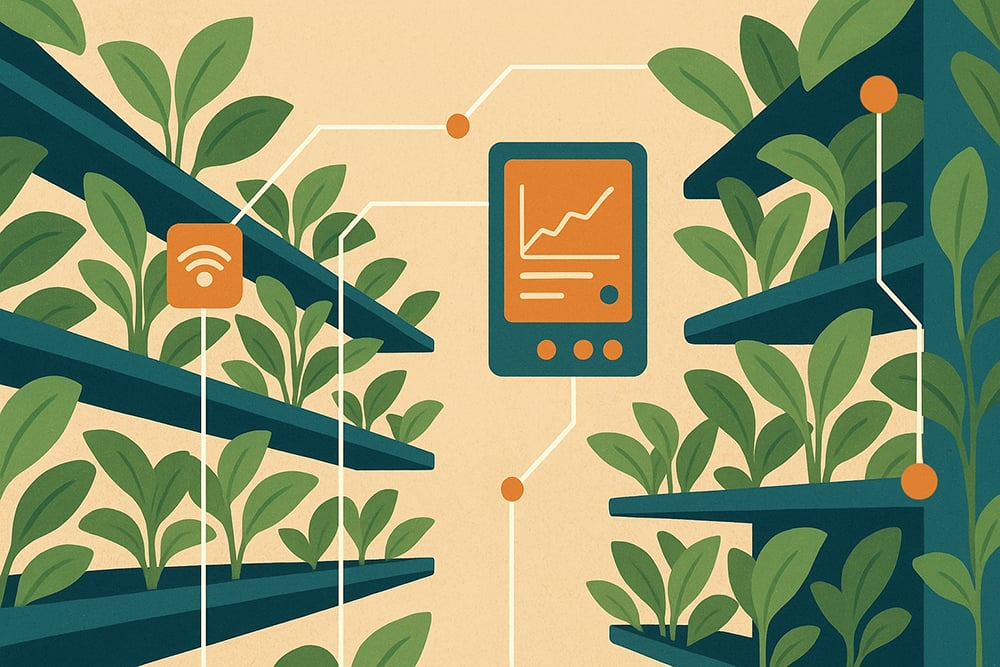
Temperature directly affects plant metabolism, germination rates, and overall growth speed. Even small temperature variations can significantly impact crop development and yield.
Temperature sensors are typically placed at multiple heights within growing zones to detect thermal stratification. Advanced systems maintain temperature gradients between root zones and leaf areas to optimize both vegetative growth and flowering/fruiting processes.
At Atlas Scientific, our platinum temperature sensors provide the highest level of stability and repeatability.
In particular, the Atlas Scientific Inline PT-1000 Temperature Kit comes with our EZO™ RTD Temperature Circuit, PT-1000 Temperature Probe (with BNC to SMA adapter), your choice of temperature thermowell, and our EZO™ non-isolated Carrier Board. This kit provides everything you need to take highly stable and repeatable temperature readings.
Humidity affects transpiration rates (how plants release water vapor), nutrient uptake, and susceptibility to fungal diseases. Too little humidity causes water stress, while excessive humidity can promote mold and pathogen growth.
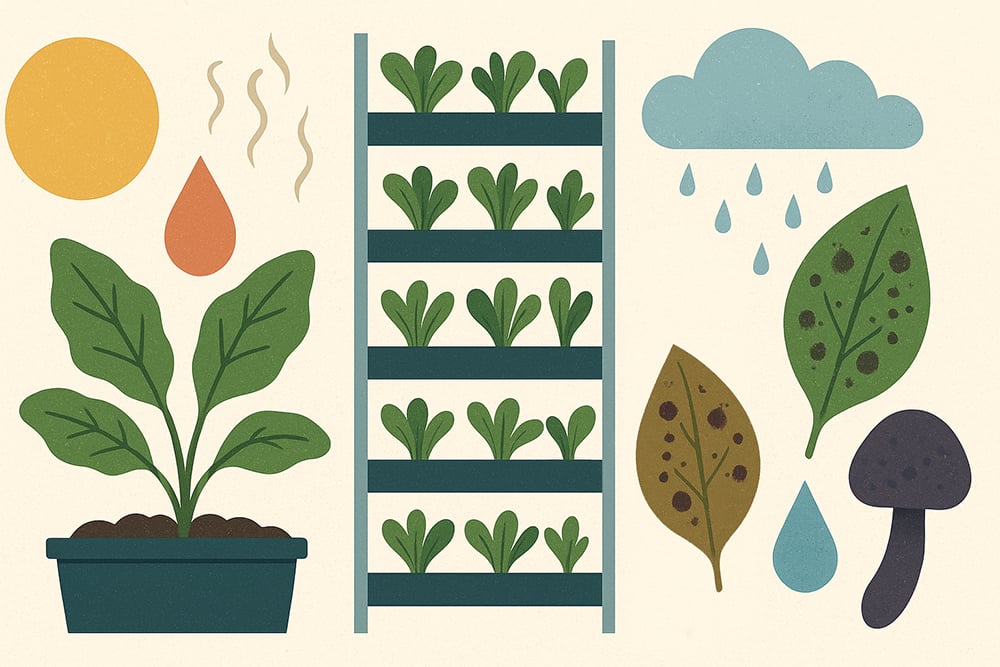
Humidity control in vertical farms often involves careful balancing with temperature management, as the two parameters are closely linked. Automated systems adjust ventilation, misting systems, and air circulation based on humidity readings to maintain the ideal moisture levels for each crop type and growth stage.
At Atlas Scientific, we have stainless steel humidity probes that are both versatile and durable, and suitable for both indoor and outdoor humidity measurement. Our EZO Embedded Humidity Probe delivers the same results as our EZO-HUM Circuit. There is no difference between the readings or accuracy, only in design.
We also offer the EZO Embedded Humidity Probe with an advanced photosensitive resin body. This humidity probe is both durable and convenient because of its design. Ideal for measuring indoor humidity, the design is guaranteed to last a lifetime. It gives consistent and accurate readings of the kind seen from our EZO-HUM Circuit. Both types of humidity probes arrive in a fully calibrated condition; just take them out of the box and use them.
Light is essential for photosynthesis and drives virtually all plant growth processes. In vertical farms where artificial lighting replaces sunlight, precise measurement ensures plants receive optimal light for energy efficiency and crop development.
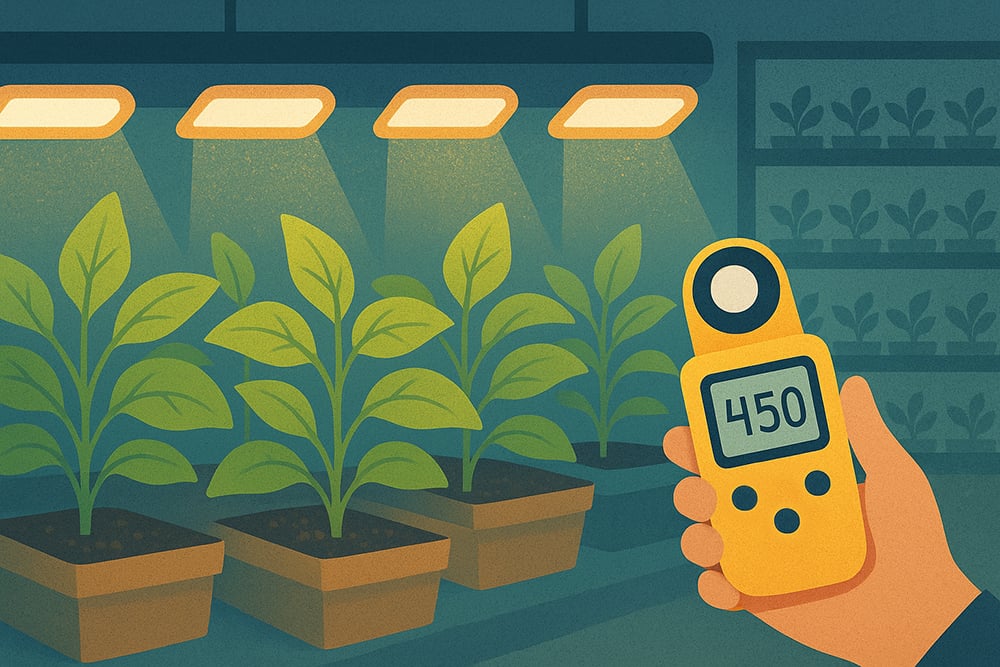
Vertical farms measure light using:
Light measurement systems help vertical farms provide ideal lighting while minimizing energy usage, which is often one of the largest operational costs.
Carbon dioxide is a primary building block for plant growth through photosynthesis. In sealed vertical farming environments, CO2 can be quickly depleted around actively growing plants, limiting their productivity.
Proper CO2 management can increase yields by 20-30% compared to ambient conditions, making it a crucial parameter to monitor and control.
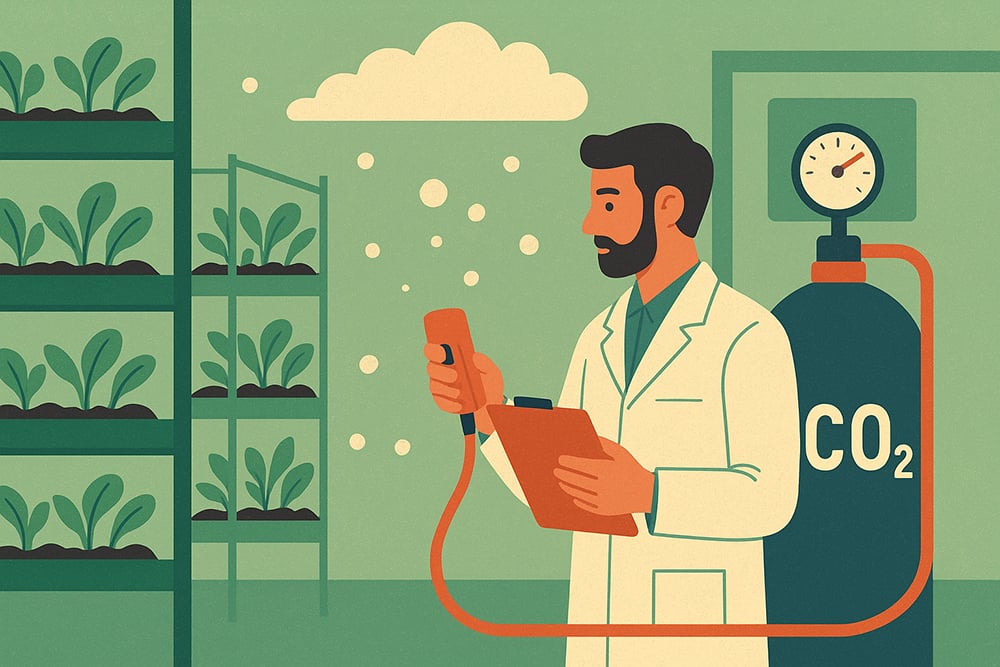
With Atlas Scientific’s EZO-CO2 sensor, you can get the CO2 readings in ppm in the air. Temperature and humidity compensated, the Atlas Scientific EZO-CO2 sensor brings cutting-edge sensing to any vertical farming projects you may have.
In soilless growing systems like hydroponics and aeroponics, plants rely entirely on nutrient solutions for their mineral requirements. Maintaining proper nutrient concentrations ensures healthy growth and prevents deficiencies or toxicities.

Vertical farms measure nutrient concentration primarily through:
Continuous nutrient monitoring prevents deficiencies before visible symptoms appear, ensuring consistent crop quality and yield.
The Atlas Scientific K1 EZO-Conductivity Kit is ideal for reading water with a conductivity of 10µs up to 100,000µs, which means this kit is also perfect for environmental monitoring, hydroponics, and vertical growing systems.
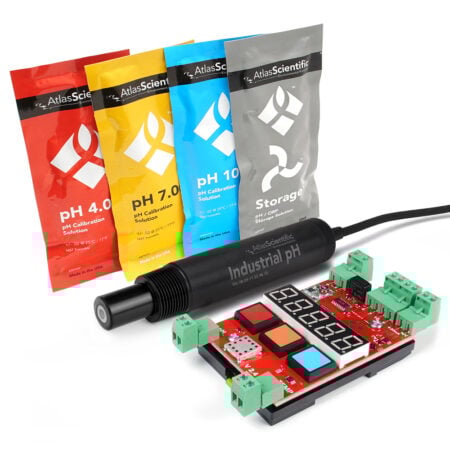
pH measures the acidity or alkalinity of the nutrient solution and directly affects plants’ ability to absorb different nutrients. Each nutrient has an optimal pH range for absorption, with most hydroponic crops preferring slightly acidic conditions (5.5-6.5).
Vertical farms monitor pH using:
Proper pH control ensures maximum nutrient availability and prevents issues like nutrient lockout, where plants cannot absorb available minerals due to chemical interactions at improper pH levels.
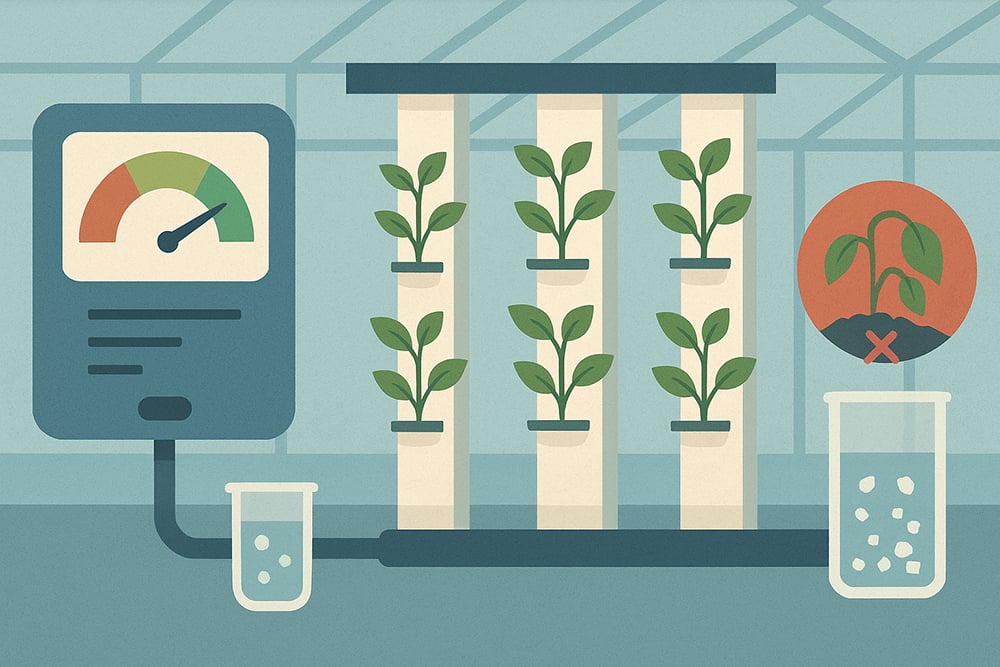
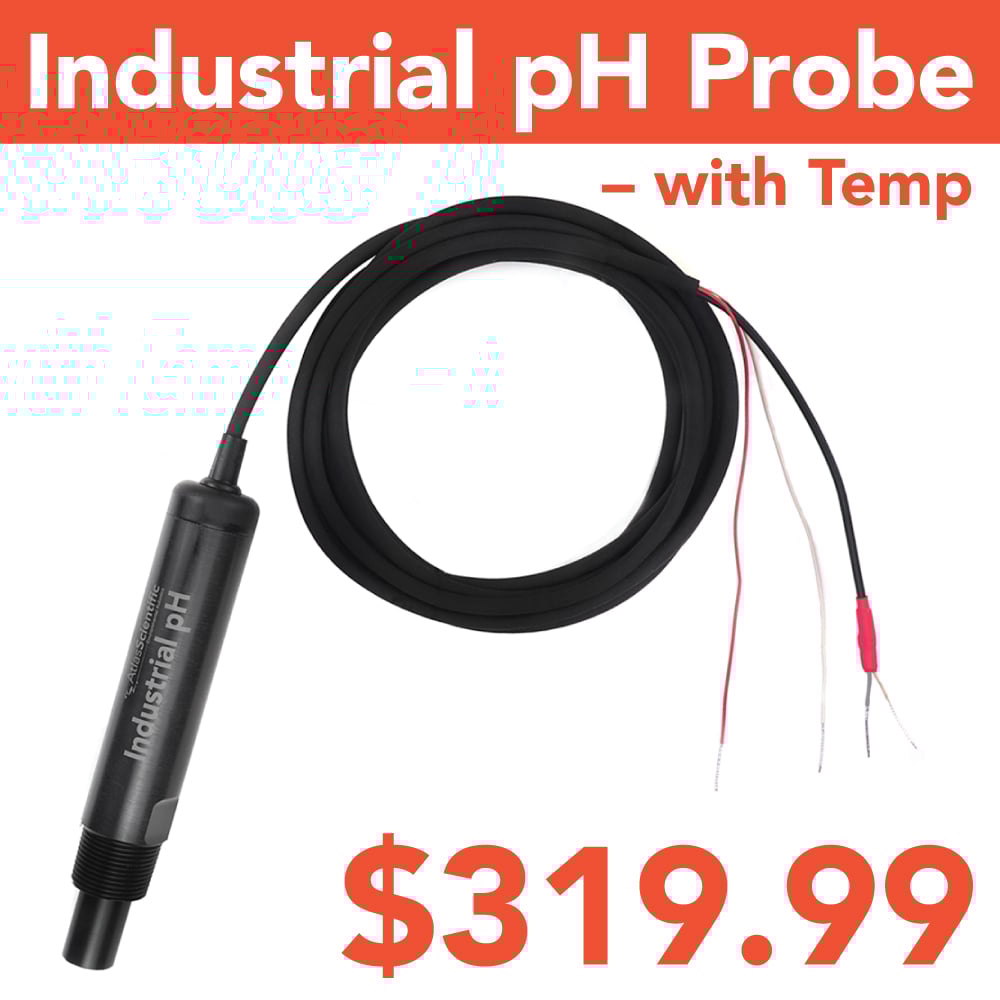
The Atlas Scientific EZO-pH Kit gives you everything you need to take high-accuracy, interference-free readings. And for all the vertical farmers doing things with soil, this may be more up your alley: the Atlas Scientific spear tip probe.
Artificial intelligence is changing vertical farming from basic automated systems into smart farming platforms that can learn and make decisions on their own.
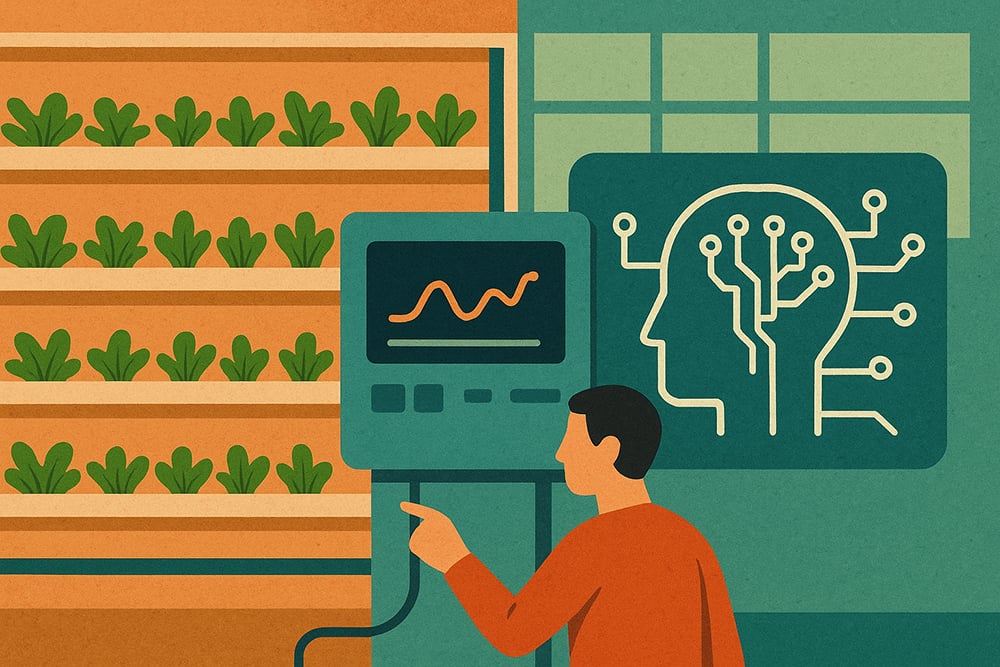
Today’s advanced vertical farms use AI in several key ways:
Computer Vision for Plant Monitoring: AI cameras watch plants grow and spot problems early:
Smarter Resource Management: AI algorithms look at past data to better manage:
Automated Decision-Making: Modern farms use AI to make on-the-spot growing decisions:
In the next few years, we’ll likely see:
AI won’t replace farmers, but it may change their jobs.
Farmers are becoming tech managers who design systems and growing strategies that AI carries out. Their hands-on knowledge is still essential. The best farms combine AI with human farming knowledge. AI is great with data and patterns, while humans provide problem-solving skills and judgment that machines don’t have.
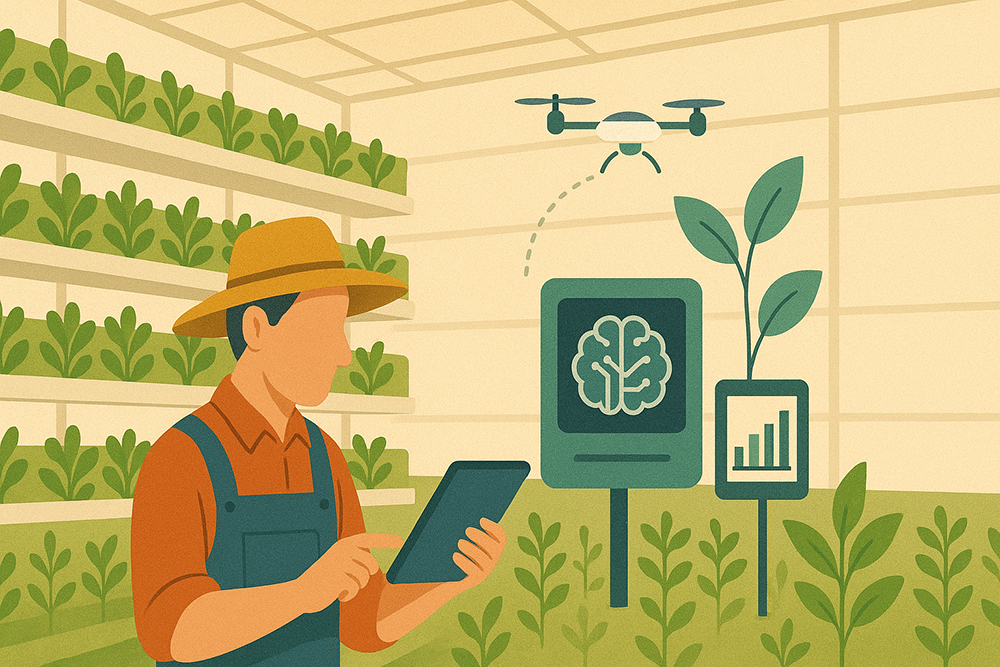
Vertical farming is creating jobs that blend farming know-how with technology skills. Rather than eliminating jobs, this is creating new types of agricultural careers.
The future will likely feature farmers and AI working as partners, each bringing different strengths to the table. As AI gets smarter, farmers will focus more on high-level management and innovation, adapting the farmer’s role rather than replacing it.
Vertical farming automation represents a fundamental reimagining of agricultural production for the 21st century and beyond. By integrating advanced monitoring technologies, precision control systems, and increasingly sophisticated artificial intelligence, these growing environments achieve levels of efficiency, consistency, and resource conservation that were impossible under traditional farming methods.

The core strength of automated vertical farming lies in its measurement and monitoring capabilities. Through precise tracking of temperature, water levels, humidity, soil moisture, light parameters, and numerous other variables, these systems create ideal growing environments that maximize plant development while minimizing resource consumption.
If you would like to learn more about the monitoring tools used in vertical farming, do not hesitate to reach out to the world-class team at Atlas Scientific.




Maintaining the correct pH inside a bioreactor is essential for successful fermentation, cell culture, and bioprocess optimization. Even small pH fluctuations can dramatically affect enzyme

Reverse osmosis water is best for hydroponics, providing near-zero EC and removing contaminants. It offers reliable results, precise nutrient control, and typically pays for itself